
Guide on gorilla diet, food for the gorillas in Uganda and Rwanda. What gorillas eat in the wild? Gorillas are among the most powerful animals on Earth, yet their strength comes almost entirely from a plant-based diet. Understanding the gorilla diet helps travelers appreciate how these gentle giants survive, socialize, and thrive in Africa’s forests. Superfine gorilla trekking Safaris allow travellers to observe how gorillas feed naturally is often one of the most fascinating moments of the experience.
Are Gorillas Herbivores?
Yes. Gorillas are primarily herbivores, feeding mainly on plants rather than meat. Their bodies are specially adapted to digest large quantities of fibrous vegetation. While they may occasionally ingest insects unintentionally, this plays no meaningful role in their nutrition.
Their gorilla diet varies depending on the habitat and altitude, season and food availability and gorilla species or subspecies. Despite these differences, plant material remains the foundation of all gorilla diets.
Main Foods in a Gorilla’s Diet
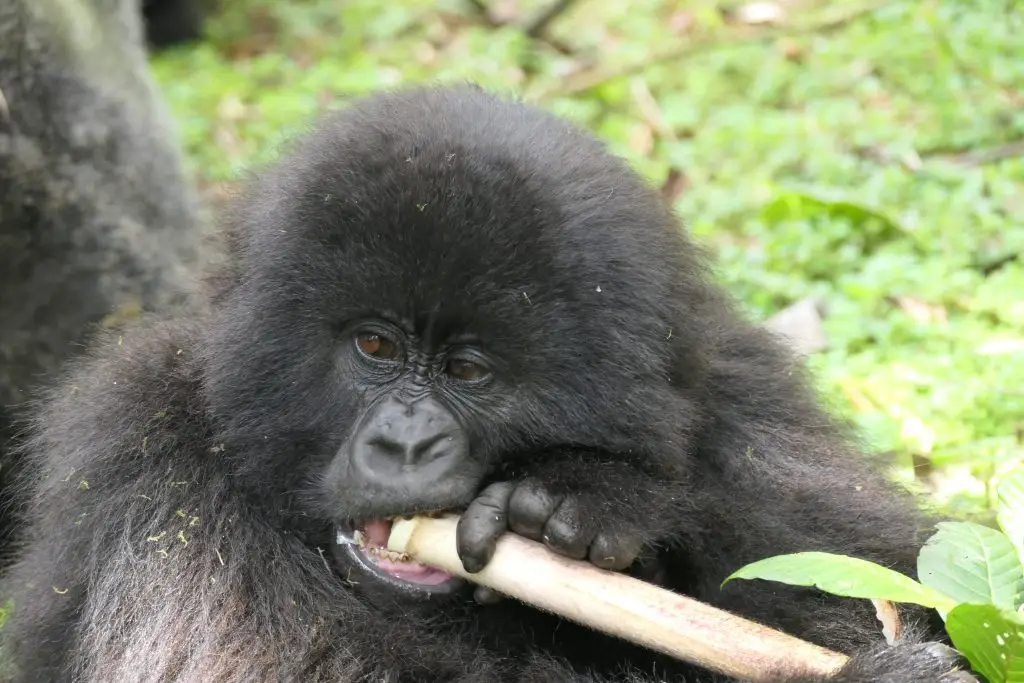
Leaves – The Core of the Gorilla Diet
Leaves make up the largest portion of a gorilla’s daily food intake. Gorillas consume young leaves, which are easier to digest and mature leaves, rich in fiber. Leaves support digestion and provide essential nutrients needed for energy and health.
Stems and Shoots
Gorillas regularly feed on stems and shoots from a wide range of forest plants. The stems and shoots are soft and easy to chew and also available throughout the year. Shoots are particularly important during rainy seasons when fresh growth is abundant.
Fruits – Seasonal Energy Sources
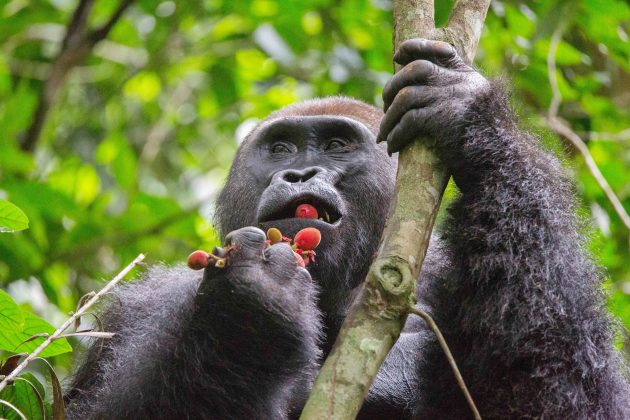
Fruit is an important but seasonal part of the gorilla diet.
- Lowland gorillas eat more fruit than mountain gorillas
- Fruit consumption increases during peak fruiting seasons
Fruits provide natural sugars and energy, though they are not always available in mountainous regions.
Bark and Plant Pith
Gorillas sometimes strip bark or eat plant pith, especially during dry seasons and also when preferred foods are less available. These foods provide minerals and help supplement their diet.
Roots and Tubers
In certain habitats, gorillas dig for roots and tubers. These underground foods supply carbohydrates and provide energy during periods of limited vegetation. This behavior shows how adaptable gorillas are to changing conditions.
Insects – Rare and Accidental
Gorillas do not hunt insects. However, they may occasionally consume ants or termites while feeding on plants. This intake is accidental and insignificant nutritionally.
Differences Between Mountain and Lowland Gorilla Diets
Mountain Gorilla Diet
Mountain gorillas live at higher elevations such as Bwindi Impenetrable National Park, Mgahinga Gorilla National Park, and Volcanoes National Park. Their diet mainly consists of:
- Leaves
- Stems and shoots
- Wild celery
- Bamboo shoots (seasonally)
Fruit is limited in these habitats, making vegetation the dominant food source.
Lowland Gorilla Diet
Lowland gorillas live in forests with greater plant diversity. Their diet includes:
- A wide variety of fruits
- Leaves and shoots
- Seeds and bark
Greater food variety leads to less seasonal feeding pressure.
How Much Do Gorillas Eat in a Day?
Gorillas eat for much of the day to support their large bodies.
- Adult gorillas can consume up to 30 kilograms of vegetation daily
- Feeding is balanced with rest, movement, and social interaction
This steady feeding pattern helps conserve energy.
How Gorilla Diet Influences Behavior
Food availability affects daily movement patterns, group travel routes and social interactions during feeding. Because plant food is generally abundant, serious competition within gorilla groups is rare
How Gorillas Get Water
Gorillas obtain most of their hydration from:
- Moist leaves
- Stems
- Fruits
They rarely drink water directly, except during very dry conditions.
Why Gorilla Diet Matters for Conservation
Protecting gorillas means protecting:
- Forest plant diversity
- Feeding grounds and seasonal food areas
- Entire ecosystems that support gorilla survival
Habitat loss directly threatens gorilla food sources, making conservation essential.
Gorilla Feeding Behavior
On gorilla trekking safaris , guests often witness gorillas feeding calmly in their natural environment. Our expert guides explain feeding habits, plant species, and the role diet plays in gorilla behavior—adding depth and meaning to every encounter.
In conclusion, the gorilla diet is a powerful example of how nature supports even the largest primates through plant-based nutrition. From leaves and shoots to seasonal fruits and bamboo, every meal reflects a deep connection to the forest. Understanding what gorillas eat enriches the gorilla trekking experience and highlights why conservation is vital.