
June to September is the best time to visit Rwanda. The long dry season brings clear skies, firm forest trails and the most reliable conditions for gorilla trekking in Volcanoes National Park, chimpanzee and colobus trekking in Nyungwe Forest and game drives in Akagera. December to February runs it close almost identical conditions, slightly shorter and often less crowded. If those windows don’t suit your dates, Rwanda is worth visiting year-round: the wet season (March–May) has its own case, which we cover honestly below.
Rwanda’s Seasons at a Glance
Rwanda sits just south of the equator at an average elevation of around 1,500 metres. The result is a highland climate that is cooler and more comfortable than most equatorial destinations, Kigali rarely exceeds 26°C and the volcanic highlands of Volcanoes National Park can drop to 7–10°C on the higher slopes at dawn. Two dry seasons and two wet seasons govern the annual rhythm:
- June–September (long dry season): The best overall period. Dry trails, clear mornings, excellent wildlife concentration in Akagera. Peak tourism — book permits and lodges well ahead.
- December–February (short dry season): Nearly as good. Slightly warmer in places. Festive-season demand peaks in late December, but early January and February are often very good value.
- March–May (long rains): The wettest period. Daily afternoon downpours, slippery forest trails and reduced Akagera visibility. Lodge rates drop 20–40%. Not impossible just harder work.
- October–November (short rains): Variable. Early October can be fine; November is less reliable. Good for birding specialists; less straightforward for everything else.
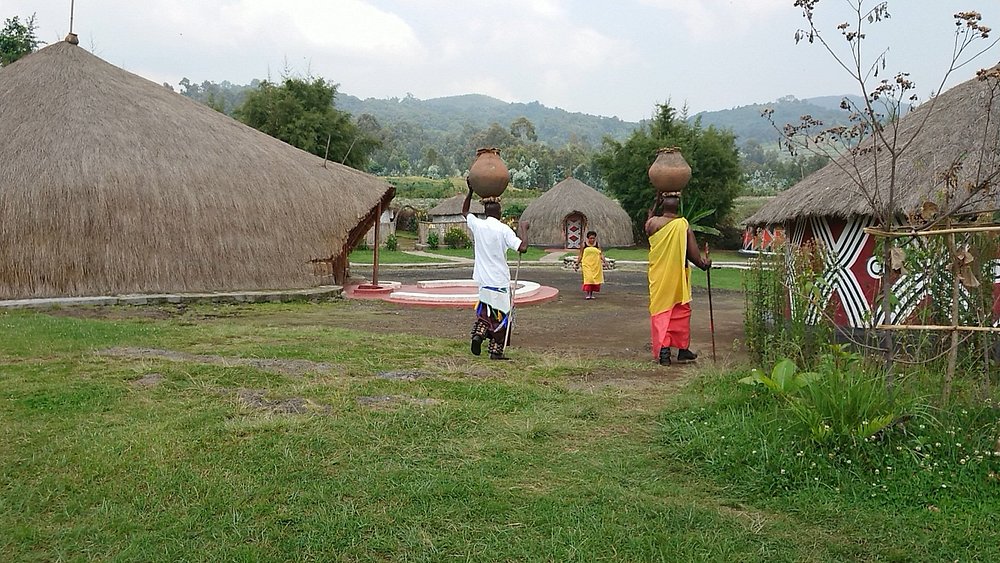
Gorilla Trekking: When to Go
Mountain gorilla trekking in Volcanoes National Park runs every day of the year, the gorillas don’t migrate and permits are available across all twelve months. What changes with season is the physical experience of the trek. In the dry season, the bamboo zone underfoot is firm, vegetation is lower and sightlines to the gorilla families are clearer. A trek that takes three hours in July might take five or six in April. That’s not a reason to avoid the wet season entirely, but it is the honest difference.
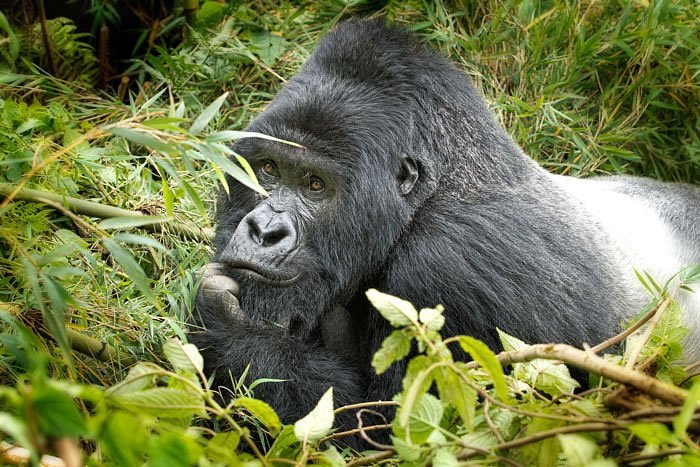
July and August are the peak months. Permits priced at USD 1,500 per person and limited to 96 per day sell out four to six months ahead for those months. Book as early as your dates allow. June and September offer almost identical conditions with better availability. December and January are the next-best window and are noticeably less crowded than the July–August peak, making them the practical choice for travellers who want dry-season quality without peak-season pressure on bookings.
For the wet season: gorilla encounters themselves are not diminished by rain. The forest is dramatically green and atmospheric in April. What you are accepting is slippery, steep trails, the certainty of getting wet and a longer, more physically demanding trek. Some experienced visitors prefer it. For a first gorilla trekking experience, the dry season is the straightforward advice.
Nyungwe Forest: Chimps, Colobus and the Canopy Walkway
Nyungwe receives more rainfall than Volcanoes, it sits on the Albertine Rift escarpment and catches cloud from both sides which makes the seasonal contrast more pronounced. The dry seasons are clearly preferable for chimpanzee trekking and Ruwenzori colobus monkey trekking: trails are steeper than Volcanoes and become genuinely hazardous when wet. June to September is the most comfortable window.
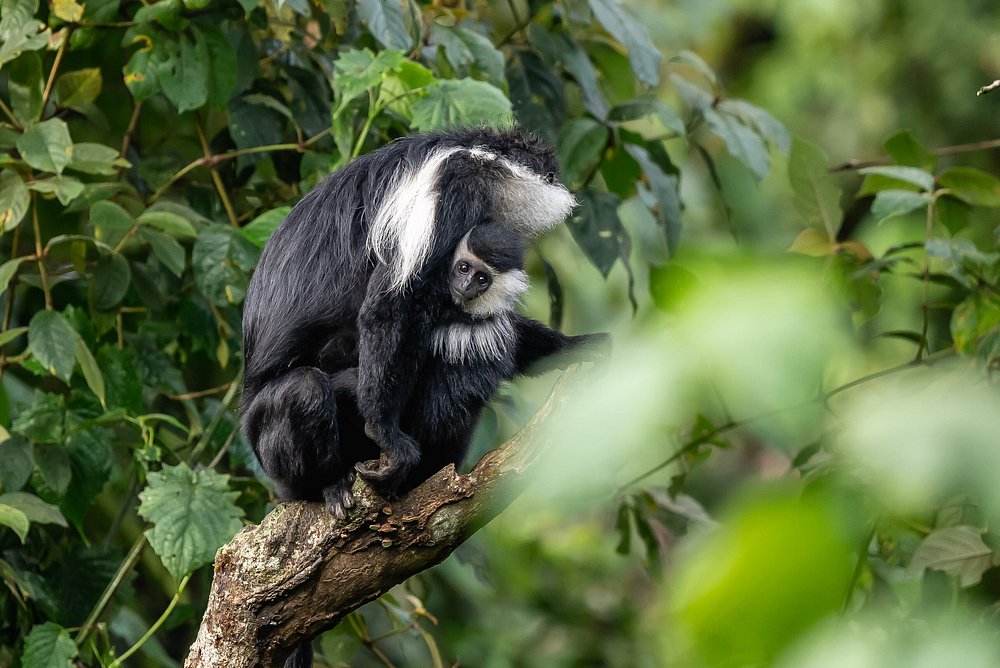
June and July also coincide with the Ruwenzori colobus birth season — white-coated newborns are visible and family group observations during this period are particularly rewarding. For birding in Nyungwe, the picture reverses slightly: October to March brings migratory species that are absent in the dry season, so specialist birders may find the shoulder and wet months worth the difficult trail conditions. December to February is a strong all-round choice for Nyungwe dry enough for comfortable trekking with good bird activity beginning to build.
Akagera National Park: Game Viewing by Season
Akagera follows standard savannah logic. The dry season (June–September) concentrates wildlife around the park’s lakes and rivers as standing water elsewhere dries up, grasses are grazed short and visibility is at its best. Lion and black rhino sightings in the northern zone are most reliable during this period. December to February is almost as good and typically less crowded.
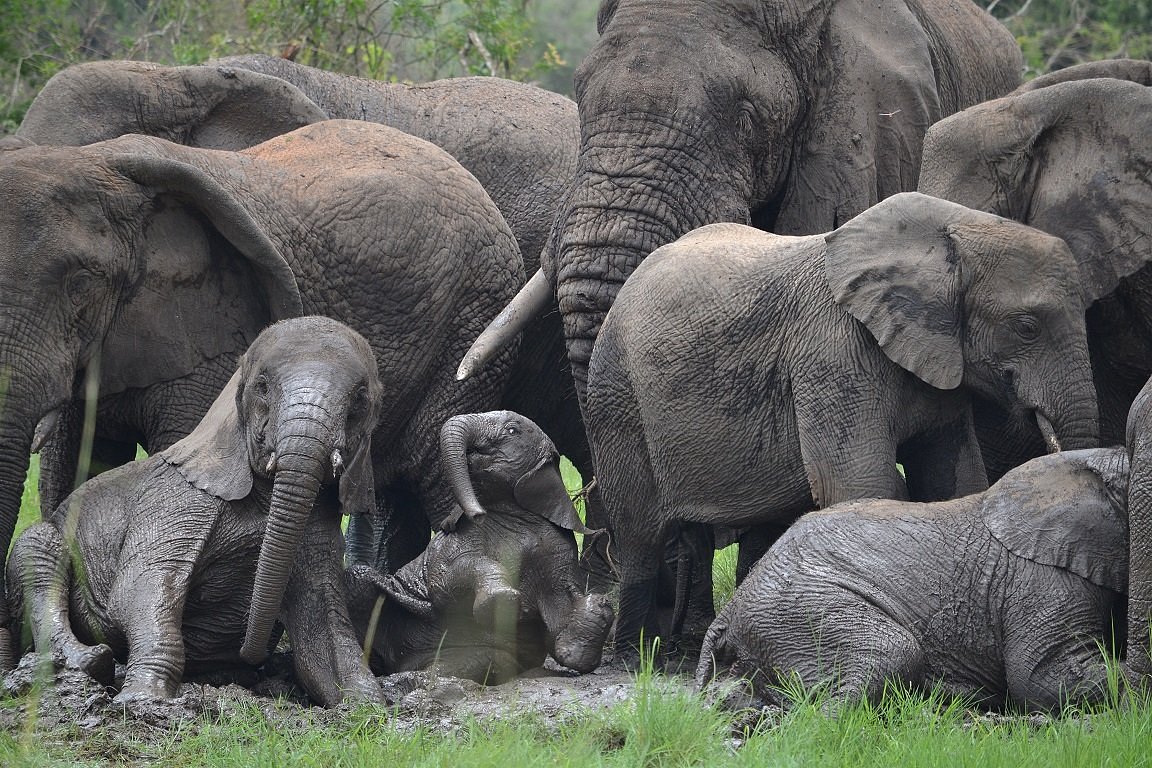
In the wet season, tracks become difficult and vegetation is dense — game is present but more dispersed and harder to spot. The one exception is birding: Akagera’s waterbird populations are augmented by migrants from October through March, making it one of East Africa’s most productive birding parks during the wet months. For anyone combining a standard game drive safari with serious birding, October or November can work well in Akagera even when the rest of Rwanda is wetter.
Golden Monkey Trekking
Golden monkey trekking in Volcanoes National Park follows the same seasonal pattern as gorilla trekking year-round availability, dry season preferred for trail conditions. The golden monkeys inhabit the bamboo zone at lower altitudes than most gorilla families, which typically makes the trek shorter and less physically demanding. Permits cost USD 100 per person. June to September and December to February are the recommended windows, and the activity can be combined with a gorilla trek across two consecutive days.

Month-by-Month: Rwanda Through the Year
January — Excellent
Part of the short dry season. Strong conditions for gorilla trekking, golden monkeys, Nyungwe and Akagera. Festive-season crowds thin out after the first week. February is often the least-visited good-weather month and offers the best combination of strong conditions and open availability.
February — Excellent, Best Value in Dry Season
Dry, warm, uncrowded. The best month for independent travellers who want peak-quality conditions without peak-season competition for permits and lodges. Rates at most properties are at or near low-season levels despite the strong conditions.
March — Transitional
Rains begin, usually mid-month. Early March remains reasonable for all activities. By late March trails in Volcanoes and Nyungwe are noticeably muddier. Lodge rates begin dropping. Manageable for experienced safari travellers with appropriate expectations.
April — Challenging
Peak rainy season. Heavy daily rain, difficult trail conditions across all parks, reduced visibility in Akagera. Lowest lodge rates of the year — often 30–40% below peak. The landscape is vivid green and the dramatic storm light over the volcanoes has genuine beauty. Not recommended for first-time visitors.
May — Improving
Rains ease toward the end of the month. Still difficult in the first half. Late May can mark the beginning of genuinely good conditions for confident travellers willing to accept some uncertainty. A useful entry point if June permits are fully sold.
June — Very Good
The dry season arrives, typically by mid-month. Conditions improve rapidly. An excellent choice strong conditions without the July–August peak demand. Ruwenzori colobus births begin in Nyungwe. Gorilla permit availability is better than July and August.
July — Peak Season, Book Early
The single best month for wildlife conditions across all three parks. Clear skies, firm trails, excellent game viewing. Also the most competitive for permits and accommodation — book gorilla permits four to six months ahead, lodges at least three months ahead.
August — Peak Season
Equal to July. Remains peak with high demand. The Serengeti Great Migration peaks during August, making this the most popular month for Tanzania–Rwanda combination itineraries. Expect peak pricing and limited last-minute availability across all lodge categories.
September — Very Good, Easing Crowds
Dry season conditions hold through September. Crowds begin easing from mid-month. Often the best month for travellers who want the conditions of peak season without the full pressure on bookings and pricing. One of the most consistent recommendations for a first Rwanda visit.
October — Transitional
Short rains begin, usually mid-month. First half of October remains good. Akagera birding becomes productive with returning migrants. Nyungwe and Volcanoes trail conditions deteriorate from mid-month. A workable option for flexible itineraries.
November — Wet
Consistently wet across the highlands. Less suitable for gorilla trekking and forest activities. Akagera birding excellent. Accommodation rates drop and availability is wide open. Best suited to specialist birders or travellers with no other date flexibility.
December — Good, Rising Demand Late Month
The short dry season re-establishes itself, typically from mid-December. Early and mid-December are often excellent and relatively uncrowded. Christmas week brings festive-season demand and premium pricing. The final days of December and early January are among the most underrated periods in the Rwanda calendar.
Should You Visit in the Wet Season?
If budget is the primary constraint, the wet season has a genuine case. Lodge rates drop 20–40% during March to May and November, the gorilla permit price (USD 1,500) stays fixed but the overall trip cost is meaningfully lower. The landscape during the rains is extraordinarily lush Nyungwe in April is a deep, vivid green that the dry months cannot match and for birders the wet season significantly expands the species list across all three parks.

The honest position: the wet season rewards travellers who are physically comfortable with challenging conditions, have some East African safari experience and are motivated by value, the landscape aesthetic or specialist birding. For a first visit to Rwanda where the gorilla trekking experience is the centrepiece, the dry seasons are the clear recommendation. You came a long way and paid USD 1,500 for the permit , firm trails and clear skies make a real difference.
Practical Tips
- Book gorilla permits early: Limited to 96 per day across eight habituated gorilla families. July–August permits sell out four to six months ahead. Book through the Rwanda Development Board (rdb.rw) or your tour operator as soon as dates are confirmed.
- Plan at least 7–8 days: A full Rwanda primate circuit covering Volcanoes, Nyungwe and Akagera needs seven to eight days from Kigali; ten days is more comfortable with a Lake Kivu stop.
- Pack for cold mornings: Gorilla treks start at around 2,500 metres. Even in July, mornings on the volcano slopes are cold — pack a warm fleece and waterproof regardless of season.
- Visa: The East Africa Tourist Visa (USD 100, valid across Kenya, Uganda and Rwanda) is available on arrival at Kigali International Airport or online at irembo.gov.rw.
- Getting there: Kigali (KGL) has direct connections to Nairobi, Addis Ababa, Dubai and Brussels. One-stop routings from the UK, US and Australia are well-served via Nairobi or Addis.
Frequently Asked Questions
What is the single best month to visit Rwanda?
July offers the best all-round conditions across Volcanoes, Nyungwe and Akagera. June and September are equally excellent and easier to book. February is the most underrated month dry-season quality with low-season availability and pricing.
Can you trek gorillas in the rainy season?
Yes, gorilla trekking runs every day of the year. In the wet season (March–May, October–November) trails are muddier and the trek more physically demanding, but the gorilla encounters themselves are not reduced in quality. It suits experienced trekkers with appropriate gear. For a first visit, dry season is the more straightforward experience.
How far in advance should I book gorilla permits?
For July and August, four to six months minimum. For June and September, two to three months. For December to February, six to eight weeks is usually sufficient outside the Christmas–New Year window. Earlier is always safer, permits can sell out at any time of year if a group books the remaining allocation.
Is Rwanda worth visiting without doing gorilla trekking?
Absolutely. Nyungwe Forest’s chimpanzee and colobus trekking, the canopy walkway, Akagera’s Big Five game drives and boat safaris on Lake Ihema are each excellent in their own right. The Rwanda primate circuit without gorillas — three or four days across Nyungwe and Akagera — is a compelling trip that costs a fraction of a gorilla permit-inclusive itinerary.
Ready to plan your Rwanda safari? Superfine Safaris Limited secures gorilla permits, builds itineraries around your travel dates and books lodges across Volcanoes, Nyungwe and Akagera. Contact us for a tailored quote.
Plan Your Rwanda Safari
- ✓ Gorilla trekking permits
- ✓ Nyungwe chimp & colobus treks
- ✓ Akagera Big Five game drives
- ✓ Lodge & camp bookings
- ✓ Full Rwanda primate circuits
Rwanda at a Glance
| Peak season | Jun–Sep & Dec–Feb |
| Avoid | Apr–May (long rains) |
| Sweet spot | Jun & Sep (dry, fewer crowds) |
| Temperature | 15–26°C (highlands) |
| Gorilla permit | USD 1,500 per person |
| Currency | RWF / USD accepted |
| Visa | East Africa Tourist Visa – USD 100 |