
Gombe Stream National Park is the place where our understanding of chimpanzees and consequently of ourselves was fundamentally changed. It was here in 1960 that Jane Goodall arrived and began what became the world’s longest-running wildlife research programme. Her early observations at Gombe that chimpanzees make and use tools, that they hunt cooperatively for meat, that their social structures involve complex politics of alliances and conflict rewrote the definition of what it means to be human.
Tanzania’s smallest national park, covering just 52 square kilometres on the steep forested slopes above Lake Tanganyika, carries a disproportionate weight in the history of science, and visiting it connects you to that history in a direct and tangible way.
The Chimpanzee Experience at Gombe Stream National Park
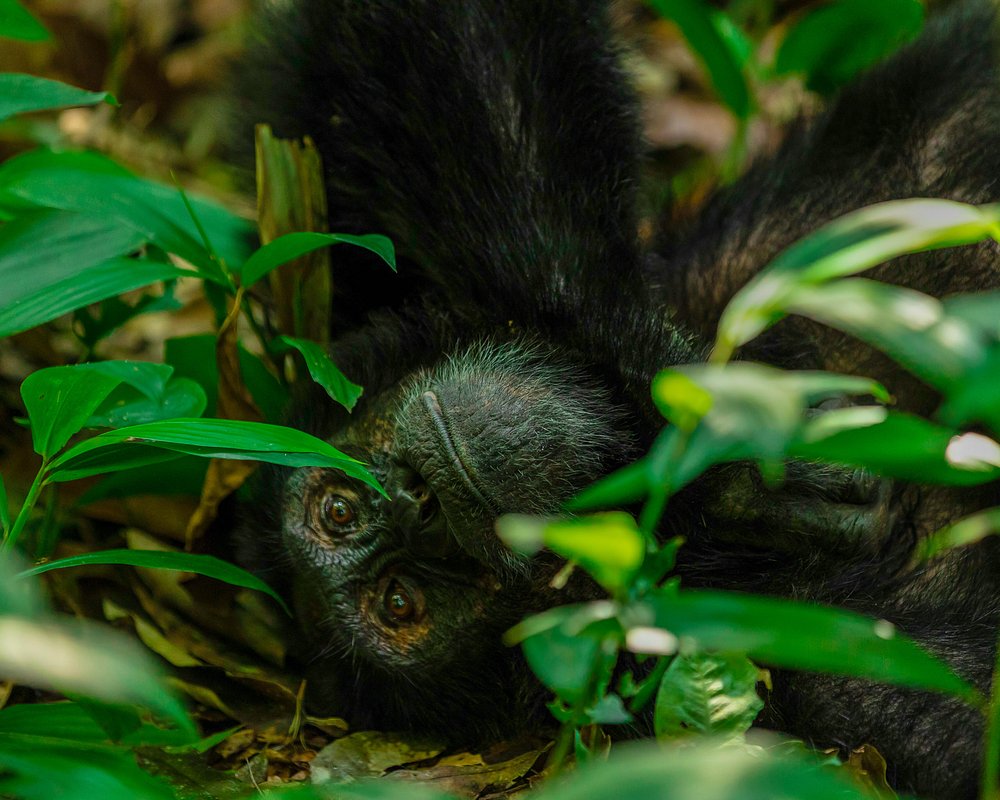
Gombe Stream National Park holds around 150 chimpanzees in three habituated communities the Kasekela, Mitumba and Kalande groups. The Kasekela community is the one studied by Goodall from 1960 onward and is the community that most visitors encounter on a trekking permit. The habituation at Gombe is among the deepest of any chimpanzee population in Africa: more than sixty years of continuous human presence on foot has made the Kasekela chimpanzees almost entirely comfortable with observers, and encounters are typically close, unhurried and extended in a way that reflects that long familiarity.
Trekking permits are issued for small groups — the standard limit is six visitors per community per day — and the trek itself begins at the park headquarters at Kasekela before dawn, following established forest trails up the steep ravines that the chimpanzees use as territorial boundaries and movement corridors. Scouts who track the Kasekela community daily narrow the distance before the visitor group moves in. Once found, the regulations permit one hour with the chimpanzees. In practice, because Gombe’s chimpanzees are so deeply habituated and the terrain keeps them relatively close to the lake, this hour often involves the kind of sustained proximity — sitting still while individuals groom, feed and interact at two or three metres — that is the most any primate trekking destination can offer.
Jane Goodall’s Legacy at Gombe Stream National park
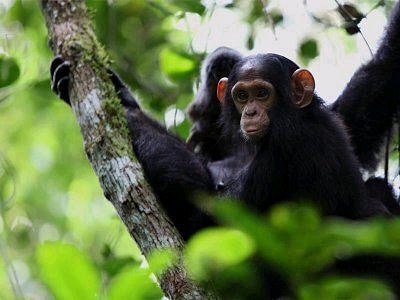
The physical legacy of the research is visible throughout Gombe Stream National Park. The research station at Kasekela, operational since the 1960s, continues to host researchers from the Jane Goodall Institute who maintain the unbroken behavioural record of the Kasekela community. The station holds decades of data, film and observation records that have produced hundreds of scientific papers and informed conservation policy for chimpanzee habitats across Africa. For visitors with a serious interest in the science, the researchers at the station are generally willing to discuss the current state of the research and what the record shows about long-term population dynamics.
Goodall’s first camp — a simple tent site on the beach below the research station — is marked and can be visited as part of the park experience. The banana provisioning area where the early habituation work was conducted, now discontinued, is still identifiable in the forest. These are modest physical markers, but for anyone who has read Goodall’s accounts of her first years at Gombe, walking the same ground and watching the descendants of the individuals she named — David Greybeard, Fifi, Frodo — feels meaningfully different from chimpanzee trekking at a site with no such history.
Lake Tanganyika and the Gombe Beach
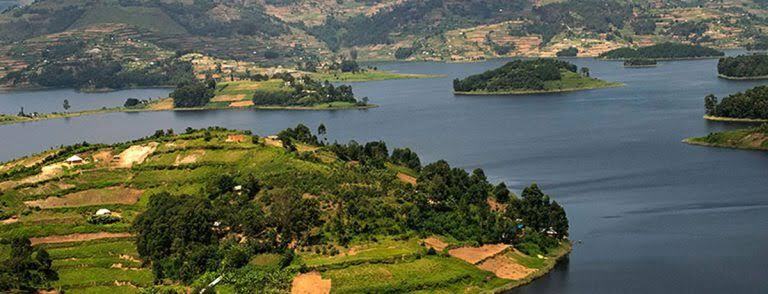
The beach at Gombe Stream National Park is one of the park’s most distinctive features. Lake Tanganyika’s water along this shoreline is clear, warm and safe to swim in, and the beach below the research station and the park accommodation is a genuinely beautiful place to recover from a morning trek — the steep forested hillside rising directly behind the camp, the lake stretching west to the Democratic Republic of Congo on the opposite shore, the sound of the forest above still audible from the water. The cichlid fish visible in the shallows are as colourful as anything in the reef environment of the Indian Ocean, and snorkelling in the lake is a standard activity that most visitors include.
Red colobus monkeys — a species found only along the western Tanzania lakeshore and a significant prey species for the Kasekela chimpanzees — are common on the forest edge near the beach. Olive baboons follow a parallel path through the coastal vegetation. The combination of primate watching, lake swimming and the research station context creates a camp atmosphere at Gombe that is unlike any other national park in Tanzania.
Getting to Gombe Stream National Park
Gombe Stream National Park is reached by boat from Kigoma, the regional capital on the northeastern shore of Lake Tanganyika. Kigoma is accessible by scheduled flight from Dar es Salaam — a ninety-minute flight on Air Tanzania — or by the TAZARA railway from Dar, a journey of approximately 36 hours that passes through some of the most remote country in Tanzania. The lake taxi from Kigoma to Gombe takes approximately two hours; a private charter speedboat covers the same distance in 45 minutes and is bookable through the park authority or the camps. The approach by water, watching the steep forested hillsides of the park rise from the lake as you arrive, sets the expedition tone for everything that follows.
Best Time to Visit Gombe Stream
The dry season from June to October is the best time for Gombe Stream National Park. The lake surface is calmer, making the boat journey more comfortable, and the chimpanzees stay at lower elevations near the lake where the fig trees are fruiting and encounter distances are shorter. The forest undergrowth is less dense after the rains, improving visibility during the trek. July and August are the peak months; visitor numbers at Gombe are naturally low compared to most East Africa destinations, and peak-season crowds are not a meaningful concern even in this period.
January and February offer a second dry window with good conditions at a lower tariff. The long rains from March to May and the short rains in November bring wet, slippery trails and rougher lake crossings. Some accommodations reduce operations in the April–May period. The chimpanzees are present year-round but the conditions underfoot in the peak wet season make the trek significantly more demanding.
Where to Stay at Gombe

Accommodation options at Gombe Stream National Park are limited by design — the park’s small size and conservation management restrict the number of beds available. The main option is the Gombe Forest Lodge, a collection of bandas on the lakeshore operated by the same company that runs Greystoke Mahale, designed for the same high-end expedition audience that visits the more celebrated chimpanzee site to the south. The lodge provides direct access to the habituated Kasekela community, lake swimming, and guided evening walks to see the chimpanzees return to their sleeping trees.
The park authority also operates simple guesthouses at Kasekela that are available at lower cost and are used by researchers, budget travellers and those visiting as part of a longer independent journey through western Tanzania. Both options book well ahead in the June to October dry season despite the small overall visitor numbers, simply because the total bed count at Gombe is very low.
Combining Gombe with Mahale
Gombe Stream and Mahale Mountains are 150 kilometres apart by water and are almost always discussed as a pair — the two chimpanzee parks of western Tanzania, each distinctive enough to justify a dedicated visit. Gombe provides the historical and scientific depth; Mahale provides the deeper forest, the more dramatic mountain setting and the more remote expedition character. Combining both in a single western Tanzania circuit — two nights at Gombe, charter flight or boat south to Mahale for three nights, then onward to Katavi or Ruaha by charter — takes six to eight days and covers a stretch of Tanzania that almost no safari visitor ever reaches. At Superfine Safaris, we build this circuit for clients who have already done the northern parks and want to see a fundamentally different Tanzania.
Frequently Asked Questions
Is Jane Goodall still at Gombe Stream National Park?
Jane Goodall left Gombe in 1986 to focus on conservation advocacy and now divides her time between international travel, speaking and the work of the Jane Goodall Institute. She visits Gombe occasionally but is not resident. The research programme she established continues under the institute’s oversight, and the long-term behavioural database of the Kasekela community is maintained by researchers who work there continuously.
How does Gombe compare to Mahale for chimpanzee trekking?
Both parks offer excellent chimpanzee trekking with well-habituated communities. Gombe is smaller and more accessible from Kigoma; the terrain is steep but the shorter park size means the community’s range is more contained. Mahale’s M Group ranges over a much larger area and the trek can be longer, but the mountain forest setting, the lake beach and the camp quality at Greystoke are exceptional. For visitors choosing between them, Gombe appeals more to those interested in the research history and the Goodall legacy; Mahale appeals more to those prioritising wilderness setting and luxury camp experience.
What other wildlife is in Gombe besides chimpanzees?
Red colobus monkeys are the second primate most visitors come specifically to see — the Kasekela chimpanzees hunt them, and the colobus troops visible along the forest edge above the beach are always alert to the sound of the chimpanzees below. Olive baboons, blue monkeys, red-tailed monkeys and bushbuck are all common. The lake shore holds monitor lizard, hippo (in the southern section) and several species of water birds. The forest bird list includes kingfishers, sunbirds, raptors and the Ross’s turaco.
Interested in visiting Gombe Stream National Park?
Superfine Safaris arranges Gombe chimpanzee permits, lake transfers and combined western Tanzania circuits. Contact us or WhatsApp our team to plan your trip.
Plan Your Gombe Safari
- ✓ Gombe chimpanzee trekking permits
- ✓ Lake Tanganyika boat & beach stays
- ✓ Combined Gombe & Mahale circuits
- ✓ Western Tanzania safari packages
- ✓ Transparent all-in pricing
Gombe at a Glance
| Location | Western Tanzania, Lake Tanganyika |
| Park size | 52 km² — Tanzania’s smallest |
| Research started | 1960 — Jane Goodall |
| Chimpanzees | ~150 individuals (3 communities) |
| Best months | Jun–Oct & Jan–Feb |
| Access | Boat from Kigoma (2 hrs) |
| Permit cost | USD 100 per person |