
Accommodation in Akagera National Park has changed considerably over the past decade. Once limited to a single ageing lodge and a few basic campsites, Rwanda’s only savannah national park now has a spread of options that stretch from ultra-luxury tented camps at the exclusive northern end to affordable public campsites for self-drivers on a tight budget. This guide covers every category, with honest detail on what each property offers, what it costs and who it suits best — so you can match your accommodation to how you want to experience one of East Africa’s most dramatically revived parks.
Accommodation in Akagera National Park at a Glance
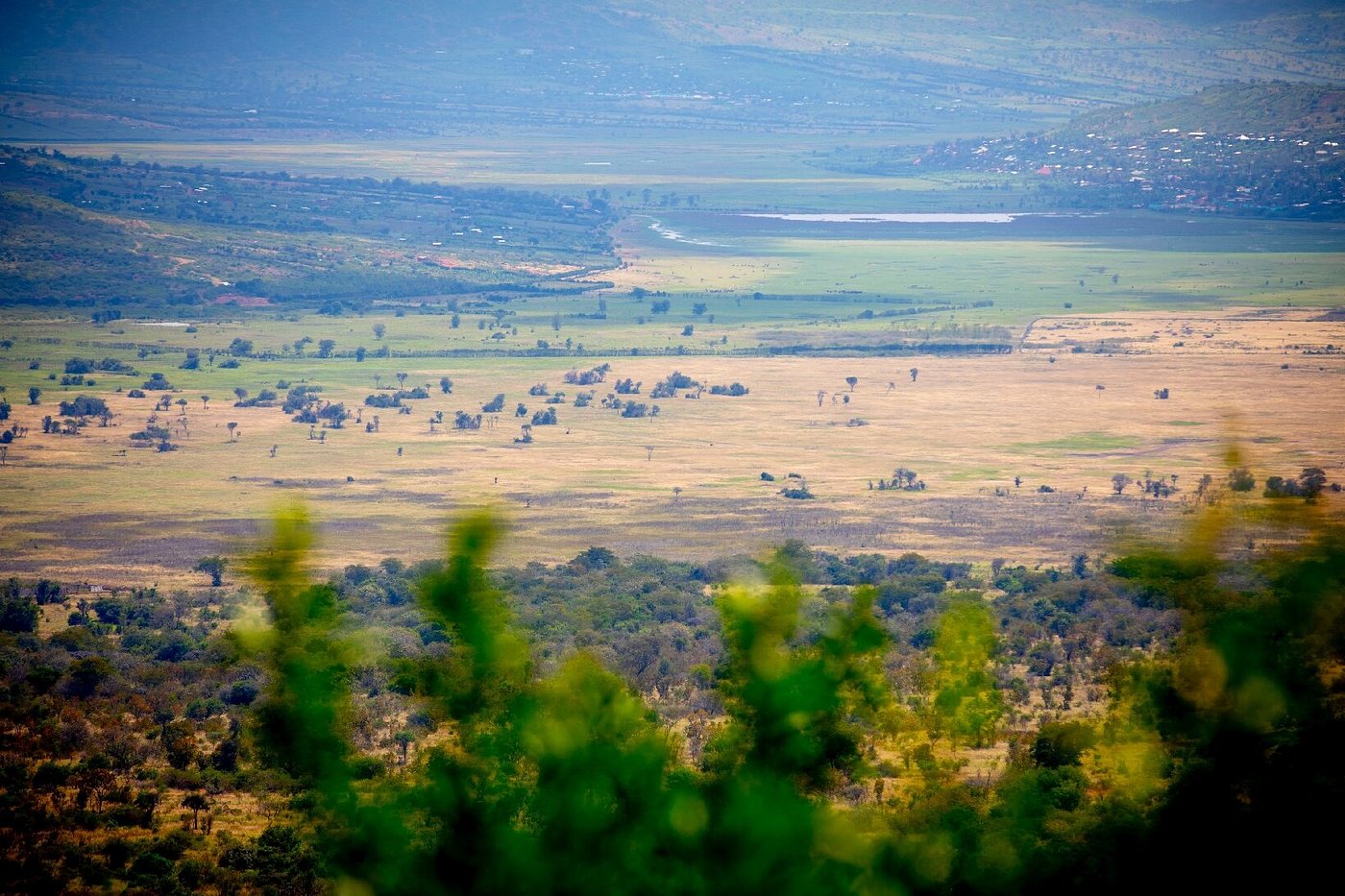
Akagera was effectively rescued from collapse in 2010 when African Parks took over management. The reintroduction of lions in 2015 and black rhinos in 2017 completed the Big Five for the first time in decades, and the park’s transformation from a poaching-ravaged reserve to a functioning, well-managed savannah ecosystem has been one of conservation’s better stories of recent years. Accommodation investment has followed: the park now has two lodges and a tented camp inside the park boundaries, two campsite options managed by African Parks, and several guesthouses in the nearest town, Kayonza, for those who prefer to base outside the park.
The northern section of the park — accessed through the Kageyo gate and reachable only with a permit — is home to the reintroduced rhinos and lions and is where the most exclusive accommodation sits. The southern section, entered through the main Gabiro gate, holds the larger lodge and most of the lakes that make Akagera’s landscape so distinctive. Where you stay largely determines which section of the park you explore, so it is worth matching accommodation choice to your wildlife priorities.
Luxury Accommodation: Magashi Camp
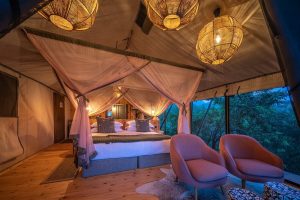 Magashi Camp is Akagera’s flagship property and one of the finest tented camps in East Africa. Operated by Wilderness Safaris and situated on the eastern shore of Lake Rwanyakazinga in the exclusive northern zone, Magashi has eight spacious canvas-and-timber suites each with a private deck overlooking the lake and the surrounding acacia and open grassland. The camp is designed with an intimate feel — never more than sixteen guests at once — and the service standard, guiding quality and food are consistently among the best in Rwanda.
Guests staying at Magashi have exclusive access to the northern zone, which holds the highest concentrations of lion, rhino, elephant and buffalo in the park. Morning and afternoon game drives are conducted in open safari vehicles with Wilderness Safaris guides, and the camp also offers walking safaris, boat excursions on Lake Rwanyakazinga and night game drives activities not available to day visitors. Rates are fully inclusive of all meals, game activities, park fees and transfers from the Kageyo gate. Expect to pay from around USD 800 to over USD 1,200 per person per night depending on season.
Magashi is the right choice for travellers who want a high-end, all-inclusive Big Five experience with the best guiding in the park, who are combining Akagera with gorilla trekking in Volcanoes National Park on a premium Rwanda itinerary, or who simply want the most immersive and private way to experience the park’s revived wildlife. It is not the right choice if budget is a constraint — there is a significant price step down to the next category.
Luxury Accommodation: Mantis Akagera Game Lodge
The Mantis Akagera Game Lodge, at the southern end of the park near the Gabiro entrance, is the park’s original lodge — significantly renovated and rebranded in recent years under the Mantis Collection. It sits on a hillside above Lake Ihema, Rwanda’s largest lake, and offers sweeping views across the water and the reed-fringed shores that attract large concentrations of waterbirds. The lodge has around 60 rooms and suites spread across the hillside in a range of categories from standard rooms to lakeside suites with private plunge pools.
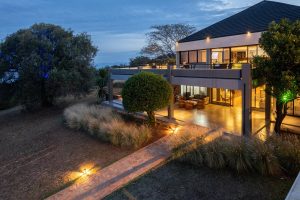
The Mantis Akagera Game Lodge is a more conventional hotel-style operation than Magashi — larger, with a pool, bar, restaurant and conference facilities, and positioned as an upscale property rather than an ultra-exclusive camp. Game drives, boat safaris on Lake Ihema and guided walks are available from the lodge. Rates run from around USD 300 to USD 600 per person per night on a full-board basis. It suits travellers who want comfortable lodge accommodation with good amenities and easy access to the southern lake circuit, or groups and families for whom the smaller camp format of Magashi is less practical.
Mid-Range Accommodation: Ruzizi Tented Lodge
Ruzizi Tented Lodge is Akagera’s best-value option for travellers who want to be inside the park without paying luxury prices. The lodge has nine canvas chalets pitched on raised wooden platforms above the shore of Lake Ihema, each with a private veranda facing the water. At dawn and dusk, hippos graze within a few metres of the chalets and elephants occasionally pass through the camp area — the kind of spontaneous wildlife encounter that makes staying inside a park fundamentally different from basing outside it.
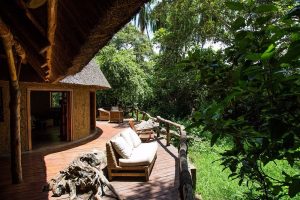
The tented chalets are comfortable rather than luxurious — proper beds, en suite bathrooms and reliable hot water, but without the private plunge pools and butler service of the top-end options. The communal dining area and bar are open-sided, looking directly over the lake, and meals are solid three-course affairs cooked fresh on site. Game drives can be arranged through the lodge, and the boat safari on Lake Ihema departs from the jetty a short walk away. Rates run from around USD 150 to USD 250 per person per night on a full-board basis, making Ruzizi the most accessible in-park option for independent and mid-range travellers.
Ruzizi is the right choice for first-time Akagera visitors who want a genuine bush camp feel at a reasonable price, for birders who want early morning access to the lakeshore habitats, and for anyone who values the spontaneous wildlife encounters of sleeping inside the park over the facilities of a larger lodge.
Budget Accommodation: Camping in Akagera
African Parks operates two public campsites inside Akagera for self-drive visitors and budget travellers: Shakwe campsite in the southern section near Lake Ihema, and Mutumba campsite in the northern zone. Both are basic but functional — designated pitches, long-drop toilets, cold bucket showers and basic cooking facilities. You need to bring your own tent, sleeping equipment, food and cooking gear. Campsites must be booked through the park booking system, and a ranger is stationed overnight at each site.
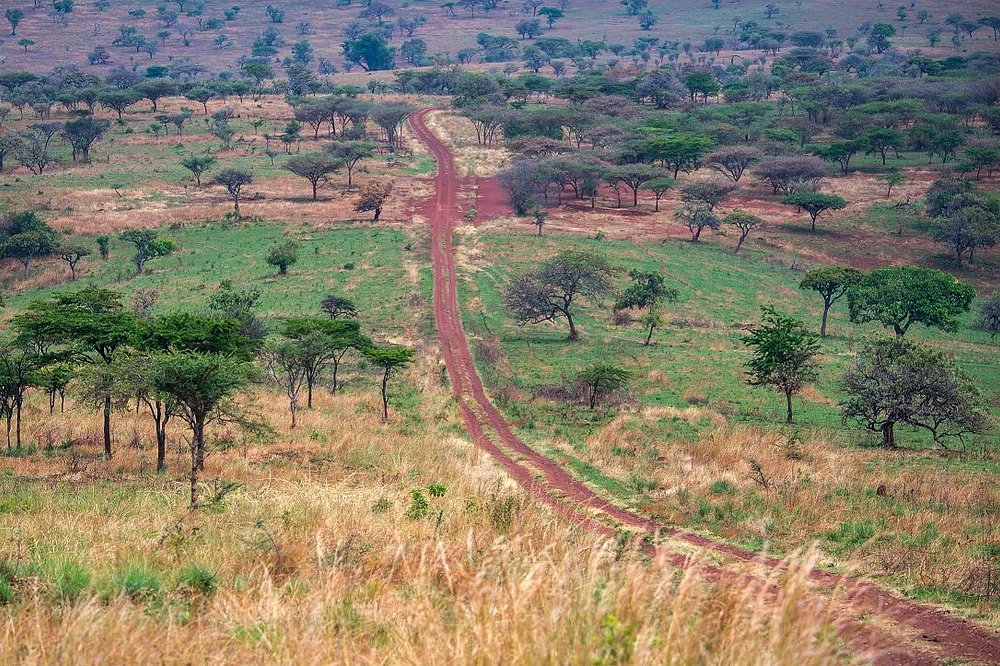
Camping rates are around USD 30 per person per night, making this the most affordable way to sleep inside Akagera. The experience is raw and rewarding — night sounds from the surrounding bush, the possibility of wildlife moving through the camp area after dark, and dawn game drives starting immediately from your pitch without the drive from an external guesthouse. Self-drive visitors with their own vehicle and camping equipment who want maximum time inside the park and minimum expenditure will find Akagera’s campsites a genuine option.
Budget Accommodation: Guesthouses in Kayonza
The town of Kayonza, around 15 kilometres from Akagera’s Gabiro entrance gate, has a small collection of guesthouses and budget hotels that cater to visitors who prefer to base outside the park. Standards vary but the best options offer clean rooms, reliable Wi-Fi and simple meals at local prices — typically USD 30 to USD 80 per room per night. The main practical trade-off is the drive: reaching the park gate takes around 20 to 30 minutes, which means an early morning game drive requires a very early start from town. Kayonza lacks the atmosphere and wildlife proximity of sleeping inside the park, but it works well for travellers passing through on a longer Rwanda itinerary or those with tight accommodation budgets.
Choosing the Right Accommodation in Akagera
The decision largely comes down to three factors: budget, the section of the park you want to explore, and whether the spontaneity of sleeping inside the park matters to you.
- For the best Big Five game viewing, including lions and black rhinos in the northern zone: Magashi Camp is the clear choice. The exclusive access and expert guiding make a material difference to what you see.
- For comfortable lodge accommodation with good amenities and access to the southern lake circuit: Mantis Akagera Game Lodge is the practical option, particularly for groups or families.
- For mid-range travellers who want to sleep inside the park with genuine bush atmosphere: Ruzizi Tented Lodge offers the best combination of value and experience.
- For self-drivers and budget travellers who want maximum time inside the park: the African Parks campsites are the most rewarding option at the lowest cost.
- For travellers simply passing through on a tight budget or longer Rwanda itinerary: Kayonza’s guesthouses provide a practical base without pretending to be anything more.
Getting to Akagera National Park
Akagera is approximately 100 kilometres east of Kigali — around two and a half hours by road. The drive passes through Kayonza and then along a good tarmac road to the Gabiro gate. For the northern zone and Magashi Camp, the Kageyo gate is accessed via a separate road and takes around three hours from Kigali. Most visitors arrive by private vehicle or with a driver; there is no scheduled public transport to the park gates. Transfers from Kigali can be arranged through any of the lodges or through a tour operator.
Combining Akagera with the Rest of Rwanda
Akagera sits naturally at the start or end of a Rwanda itinerary. Flying into Kigali, spending two nights at Akagera for game drives and a boat safari, then driving to Volcanoes National Park for gorilla trekking is one of the most efficient ways to experience Rwanda’s two very different wildlife landscapes within a week. The drive from Akagera to Volcanoes via Kigali takes around four to five hours. Akagera can also be combined with Nyungwe Forest in the south, though this requires an overnight in Kigali or Huye in transit and works better over nine or ten days.
Practical Tips
- Booking: Magashi Camp books out quickly in peak season (June–September) — reserve at least three months ahead. Ruzizi and Mantis can often be booked four to six weeks out. Campsites book through the African Parks online system.
- Park entry: USD 40 per person per day, paid separately from accommodation at luxury and mid-range properties. Some packages include park fees — confirm before booking.
- Best time: June to September (dry season) gives the best game viewing as animals concentrate around the lakes and rivers. December to February is also dry and excellent. Avoid April–May (long rains).
- What to bring: Neutral-coloured clothing, binoculars, sunscreen, insect repellent and a warm layer for early morning game drives. The eastern Rwanda savannah can be cool before sunrise.
- Visa: The East Africa Tourist Visa (USD 100, valid across Kenya, Uganda and Rwanda) is available on arrival at Kigali International Airport or online at irembo.gov.rw.
Frequently Asked Questions
Is it better to stay inside Akagera National Park or in Kayonza?
Staying inside the park is significantly better for the wildlife experience — early morning game drives start immediately, animals move through the camp areas after dark, and the dawn atmosphere at the lakeside properties is hard to replicate from outside. Kayonza guesthouses make sense only for strict budget travellers or those passing through rather than focusing on Akagera specifically.
How many nights do I need at Akagera National Park?
Two nights is the practical minimum — one full day of morning and afternoon game drives plus a boat safari on Lake Ihema. Three nights allows for a more relaxed pace, a dawn walk and a night game drive, which significantly increase your chances of seeing lions and other nocturnal wildlife. Guests at Magashi typically stay two to three nights.
Does Akagera National Park have the Big Five?
Yes — Akagera has lion, leopard, elephant, buffalo and black rhino. Lions were reintroduced in 2015 and black rhinos in 2017. The northern zone, exclusively accessible to Magashi Camp guests, holds the highest concentrations of lion and rhino. Leopards are present throughout the park but rarely seen. Elephant and buffalo are reliably encountered across both zones.
What is the difference between Magashi Camp and Ruzizi Tented Lodge?
Magashi is an ultra-luxury exclusive-use camp in the northern zone with eight suites, all-inclusive rates and the best guiding in the park. Ruzizi is a comfortable mid-range tented camp in the southern zone with nine chalets at roughly a quarter of the price. Both give you the experience of sleeping inside the park — the key difference is the level of service, the zone of the park accessed and the price.
Looking for the right accommodation in Akagera National Park? Superfine Safaris books all properties from Magashi Camp to Ruzizi Tented Lodge and arranges full Rwanda itineraries combining Akagera, Volcanoes and Nyungwe. Contact us for a tailored quote.
Plan Your Akagera Safari
- ✓ Lodge & camp bookings
- ✓ Game drives & boat safaris
- ✓ Big Five game viewing
- ✓ Night game drives
- ✓ Akagera & gorilla combos
Key Facts
| Location | Eastern Rwanda, ~2.5 hrs from Kigali |
| Luxury from | ~USD 800 pp/night (Magashi) |
| Mid-range from | ~USD 150 pp/night (Ruzizi) |
| Budget from | ~USD 30 pp/night (camping) |
| Best time | Jun–Sep & Dec–Feb |
| Park entry | USD 40 per day |
| Currency | RWF / USD accepted |
| Visa | East Africa Tourist Visa – USD 100 |