
A good Arusha city tour takes you through one of the most interesting cities in East Africa and leaves you understanding Tanzania at a depth that no game drive can reach on its own. Arusha sits at 1,400 metres in the shadow of Mount Meru, with Kilimanjaro visible on the horizon on a clear morning, and it has been the commercial and cultural heart of northern Tanzania since the colonial era. The central market, the coffee farms on Meru’s lower slopes, the Shanga craft workshop, the Cultural Heritage Centre, and the walking safari in Arusha National Park thirty kilometres from the city centre — these are the things most visitors fly straight past on their way to the Serengeti. This guide covers all of them, and explains why spending a real day in Arusha before or after the parks makes the whole trip feel more complete.
What Makes Arusha Worth More Than One Night
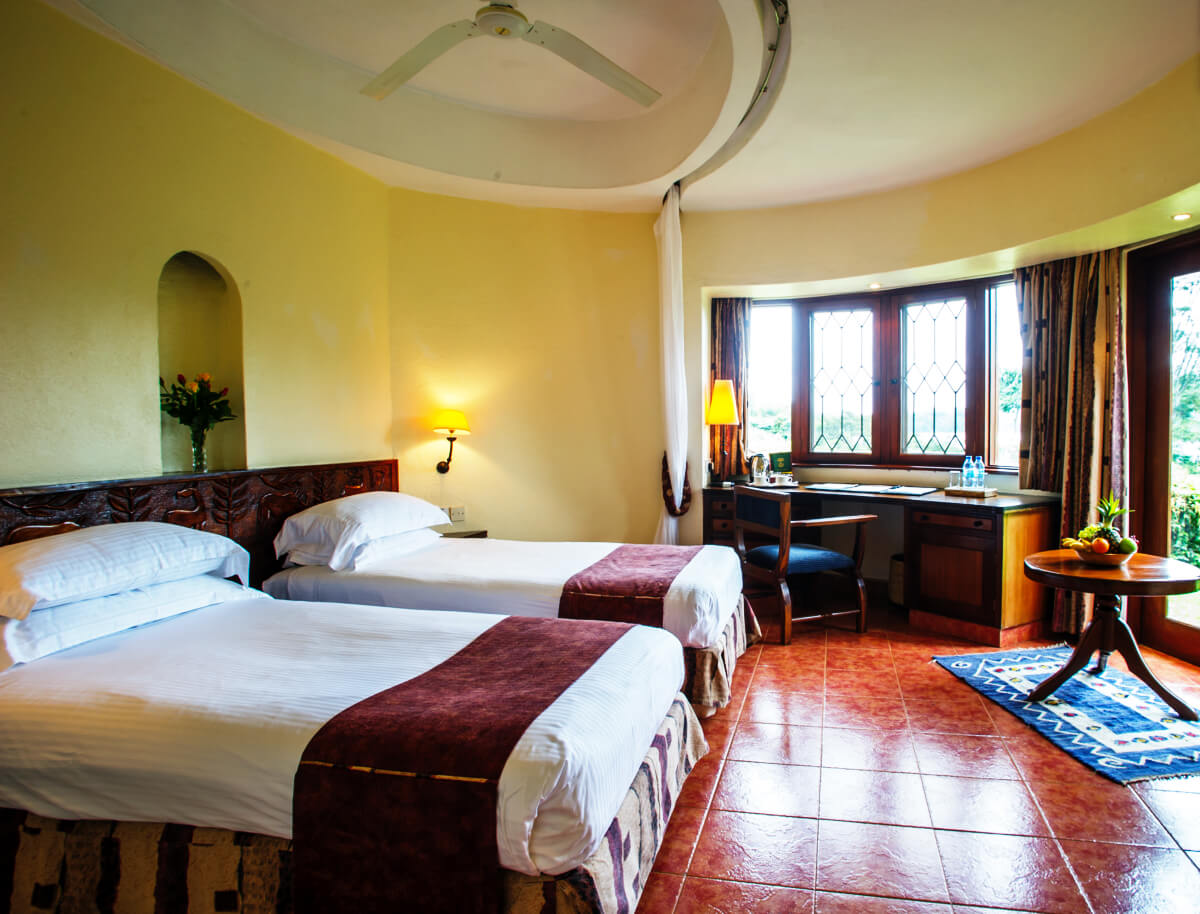
Arusha has been the gateway to East Africa’s greatest wildlife destinations for over a century, and the city has grown around that role in ways that go well beyond logistics. Every major safari operator in northern Tanzania is based here. The Arusha International Conference Centre — where the International Criminal Tribunal for Rwanda held its proceedings for over a decade — sits a block from the clock tower. Conservation organisations, research institutions and development NGOs have offices along the main avenues. The result is a city with genuine intellectual energy and cosmopolitan character: local, international and everything in between, all rubbing up against each other in the market lanes and the coffee shops and the outdoor barbecue spots that operate until late.
Most travellers give it one night. The ones who give it two or three come back with stories about it that are as good as anything from the Serengeti. The city rewards curiosity.
Walking the City: Clock Tower to the Market
The clock tower at the junction of Boma Road and Sokoine Road is where every Arusha city tour should begin. It marks the precise midpoint of the old Cape-to-Cairo road — equidistant between Cairo in the north and Cape Town in the south — a small geographic fact the city carries with understated pride. From here, India Street and Market Street run north through the commercial core: fabric sellers, tailors at pavement machines, mobile phone stalls, hardware shops, and the first of the craft traders who set up along the tourist routes between lodges and the market. Walking this stretch on a weekday morning is the fastest way to read the city’s rhythm before the tourist layer is applied.
The central market, ten minutes north on foot, is the real thing. It covers several city blocks and divides loosely by produce type: citrus from the Kilimanjaro foothills, avocado and banana from Meru’s slopes, dried legumes and grains in the inner lanes, spices — cardamom, dried chilli, cloves hauled up from the coast — filling the air with a smell you carry home in your memory. Butchers, fishmongers, secondhand clothes traders and a hardware section that appears to stock every fastener known to engineering complete the picture. The market is not tourist-facing. Prices are in shillings, the pace is set by the people who shop here every day, and the inner sections are genuinely difficult to navigate without a local guide. That is precisely what makes it worth the 90 minutes. Ask your lodge or operator to arrange a guide who knows it.
The Cultural Heritage Centre
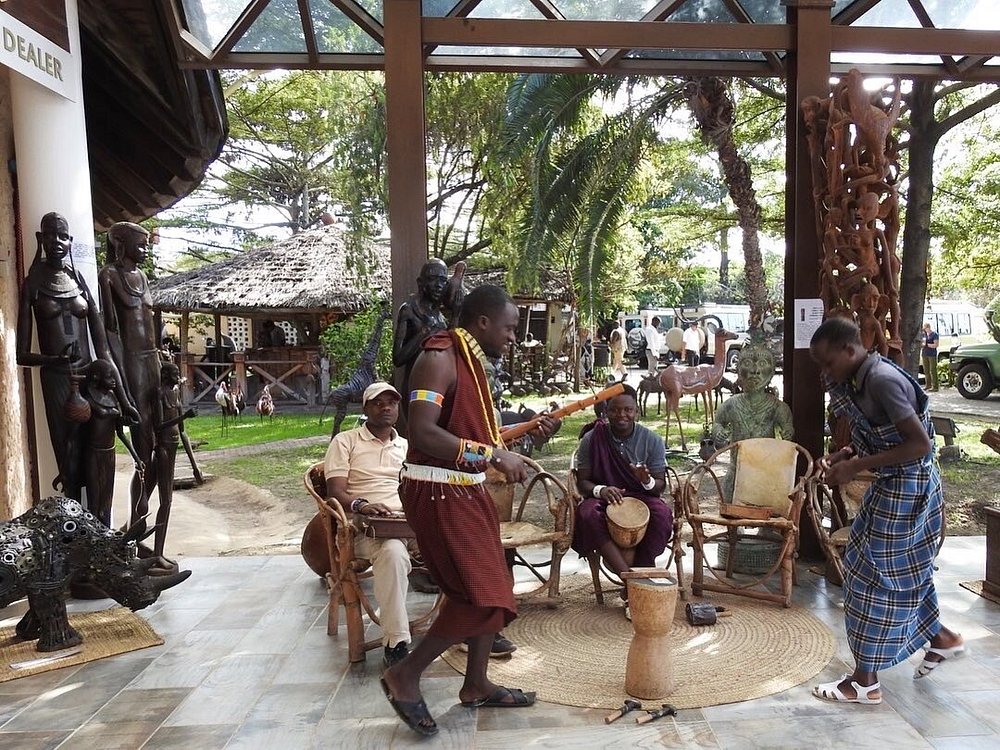
Two kilometres out along the Dodoma Road, the Cultural Heritage Centre is the best place in Arusha to engage seriously with Tanzanian art and craft. Two floors of gallery and retail space, plus an outdoor sculpture garden, hold a range of work that is consistently well above the quality of street-side curio stalls. The gallery carries contemporary Tanzanian painting alongside a strong Tingatinga collection — the bold, flat-coloured style that originated in Dar es Salaam in the 1960s and became one of the country’s most recognisable artistic exports. The craft section covers Maasai beadwork, Makonde wood carvings, Kanga fabrics, soapstone objects and recycled glass pieces. Prices are fixed. You pay more here than at the roadside and you take home something that will still look good in ten years.
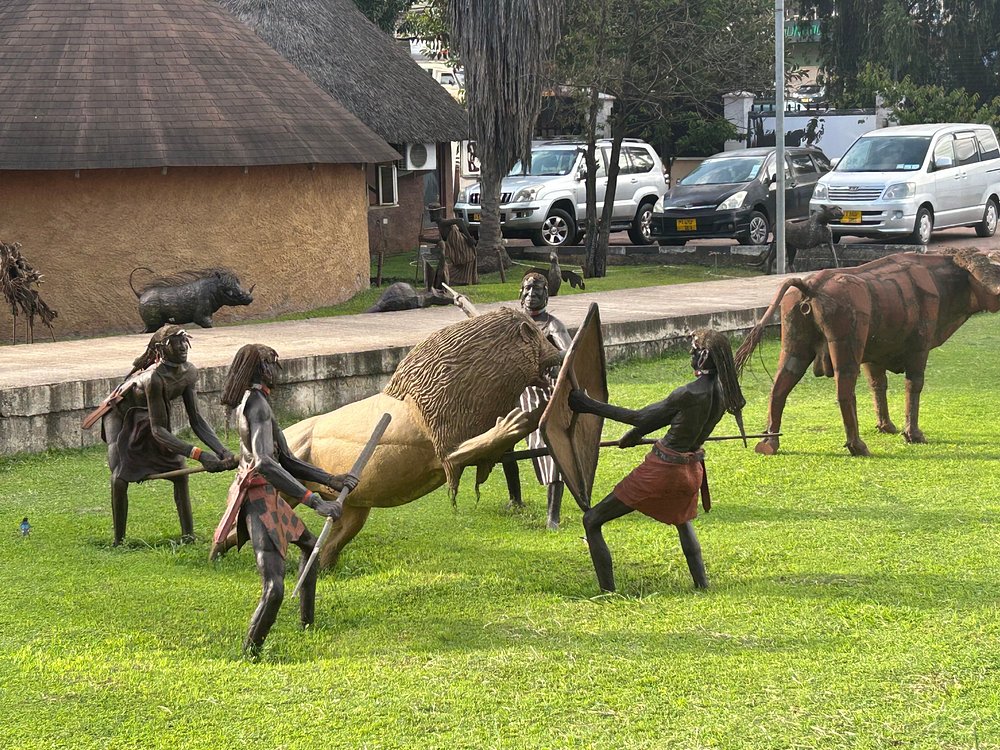
The outdoor sculpture garden alone is worth the visit — large-scale bronze and iron works depicting traditional hunting scenes, human figures and animals, arranged across a green lawn that gives you a sense of how Tanzanian sculpture operates at its most ambitious. The restaurant and coffee shop on the premises make it a natural late-morning stop, particularly on the day before departure when consolidating shopping into one place saves time.
Shanga River House
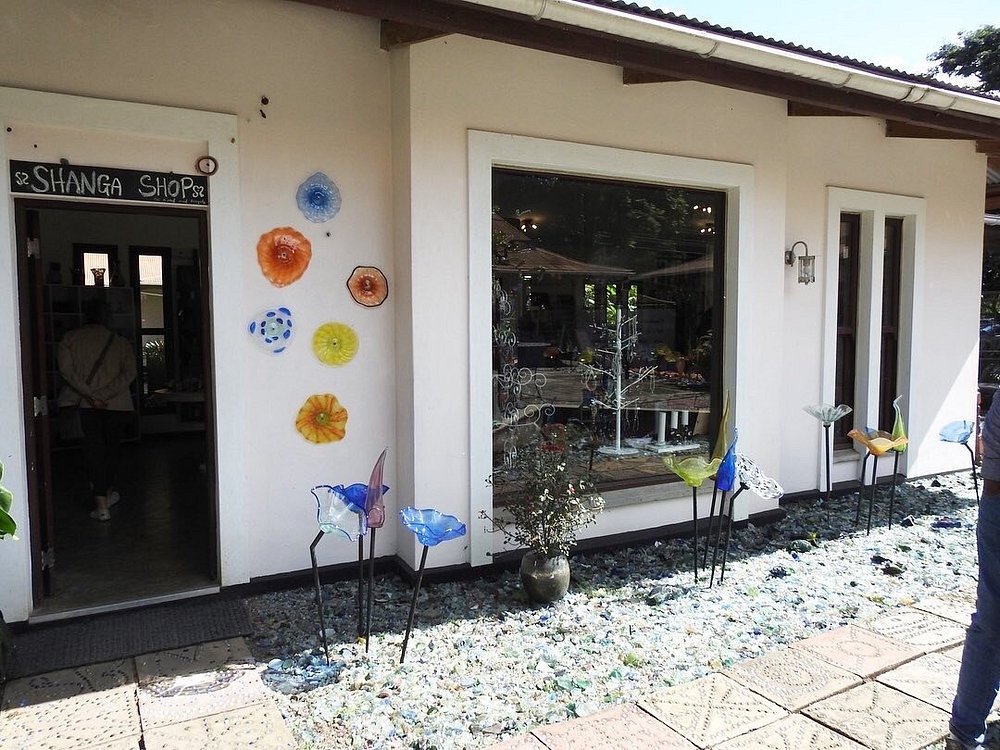
Shanga is one of the most quietly remarkable places in Arusha — and one of the least known to passing visitors. It is a social enterprise craft workshop that employs artisans with physical and sensory disabilities, producing glass, paper and textile goods entirely from recycled materials: glass beads and vessels blown from reclaimed bottles, paper sheet-cast from elephant dung and office waste, fabric woven on traditional looms from repurposed thread. It operates as a commercial enterprise rather than a charity, and the quality of the finished goods reflects that distinction clearly.
The visit runs as a guided tour through each production area. You watch the full glass-blowing process, see paper being made from raw pulp, observe weaving in progress. The artisans are skilled and plainly proud of the work. The shop sells the finished pieces at fixed prices. For travellers who care about what they bring home — who it was made by, how, and whether the purchase means something — Shanga is the answer Arusha has to that question. It is not on most visitors’ radar. It should be.
Coffee Farms on Mount Meru’s Slopes
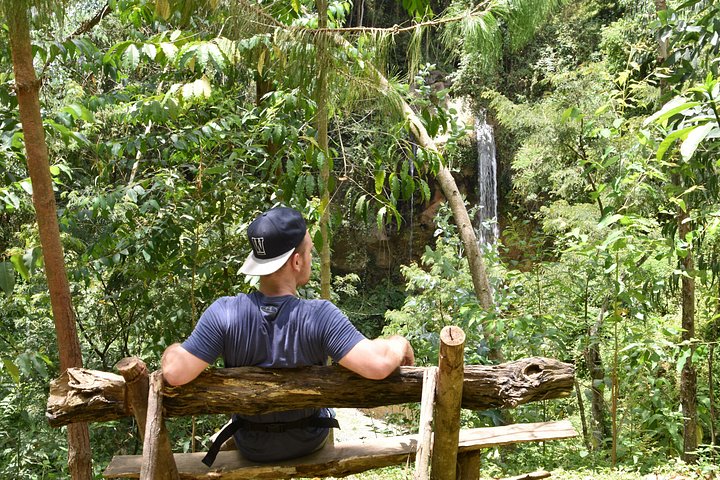
The belt of farms running east from Arusha through Tengeru and Usa River produces Arabica coffee that ends up in the speciality roasters of London and Amsterdam without most customers knowing where it came from. The altitude, volcanic soil and reliable rainfall between 1,400 and 2,000 metres create conditions that coffee agronomists describe as near-ideal. The farms have been here since the colonial period and are today a mix of smallholder cooperatives and larger estates, all growing under the shade of native trees that give the coffee its distinctive layered flavour.
A farm visit — half a day, best done in the morning — takes you into that story directly. You walk the rows during harvest season, watch the hand-picking and sorting, see the pulping tanks and fermentation channels, observe the drying beds spread with red cherry in the sun, and end at a cupping table where the differences between processing methods become tangible rather than theoretical. For anyone who drinks coffee with any attention, this is one of the best things available in Arusha. For anyone who does not, it is still a beautiful walk through a working highland farm with the mountain above you and views back toward the city. Most Arusha lodges can arrange the visit; the farms around Tengeru and Usa River, twenty to thirty minutes by road, are the most organised for visitor tours.
Arusha National Park: Walking Safari on the City’s Doorstep
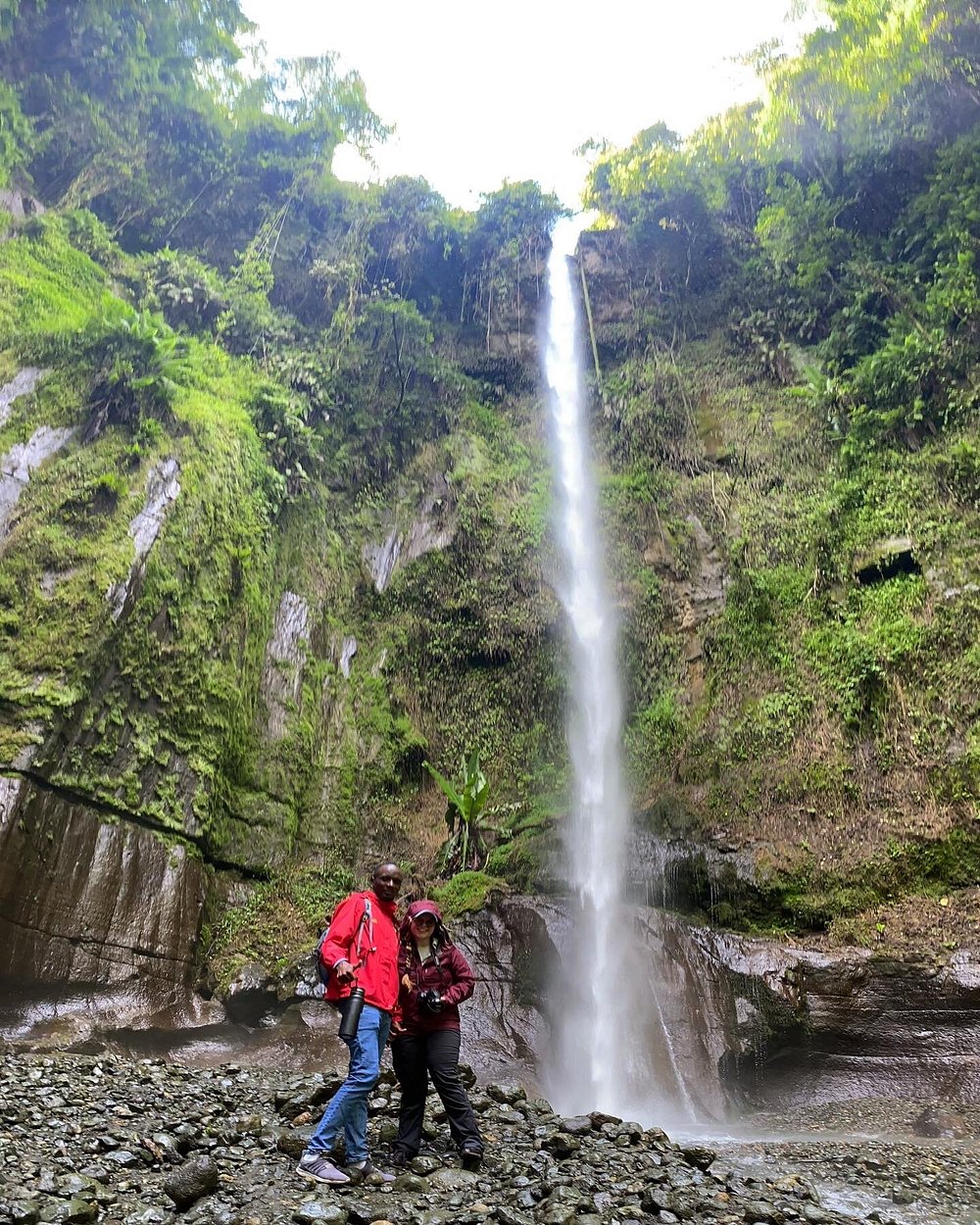
Thirty kilometres from the city centre and yet entirely wild, Arusha National Park is the most underrated park in Tanzania’s northern circuit — and the only one where you can leave the vehicle. Guided walking safaris are offered here, and they are not available in the Serengeti, Ngorongoro or Tarangire. That distinction matters: moving through forest on foot with a ranger, reading tracks at ground level, approaching giraffe quietly, understanding the landscape through your legs rather than through a window — it is a fundamentally different experience from a game drive, and for many travellers it is the moment the safari clicks into something more personal.
The park itself covers three distinct zones. The Momella Lakes in the east are alkaline, flamingo-visited and fringed with waterbuck and buffalo. The montane forest on Mount Meru’s lower slopes holds black-and-white colobus monkey in the canopy, elephant on the forest trails and a quiet that is hard to find anywhere near a city of this size. Ngurdoto Crater — a collapsed volcanic caldera in the south of the park, known locally as Little Ngorongoro — cannot be entered but can be viewed from a series of rim points that look down into a private, undisturbed wildlife basin below. The circuit connecting these zones makes a full day. A half-day covers the lakes or the forest walk, and either works as a morning excursion before an afternoon overland departure. Entry costs USD 45 per person per day.
Mount Meru
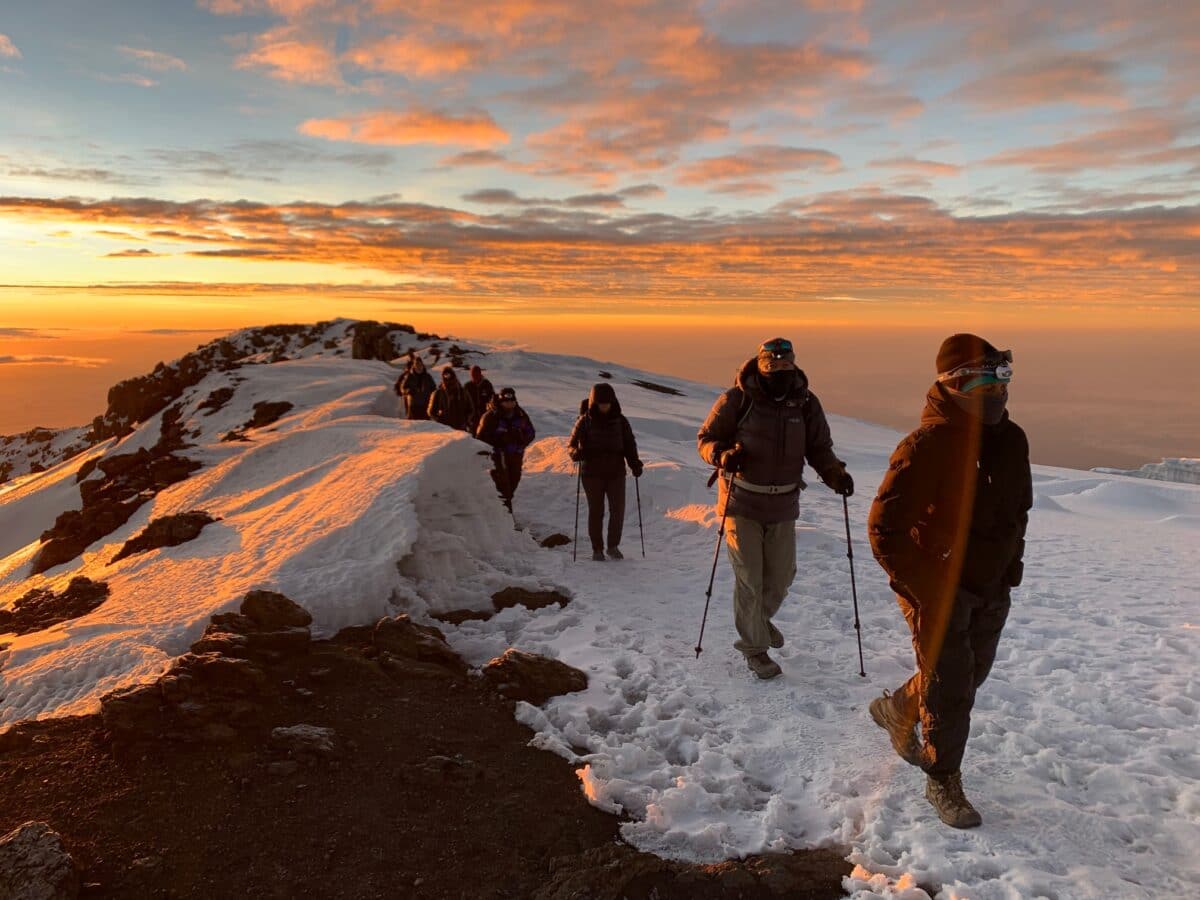
Tanzania’s second-highest mountain sits directly above Arusha National Park, and at 4,566 metres it is the fourth-highest peak in Africa. Mount Meru is almost always described in relation to Kilimanjaro — “the other mountain,” the acclimatisation climb before the big one — but that framing understates it. The summit route passes through forest thick with elephant and buffalo, involves a genuinely technical knife-edge ridge approach to the crater rim, and delivers sunrise views of Kilimanjaro floating above the clouds that most climbers who have done both mountains describe as the more affecting sight. It is also far less crowded than Kilimanjaro, the trails are in better condition, and the three-to-four-day ascent is, mile for mile, a richer wilderness experience.
For travellers with less time, the lower trails on Meru’s slopes within Arusha National Park offer a genuine taste of the mountain as part of a city tour day. An armed ranger accompanies all groups on these trails — mandatory, not optional, because elephant and buffalo are regularly encountered at this altitude. The lower forest walk takes two to three hours return and leaves from the Momella Gate, forty minutes by road from Arusha.
Day Trips to the Northern Circuit Parks
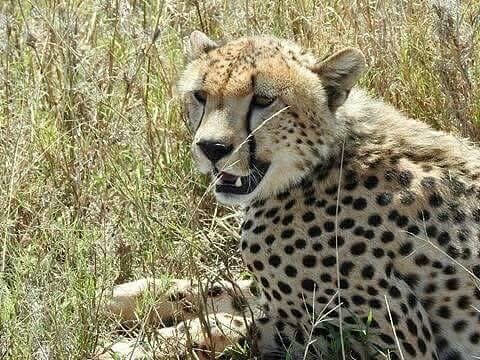
Arusha is the departure point for all of Tanzania’s major northern circuit destinations. Most travellers build multi-day itineraries to each park, but understanding the distances helps with planning how much city time to include.
Lake Manyara National Park is 126 kilometres south — ninety minutes by road — and works as a day trip for those with limited time. The park runs along the base of the Rift Valley escarpment, with dense groundwater forest giving way to open floodplain and the alkaline lake shore. It is best known for its tree-climbing lions — a behaviour documented here since the 1960s and still reliably observed today. Tarangire, two hours south, is the park most commonly underestimated by first-time Tanzania visitors. In the dry season, between June and October, its single permanent river draws elephant in concentrations that rival anything in East Africa: hundreds moving through ancient baobab woodland, dust rising in the late afternoon light. It deserves two nights minimum.

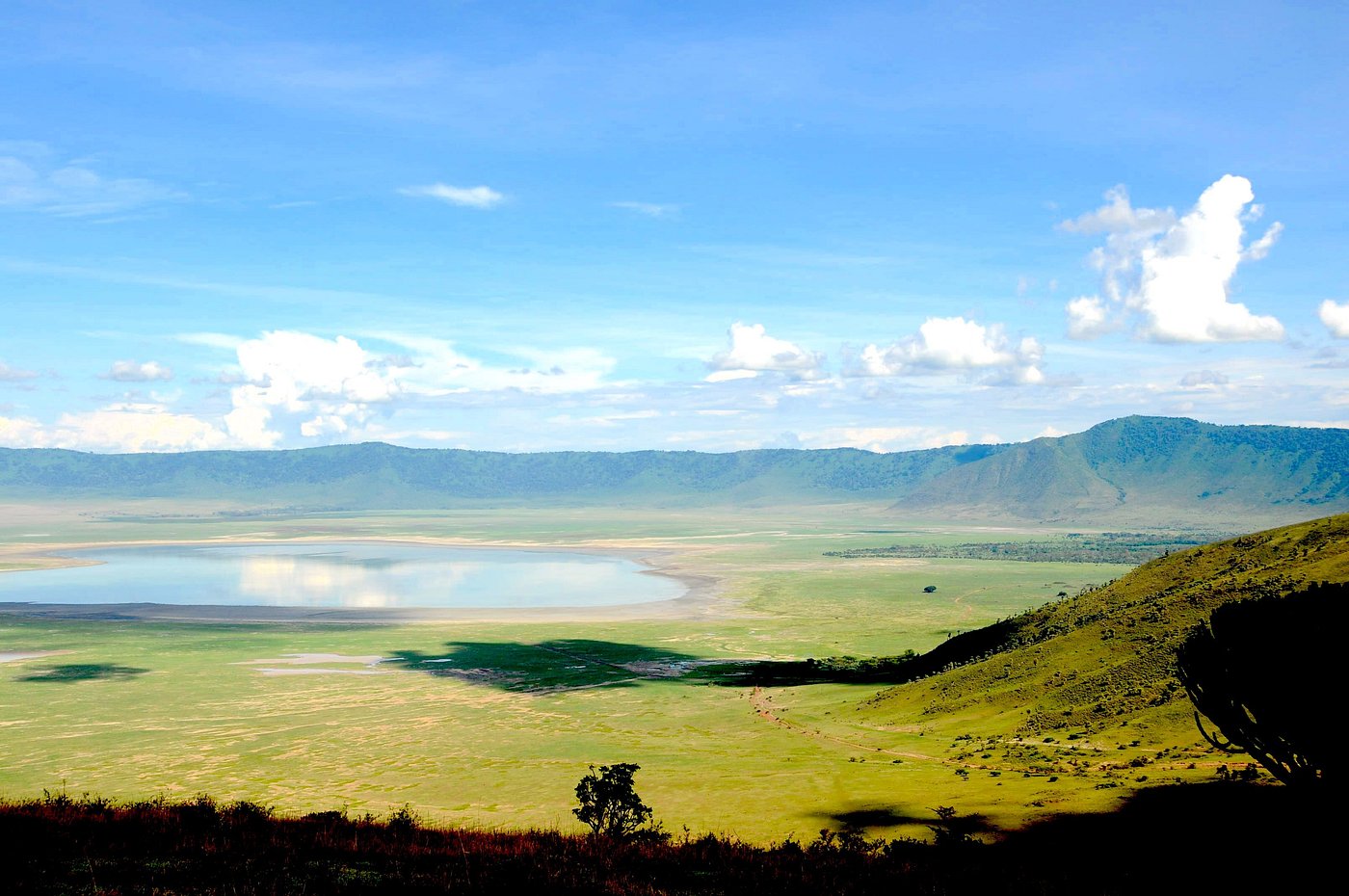
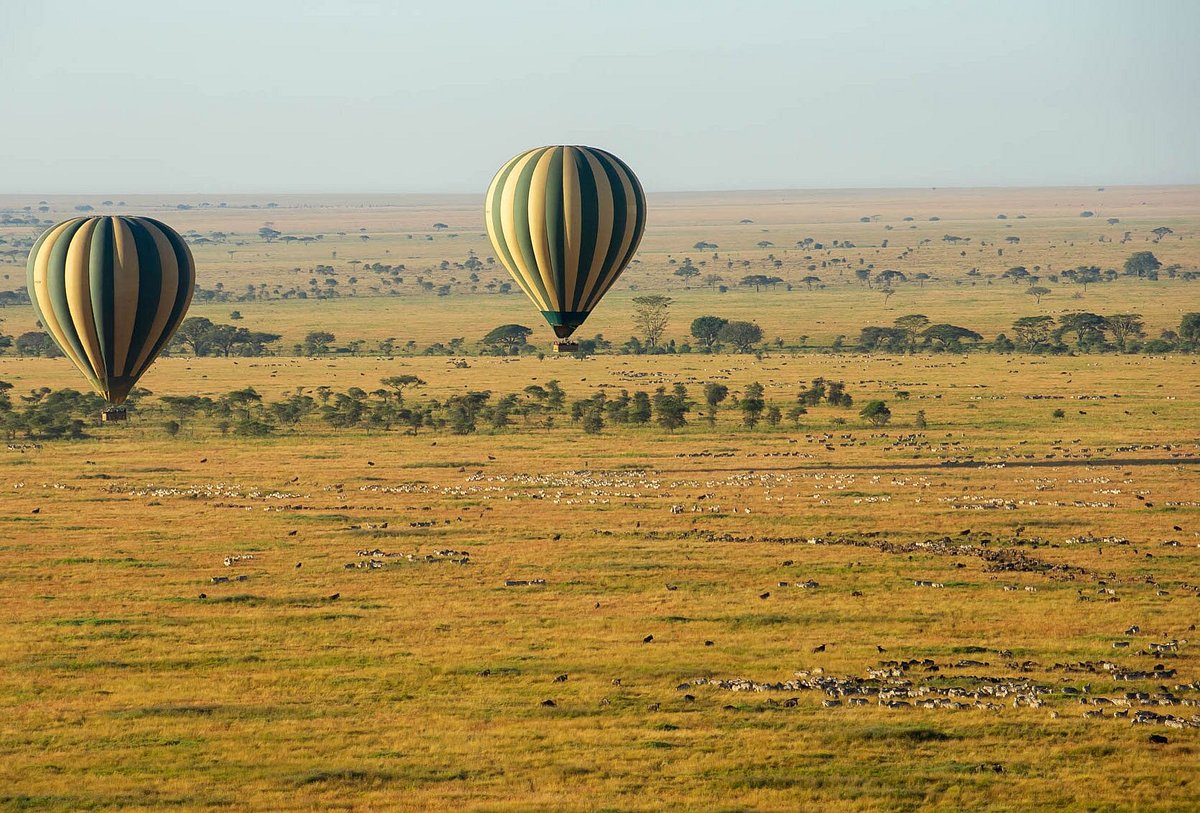
Ngorongoro Crater is three hours from Arusha along a road that climbs steadily through highland farmland before entering the Conservation Area and emerging above the clouds on the crater rim. The descent into the crater at dawn — arriving to morning mist burning off the floor 600 metres below, wildlife visible in every direction — is one of those experiences that is difficult to describe to someone who has not had it. One night on the rim is the minimum; two nights means two descents, and the crater changes completely between a morning drive and an afternoon one. The Serengeti, seven to eight hours overland or forty-five minutes by light aircraft from Arusha Airport, requires at least two nights and ideally three to four.
Where to Eat in Arusha
Arusha eats better than most visitors expect. The food scene has been shaped by decades of international visitors passing through, and several genuinely good options exist across every price point.
Khan’s Barbecue on Mosque Street near the market is the honest answer to where to eat in Arusha if you only go once. Outdoor tables, charcoal-grilled nyama choma — goat and beef roasted over open fire — cold Kilimanjaro beer and a clientele that is almost entirely local. It is inexpensive, it is delicious, and it is the version of Arusha that most tourists completely miss. Go hungry and go early, because the best cuts go fast.
Blue Heron on the Old Moshi Road is the consistently recommended option for a proper sit-down meal — grilled fish, Tanzanian stews, reliable service and a room that mixes safari travellers with local professionals in proportions that keep it from feeling like a tourist trap. Arusha Coffee Lodge is worth visiting for a meal even if you are not staying there: the coffee is grown on the property and roasted on site, and the food — built on local produce with evident technique — is among the best in the city. Via Via near the Natural History Museum has been a traveller’s refuge for years: good breakfasts, cold drinks, an outdoor terrace and occasional live music. It is the kind of place you find yourself returning to on the last afternoon before the airport, simply because nothing else feels as comfortable.
Where to Stay in Arusha
The lodging options in Arusha span a wider range than most northern Tanzania cities, and the mid-range tier in particular is genuinely strong. Arusha Coffee Lodge, ten minutes from the city on a working coffee estate, has garden cottages, farm-to-table food and a setting that makes the stay feel like a destination in itself rather than a logistics stop. Rivertrees Country Inn on the Usa River combines a garden property with easy access to the coffee farm belt east of the city. Both are mid-range in price and well above mid-range in quality.
At the luxury end, Arusha Serena Hotel is the established landmark: 90 acres of grounds, colonial architecture, consistently good food and a track record built over decades. Ngare Sero Mountain Lodge, closer to Arusha National Park, occupies a private estate with a lake, walking trails and accommodation in restored colonial cottages — quieter and more intimate than the Serena, and worth the twenty-minute drive from the city centre for travellers who want a genuinely restorative last night before a long flight home.
For budget travellers, the Kijenge and Sakina neighbourhoods offer clean, well-positioned guesthouses in the USD 30–80 range. Practical, not atmospheric — right for a single-night transit before an early park departure.
When to Go and What to Expect
Arusha’s altitude keeps temperatures pleasant year-round. Days rarely exceed 28°C; nights rarely drop below 10°C. The city itself does not have a bad season. The long rains from March to May, heaviest in April, bring afternoon downpours that interrupt outdoor time but turn the slopes of Meru brilliantly green and reduce visitor numbers enough that the city feels quieter and more local. June to October is the long dry season — clearest skies, best Kilimanjaro visibility on the horizon, and the peak game-viewing period across all the northern circuit parks. January and February bring a shorter dry period that coincides with the Serengeti calving season and some of the best park rates of the year.
Time the city around the parks: for most travellers, one or two nights in Arusha before the safari and one night after works better than combining everything at the end when fatigue makes the city harder to engage with properly.
Getting Around
The clock tower area and the market are walkable. For anything beyond the city centre — the Cultural Heritage Centre, Shanga, the coffee farms, Arusha National Park — a hired driver arranged through your lodge is the most efficient option for a full city tour day, typically USD 50–80 including fuel. Agree the itinerary in advance and you can cover the market, Shanga, the Cultural Heritage Centre and a coffee farm visit in a single well-organised day. Taxis work for individual journeys: agree the fare before you get in. Boda-boda motorcycle taxis are ubiquitous and cheaper, but carry genuine risk on roads that mix high traffic volume with unpredictable driving. Not recommended with luggage, after dark, or at all if there is a reasonable alternative.
Frequently Asked Questions
How long does an Arusha city tour take?
Half a day covers the market, clock tower area and either the Cultural Heritage Centre or Shanga. A full day covers all four — market, Cultural Heritage Centre, Shanga and a coffee farm visit — with time for a proper lunch. Two days allows you to add Arusha National Park, which deserves its own half-day or full day rather than being squeezed into a city tour schedule. Most itineraries can accommodate a full city tour day either the morning after arrival from Kilimanjaro Airport or the final day before departure.
Is Arusha National Park worth visiting before the main northern circuit?
Yes, and particularly for the walking safari. If your main circuit covers the Serengeti, Ngorongoro and Tarangire — all vehicle-only parks — a morning walk in Arusha National Park before departure gives you a quality of wildlife engagement that the drive-based parks cannot replicate. It also recalibrates your attention for the game drives ahead: you arrive at the Serengeti more observant than you would have been coming straight from an airport.
What is the distance from Arusha to Kilimanjaro Airport?
46 kilometres, around 45 minutes by road in normal traffic. Allow 60–75 minutes during school run hours (7–8 a.m. and 4–5 p.m.). Arusha Airport, for domestic bush flights to the Serengeti airstrips, is within the city itself — ten to twenty minutes from any central lodge.
Do I need a guide for an Arusha city tour?
The Cultural Heritage Centre and Shanga are straightforward independently. The central market is significantly better with a guide who knows the inner sections and can translate. Arusha National Park requires a ranger (provided by the park authority) and benefits from a guide who knows the walking trails. A full-day city tour arranged through Superfine Safaris covers all logistics, removes the need to negotiate separate taxis, and ensures the market visit goes beyond the outer stalls where most solo visitors stop.
Adding an Arusha city tour to your Tanzania itinerary?
Superfine Safaris arranges city tours, Arusha National Park day trips, coffee farm visits and the full northern circuit — Serengeti, Ngorongoro, Tarangire — from Kilimanjaro Airport arrival to departure. Contact us for a tailored quote or WhatsApp our team to talk through your dates.
Plan Your Tanzania Safari
- ✓ Arusha city tours & day trips
- ✓ Serengeti, Ngorongoro & Tarangire
- ✓ Kilimanjaro & Mount Meru climbs
- ✓ Zanzibar beach extensions
- ✓ Transparent all-in pricing
Arusha at a Glance
| Location | Northern Tanzania |
| Altitude | 1,400 m above sea level |
| Nearest airport | Kilimanjaro (JRO) — 46 km |
| Best months | Jun–Oct & Jan–Feb |
| Currency | Tanzanian Shilling (TZS) |
| To Ngorongoro | 3 hrs by road |
| To Serengeti | 8 hrs drive or 1 hr flight |