
Nyungwe Forest National Park is Rwanda’s oldest and largest montane rainforest — a vast, mist-draped highland wilderness in the country’s southwest that holds more primate species than any other forest in Rwanda and more Albertine Rift endemic birds than almost anywhere else on the continent. For travellers who have visited Volcanoes National Park for gorillas, Nyungwe Forest offers something entirely different: a denser, wilder, less visited forest experience where the wildlife encounters feel genuinely unscripted and the landscape itself is as compelling as any individual sighting.
Why Nyungwe Forest National Park Stands Apart
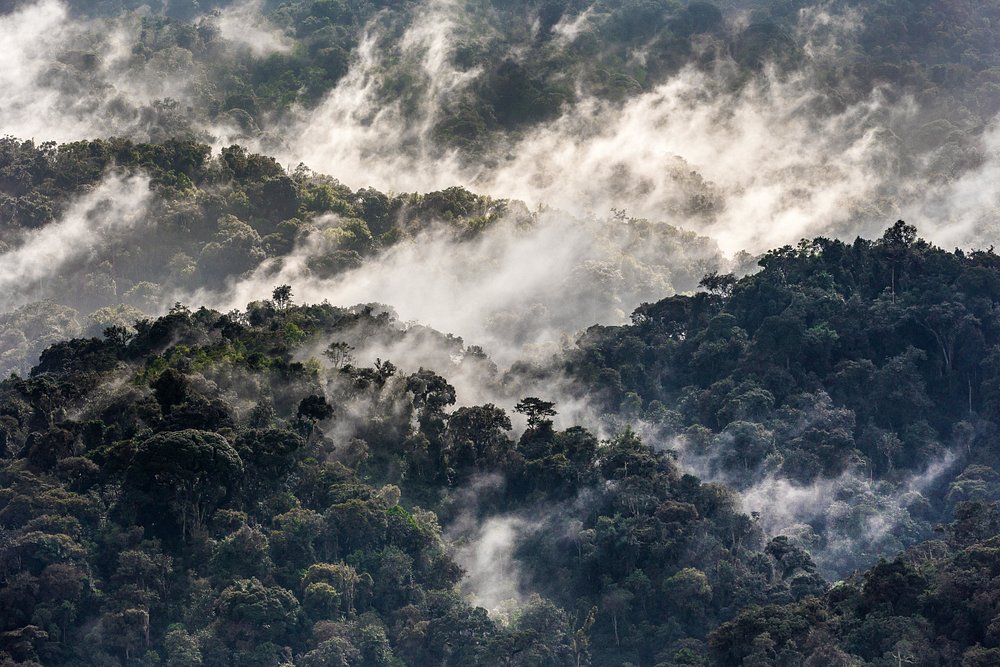
Nyungwe covers 1,019 square kilometres of continuous montane rainforest and bamboo zone, rising from around 1,600 metres near the tea estates at its edges to nearly 2,950 metres at its highest ridges. It is one of the largest montane rainforests in Central or East Africa and one of the oldest — the forest has remained largely intact through the ice ages, giving it an exceptional depth of biodiversity. The species lists reflect this: 13 primate species, over 320 bird species including 29 Albertine Rift endemics, more than 1,000 plant species, 85 mammal species and over 120 butterfly species recorded within its boundaries.

What distinguishes a visit to Nyungwe from many East African wildlife experiences is the combination of accessibility and authenticity. The park is well managed by the Rwanda Development Board, trails and facilities are maintained to a high standard, and yet the forest itself is large enough that you can walk for hours without seeing another visitor. The main activities — chimpanzee trekking, Ruwenzori colobus trekking and the canopy walkway — are reliably excellent, and the park rewards visitors who spend two or three days rather than passing through in an afternoon.
Chimpanzee Trekking in Nyungwe
Chimpanzee trekking is Nyungwe’s flagship activity and the main reason most first-time visitors make the journey to southwestern Rwanda. The park holds one of Rwanda’s largest chimpanzee communities — a fully habituated group of around 70 individuals, tracked by RDB rangers each morning. Permits cost USD 150 per person. Group sizes are capped at six trekkers per session to minimise disturbance to the animals, with morning sessions departing at around 7:30 am from Uwinka visitor centre.

Chimpanzees in Nyungwe are territorial and wide-ranging — they cover large distances in a day and spend time on the ground as well as high in the forest canopy. Trek duration varies accordingly, from as little as an hour when the group is close to the trailhead to five or six hours when they have moved deep into the forest. When you locate the community, encounters are extended and often intense: chimps feeding, grooming, playing and occasionally engaging in the loud, dramatic whooping calls that echo through the forest. The intelligence and expressiveness of chimpanzees at close range makes for one of the most affecting wildlife experiences available in Africa.
Ruwenzori Colobus Monkey Trekking
Nyungwe holds one of the largest troops of Ruwenzori colobus monkeys in Africa — the main Gisakura troop has been counted at over 400 individuals. These striking black-and-white monkeys live almost entirely in the canopy and move through the forest in large, fluid groups that can take a considerable time to pass. Colobus permits cost USD 100 per person and follow the same structure as chimpanzee trekking, with ranger-led sessions departing from Uwinka.
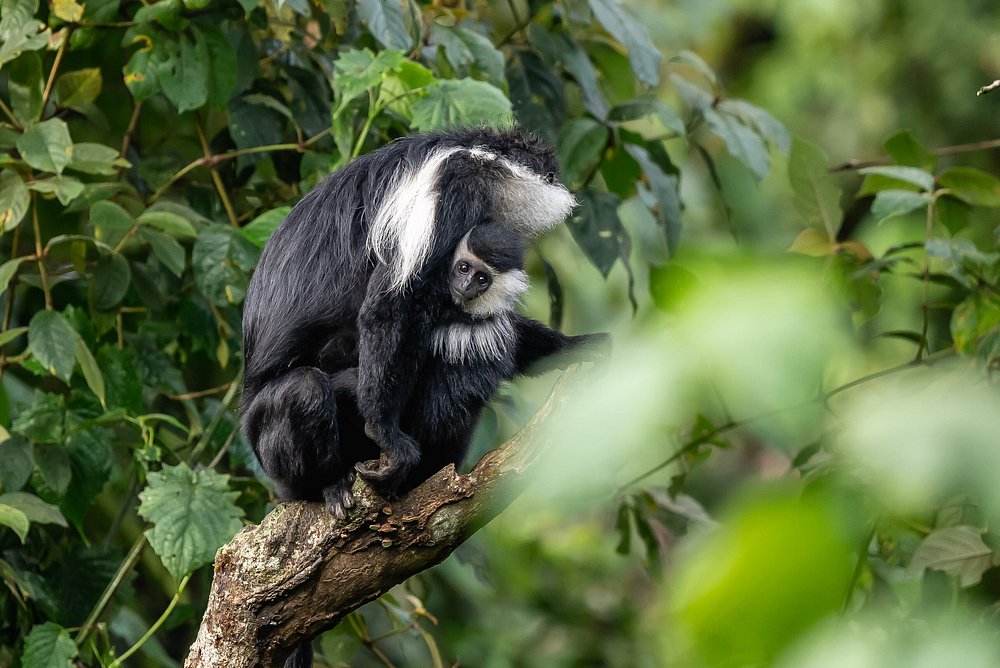
The colobus trek is a different experience from chimpanzee trekking in almost every way — less intense and unpredictable, more expansive and aerial. Where a chimp encounter is defined by the animals’ ground-level presence and behavioural complexity, the colobus troop in the canopy is a spectacle of scale and colour. Many visitors who do both find them equally rewarding for entirely different reasons, and two days in Nyungwe combining one of each is one of the best primate itineraries available in Rwanda.
The Canopy Walkway
Nyungwe’s 160-metre suspension canopy walkway spans a valley at the height of the forest canopy and is one of the most distinctive experiences in Rwanda. It is accessed on the Igishigishi trail from Uwinka and is often combined with colobus trekking into a half-day visit. The walkway sways noticeably underfoot and the drop to the valley floor is real — it is not recommended for those with a serious fear of heights — but for everyone else it provides a perspective on the forest that ground-level trekking cannot offer.
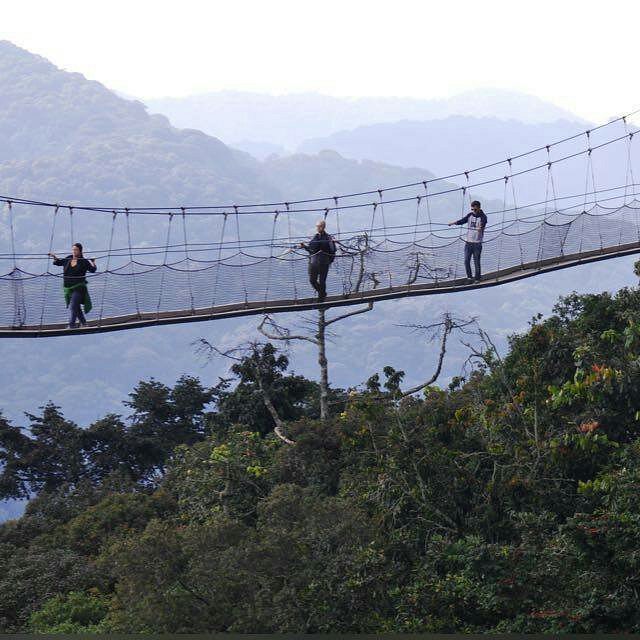
Walking the canopy walkway at dawn is the most rewarding timing. The forest is alive with bird calls before the mist lifts, colobus troops frequently pass close to the bridge level, and the views across unbroken montane forest to the ridgelines beyond give a genuine sense of Nyungwe’s scale. A canopy walkway visit can be combined with the Igishigishi trail loop, one of the park’s most accessible routes, making a full morning activity without requiring a primate trek permit.
Hiking Trails in Nyungwe Forest
Nyungwe has over 130 kilometres of maintained hiking trails, covering terrain from relatively gentle ridge walks to steep, demanding descents into the forest interior. The trail network is one of the most extensive in any East African national park and rewards visitors who want to explore the forest on foot beyond the structure of a managed primate trek.
Key trails include the Igishigishi trail (3.2 km loop from Uwinka, includes the canopy walkway), the Isumo Waterfall trail (leading to a 30-metre waterfall deep in the forest interior, around 4 hours return), the Bigugu trail (ascending to the park’s highest point at 2,950 metres, a full day’s hike with outstanding views), and the Kamiranzovu wetland trail, which passes through a high-altitude swamp that is among the best habitats for some of the park’s rarest bird species. All trails are walked with a ranger-guide; fees are included in the park entry.
Birding in Nyungwe Forest
Nyungwe Forest National Park is one of the premier birding destinations in Africa. Over 320 species have been recorded, of which 29 are Albertine Rift endemics — species found only in the highland forests running from Uganda’s Rwenzori Mountains south through Rwanda, Burundi and the eastern DRC. For serious birders, Nyungwe is among the most important sites on the continent.
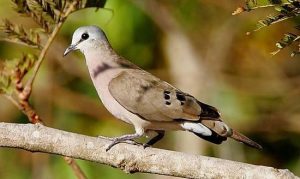
Target species include the Rwenzori turaco (large, green and red, conspicuous in the canopy), the African green broadbill (one of Africa’s rarest birds, found here reliably), the red-collared mountain babbler, Grauer’s rush warbler, Stripe-breasted flufftail, Congo bay owl and the Albertine owlet. The Kamiranzovu swamp trail is especially productive for marsh specialists, and the Bigugu trail gives access to higher-altitude species not found in the lower forest zones. Dawn walks along any of the main trails are productive; a dedicated birding guide with knowledge of the park’s specific zones significantly improves species tallies.

Other Wildlife in Nyungwe
Beyond primates and birds, Nyungwe supports a range of other wildlife that is encountered less predictably but adds to the forest’s depth. African elephants pass through the park on occasion, though sightings are rare and the population is small. Leopards are present but almost never seen. More regularly encountered are bushbuck, duikers and giant forest hogs along the trails, and the occasional mongoose or African civet crossing a forest path. The park’s otter population is present along the Mwogera river and very occasionally seen on early morning walks near water.
Of the thirteen primate species, the most reliably encountered alongside the habituated colobus and chimpanzee groups are L’Hoest’s monkey — dark-coated with a distinctive white beard, often seen close to the trails and less shy than most forest primates — and the olive baboon, which forages at the forest edge. Blue monkeys, grey-cheeked mangabeys and the small, nocturnal bushbaby are also present, though the latter is only encountered on night walks.
Best Time to Visit Nyungwe Forest
The dry seasons — June to September and December to February — are the most comfortable times to visit Nyungwe Forest National Park. Trails are firmer, forest visibility is better and mornings are more often clear. All primate activities run year-round, but the wet season (March to May and October to November) brings consistently heavy afternoon rain, muddy and slippery trail conditions and reduced visibility that makes trekking considerably harder work.
June and July coincide with the peak birth period for the Ruwenzori colobus — white-coated infants are particularly visible during these months and family group observations are especially rewarding. For birding, the wet season months actually produce higher bird activity and some migratory species are present only during this period, making October to November productive for specialists willing to accept the trail conditions.
Getting to Nyungwe Forest National Park
Nyungwe Forest is approximately 225 kilometres southwest of Kigali. The drive takes around four to five hours on tarmac via the RN1 highway through Huye (Butare). The road is in good condition throughout and passes through some of Rwanda’s most dramatic highland scenery, including the tea estate landscapes around Gisakura at the park’s eastern edge.
Most visitors combine Nyungwe with a stop at Lake Kivu — the lake lies immediately west of the park and the lakeshore towns of Kibuye (Karongi) or Rusizi (Cyangugu) are natural overnight bases either side of the forest. There is no scheduled air service directly to Nyungwe; the nearest airstrip is at Kamembe near Rusizi, served by occasional charter flights. For most itineraries, a private vehicle with driver provides the most flexibility, particularly for early morning trek departures.
Where to Stay Near Nyungwe Forest
One&Only Nyungwe House is the park’s flagship property — a high-end lodge set among working tea plantations at the forest edge, with guided forest experiences included in the stay and one of the most dramatic settings of any lodge in Rwanda. For the mid-range market, Gisakura Guest House, operated by the RDB and located within walking distance of the Uwinka trailhead, is the most practically convenient option for early morning primate treks. Nyungwe Top View Hill Hotel in Gisakura is a solid mid-range alternative with views across the forest canopy. Budget travellers often base themselves in Huye (Butare), around 60 kilometres east, though the two-hour return transfer each day reduces the time available for forest activities.
Combining Nyungwe with the Rwanda Primate Circuit
Nyungwe Forest National Park sits naturally within Rwanda’s primate circuit alongside Volcanoes National Park in the north. A standard circuit spends two nights at Nyungwe for chimpanzee and colobus trekking, then drives through Kigali to Volcanoes for two nights of gorilla and golden monkey trekking — four distinct primate encounters across four days of trekking, all within one small country. Many itineraries add a night on Lake Kivu between Nyungwe and Kigali, and Kigali’s Genocide Memorial and craft market make a natural half-day stop in transit.
Practical Tips for Nyungwe Forest National Park
- Permits: Book chimpanzee (USD 150) and colobus (USD 100) permits through the Rwanda Development Board (rdb.rw) or a licensed tour operator. Book at least two to three weeks ahead in peak season (June–September).
- What to wear: Long trousers, long sleeves, waterproof jacket and proper hiking boots. Dark or neutral colours for primate treks. Garden gloves protect hands on steep sections. Mornings are cold at altitude — bring a warm layer.
- Fitness: Trails are steep and the altitude real. A moderate level of fitness is needed for most activities. The canopy walkway is accessible to most visitors; the Bigugu summit trail requires a full day’s hiking fitness.
- Photography: A wide-angle lens captures the colobus spectacle best. A camera with good high-ISO performance handles the low light under the forest canopy. For birds, a 400mm+ telephoto is useful.
- Visa: Most nationalities obtain the East Africa Tourist Visa (USD 100, valid across Kenya, Uganda and Rwanda) on arrival at Kigali International Airport or online at irembo.gov.rw.
- Health: Malaria prophylaxis is recommended. Temperatures drop sharply at night — pack warmer clothing than you would expect for Rwanda.
Frequently Asked Questions
How many days should I spend in Nyungwe Forest National Park?
Two full days is the minimum that does the park justice — one for chimpanzee trekking, one for colobus trekking and the canopy walkway. Three days allows for a dedicated birding morning, a longer hiking trail and a more relaxed pace throughout. Visitors with a particular interest in birding could usefully spend four or five days working through the different trail zones.
Is Nyungwe Forest safe to visit?
Nyungwe Forest National Park is safe and well managed. All activities are led by experienced RDB ranger-guides and the park infrastructure is maintained to a high standard. The forest borders the DRC, but the active park trails and visitor areas are far from the border and there are no security concerns for tourists in the areas used for tourism activities.
What is the difference between Nyungwe and Volcanoes National Park?
Volcanoes National Park is Rwanda’s gorilla trekking destination — a volcano landscape in the north bordering Uganda and the DRC, where the focus is entirely on mountain gorilla and golden monkey encounters. Nyungwe is a dense, vast montane rainforest in the southwest, with chimpanzees, colobus monkeys, extensive hiking trails and exceptional birding. The two parks offer entirely different landscapes and wildlife experiences and complement each other well within a single Rwanda itinerary.
Can I visit Nyungwe Forest without a primate trek permit?
Yes — park entry alone allows access to the canopy walkway, all hiking trails and the birding routes. The primate trek permits (chimpanzee USD 150, colobus USD 100) are additional to the park entry fee and required specifically for the managed primate tracking activities. Birders and hikers who are not interested in primate trekking can spend productive days in the park on park entry alone.
Planning a visit to Nyungwe Forest National Park? Superfine Safaris arranges chimpanzee trekking permits, colobus treks, forest lodges and full Rwanda primate circuits. Contact us for a tailored quote.
Plan Your Nyungwe Visit
- ✓ Chimpanzee trekking permit
- ✓ Ruwenzori colobus trekking
- ✓ Canopy walkway experience
- ✓ Birding & forest trails
- ✓ Rwanda gorilla & Nyungwe combos
Key Facts
| Location | SW Rwanda, near Rusizi |
| Area | 1,019 km² |
| Altitude | 1,600–2,950 m |
| Primates | 13 species |
| Birds | 320+ species |
| Chimp permit | USD 150 per person |
| Colobus permit | USD 100 per person |
| Best time | Jun–Sep & Dec–Feb |
| Visa | East Africa Tourist Visa – USD 100 |