
The Selous Game Reserve is one of the largest protected wildlife areas in Africa and one of the least visited. Renamed Nyerere National Park after Tanzania’s founding president when its northern section received full national park status in 2019, it remains better known in wildlife conservation circles than on the average Tanzania itinerary — which is precisely what makes it compelling. A Selous safari offers something the northern parks simply cannot: boat safaris on the Rufiji River, walking safaris through riverine forest, and game drives over an enormous territory shared with almost no other tourists. If the northern circuit has taught you what a good game drive feels like, a Selous safari teaches you what a great one is.
The Rufiji River: Africa’s Most Productive Boat Safari

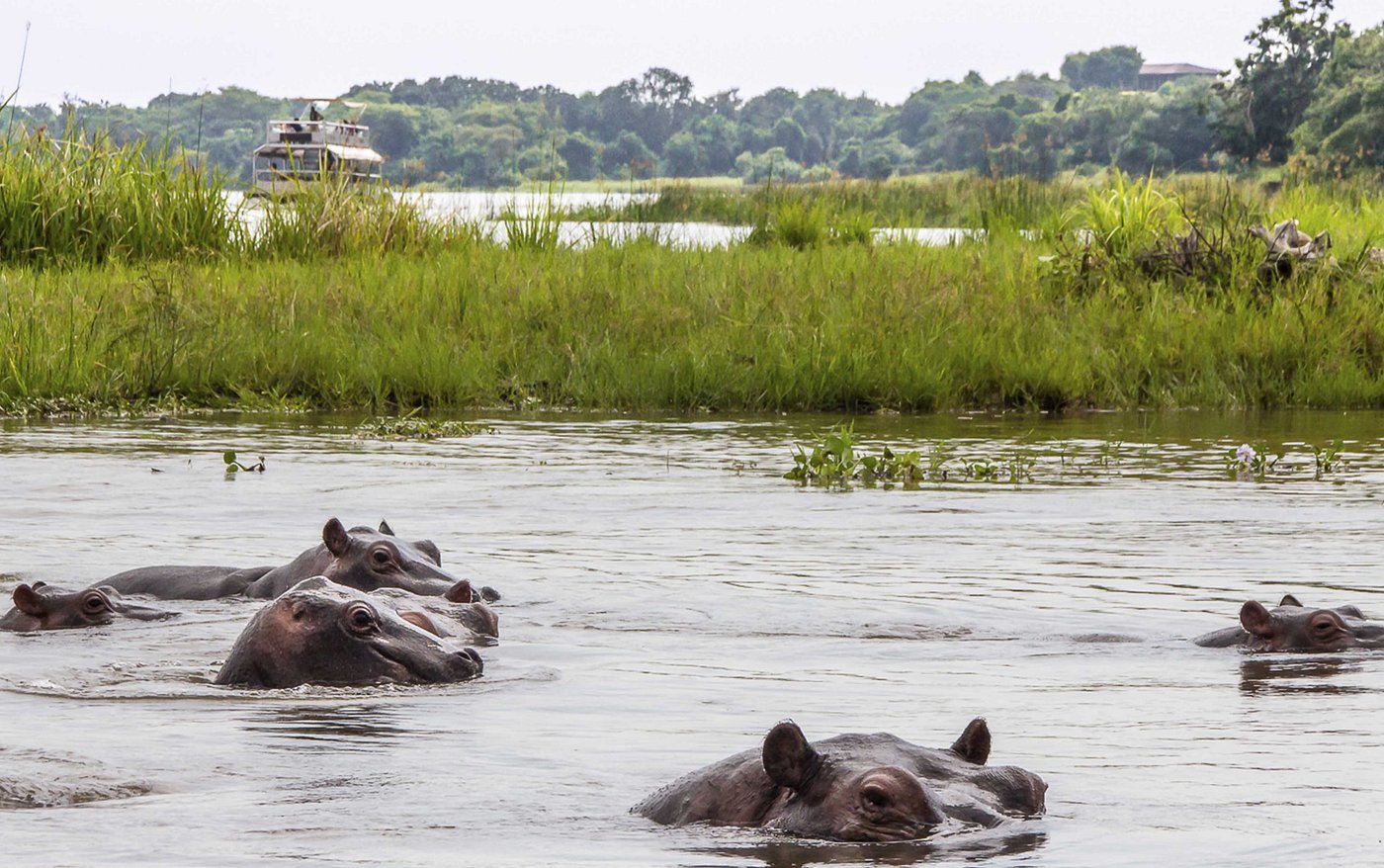
The Rufiji River is the centrepiece of any Selous safari, and the boat safari it provides is unlike anything available in the northern parks. The river drains a watershed of nearly 180,000 square kilometres and flows wide and slow through the heart of the reserve, lined with dense forest on its banks and punctuated by oxbow lakes and sandy islands that change position every rainy season. In the dry months from June to October, the water level drops and the animals concentrate around the remaining channels and pools in numbers that can seem barely believable.
A two-hour morning boat safari on the Rufiji passes hippo pools holding forty or fifty individuals, crocodile so numerous they overlap on the sandbars, elephant drinking in family groups at the bank, and a bird list so dense along the water’s edge that serious birders run out of space in their notebooks. Fish eagles call from overhanging branches. African skimmers skim the water surface. Open-billed storks work the shallows in lines. The combination of proximity — you drift to within ten metres of a hippo pod — and the quietness of moving by boat creates a quality of wildlife observation that game drives from a vehicle cannot reproduce. Most clients who have done both describe the Rufiji boat safari as one of the two or three best wildlife experiences of their lives.
Walking Safaris in the Selous
Walking safaris in the Selous are available from several camps and are conducted by rangers who know this specific landscape — not generic park rangers following a standard script, but guides who have spent years watching how the Rufiji’s flood cycle changes the game distribution and how the miombo thickets hold leopard even when the open country looks empty. The walks tend to run two to three hours in the early morning before the heat builds, following game trails through the bush in small groups of four to eight guests.
What distinguishes a Selous walking safari from those in other parks is the terrain. The combination of riverine forest, open grassland and dense thicket means that encounters are genuinely unpredictable — you may emerge from a stand of palm to find an elephant feeding thirty metres away, or follow lion tracks for an hour before hearing a distant grunt that means the pride is close. The aroused attention this produces — the constant reading of wind, the slow placing of each foot — is a different and more concentrated form of engagement with the African bush than anything you experience from a vehicle.
Wildlife in the Selous Game Reserve

The Selous Game Reserve holds one of the largest elephant populations in Africa — historically around 100,000 individuals, though poaching pressure in the 2000s reduced this significantly and recovery is ongoing. Current estimates suggest 15,000 to 20,000 elephants remain in the ecosystem, and the herds visible from the Rufiji River in the dry season are substantial. The reserve holds the largest population of hippopotamus in Africa, a statistic that becomes vividly apparent on any boat safari. Buffalo aggregate in herds that can exceed a thousand animals on the flood plains. Wild dog packs are monitored and seen regularly; the Selous-Nyerere ecosystem is one of the last strongholds of the species in East Africa.
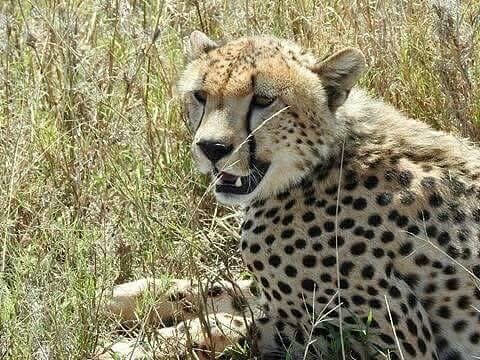
The predator density is exceptional. Lion prides are large and frequently visible on the open grasslands south of the Rufiji. Leopard are more elusive but present throughout the riverine forest. Cheetah hunt the open areas in the north of the reserve. The diversity extends to smaller carnivores — African wild cat, serval, caracal, honey badger and genet are all present and seen with reasonable frequency on night drives. The bird life, already rich in any southern Tanzania ecosystem, reaches exceptional density along the Rufiji’s corridors, with the boehm’s bee-eater and several miombo specialists occurring alongside generalist species in numbers unusual for a single site.
The Name Change: Selous and Nyerere
A practical note on names: what was historically known as the Selous Game Reserve now operates under two designations. The northern photographic tourism zone — where the camps, boat safaris and walking activities are concentrated — became Nyerere National Park in 2019, named for Julius Nyerere, Tanzania’s founding president and father of the nation. The southern and eastern sections remain as the Selous Game Reserve, managed for hunting concessions and conservation. When operators refer to the Selous safari or a Selous camp, they almost always mean the Nyerere National Park zone. The two names refer to the same general ecosystem and most camps use both interchangeably in their marketing.
Best Time to Visit the Selous Game Reserve

The dry season from June to October is the peak period for a Selous safari. The Rufiji drops to navigable levels ideal for boat safaris, vegetation opens up, and the game concentrates around the remaining water. July and August offer the best overall conditions — dry, cool mornings, excellent game viewing, and the peak season camps operating at full programme. September and October remain very good but temperatures begin to climb toward 35°C in the afternoon.
The short dry season from January to February — the lull between the two rain periods — can be productive and significantly cheaper. The river level is still reasonable, and the camps that stay open in this period reduce rates by 20 to 30 per cent. April and May, the heart of the long rains, are the season most operators close: the tracks flood, the river rises into the forest, and boat operations become difficult. November is transitional and increasingly favoured by birders, as migratory species arrive and the annual flood pulse begins.
Getting to the Selous Game Reserve
The Selous is the most accessible of Tanzania’s southern parks. Charter flights from Dar es Salaam take 40 to 50 minutes to the airstrips inside the reserve, making it realistic as a standalone destination even for visitors with limited time. Direct charter connections from Zanzibar are available from several operators and take under an hour. From the Serengeti or Ruaha, connecting flights can be arranged via Dar or direct on some circuits. The road from Dar es Salaam is technically drivable — 230 kilometres — but involves significant dust roads in the last section and takes five to six hours; most visitors fly.
Where to Stay in the Selous
Accommodation in the Nyerere/Selous area ranges from true luxury camps on the Rufiji to mid-range tented camps accessible at lower price points. Sand Rivers Selous is the benchmark property — an open-plan stone and canvas camp on a high bank above the Rufiji with exceptional boat safari access and a guiding team with decades of experience in this specific landscape. Roho ya Selous and Sable Mountain Lodge offer strong mid-range alternatives with the same river access at more accessible tariffs. Beho Beho, elevated in the hills above the main river basin, runs some of the most highly regarded walking safari programmes in the reserve. All camps require advance booking in the June to October window; last-minute availability is rare in a destination with this few beds.
Combining Selous with Ruaha and Zanzibar
The southern Tanzania circuit — Selous and Ruaha combined — is one of the most rewarding itineraries we build at Superfine Safaris. Spend three nights at Selous for the boat safari and game drives on the river circuits, fly to Ruaha for three nights of walking safaris and dry-country game drives, then connect to Zanzibar for a beach close. The whole circuit takes nine to eleven days and shows you a Tanzania that most visitors flying straight to the Serengeti never encounter. Contact our team to discuss dates and preferred camps.
Frequently Asked Questions
What is the difference between the Selous Game Reserve and Nyerere National Park?
They refer to the same ecosystem. Nyerere National Park is the northern section of what was the Selous Game Reserve, redesignated in 2019 for photographic tourism. The southern section remains as a game reserve managed partly for hunting concessions. All the photographic safari camps operate inside or adjacent to the national park zone, and the name Selous is still widely used in the industry to refer to the whole area.
Can I do a day trip to the Selous from Dar es Salaam?
A day trip is technically possible — the flight is under an hour each way — but it does not do justice to the destination. The boat safari alone takes two hours; a full day gives you one boat safari and one game drive, which is a worthwhile experience but does not capture the best the reserve offers. A minimum of two nights is strongly recommended; three nights lets you do the boat safari twice at different water levels and cover more of the road network.
Are there predators in the Selous Game Reserve?
Yes, and in significant numbers. Lion, leopard, cheetah, wild dog and spotted hyena are all present. The lion prides south of the Rufiji are large and well studied; wild dog packs are monitored by the camps and sightings are regular during the dry season. The Selous is one of the best places in Tanzania to see wild dogs reliably.
Interested in a Selous Game Reserve safari?
Superfine Safaris arranges Selous/Nyerere boat safaris, walking safari packages and combined southern Tanzania circuits. Contact us or WhatsApp our team to plan your trip.
Plan Your Selous Safari
- ✓ Rufiji River boat safaris
- ✓ Walking safaris with armed rangers
- ✓ Combined Selous & Ruaha circuits
- ✓ Zanzibar beach extension
- ✓ Transparent all-in pricing
Selous/Nyerere at a Glance
| Total size | 50,000 km² (Game Reserve) |
| National Park | Nyerere — 30,893 km² |
| Location | South-east Tanzania |
| Best months | Jun–Oct (dry season) |
| From Dar es Salaam | ~45 min charter flight |
| Key feature | Rufiji River boat safaris |