
One of the first questions travelers ask when planning a gorilla trekking safari is, “What time does gorilla trekking start, and when will we be back?” It is a sensible question, especially when you are arranging accommodation, planning transfers or combining your gorilla encounter with other activities in Uganda or Rwanda. Gorilla trekking is an early-morning activity, but it does not follow a strict finish time. The day begins with a briefing from park officials before visitors enter the forest with experienced guides and trackers. What happens next depends largely on where the mountain gorillas are located and how long it takes to reach them.
At Superfine Safaris Limited, we encourage travelers to understand the daily trekking schedule before choosing their accommodation or planning onward journeys. A little preparation makes the experience more comfortable and allows you to enjoy the forest without worrying about what comes next.
What Time Does Gorilla Trekking Start?
In Uganda and Rwanda, gorilla trekking generally begins with an early-morning briefing, usually between 7:00 am and 8:00 am. Visitors receive instructions on gorilla conservation, safety, trekking etiquette and what to expect in the forest.
The actual departure time may vary depending on the park, the trekking location and the arrangements made by park authorities. It is important to confirm your reporting time before the day of your trek.
Gorilla trekking start time in Uganda
Uganda offers mountain gorilla trekking in two national parks: Bwindi Impenetrable National Park and Mgahinga Gorilla National Park. In Bwindi, visitors report to the headquarters serving their assigned trekking sector. These include Buhoma, Ruhija, Rushaga and Nkuringo. Although all four sectors are part of Bwindi, they are geographically separate, so choosing accommodation near the correct starting point is essential.
A typical trekking morning involves arriving early, completing registration, attending the briefing and meeting the guide who will lead your group into the forest. Trekkers usually begin walking at around 8:00 am, although the exact departure time depends on the day’s arrangements.
At Mgahinga Gorilla National Park, the process is similar. Visitors gather for a morning briefing before setting off to search for the habituated mountain gorilla group.
Tip: Do not choose your lodge based on its distance from Bwindi alone. Confirm the trekking sector printed on your permit or communicated by your operator, then select accommodation that makes reaching the correct headquarters straightforward.
Gorilla trekking start time in Rwanda
Rwanda’s gorilla trekking experience takes place in Volcanoes National Park, near the town of Musanze. The day begins at the Kinigi park headquarters, where visitors register, receive a briefing and are allocated to trekking groups.
The briefing commonly starts around 7:00 am, with groups heading into the forest after the necessary preparations. Your safari operator will advise you on the reporting time and when to leave your accommodation.
Travelers staying in Musanze have the advantage of being relatively close to the park headquarters. Those staying in Kigali can also reach the park by road, but the early start means leaving the city very early in the morning.
For a relaxed experience, we recommend spending the night in Musanze before trekking, particularly if you prefer not to begin your day with a long drive.
What Time Does Gorilla Trekking End?
Unlike a scheduled city tour or a game drive with a fixed return time, gorilla trekking has no guaranteed finishing hour. Some travelers return to their lodge before lunch, while others spend much of the day walking through the forest. The difference often comes down to the location of the gorilla family and the conditions along the trail.
Mountain gorillas move through their natural habitat to feed, rest and interact with other members of their family. Trackers work to establish their location, but the animals are free-ranging wildlife, not animals waiting at a designated viewing point.
Once the assigned gorilla family is located, visitors on a standard trek are generally permitted to spend up to one hour observing the animals. The guide then leads the group back to the forest exit or designated return point.
For planning purposes, allow approximately two to six hours for a standard gorilla trek, while recognizing that some excursions may take longer. This is an estimate rather than a fixed duration.
If you are planning a restaurant reservation, another excursion or a transfer after trekking, keep your schedule flexible. It is better to have time to relax after the forest walk than to feel rushed throughout an experience you may have travelled thousands of kilometers to enjoy.
Why Some Gorilla Treks Finish Earlier Than Others
The length of your trek is not determined by the time you arrive at the briefing point. Several factors influence how quickly your group reaches the gorillas and returns.
The gorillas’ location: This is often the biggest factor. A family may be found relatively close to the starting point on one day but much farther into the forest on another.
The nature of the terrain: Bwindi’s steep slopes, thick vegetation and uneven trails can make walking demanding. In Volcanoes National Park, certain routes involve climbing through forested mountain terrain.
Rain and trail conditions: Rain can make paths slippery and slow the pace of the trek. Even when the weather is clear, sections of tropical forest may remain wet and muddy.
The group’s walking pace: Visitors have different levels of fitness and hiking experience. Guides manage the group while taking account of the terrain and the conditions encountered along the way.
Tracking progress: Park trackers help locate the gorillas and communicate with the trekking guides. Their work improves the chances of finding the assigned family, but it cannot guarantee a particular return time.
These variations are part of visiting mountain gorillas in the wild. Rather than treating the trek as an activity with a strict timetable, approach it as a guided wildlife experience that unfolds according to the forest.
How Long Can You Stay with the Gorillas?
For standard gorilla trekking in Uganda and Rwanda, visitors are generally allowed up to one hour with the gorilla family after it has been located.
That hour can be remarkably rewarding. You may see young gorillas playing, adults feeding, mothers caring for their infants or members of the family resting among the vegetation. Each encounter is different because the animals decide how they spend their time.
Your guide will explain where to stand, how to behave and how to maintain the required distance. Flash photography is not permitted, and visitors must follow the instructions given to protect both the gorillas and the people in the group.
Uganda also offers a gorilla habituation experience in Bwindi. This is a separate activity involving a gorilla group undergoing habituation, with eligible visitors permitted up to four hours with the group under the applicable rules. It requires a different permit and should not be confused with standard gorilla trekking.
If your main interest is spending more time learning about gorilla behavior and the habituation process, ask your safari operator whether this experience is appropriate for your travel plans and budget.
Can You Travel to Kigali or Entebbe After Gorilla Trekking?
Yes, onward travel may be possible after trekking, but the best arrangement depends on your destination and the time you return from the forest.
Travelling from Volcanoes National Park to Kigali
The road journey from the Volcanoes National Park area to Kigali generally takes around two to three hours, depending on your exact starting point, traffic and road conditions.
Although the distance is manageable, the unpredictable end time of gorilla trekking makes it unwise to plan a tight connection. If you have an international flight, allow sufficient time for the trek, the drive and airport formalities.
Depending on your flight schedule, you may prefer to spend the night in Musanze before travelling to Kigali the following day.
Travelling from Bwindi to Entebbe
The journey from Bwindi Impenetrable National Park to Entebbe can take approximately eight to ten hours or longer by road, depending on the trekking sector, route, stops and road conditions.
For most travelers, starting such a long drive after several hours of walking is tiring and impractical. An overnight stay near Bwindi is generally the more comfortable option.
If you intend to fly out of Uganda shortly after trekking, discuss the available arrangements with your operator in advance. Your itinerary may need an additional night or a suitable domestic flight connection, depending on availability and your departure airport.
The same principle applies when crossing between Uganda and Rwanda: the border route, transfer time and any immigration procedures should be considered before finalizing your schedule.
Where Should You Stay Before Gorilla Trekking?
Your accommodation should be selected according to the location of your trek, rather than simply the name of the national park.
In Bwindi, travelers trekking in Buhoma, Ruhija, Rushaga or Nkuringo should confirm the correct sector before booking their lodge. A property that appears close to Bwindi on a map may still require a lengthy transfer to a different sector.
In Mgahinga, choose accommodation that allows convenient access to the designated briefing point.
In Rwanda, Musanze is a practical base for Volcanoes National Park. Staying nearby allows you to enjoy breakfast, meet your driver and reach Kinigi without a lengthy early-morning journey.
Superfine Safaris Limited can help match your accommodation to your trekking arrangements, whether you prefer a budget guesthouse, a comfortable midrange lodge or a luxury forest retreat.
What Should You Carry for Gorilla Trekking?
Because the trek may last several hours, preparation matters more than dressing for a short morning walk. Pack the following essentials:
- Hiking boots with good grip and suitable ankle support.
- Long trousers and a long-sleeved top for protection from vegetation.
- A waterproof jacket or rain poncho.
- Drinking water and snacks, following the park’s guidance.
- Gardening or hiking gloves for handling vegetation where appropriate.
- A small backpack for your essentials.
- A camera with sufficient battery power and flash disabled.
- Insect repellent and other personal necessities.
A walking stick can be useful on steep or slippery trails, and porters may be available to assist with bags and provide support. Hiring a porter also creates income for people living around the national parks.
You do not need to carry your main suitcase into the forest. Leave larger luggage at your accommodation or in the safari vehicle according to your operator’s arrangements.
Is Gorilla Trekking in Uganda Different from Rwanda?
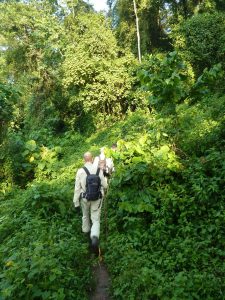 The basic morning schedule is similar in both destinations, but the overall experience depends on where you trek and how you organize the rest of your safari. Uganda provides two gorilla trekking destinations: Bwindi Impenetrable National Park and Mgahinga Gorilla National Park. A gorilla encounter can be combined with chimpanzee trekking, wildlife safaris, birdwatching and cultural experiences.
Rwanda offers gorilla trekking in Volcanoes National Park, which is particularly convenient for travelers building a shorter itinerary around Kigali or combining gorilla trekking with other experiences in the country.
Your decision should consider more than the start and end time. Accommodation, permit costs, road transfers, the physical demands of the trek and the activities you want to include all contribute to the overall experience.
Superfine Safaris Limited helps travelers compare the options and develop itineraries suited to their interests, available time and budget.
Frequently Asked Questions About Gorilla Trekking Times
What time does gorilla trekking start in Uganda?
Gorilla trekking generally begins with a morning briefing between 7:00 am and 8:00 am, followed by departure into the forest. Reporting times vary, so visitors should confirm the exact schedule for their assigned sector.
What time does gorilla trekking start in Rwanda?
In Rwanda’s Volcanoes National Park, the briefing at Kinigi commonly begins around 7:00 am. Trekkers then enter the forest after registration and group allocation.
What time does gorilla trekking end in Uganda and Rwanda?
There is no guaranteed finish time. Some groups return before lunch, while others continue into the afternoon. The duration depends on the gorillas’ location, the terrain and the pace of the trek.
How many hours do you spend walking during gorilla trekking?
A standard trek may take approximately two to six hours in total, although shorter and longer excursions are possible. The time spent walking is separate from the standard allowance of up to one hour observing the gorillas.
Can I go gorilla trekking and return to Kigali on the same day?
Yes. Returning to Kigali after trekking in Volcanoes National Park is possible, but the timing depends on when your group returns and the road conditions. Allow sufficient time if you have an onward flight.
Can I drive from Bwindi to Entebbe after gorilla trekking?
It is possible, but the journey can take eight to ten hours or longer. Since the trek itself may take several hours, spending another night near Bwindi is generally more comfortable and practical.
Should I book accommodation before or after gorilla trekking?
Ideally, plan accommodation for the night before your trek near the correct briefing point. An additional night after trekking is also advisable if you have a long onward journey or want to avoid travelling while tired.
Is gorilla habituation longer than normal gorilla trekking?
Yes. Uganda’s gorilla habituation experience allows eligible visitors up to four hours with a gorilla group undergoing habituation, subject to the applicable rules. A separate permit is required.
Plan Your Gorilla Trek with Superfine Safaris Limited
A successful gorilla trekking safari is about more than securing a permit. The right accommodation, a well-planned transfer and a realistic daily schedule can make the difference between a rushed excursion and a rewarding encounter with mountain gorillas.
At Superfine Safaris Limited, we organize personalized gorilla trekking holidays in Uganda and Rwanda, taking care of permits, accommodation, ground transport and other agreed safari arrangements. We help travelers choose the right trekking destination and plan the surrounding activities without putting unnecessary pressure on the day.
Whether you are travelling alone, as a couple, with family or as part of a private group, we can tailor your safari to your preferred travel style and budget.
Contact Superfine Safaris Limited to plan your Uganda or Rwanda gorilla trekking safari and receive an itinerary designed around your travel dates and interests.