
Mombasa is one of East Africa’s most layered destinations — a port city where Swahili, Arab, Portuguese and British history collide along a coastline of white sand and warm Indian Ocean water. Whether you have two days or two weeks, the things to do in Mombasa range from wandering 600-year-old alleyways to snorkelling above coral reefs teeming with sea turtles. This guide covers the best experiences across the city and its surrounding coast, so you can build a trip that actually reflects Mombasa rather than a generic beach holiday.
Fort Jesus and Mombasa Old Town
No visit to Mombasa starts anywhere else. Fort Jesus was built by the Portuguese in 1593 and is now a UNESCO World Heritage Site — its coral-stone walls, bastions and moat have survived sieges, cholera epidemics and colonial handovers, all of which are told through the on-site museum with remarkable restraint. Allow a minimum of two hours to do it justice.
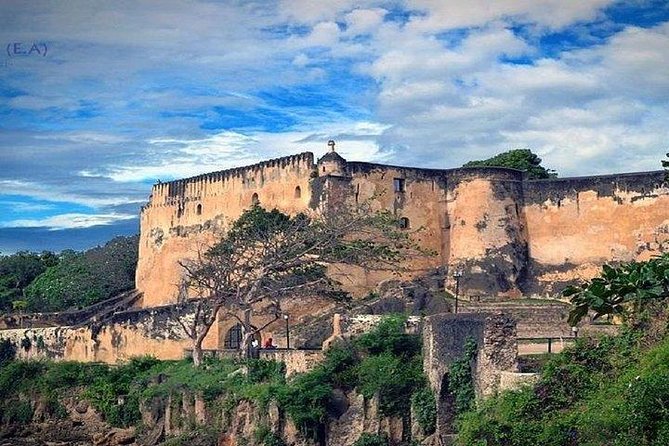
Immediately outside the fort, the Old Town begins. Walk Ndia Kuu Road and the narrower lanes branching off it — carved wooden doors, hanging lanterns, mosque minarets and the smell of cardamom coffee at street stalls are the defining details. The Old Town is genuinely lived-in, not curated, which makes it all the more worth exploring slowly on foot. Engage a local guide for USD 10–15 and you will get stories the signboards don’t tell.
Mombasa Marine National Park
Declared a protected area in 1986, Mombasa Marine National Park stretches 200 metres offshore from Nyali to Kenyatta Beach. The reef here is among the most accessible in East Africa — glass-bottom boat trips depart from the beach at low tide, and snorkelling directly from shore is possible at several points. The park is home to hawksbill and green sea turtles, lionfish, moray eels and over 250 species of reef fish.
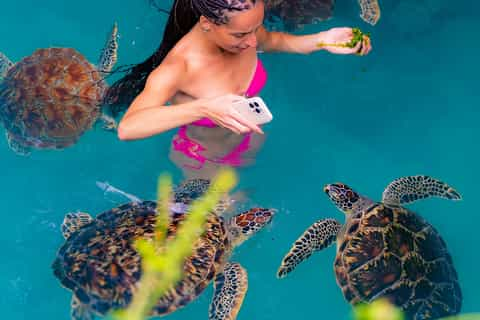
Dive operators based at Nyali Beach and Bamburi Beach run half-day sessions in the park for around USD 50–80 per person including equipment. Early morning entries before 9 am give the clearest water and the best chance of spotting turtles undisturbed.
Haller Park Wildlife Sanctuary
Haller Park, carved from what was once a limestone quarry, is now a lush wildlife sanctuary managed by the Bamburi Nature Trail. Home to hippos, crocodiles, buffaloes, giraffes and vervet monkeys, it is one of the most underrated afternoon activities in Mombasa. It is especially well suited to families and those on a tight timeline who want wildlife without a long drive.
Nyali and Bamburi Beach
The beaches north of Mombasa island are the most developed stretch of Kenya’s coast, lined with resorts, water-sports operators and open-air restaurants. Nyali Beach is closest to the city centre. Bamburi Beach, a few kilometres north, is wider and calmer, with a strong reef close to shore that keeps the water flat.
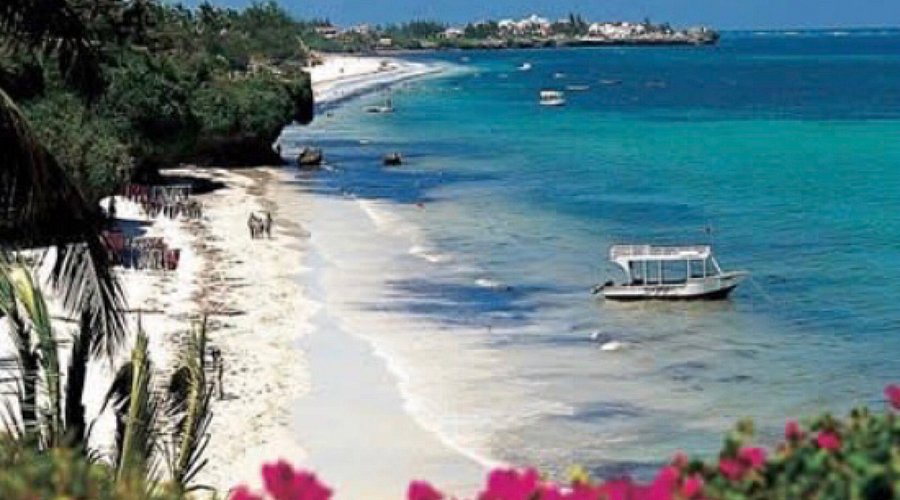
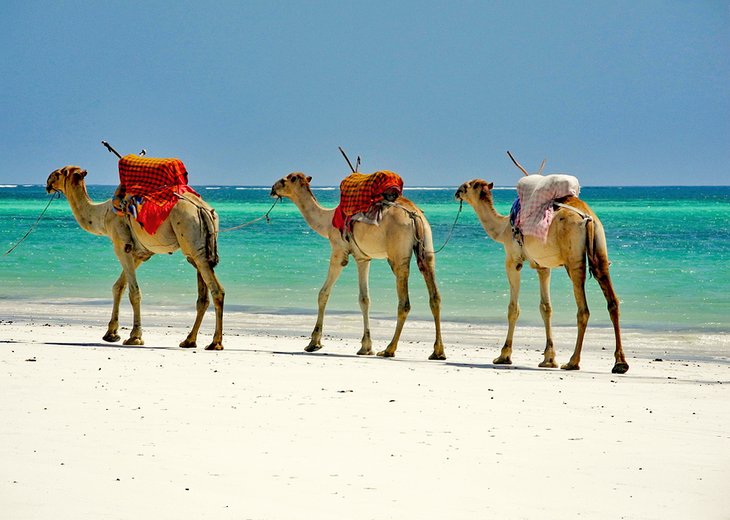
For water activities, options along this strip include jet skiing, parasailing, kitesurfing, stand-up paddleboarding and deep-sea fishing charters. Camel rides on the beach at low tide are a classic Mombasa experience.
City Landmarks: The Elephant Tusks and Biashara Street
The pair of giant aluminium elephant tusks straddling Moi Avenue were erected in 1952. They have been Mombasa’s most photographed landmark ever since. From here, head to Biashara Street for spices, kikoi cloth and hand-carved wooden items. Finish at the Akamba Handicraft Cooperative — a large collective of Kenyan craftspeople whose work spans sculpture, jewellery and leatherwork.
Wasini Island and Kisite-Mpunguti Marine Park
One of the best day trips from Mombasa takes you 80 kilometres south to Wasini Island and the Kisite-Mpunguti Marine Park, arguably Kenya’s finest snorkelling destination. Operators sail through a channel where dolphin pods are regularly spotted, then anchor above the Kisite reef for two to three hours of snorkelling. Lunch is served on Wasini Island itself — a traditional Swahili meal of grilled fish, rice cooked in coconut milk and chapati.
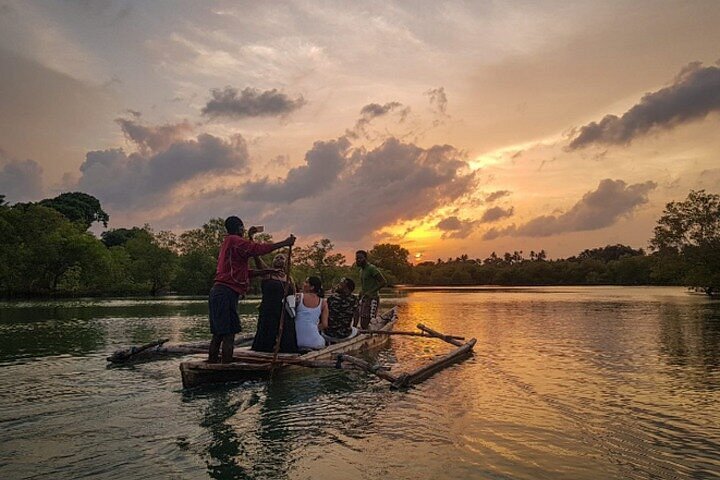
The full excursion runs from around 7 am to 5 pm and costs USD 70–90 per person. Visibility on the reef is consistently 15–25 metres, and bottlenose and spinner dolphins are spotted on roughly 80 per cent of trips.
Swahili Food and Where to Eat
Mombasa’s food scene is one of the more distinctive in East Africa. Look for biryani cooked in clay pots at the Old Town’s small restaurants, freshly grilled octopus near the port, and mandazi with spiced chai for breakfast. For a proper sit-down meal, Tamarind Restaurant overlooking the Old Harbour is the long-standing benchmark — the crab and lobster are caught locally and the sundown views across to the dhow anchorage are hard to beat.
Day Trip to Watamu and Malindi
If you have a spare day, the drive north along the coast road to Watamu (110 km) and Malindi (120 km) reveals a quieter side of Kenya’s coast. Watamu Marine National Park has excellent snorkelling and a sea turtle conservation centre. Gede Ruins — a Swahili-Arab settlement abandoned in the 17th century — is one of the most atmospheric archaeological sites in Kenya.
Getting Around Mombasa
Mombasa island is connected to the mainland by the Likoni Ferry to the south and by road bridges to the north and west. Within the city, tuk-tuks are the easiest way to cover short distances — agree on a fare before you get in, typically KES 100–300 for city centre trips. Ride-hailing apps including Bolt work reliably in Mombasa.
When to Visit Mombasa
Mombasa has two dry seasons ideal for beach holidays and snorkelling: January to March and July to October. The long rains fall in April and May. For a combination of good weather and manageable visitor numbers, October and early November are particularly well balanced.
Practical Tips
- Entry: Most nationalities can purchase an East Africa Tourist Visa (USD 100, valid 90 days across Kenya, Uganda and Rwanda) on arrival or online at evisa.go.ke.
- Currency: Kenyan Shilling (KES). ATMs are widespread and major hotels and restaurants accept Visa and Mastercard.
- Health: Malaria prophylaxis is recommended. Yellow fever vaccination is required if arriving from a yellow-fever endemic country.
- Dress code in Old Town: The Old Town is a predominantly Muslim neighbourhood — modest dress (covered shoulders and knees) is respectful.
- Safety: Use a tuk-tuk or Bolt rather than walking after dark in the city centre. Beach resort areas north of the island are safe for evening strolls.
Frequently Asked Questions
How many days do you need for things to do in Mombasa?
Three to four days covers Fort Jesus, the Old Town, the Marine Park, a beach day and the Wasini Island trip. Extend to a week if you want day trips to Watamu or Malindi.
Is Mombasa safe for tourists?
The main tourist areas are generally safe during the day. Exercise the same caution you would in any busy port city: keep valuables out of sight, use trusted transport and avoid deserted areas after dark.
How do I get from Nairobi to Mombasa?
The SGR Madaraka Express train takes around four and a half hours and costs KES 1,000–3,000 depending on class. Flights take under an hour. The overnight bus (around 8 hours) is the budget option.
Can I combine Mombasa with a safari?
Yes — a Mombasa safari combination is one of the most popular Kenya itineraries. Fly or take the train to Nairobi, connect to the Masai Mara or Amboseli for a three to four-day safari, then return to Mombasa for a beach finish. Superfine Safaris designs these safari-beach combinations regularly.
Ready to explore Mombasa? Superfine Safaris arranges Fort Jesus tours, Marine Park snorkelling, Wasini Island day trips and full Kenya coast itineraries. Contact us for a tailored quote.
Plan Your Mombasa Trip
- ✓ Fort Jesus & Old Town tours
- ✓ Marine Park snorkelling
- ✓ Wasini Island day trips
- ✓ Diani Beach extension
- ✓ Safari & coast combos
Key Facts
| Best time | Jan–Mar & Jul–Oct |
| Getting there | SGR (4.5 hrs) or fly (1 hr) from Nairobi |
| Currency | Kenyan Shilling (KES) |
| Language | Swahili & English |
| Visa | East Africa Tourist Visa – USD 100 |
| Time zone | EAT (UTC+3) |
| Malaria | Prophylaxis recommended |