
Gorilla trekking safety is one of the first things people ask about when they start planning a visit to Uganda or Rwanda, and the answer is more reassuring than most people expect. Mountain gorilla trekking has been running in both countries for decades and has an excellent safety record — the habituated gorilla families that permit-holders visit are calm, predictable, and largely indifferent to human presence. But gorilla trekking safety is not just about the animals. It also covers the physical demands of the hike, your health on trek day, the security situation in each country, and the rules that make the whole experience work. This guide covers all of it honestly.
Gorilla Trekking Safety: The Short Answer
- Is gorilla trekking safe from the animals? Yes. Habituated gorillas have been visited daily for years and largely ignore trekkers. Charges are rare; serious injuries are extremely rare.
- Is gorilla trekking safe in Uganda? Yes. Bwindi and Mgahinga are well-patrolled and have a strong tourist safety record.
- Is gorilla trekking safe in Rwanda? Yes. Rwanda is one of Africa’s most stable countries. Volcanoes National Park is 2.5 hours from Kigali on a paved road.
- What is the real risk? The terrain. Steep, muddy rainforest at altitude is the most demanding part of the day for most trekkers.
- Biggest health rule: No trekking with any respiratory illness — gorillas are highly susceptible to human pathogens.
- Minimum age: 15 years in both countries.
Gorilla Trekking Safety Rules: The 8 Golden Rules
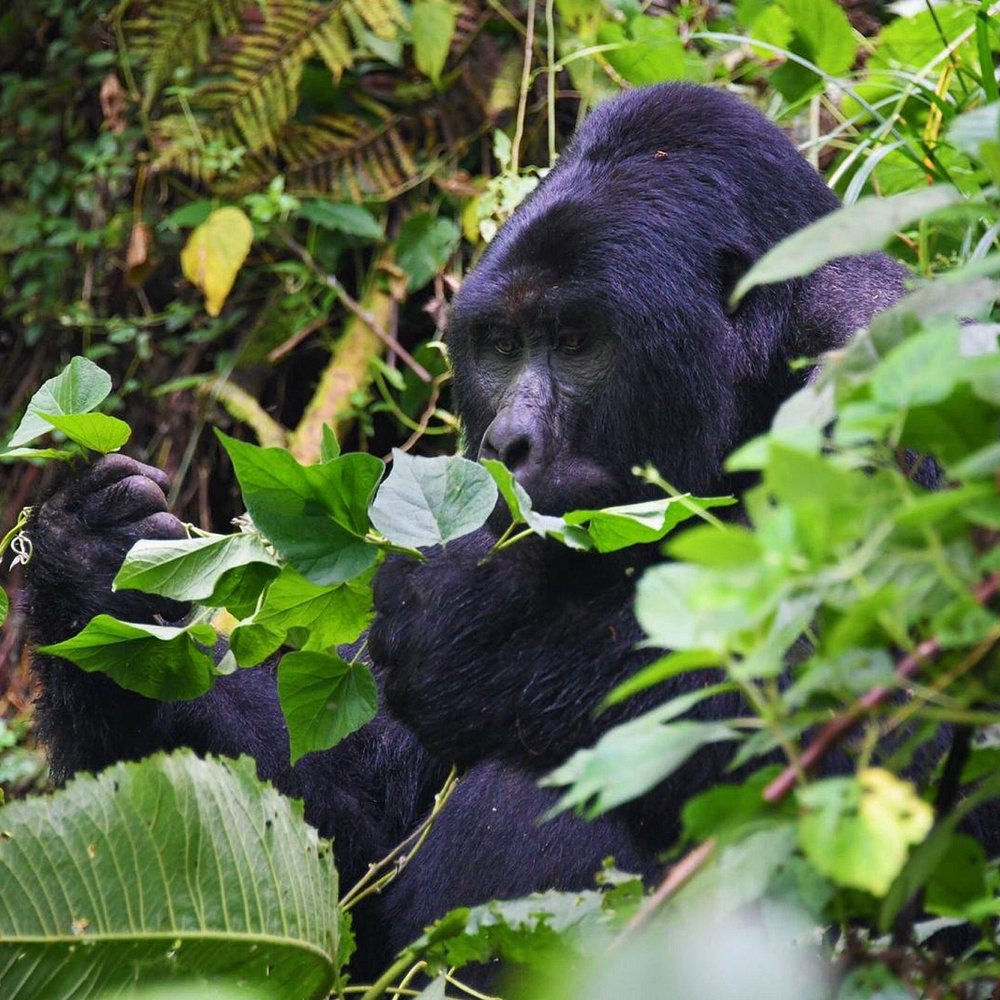
Gorilla trekking safety in both Uganda and Rwanda is built around a set of rules enforced by the Uganda Wildlife Authority (UWA) and Rwanda Development Board. You will be briefed on all of these at the ranger station before setting off. They exist to protect the gorillas from human disease and to keep trekkers safe during the encounter:
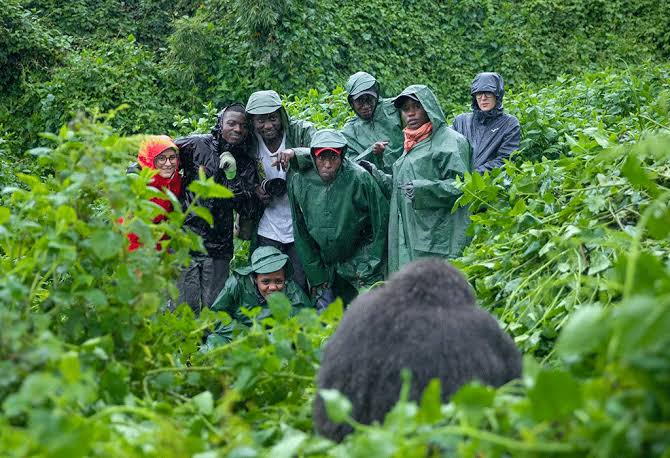
- Maintain 7 metres distance at all times. Seven metres is the established minimum at which disease transmission from human to gorilla is considered negligible. This is the single most important gorilla trekking safety rule. Guides actively reposition trekkers who drift too close.
- Do not trek if you have any respiratory symptoms. A cold, flu, cough or COVID-19 means your trek is cancelled. Gorillas share approximately 98% of human DNA and are highly susceptible to our respiratory illnesses. Serious outbreaks in gorilla families have been caused by human disease transmission. No exceptions are made.
- Wear a face mask within 10 metres. Both Uganda and Rwanda now require face masks as an additional layer of gorilla trekking safety when trekkers are in close proximity to the gorillas.
- No flash photography. Flash startles the animals and can provoke a defensive reaction. Set your camera to no-flash before entering the forest.
- Do not make direct sustained eye contact with a silverback. A prolonged stare is read as a challenge or threat. Keep your gaze soft and look away if a silverback looks directly at you.
- No eating or drinking in front of the gorillas. Food smells attract unwanted interaction; human food is also harmful to gorillas.
- Keep voices low and movements slow. Whisper within the gorilla zone. Move deliberately. Sudden movements alarm the animals.
- If charged, crouch, stay still, do not run. This is the most critical gorilla trekking safety response you can learn before the trek. Running triggers a pursuit instinct. Crouching and averting your gaze signals submission. Your guide will manage the situation — trust them.
Gorilla Trekking Safety and the Animals: How Dangerous Are Mountain Gorillas?
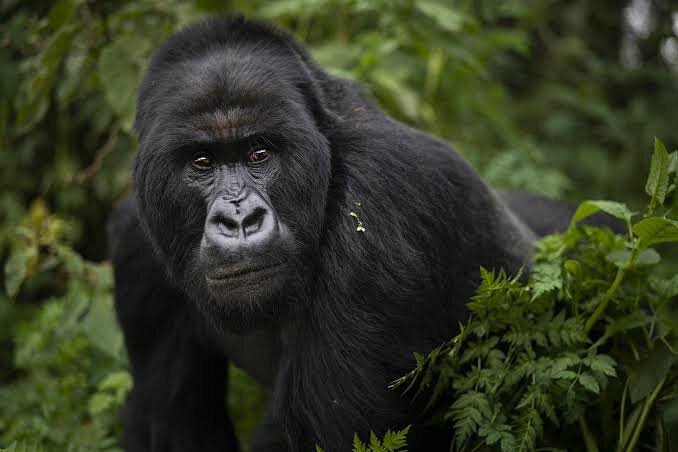
Mountain gorillas are among the most powerful animals on earth — a silverback weighs up to 220kg and is many times stronger than a human. But that raw power has to be understood in context: habituated gorillas have been conditioned over years to accept the presence of humans at close range. They do not see trekkers as prey or as a threat, and they typically ignore the group entirely, continuing to feed, groom, and play as they would on any other day.
Mock charges do occur. A young male (blackback) establishing his social rank, or a silverback who feels his family is being crowded, may run toward the trekking group, beat his chest, and vocalise. It looks and sounds alarming. But gorilla trekking safety statistics show that these mock charges almost always stop short of the group, and experienced guides read the body language well in advance. They position themselves, make submissive sounds, and de-escalate the situation quickly. Guides carry no weapons — their relationship with the gorilla family and their experience is the only tool required.
Serious injuries from gorilla encounters on permitted treks are extraordinarily rare across the entire history of mountain gorilla tourism. The habituation process and consistent rule enforcement are the reason.
Gorilla Trekking Safety and the Physical Challenge
For most trekkers, the terrain is a greater challenge than the animals. Gorilla trekking safety means being prepared for a hike through dense equatorial rainforest at altitudes of 1,500–2,500 metres — steep, often muddy, with tangled roots and vegetation that you push through rather than walk past. Duration varies from 2 to 8 hours depending on where the gorilla family has moved overnight.
What to Expect on Trek Day
- Duration: 2–8 hours total; 1 hour exactly with the gorillas once found
- Elevation gain: 300–800m depending on sector; Bwindi’s Nkuringo is the most demanding
- Terrain: Steep, muddy, dense undergrowth; pushing through vegetation is normal
- Group size: Maximum 8 trekkers per gorilla family per day
- Porter: Strongly recommended — carries your bag, steadies you on steep sections, USD 15–20
- Start time: 7:00–8:00am from the ranger station after briefing
People in their 60s and 70s complete gorilla treks regularly. The key to managing gorilla trekking safety on the physical side is choosing the right sector. Rwanda’s Volcanoes National Park has the shortest, most accessible treks on average. In Uganda, Bwindi’s Buhoma and Ruhija sectors are more manageable than the very steep Nkuringo. Hire a porter regardless of fitness level — they are part of the gorilla trekking safety network on the ground, particularly on descents.
Gorilla Trekking Safety in Uganda vs Rwanda
Both Uganda and Rwanda have strong gorilla trekking safety records, but the two countries offer different contexts that are worth understanding before you choose:
Rwanda (Volcanoes National Park) is the more straightforward from a logistics and security perspective. Rwanda is one of the most stable and well-governed countries in Africa. The park is 2.5 hours from Kigali on a good road, the infrastructure is modern, and there are no meaningful security concerns for visitors. Gorilla trekking safety in Rwanda also benefits from shorter treks and better-maintained paths.
Uganda (Bwindi Impenetrable Forest, Mgahinga) sits in southwestern Uganda near the DRC border. Bwindi has an excellent tourist safety record and is patrolled by the Uganda Wildlife Authority at all times. The 1999 Bwindi incident — often cited in online safety discussions — led to significantly strengthened security, and there have been no incidents involving tourists in the decades since. The trekking areas are not near any active conflict zone and gorilla trekking safety standards are high.
| Factor | Uganda (Bwindi) | Rwanda (Volcanoes NP) |
|---|---|---|
| Security | Very good; UWA rangers patrol continuously | Excellent; one of Africa’s most stable countries |
| Trek difficulty | Variable; some sectors very demanding | Generally shorter, more accessible |
| Gorilla groups | 21+ habituated families | 12 habituated families |
| Permit cost | USD 800/person | USD 1,500/person |
| Distance from capital | 8–9 hr drive; 1-hr flight to Kihihi | 2.5 hours from Kigali by road |
| Medical facilities | Limited near park; evacuation plan needed | Better; Kigali hospitals 2.5 hours away |
For a deeper comparison, see our guide on gorilla trekking Uganda vs Rwanda.
Gorilla Trekking Safety: Health and Medical Considerations
Beyond the respiratory illness rule, there are several health factors that affect gorilla trekking safety and should be addressed before you travel:
- Altitude: Bwindi sits at 1,600–2,600m; Volcanoes NP at 2,400m and above. Altitude sickness is uncommon at these levels but can affect travellers who fly in from sea level without rest. Spend at least one night at mid-altitude (Kigali at 1,567m; Kampala at 1,190m) before the trek.
- Malaria: Both countries are malaria zones. Take prophylaxis and use DEET repellent before entering the forest. The dense rainforest supports mosquitoes year-round.
- Yellow fever vaccination: Required for entry into both Uganda and Rwanda. Carry the yellow card — you will be asked for it on arrival.
- Travel insurance: Standard policies often exclude high-altitude hiking and emergency evacuation. Gorilla trekking safety planning must include a policy that explicitly covers adventure activities and medical evacuation from a remote location.
- Pre-trek fitness: Walking with a loaded day pack for 30–45 minutes daily in the 4–6 weeks before your trek makes a meaningful difference. You do not need to be athletic, but cardiovascular preparation pays off on the steeper sections.
Gorilla Trekking Safety Kit: What to Wear and Carry
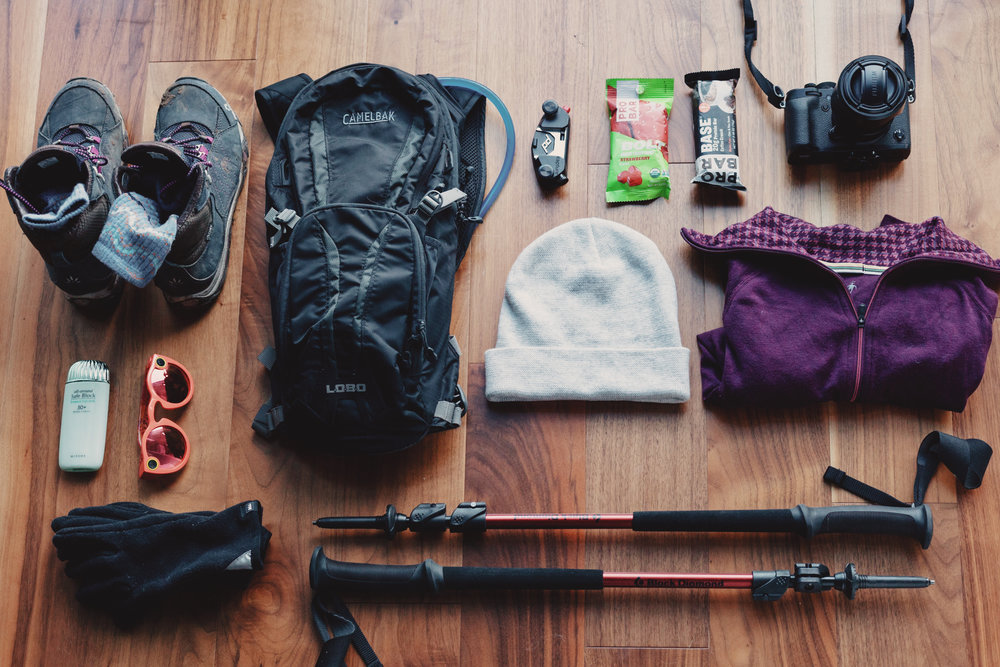
Essential Gorilla Trekking Safety Kit
- Waterproof ankle-support boots: The most important item. Break them in before travel.
- Long trousers and long-sleeved shirt: Protects against nettles, insects and vegetation. Neutral colours (khaki, green, brown) — not black or bright colours.
- Garden gloves: Indispensable for grabbing roots and vegetation when climbing. Pack your own.
- Gaiters: Keeps mud out of your boots. Essential in wet conditions.
- Rain jacket: Pack regardless of the forecast — the rainforest earns its name.
- Face mask (x2): Required within 10 metres of the gorillas in both countries.
- Trekking pole or walking stick: Provided at the ranger station, or bring your own. Invaluable on descents.
- DEET insect repellent (30%+): Apply before entering the forest.
- 2 litres of water and snacks: Consumed before and after the gorilla encounter — not in front of the gorillas.
For a complete list, see our gorilla trekking packing list.
Gorilla Trekking Safety FAQ
Is gorilla trekking safe?
Yes. Gorilla trekking in Uganda and Rwanda is well-regulated, the habituated gorilla families have been visited daily for years, and serious incidents are extremely rare across the full history of mountain gorilla tourism. The physical demands of the hike and the strict no-trekking-when-sick rule are the two factors that require the most personal attention.
Have gorillas ever attacked trekkers?
Serious injuries from gorilla encounters on permitted, guided treks are extremely rare. Mock charges do occur and look frightening, but experienced guides manage them effectively. Following the 7-metre rule and the guide’s instructions in the moment eliminates almost all risk.
What happens if I have a cold on trek day?
You will not be allowed to trek — no exceptions. Gorilla trekking safety protocols are non-negotiable on this point because mountain gorillas have died from transmitted human respiratory illnesses. Contact your operator as early as possible to discuss permit transfer options if you fall ill before the trek.
What should I do if a gorilla charges at me?
Stay still. Crouch low. Avert your gaze. Do not run. Running can trigger a pursuit response from the animal. Your guide will step in front of you, use submissive vocalisations, and manage the situation. Mock charges almost always stop well short of the group.
Is gorilla trekking safe for older visitors or people with limited fitness?
Yes, with preparation. People in their 60s and 70s complete gorilla treks regularly. Hire a porter, choose an accessible sector (Rwanda or Bwindi’s Buhoma rather than Nkuringo), and be honest with your operator about fitness levels. The experience is managed around you, not against you.
Do I need special travel insurance for gorilla trekking safety?
Yes. Standard policies often exclude high-altitude hiking and emergency evacuation. You need a policy that explicitly covers adventure activities and medical evacuation — evacuation from remote Bwindi to Kampala is expensive without adequate cover.
Is gorilla trekking safe during the rainy season?
Yes, though the trails become significantly more demanding when wet. Gorilla trekking safety during the rains requires good waterproof boots and gaiters, a rain jacket, and acceptance that you will get muddy. The gorilla encounter itself is unchanged. Permit prices are often lower in the wet season and the forest is extraordinarily lush.
What is the minimum age for gorilla trekking?
15 years in both Uganda and Rwanda. Children under 15 are not permitted regardless of fitness, as younger children are more likely to make unpredictable movements, carry pathogens, and disturb the gorilla family. This is a gorilla trekking safety rule that neither country makes exceptions for.
More Gorilla Trekking Guides
Ready to Book Your Gorilla Trek?
We arrange gorilla trekking permits, guides and full itineraries in Uganda and Rwanda for all fitness levels and budgets. Get in touch and we’ll plan the right trip for you.
Book Your Gorilla Trek
We arrange permits, guides and full itineraries in Uganda and Rwanda for all fitness levels and budgets. Tell us your dates and we’ll take care of the rest.
Plan My Gorilla TrekSafety at a Glance
| Permit Uganda | USD 800/person |
| Permit Rwanda | USD 1,500/person |
| Min. age | 15 years |
| Time with gorillas | 1 hour exactly |
| Group size | Max 8 trekkers |
| Distance rule | 7 metres at all times |
| Best season | Jun–Sep & Dec–Feb |