
Getting the Kenya safari packing list right is one of the most practical things you can do before your trip. The difference between a well-packed bag and an overstuffed one shows up on every game drive — in whether you can reach your camera quickly, stay comfortable through a three-hour morning circuit, or fit within the strict 15 kg luggage limit on charter aircraft that connect Nairobi to the Masai Mara, Amboseli and Samburu. This Kenya safari packing list covers exactly what you need, nothing you don’t, based on the conditions you will actually encounter in Kenyan parks across the dry and wet seasons. Cross-reference it with our Kenya safari travel tips before you book.
Clothing for a Kenya Safari
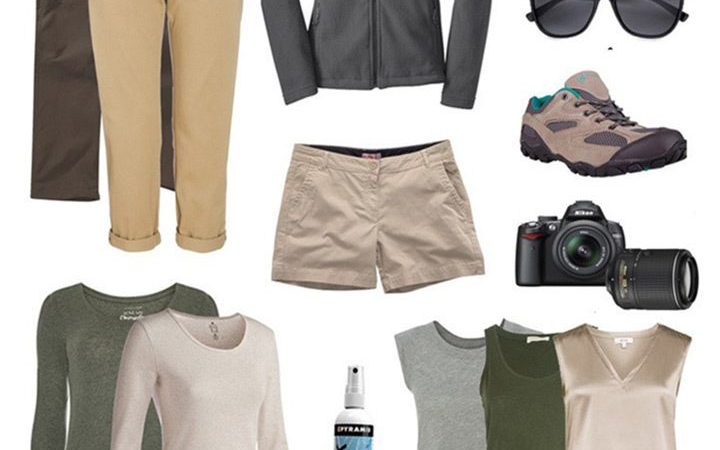
The most important single item on the Kenya safari packing list is not a specific garment but a colour principle: stick to khaki, olive, tan, sage and grey. These tones blend with the savannah, avoid attracting insects with bright contrast, and do not alarm wildlife. White is conspicuous and shows dust instantly. Bright blue, red and black attract tsetse flies in some parks. Safari clothing does not need to be expensive — the functional requirement is cotton or moisture-wicking synthetic fabric in the right colours, not a specific brand.
- 2–3 long-sleeve shirts: lightweight cotton or linen. Long sleeves protect against sun and mosquitoes at dawn and dusk without requiring repellent on your arms during drives.
- 1–2 short-sleeve shirts: for midday when temperatures peak.
- 2 pairs of lightweight trousers: zip-off convertibles work well — they become shorts and the zip pockets hold items securely in a moving vehicle.
- 1 pair of shorts: for camp during the heat of the day.
- Fleece or light down jacket: early morning drives in open vehicles at altitude (Masai Mara, Laikipia) can be genuinely cold — 10–14°C — especially June to August. A packable down jacket earns its weight every morning.
- Rain layer: a lightweight waterproof or packable poncho for the short rains (October–November) and long rains (April–May).
- Hiking boots or trail shoes: closed-toe, ankle-supporting for any bush walk. Trainers are fine for vehicle-only safaris.
- Sandals or flip-flops: for camp and lodge downtime.
- Wide-brim sun hat: the roof-hatch position on open-top vehicles gives continuous sun exposure. Non-negotiable.
- Sunglasses: polarised lenses reduce glare on water and open plains, and protect your eyes during long morning drives into the low sun.
Safari Kit and Luggage
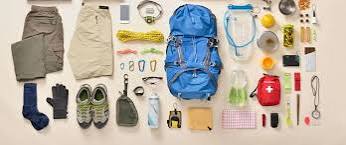
This section is where the Kenya safari packing list diverges most from general travel packing — specifically on bag type and weight. Charter aircraft weight limits are firm: 15 kg total per person including hand luggage, in a soft-sided bag. Hard-shell suitcases are refused. A soft duffel bag or holdall is the standard solution; a 60–80 litre capacity is sufficient for seven to ten days. If you are travelling to multiple Kenya destinations on the same trip, our Kenya drive time guide helps you plan the logistics between parks.
- Soft duffel or holdall: 60–80 litre. Pack to 13–14 kg and leave a small margin.
- Day backpack: for the vehicle — holds camera, binoculars, water, sunscreen and snacks.
- Refillable water bottle: 1 litre minimum. Most lodges and tented camps provide filtered water for refilling, reducing plastic waste.
- Power bank: 20,000 mAh charges a phone and camera battery several times. Charging at tented camps may be limited to certain hours.
- Universal adapter: Kenya uses the UK G-type three-pin socket.
- Headlamp: for walking between tents at night. Most camps restrict unescorted night movement between buildings.
- Dry bag or sealed camera case: Kenya’s dry season tracks generate significant dust. Protect cameras between drives.
- First aid basics: blister plasters, antihistamines, rehydration sachets, Imodium. Compact and worth having.
Optics and Camera Equipment
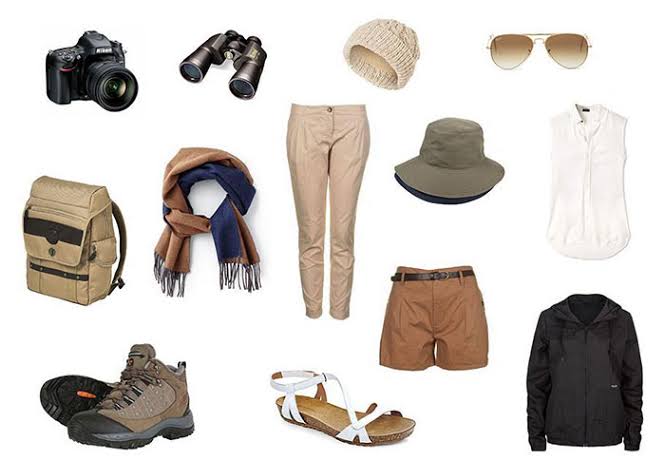
Good binoculars are the single highest-impact upgrade to any Kenya safari. The ability to identify a leopard at rest in an acacia tree from 300 metres, or read a cheetah’s posture from a termite mound, depends on glass quality. We recommend 8×42 as the standard configuration: 8x magnification is stable enough to use from a moving vehicle, and the 42mm objective gathers sufficient light for the golden hours at dawn and dusk when game is most active and light is lowest. Compact 10×25 binoculars are notably inadequate in this context. If you do not own good binoculars, buying or renting a quality pair before your Kenya trip is a worthwhile decision — the difference is not subtle. You will use them every game drive.
- Binoculars: 8×42 or 10×42. Roof prism design recommended for durability and image quality.
- Camera: DSLR or mirrorless with a zoom lens. Smartphone cameras are inadequate at typical safari distances of 30–200 metres.
- Telephoto lens: 300mm minimum for frame-filling wildlife at 50 metres; 400–500mm is better. A 100–400mm zoom covers the widest range of shooting distances in a single lens.
- Memory cards: bring more than you expect to use. A productive morning game drive on burst-shooting can fill a 64 GB card.
- Spare batteries: two per camera body. Reliable power at tented camps is not guaranteed.
- Bean bag: rests on the vehicle window and provides stable support for a telephoto in low light. More practical than a tripod in a game drive vehicle.
- Scarf or buff: doubles as dust protection for your face and neck on open-roof drives, and warmth on cold mornings.
Health and Medication
Malaria prophylaxis is required for all major Kenya safari parks. Consult your travel health provider about the right course for your itinerary — options typically include Malarone, doxycycline or Lariam, each with different timing requirements. Yellow fever vaccination is mandatory if you are arriving from a country with yellow fever transmission risk — carry the ICVP (yellow card). For full entry requirements, see our Kenya tourist visa and eTA guide.
- Malaria prophylaxis: prescription medication, full course started before departure.
- DEET insect repellent: 50% concentration for evening use at camp. Lower concentrations are largely ineffective against the species present at Kenyan park elevations.
- Sunscreen SPF 50: reapply every two hours on open-roof game drives. East African equatorial sun is intense.
- Lip balm with SPF: wind and sun on open vehicles causes rapid chapping.
- Personal prescription medication: in original packaging with prescription documentation. Kenyan customs may inspect.
What to Leave at Home
Camouflage clothing is prohibited at most East African border crossings and banned in Kenyan national parks. Plastic bags are banned by Kenyan law — do not carry them into the country. Drones require advance written permission from the Kenya Civil Aviation Authority and are effectively banned in most national parks without confirmed approval documentation. If you are planning to add a coast extension — Mombasa, Diani or Watamu Marine Park — to your safari, the packing requirements are similar but add a snorkel set and reef-safe sunscreen to the list. And if you are still planning which parks to include, our top five Kenya national parks guide and Masai Mara safari guide are good starting points.
Frequently Asked Questions
What is the luggage weight limit on Kenyan charter flights?
15 kilograms total per person including hand luggage, in a soft-sided bag. This is firm on small charter aircraft — not a guideline. Hard-shell cases are refused. Pack to 13–14 kg, use a soft duffel, and leave a small margin. Some operators allow minor overages for a fee, but the soft-sided bag rule is non-negotiable due to hold shape constraints.
Do I need to bring my own binoculars on a Kenya safari?
Yes. Binoculars are the highest-impact single item on the Kenya safari packing list. Lodges occasionally lend them but quality is typically poor. Bring your own 8×42 minimum — the difference between adequate and excellent optics on a game drive is the difference between watching wildlife and squinting at it. Use them every session and you will understand why we recommend this first.
What clothes should I pack for an early morning game drive?
Layers — a base layer, a long-sleeve shirt and a fleece or light down jacket. Morning temperatures in the Masai Mara, Laikipia plateau and Aberdare at altitude can drop to 10–14°C before sunrise, especially June to August. You will be in an open vehicle for two to three hours. Dress warmer than you expect to need and strip down as the sun rises.
Questions about your Kenya safari packing or trip planning?
Our team advises on exactly what to bring for your specific parks and travel dates. Contact us or WhatsApp us and we will answer before you book.
Plan Your Kenya Safari
- ✓ Masai Mara, Amboseli, Samburu
- ✓ Small-group & private safari
- ✓ Safari & beach combination
- ✓ Packing guidance for every trip
- ✓ Transparent all-in pricing
Packing Quick Reference
| Clothing colours | Khaki, olive, tan, grey |
| Avoid | White, bright blue, black |
| Bag weight limit | 15 kg on charter flights |
| Malaria prophylaxis | Required for all parks |
| Binoculars | 8×42 minimum |
| Power sockets | UK 3-pin (G-type) |
| Currency | KES / USD widely accepted |