
This is the Seychelles travel guide we wish we had when we first started planning trips to these islands: practical, honest, and built around how people actually travel here rather than how brochures say they should. Seychelles is 115 islands scattered across 1.3 million square kilometres of Indian Ocean, but in practice most visitors spend their time on three of them.
Mahé, Praslin and La Digue and the rest of this guide is built around helping you understand those three islands, get between them, spend the right amount of time on each, and arrive knowing what to expect. Whether you are planning a honeymoon, a family holiday, or a beach extension after an East Africa safari, this Seychelles travel guide covers everything you need.
Seychelles Travel Guide: The Essentials at a Glance
- Visa: None required for any nationality — 30-day permit on arrival
- Currency: Seychellois Rupee (SCR); USD and EUR widely accepted at hotels
- Best time to visit: April–May and October–November (shoulder seasons)
- Main islands: Mahé (airport), Praslin (best beaches), La Digue (car-free, iconic boulders)
- Inter-island ferry: Mahé–Praslin 55 min (~USD 32); Praslin–La Digue 15 min (~USD 17)
- Nearest hub: Nairobi, Kenya (4.5 hours by air)
- No malaria: Seychelles is malaria-free
- Minimum recommended stay: 7 nights; 10–14 nights to visit all three islands properly
What Makes Seychelles Worth Visiting
A useful Seychelles travel guide has to answer the obvious question first: what exactly makes these islands special enough to justify the price and the journey? The honest answer has three parts.
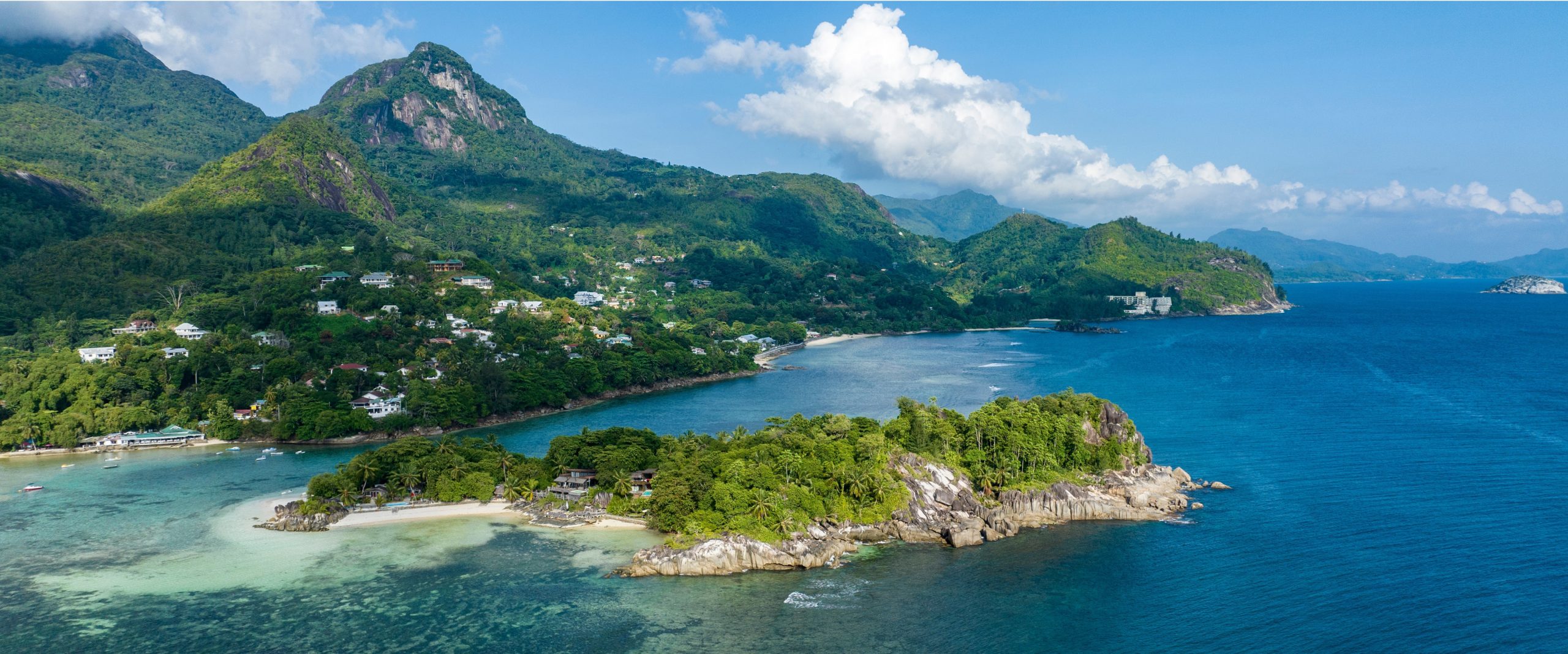
First, the geology. The inner islands of Seychelles are ancient granite — not coral atolls — and over millions of years that granite has weathered into enormous rounded boulders in colours that range from pale grey to deep orange, shaped into forms that look almost sculpted. There is nowhere else on earth where this geology meets a tropical Indian Ocean setting. The result is a landscape — and specifically a beach landscape, at places like Anse Source d’Argent on La Digue island and Anse Lazio on Praslin island — that photographs fail to prepare you for.
Second, the wildlife. Seychelles has no large predators and no malaria. It does have Aldabra giant tortoises (some over 100 years old, wandering resort beaches), the coco de mer palm (whose seed is the world’s largest and heaviest), the Seychelles black parrot (found only on Praslin), and the Seychelles paradise flycatcher (found only on La Digue). Between October and November, whale sharks pass through inner island waters. The biodiversity is extraordinary for such a small island group.
Third, the logistics. Seychelles is easier to visit than its remoteness suggests. No visa for any nationality. Malaria-free. Good infrastructure on all three main islands. Direct flights from Nairobi, Dubai, Paris, Frankfurt and Abu Dhabi. English spoken everywhere.
Getting to Seychelles: Flights and Entry
Seychelles International Airport (SEZ) is on Mahé and handles all international arrivals. Key routes and approximate flying times in 2027:
- Nairobi (NBO) — Mahé (SEZ): Kenya Airways direct; 4.5 hours; USD 350–700 return
- Dubai (DXB) — Mahé: Emirates or flydubai; 4 hours; from USD 600 return
- Addis Ababa (ADD) — Mahé: Ethiopian Airlines; 4 hours; from USD 500 return
- Paris (CDG) — Mahé: Air France direct; approximately 10 hours; from GBP 700 return
- Frankfurt (FRA) — Mahé: Condor; approximately 9 hours; seasonal schedule
- London (LHR) — Mahé: Via Dubai (Emirates) or Paris (Air France); total travel time 12–14 hours
Visa: No nationality requires a visa to enter Seychelles. You receive a Visitor’s Permit on arrival for up to 30 days, extendable to 3 months. You need a valid onward ticket, proof of accommodation, and evidence of sufficient funds — these are rarely checked but worth having.
The Three Main Islands: What This Seychelles Travel Guide Recommends
Most Seychelles travel guides list all 115 islands. This one focuses on the three you will almost certainly visit, because those three are where the best of Seychelles is concentrated.
Mahé: Start Here
Mahé is the largest island (157 km²), has the airport, and is where most visitors spend their first night. It has the widest range of beaches — Beau Vallon on the north coast is long and family-friendly; Anse Intendance on the south is wild and dramatic; Anse Soleil on the west is a sheltered cove. The capital Victoria is the world’s smallest, but its market is excellent for fresh fish and local produce. The Mahé Nature Reserve has marked hiking trails through the granite interior. Most visitors spend 1–3 nights here before moving to the outer islands. For a detailed island guide, see our Mahé vs Praslin vs La Digue comparison.
Praslin: The Best Beaches
Praslin is 45 minutes by ferry from Mahé and home to Anse Lazio — consistently rated one of the world’s top ten beaches — and the Vallée de Mai UNESCO World Heritage palm forest. Day trips to Curieuse Island for giant tortoises are excellent. Most honeymooners and beach-focused visitors use Praslin as their main base. Recommended stay: 3–5 nights. Full details in our Praslin island guide.
La Digue: The Iconic One
La Digue is 10 km², car-free, and home to Anse Source d’Argent — the most photographed beach in the Indian Ocean. You get around by bicycle. The Seychelles paradise flycatcher lives in the Vevé Nature Reserve. The pace of life here is unlike anywhere else. Recommended stay: 2–4 nights after Praslin. Full details in our La Digue island guide.
Getting Between the Seychelles Islands
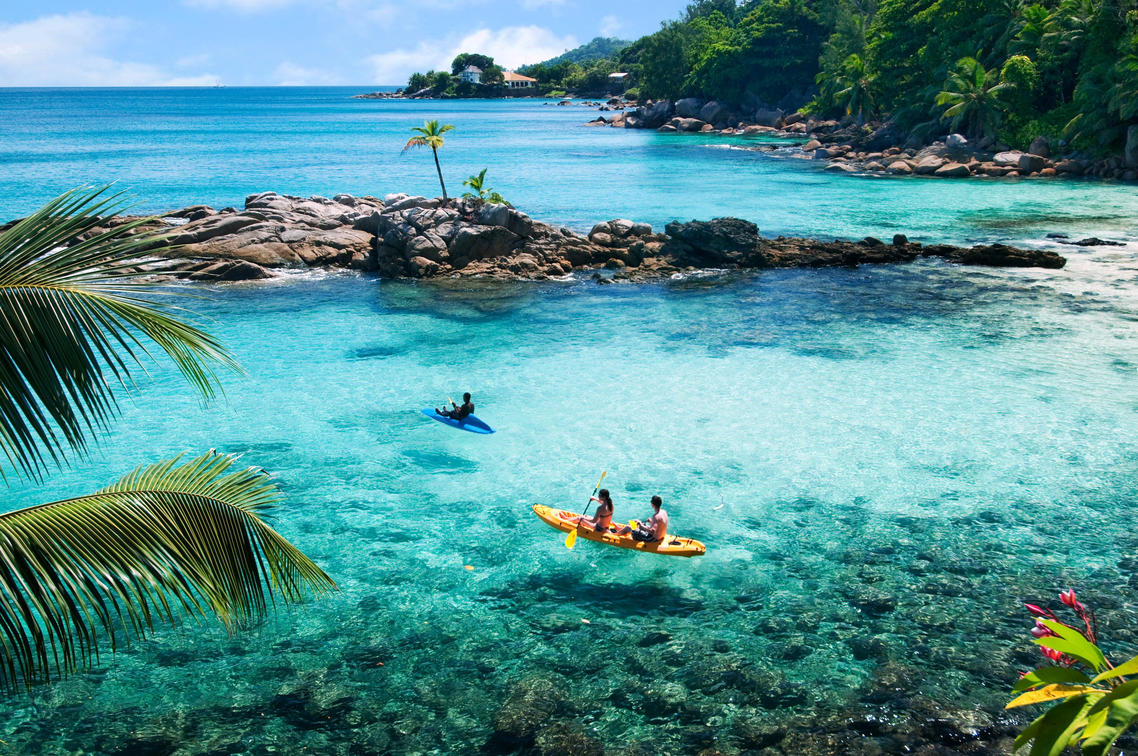
Inter-island travel is one of the best parts of a Seychelles trip and one of the things this travel guide most wants to demystify — many first-timers assume it is complicated. It is not.
Cat Cocos ferries connect Mahé, Praslin and La Digue with multiple daily departures. The Mahé–Praslin crossing takes 55–65 minutes (SCR 450–600 one way, approximately USD 30–42). The Praslin–La Digue crossing takes 15 minutes (SCR 200–280 one way, approximately USD 14–20). Tickets are available online or at the terminal; book ahead in peak season.
Air Seychelles domestic flights cover Mahé–Praslin in 15 minutes for USD 80–130 one way. Useful if time is short or sea conditions are rough. Book in advance.
On La Digue: No cars. Hire a bicycle at the La Passe jetty (USD 7–10/day) as soon as you arrive.
On Mahé and Praslin: Car hire (USD 50–80/day) is the most practical way to explore. Taxis are plentiful but always agree a price before departure — no meters.
When to Visit Seychelles
Seychelles has two main seasons driven by opposing trade winds. The northwest season (October–April) brings warm, calm seas across all coasts and is the better season for swimming and snorkelling. The southeast season (May–September) brings stronger winds and rougher conditions on south-facing coasts, though north-facing beaches (Anse Lazio on Praslin, Beau Vallon on Mahé) stay calm year-round.
The two best windows for visiting are April–May and October–November: calm seas, warm temperatures (27–30°C), lower prices than the December and August peaks, and fewer crowds. October additionally brings whale sharks to Seychelles waters. For a full month-by-month breakdown, see our best time to visit Seychelles guide.
How Much Does Seychelles Cost?
Seychelles is genuinely expensive, but the range is wider than its reputation suggests. A rough daily budget per person on the islands (excluding international flights):
- Budget: USD 120–180/day (guesthouses, self-catering, local restaurants, ferry transport)
- Mid-range: USD 300–600/day (3–4-star hotels, restaurant meals, mix of ferry and flights)
- Luxury: USD 800–3,000+/day (top resorts and private island lodges)
La Digue offers the best value of the three main islands for comparable quality accommodation. The local Creole food — grilled fish, octopus curry, breadfruit — is both the cheapest and the most delicious eating on the islands. For a full breakdown of costs by category, see our Seychelles travel cost guide.
Seychelles and East Africa Safaris: The Perfect Combination
One of the most important things a Seychelles travel guide can tell you is how close these islands are to East Africa. Nairobi is 4.5 hours from Mahé by air. That makes Seychelles the natural beach extension after a Kenya or Tanzania safari — and it is one of the best travel combinations available anywhere in the world. A week in the Masai Mara or Serengeti followed by a week in Seychelles covers the full spectrum of what East Africa and the Indian Ocean can offer, without doubling back or losing days in airports. For a full guide on planning this combination, see our Seychelles safari extension guide and our Seychelles honeymoon safaris guide.
Wildlife in Seychelles
Seychelles wildlife rewards visitors who look for it without demanding the early-dawn commitment of an East Africa safari. Key species:
- Aldabra giant tortoise: Present on Curieuse Island (day trip from Praslin), the L’Union Estate on La Digue, and several resort gardens on Mahé. Some individuals are over 100 years old.
- Whale sharks: Pass through inner island waters October–November; several operators on Mahé and Praslin run snorkelling excursions (USD 100–150/person).
- Seychelles black parrot: Endemic to Praslin; found in the Vallée de Mai and surrounding forest. Best seen early morning.
- Seychelles paradise flycatcher: One of the world’s rarest birds; found almost exclusively on La Digue in the Vevé Nature Reserve.
- Marine life: Excellent reef fish, hawksbill turtles, reef sharks and rays at Coco Island Marine Park and dive sites around Mahé.
Practical Information for Your Seychelles Trip
| Topic | Detail |
|---|---|
| Currency | Seychellois Rupee (SCR); USD and EUR accepted at hotels. ATMs on all three main islands. |
| Language | Seychellois Creole, English and French are all official. English is spoken everywhere tourists go. |
| Time zone | GMT+4 (1 hour ahead of East Africa Standard Time) |
| Power sockets | UK 3-pin (240V). Bring an adapter if travelling from Europe, the US or East Africa. |
| Health | No malaria. No yellow fever certificate required for most travellers. Dengue fever present — use mosquito repellent. |
| Driving | Left-hand side. Car hire on Mahé and Praslin. La Digue is car-free — bicycle only. |
| Mobile / Wi-Fi | Good LTE coverage on all three main islands. Most hotels offer Wi-Fi. Local SIM cards available at the airport. |
| Tipping | Not mandatory but appreciated. 10% at restaurants if service is not already included. |
Frequently Asked Questions: Seychelles Travel Guide 2027
Is Seychelles worth visiting?
Yes — the combination of granite scenery, clear water, endemic wildlife and excellent food makes Seychelles genuinely unlike any other destination. The main caveat is cost: it is expensive, and if your primary goal is an Indian Ocean beach holiday at the lowest possible price, Zanzibar or Diani Beach offer similar beach experiences for considerably less. If you want the specific magic of Seychelles — the granite, the coco de mer, the tortoises — there is no substitute.
How many days do you need in Seychelles?
Seven nights is the practical minimum to do Seychelles justice on two islands (Praslin and La Digue, with one night on Mahé on arrival and departure). Ten nights covers all three islands comfortably. Fourteen nights is the ideal length for a multi-island trip that includes Mahé, Praslin and La Digue without feeling rushed.
Which is the best island in Seychelles?
Praslin has the best overall combination of beaches and natural attractions. La Digue has the single most iconic beach (Anse Source d’Argent) and the most distinctive atmosphere. Mahé has the most variety and facilities. Most visitors find the three islands complement each other perfectly as part of the same trip. See our full Mahé vs Praslin vs La Digue guide for a detailed comparison.
Do you need a visa for Seychelles?
No. All nationalities receive a Visitor’s Permit on arrival, valid for up to 30 days and extendable to 3 months. You need a valid onward ticket and proof of accommodation.
Can you visit Seychelles on a budget?
Yes, though “budget” in Seychelles still means around USD 120–150 per person per day on the islands. Guesthouses on La Digue are the best value; buying from supermarkets and eating at local snack bars (katrol) cuts food costs significantly. See our Seychelles travel cost guide for a full breakdown.
Is Seychelles safe?
Yes. Seychelles has one of the lowest crime rates in Africa and is consistently rated among the safest destinations in the region. Petty theft exists on Mahé as in any tourist destination — take normal precautions with valuables on beaches and in public. There is no political instability and no significant risk to tourists.
What is the best Seychelles itinerary?
For 10 nights: 2 nights Mahé (arrive, Anse Soleil, Victoria market), 4 nights Praslin (Anse Lazio, Vallée de Mai, Curieuse tortoises), 3 nights La Digue (Anse Source d’Argent, cycling, Vevé Reserve), 1 final night Mahé before departure. For 14 nights: add extra nights on each island and include a Mahé diving day and an Anse Georgette visit on Praslin.
All Our Seychelles Guides
Ready to Plan Your Seychelles Holiday?
We design Seychelles itineraries and safari-plus-beach combinations for couples, families and solo travellers across all budget levels. Get in touch and we’ll put together the right trip for you.
Plan Your Seychelles Holiday
We design Seychelles itineraries and safari-plus-beach combinations for all budgets. Tell us your dates and we’ll do the rest.
Seychelles at a Glance
| Islands | Mahé, Praslin, La Digue |
| No visa | All nationalities |
| Best months | Apr–May, Oct–Nov |
| No malaria | Health safe year-round |
| Nearest hub | Nairobi (4.5 hr) |
| Minimum stay | 7 nights |
| Ideal stay | 10–14 nights |