
La Digue island is unlike any other place in Seychelles — and given the competition, that is saying something. It is small (10 km²), almost entirely car-free, and home to Anse Source d’Argent, the most photographed beach in the Indian Ocean. People arrive by ferry from Praslin expecting a pretty island and leave having quietly rearranged their idea of what a holiday can feel like. La Digue island moves at bicycle speed, runs on fresh fish and coconuts, and has a way of making everything that felt urgent before you arrived seem considerably less so. This guide covers everything you need to plan your time here: getting there, the beaches, cycling routes, wildlife, where to stay, and the questions people ask most before visiting.
What Makes La Digue Island Different?
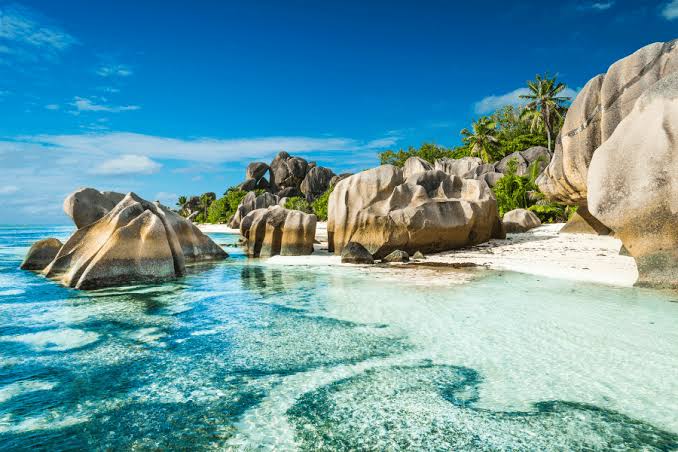
Almost every Indian Ocean island sells itself on beaches and water. La Digue island delivers both, but the thing that sets it apart is its geology and its pace. The inner islands of Seychelles are granite — not coral atolls like the Maldives — and on La Digue that granite takes its most dramatic form: boulders three and four metres tall, worn smooth over millennia into shapes that look almost deliberate, in colours that range from pale grey to deep orange depending on the time of day and how wet the rock is. There is nothing else that looks like this in the Indian Ocean.
The absence of cars adds something harder to describe. The island’s roads are shared between bicycles, ox-carts, and pedestrians. The loudest sounds on most parts of La Digue island are the wind in the palms and the sea. It is the kind of quiet that takes a day to properly hear.
How to Get to La Digue Island
La Digue island has no airport. All arrivals come by ferry, which is part of the island’s character — you step off a boat, not a plane, and that arrival already feels different.
From Praslin: Cat Cocos ferries run multiple times daily and cross in approximately 15 minutes. Tickets cost around SCR 200–280 (USD 14–20) return. This is the standard route; most visitors come to La Digue island as the third stop on a Mahé–Praslin–La Digue circuit.
From Mahé: A direct Cat Cocos service exists (check current timetables as seasonal schedules vary) and takes around 2 hours. Most travellers stop overnight on Praslin en route rather than making the full crossing in one go.
On arrival: Bicycle hire sheds are immediately at the La Passe jetty. Hire one before you do anything else — you will need it within minutes.
Anse Source d’Argent: La Digue Island’s Signature Beach
Anse Source d’Argent is the reason most people first look up La Digue island. It is a series of shallow sandy pools and coral gardens framed by enormous pink-orange granite boulders — some rising four metres from the sand — with water that moves from pale turquoise in the shallows to deep teal further out. The beach is not wide or long by standard measures, but it does not need to be. The boulders create a series of enclosed spaces, each slightly different, each extraordinary.
Visiting Anse Source d’Argent: what you need to know
- Access: Through the L’Union Estate coconut plantation; a small entry fee of around SCR 100 (USD 7) covers the estate and beach
- Opening time: Approximately 7 am — arrive as early as possible
- Best light: Sunrise to 10 am; the granite glows amber in early morning light and the beach is nearly empty
- Swimming: The shallowest pools are perfect for children; deeper sections near the outer boulders offer basic snorkelling
- Crowds: Tour groups from Praslin day trips arrive around 10–11 am; plan your visit around this
- Facilities: One small beach bar inside the estate; bring your own sun protection
Cycling La Digue Island: Routes and What to Expect
Cycling is not just a way to get around La Digue island — it is one of the best things to do here. The main road is flat along the coast and manageable on the basic single-speed bicycles available at every hire point near the jetty (SCR 100–150/day, approximately USD 7–10). The interior track crossing the granite ridge is rough and steep in sections — worth attempting on foot if you want the elevated views.
The Coastal Circuit (2–3 hours)
The standard route from La Passe goes south to Anse Source d’Argent (20 minutes), then continues along the south coast to Grand Anse, loops east past a small village, and returns north through a coconut plantation back to La Passe. Stops along the way:
- L’Union Estate — entry to Anse Source d’Argent; also worth exploring for the copra-drying house and the giant tortoise colony on the estate grounds
- Grand Anse — wild south-coast beach (dramatic scenery, usually too rough to swim)
- Anse Patates — sheltered north-coast bay; calmer than the south in trade-wind season
The South Coast Walk to Anse Coco (allow 3–4 hours return)
From Grand Anse, a coast path leads south for 45 minutes to Anse Coco — completely undeveloped, no facilities, and almost always deserted. Another 30 minutes south brings you to Anse Marène, one of the emptiest beaches in Seychelles. Bring water, snacks, and sun protection. Leave bicycles at Grand Anse and walk.
Wildlife on La Digue Island
The Seychelles Paradise Flycatcher
La Digue island is the primary natural habitat of the Seychelles paradise flycatcher (veuve) — one of the world’s rarest birds, with a total population of only a few hundred pairs. The male is unmistakable: jet black with a ribbon tail up to 20 cm long that trails behind it as it moves through the forest canopy. The Vevé Nature Reserve in the island’s interior runs self-guided and guided morning walks; sightings are consistent before 9 am. A conservation programme has brought the species back from near-extinction and La Digue island remains its stronghold.
Giant Tortoises at L’Union Estate
The L’Union Estate, which you pass through on the way to Anse Source d’Argent, has a colony of Aldabra giant tortoises that roam the grounds freely. They are significantly smaller than the populations on Curieuse Island (a day trip from Praslin) but the access is immediate and included in the estate entry fee. Worth 20 minutes on any visit.
Other Wildlife
La Digue island is excellent for birdwatching beyond the flycatcher. The white fairy tern (which nests directly on branches with no nest), Seychelles sunbird, and Seychelles bulbul are all common. Fruit bats are active at dusk throughout the island. The reef around La Digue supports good populations of reef fish, and occasional reef sharks and rays are seen on snorkelling excursions.
Snorkelling around La Digue Island
The Coco Island Marine Park, a 20-minute boat ride from La Passe, is the best snorkelling destination accessible from La Digue island — clear water, excellent reef fish diversity, and occasional reef sharks and rays. Anse Source d’Argent itself has a coral garden in its outer section, accessible from the beach in calm conditions. Several operators at the La Passe jetty hire snorkelling equipment and run half-day excursions to surrounding islets and reefs; expect to pay USD 40–60 per person for an organised trip. Whale sharks pass through La Digue island waters between October and November; ask locally about sightings and excursions during this window.
Where to Stay on La Digue Island
La Digue island is small enough that location within it barely matters — everywhere is within easy cycling distance of everywhere else. Most accommodation is in or near La Passe village for easy ferry access and proximity to the island’s restaurants and shops.
| Budget tier | Options on La Digue island | Approx. cost/night |
|---|---|---|
| Luxury | Le Domaine de L’Orangeraie (private pool villas); Zil Pasyon on Felicité Island (10-min boat transfer) | USD 500–2,500+ |
| Mid-range | Le Nautique Waterfront Hotel (jetty location, pool, sea views) | USD 200–380 |
| Budget | Self-catering guesthouses throughout La Passe; many have kitchenettes, garden areas and air conditioning | USD 60–130 |
One practical note on La Digue island accommodation: bring enough cash from Praslin or Mahé. The ATM at the La Passe jetty is not always stocked, and not all guesthouses accept cards.
How Many Days Do You Need on La Digue Island?
Two nights covers the essentials: Anse Source d’Argent at sunrise, the L’Union Estate tortoise colony, the coastal cycling circuit, and a morning walk in the Vevé Reserve for the flycatcher. Three nights adds a snorkelling excursion and the south-coast walk to Anse Coco. Four nights lets you move at the island’s own pace, which is the point. Most visitors come to La Digue island as part of a multi-island circuit; two or three nights here after three to five nights on Praslin is the most popular combination.
Can You Visit La Digue Island as a Day Trip?
Yes — the ferry from Praslin takes 15 minutes and runs multiple times a day. A La Digue day trip from Praslin is entirely reasonable: hire a bicycle at the jetty, visit Anse Source d’Argent in the morning, cycle to Grand Anse after lunch, and take the late afternoon ferry back. That said, a day trip means missing the sunrise at Anse Source d’Argent (which is the single best time to be there) and the Vevé Reserve flycatcher walk. If the ferry schedule allows an overnight, take it.
Frequently Asked Questions: La Digue Island
What is La Digue island known for?
Primarily for Anse Source d’Argent — the iconic pink-granite boulder beach — and for being car-free. La Digue island is also the primary habitat of the Seychelles paradise flycatcher, one of the world’s rarest birds.
Is La Digue island worth visiting?
Yes, unequivocally. Even a day trip from Praslin is worthwhile. Two or three nights gives you the full experience — Anse Source d’Argent at sunrise, the cycling circuit, the wildlife walks — and is one of the most distinctive island experiences in the Indian Ocean.
Is La Digue island good for families?
Yes. The shallow rock pools at Anse Source d’Argent are ideal for children. Cycling is a family activity that works well on La Digue island’s flat coastal roads. The car-free environment makes it safe and relaxed for young children.
How is La Digue island different from Praslin?
Praslin has more facilities, better restaurants, and the UNESCO Vallée de Mai forest. La Digue island is quieter, more removed, and more distinctively itself — the boulders of Anse Source d’Argent are unique even within Seychelles. Most visitors find the two islands complement each other perfectly as part of the same trip. See our full Mahé vs Praslin vs La Digue comparison for more detail.
What is the best beach on La Digue island?
Anse Source d’Argent for the scenery and the experience. Anse Patates for calm swimming in the southeast season. Anse Coco for solitude (though it requires a 45-minute walk from Grand Anse).
More Seychelles Guides
Planning a Trip to La Digue Island?
We put together Seychelles itineraries that include La Digue as part of a multi-island circuit or as a standalone destination. Tell us your dates and we’ll build the right trip around you.
Plan Your La Digue Island Stay
We book La Digue island accommodation and build multi-island Seychelles circuits. Tell us your dates and budget.
Enquire NowQuick Facts
| Ferry from Praslin | ~15 min, USD 14–20 return |
| Getting around | Bicycle (hire at jetty, $7–10/day) |
| Signature beach | Anse Source d’Argent |
| Must-do | Sunrise at Anse Source d’Argent |
| Wildlife | Seychelles paradise flycatcher |
| Best snorkelling | Coco Island Marine Park |
| Recommended stay | 2–4 nights |