
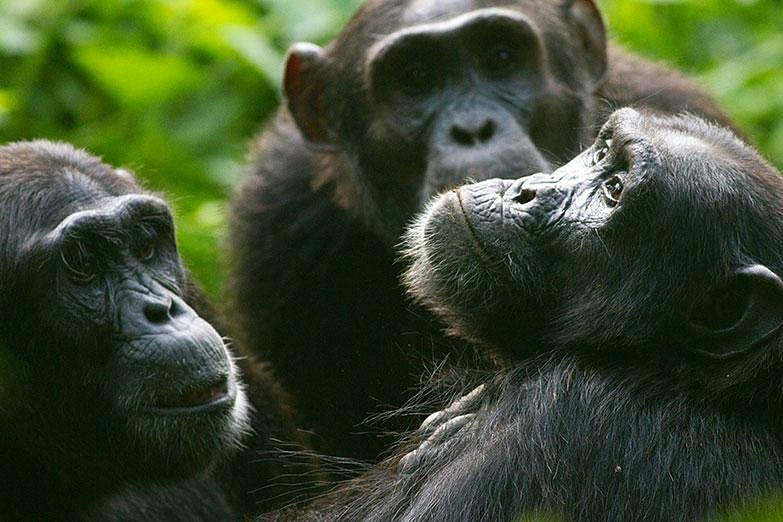
If you have ever wanted to sit quietly in a rainforest while a family of wild chimpanzees moves through the trees around you — feeding, grooming, playing and calling to each other — then chimpanzee trekking in Kibale Forest National Park belongs at the top of your Uganda itinerary. Located in the rolling foothills of western Uganda, Kibale Forest is home to over 1,500 chimpanzees, which makes it the single most chimpanzee-dense protected forest in Africa. It is not just a wildlife statistic; it translates directly to what you experience on the ground — sightings are regular, encounters are close and the hour you spend with a habituated community feels genuinely unhurried.
At Superfine Safaris Limited, we have organised chimpanzee trekking in Kibale Forest National Park for guests coming from all corners of the world, from first-time Africa visitors to seasoned safari travellers on their fifth Uganda trip. This guide shares everything we know: how the trekking works, what wildlife shares the forest, permit costs, the best seasons to visit, where to stay and how to fit Kibale into a wider Uganda safari.
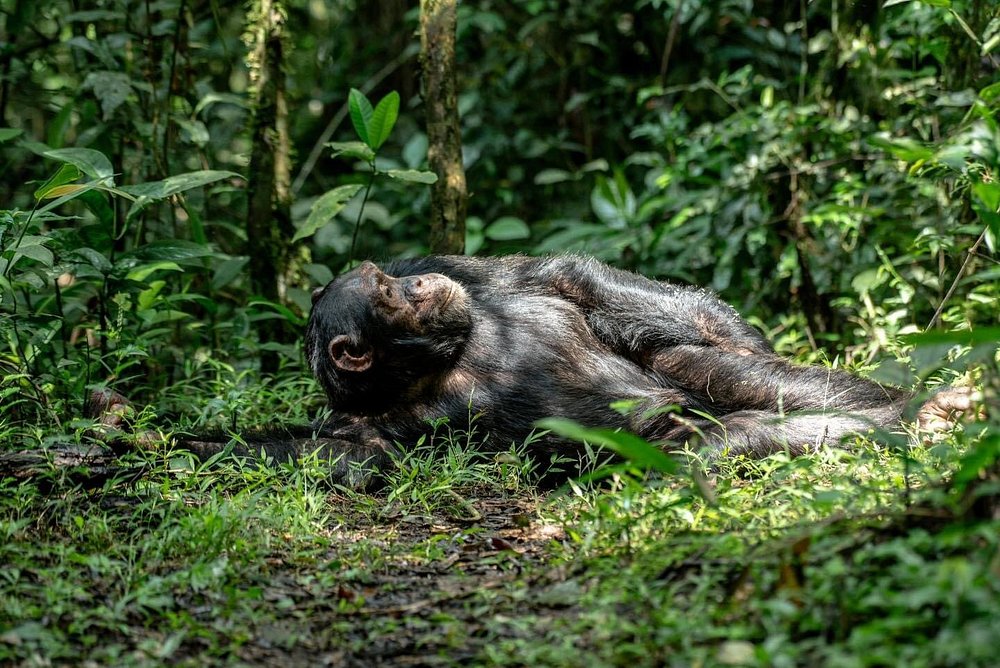
Why Kibale Forest National Park Is Uganda’s Premier Chimp Destination
Kibale Forest National Park covers 795 square kilometres of moist evergreen rainforest in western Uganda, straddling the Albertine Rift escarpment between the Rwenzori Mountains and the savannah of Queen Elizabeth National Park. The park protects one of the last large tracts of lowland rainforest in East Africa — and it is extraordinarily alive. Thirteen primate species share the canopy, the understorey and the forest floor; 375 bird species fill every layer of vegetation; and the deep green of the trees on a rainy afternoon feels like the heart of the continent.
What makes Kibale different from other chimpanzee destinations is the depth of habituation. The communities at Kanyanchu — the main visitor entry point, 36 kilometres east of Fort Portal — have been in daily contact with researchers and rangers for over three decades. These chimpanzees do not flee or hide when humans approach. They go about their lives: a mother nursing her infant in the fork of a fig tree, a large male drumming on a buttress root in a display that shakes the ground, juveniles chasing each other through the mid-canopy. You are present in their world and they carry on as if you have always been there.
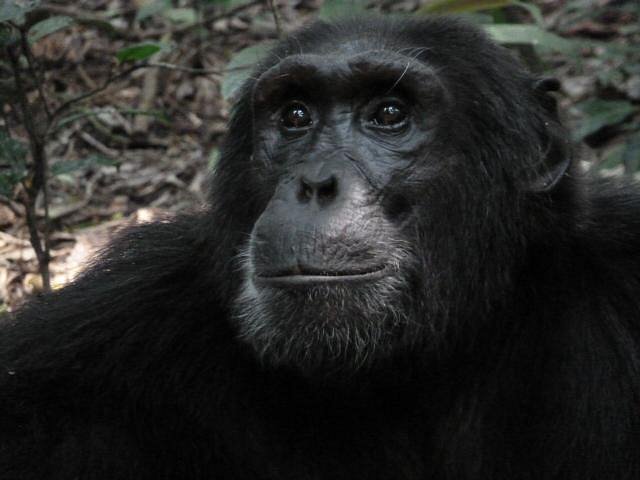
How Chimpanzee Trekking in Kibale Forest National Park Works
The Morning Briefing
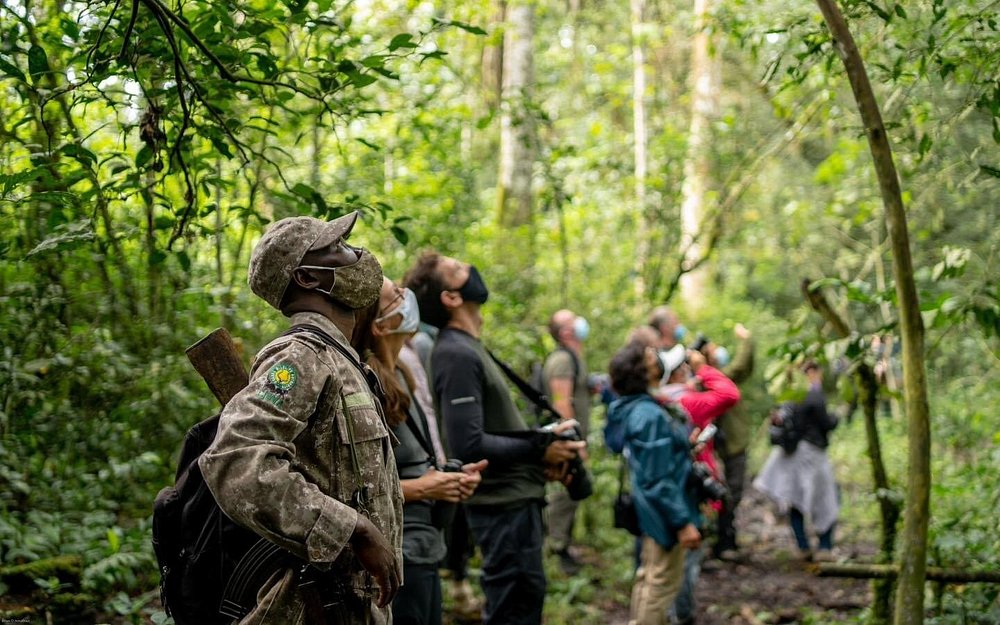
All chimpanzee treks begin at the Uganda Wildlife Authority briefing centre at Kanyanchu. Morning treks depart at 8:00 AM after a 30-minute orientation with a UWA ranger covering park rules, chimp behaviour and what to expect on the trail. The rules are straightforward and important: groups are capped at six visitors per community, you spend a maximum of one hour with the chimps, maintain a minimum distance of eight metres, do not use flash photography and do not trek if you have cold, flu or any respiratory symptoms. Chimpanzees share 98.7% of human DNA and are genuinely vulnerable to human illness — following the health rules protects both the animals and the integrity of the habituation.
Afternoon treks depart at 2:00 PM. They work well as a second activity on a busy day but they are shorter — chimpanzees begin moving to roosting trees from around 5:00 PM and tracker teams time the return accordingly. The morning trek is what most guests and our guides at Superfine Safaris Limited recommend, particularly if photography is a priority.
Finding the Chimps
Before you arrive at the briefing centre, the tracker team has already been out since before sunrise. Using radio-collar data and knowledge built over years of following these communities, the trackers locate where the chimps slept the previous evening and follow them from first light. By the time your group sets off at 8:00 AM, the tracker has already radioed in the community’s position.
Trek duration depends on how far the community has moved overnight. On days when the chimps are close to the trail network you may encounter them within 30 to 40 minutes of walking. On other days the walk to reach them takes 90 minutes or two hours. The forest itself makes this walk worthwhile regardless — the understorey is full of red colobus monkeys, the calls of grey-cheeked mangabeys carry through the canopy, and the light filtering through the trees at 8:30 in the morning is extraordinary.
The Hour With the Chimpanzees
When the tracker gives the signal, the group stops and takes position. Rangers manage the sight lines, make sure the group stays together and ensure the one-hour encounter respects both the rules and the chimps’ behaviour. What happens in that hour is genuinely unpredictable in the best possible way. You might watch a whole community feeding in a fruiting fig tree while infants play on lower branches. You might find a large male on the ground ten metres in front of you, simply grooming himself and ignoring the entire group. On the right morning, the forest fills with pant-hoots — the long-distance call chimpanzees use to locate each other — and a whole sub-group comes crashing through the canopy directly overhead to join the community you are watching.
The one-hour limit is enforced. After that, the rangers lead the group back to Kanyanchu. Total time for a morning trek, from briefing to return, is typically three to five hours.
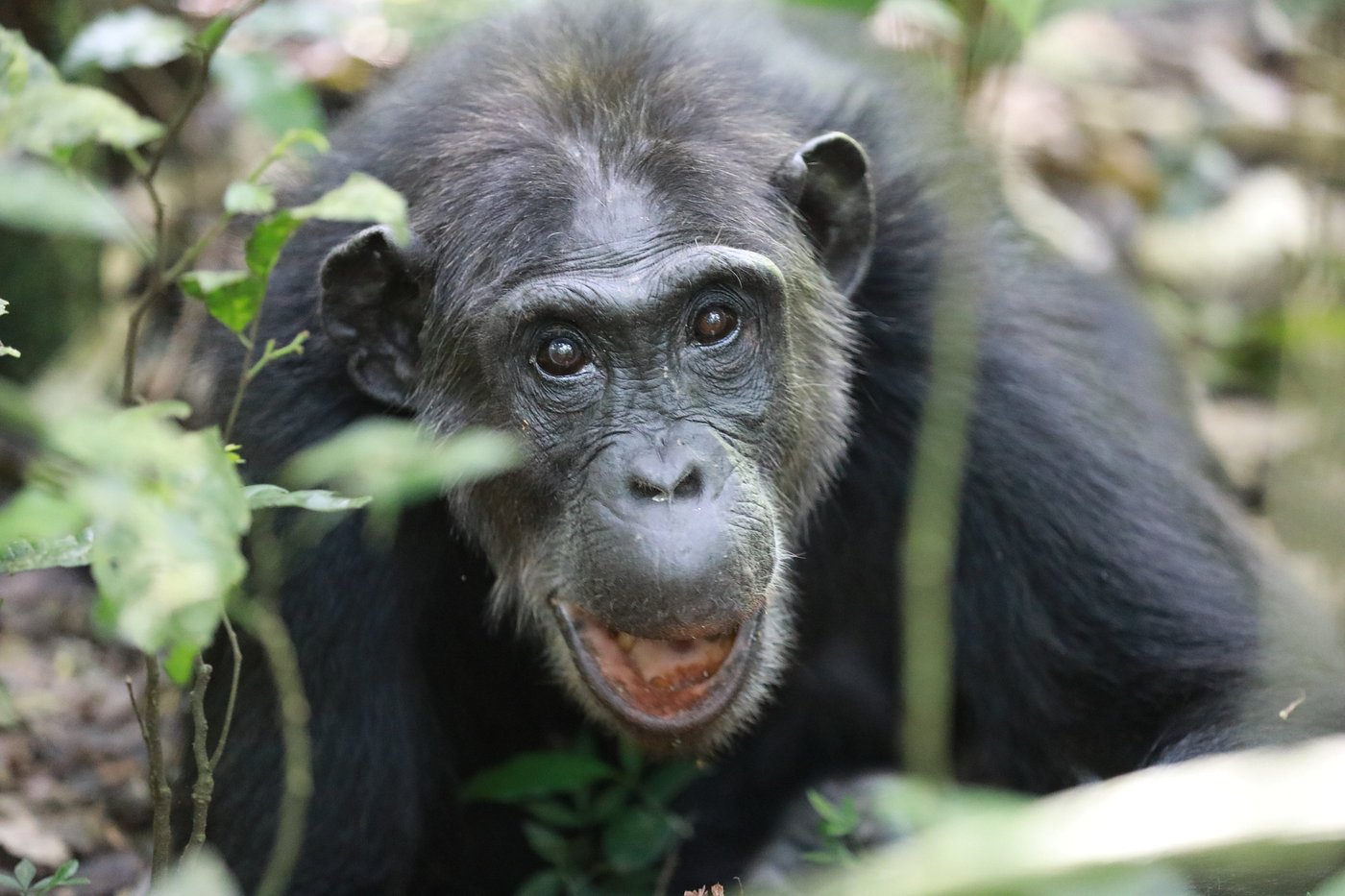
The Chimp Habituation Experience (CHEX)
For travellers who want to go deeper, the Chimpanzee Habituation Experience — known as CHEX — is a full-day immersion that begins before dawn and ends after the chimps have settled into their night trees. Instead of one hour with a fully habituated community, you join the research team following a community that is still being habituated to human presence. The maximum group size is four visitors.
CHEX departs at 6:00 AM, sometimes earlier, and runs until around 7:00 PM. You carry lunch and eat it in the forest, watching the chimps feed, rest, travel and interact throughout the day. You see behaviours that simply do not appear in a one-hour window: coordinated hunts, long-distance travel, territorial calling sessions, complex social politics between adult males. It is more demanding — the walking is longer and the conditions can be challenging — but for anyone with a genuine interest in primates or wildlife behaviour, CHEX is transformative.
Wildlife in Kibale Forest National Park
Chimpanzee trekking in Kibale Forest National Park puts you inside a forest that is genuinely full of life. Even on a day when the chimp encounter takes longer to reach, the walk itself is a wildlife experience in its own right.
13 Primate Species
Kibale Forest National Park holds 13 primate species — the highest diversity of any protected area in East Africa. After chimpanzees, the most commonly encountered include:
- Red colobus monkey — large, loud and acrobatic in the upper canopy; groups of 50 to 100 are frequently seen near the Kanyanchu trail system
- Grey-cheeked mangabey — a big, dark-furred primate with a distinctive loud call; troops of 20 to 50 move between the forest floor and mid-canopy
- L’Hoest’s monkey — an Albertine Rift endemic; quiet, ground-foraging groups in the shadowy understorey
- Black and white colobus — one of Africa’s most striking primates; their leaping between trees in the upper canopy is theatrical
- Red-tailed monkey — small, fast and everywhere; identifiable by the white nose-spot and rich chestnut tail
- Olive baboon — large troops near forest edges and lodge areas, often seen on the road to Kanyanchu
- Potto and bush baby — nocturnal and invisible by day; the park’s night walk brings you close to both with a spotlight
Birds — 375 Species Including 6 Albertine Rift Endemics
Kibale Forest National Park is one of Uganda’s great birding destinations. The 375 recorded species span every forest layer, from ground-level francolin to canopy hornbills. Six Albertine Rift endemics are present — birds found nowhere else on earth outside this narrow highland corridor — including the African pitta, green-breasted pitta, Nahan’s francolin, black bee-eater, blue-headed sunbird and Rwenzori turaco. The Bigodi Wetland Sanctuary, a community-run papyrus boardwalk at the park’s southern boundary, adds papyrus gonolek, white-winged warbler and great blue turaco to any birding checklist. Our full guide to the top birding destinations in Uganda covers Kibale’s birding in more detail.
Other Forest Wildlife
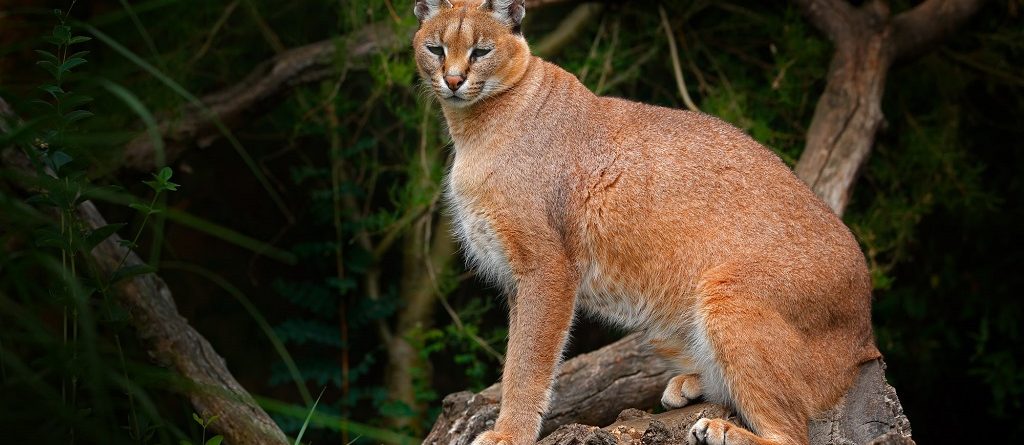
Beyond primates and birds, Kibale Forest National Park shelters forest elephant (heard more often than seen), buffalo, bushbuck, sitatunga, Harvey’s duiker, giant forest hog, African civet and large-spotted genet. The most elusive resident is the African golden cat — a medium-sized felid, roughly twice the size of a domestic cat, that moves through the park’s densest sections and is rarely photographed anywhere in Africa. Leopard are also present but almost never encountered on day treks. The park’s night walk is the best opportunity for nocturnal species including potto, bush baby, African wood owl and flying squirrels.
Chimpanzee Trekking Permits — Costs and Booking
| Activity | Foreign Non-Resident | Foreign Resident | East African Citizen |
|---|---|---|---|
| Standard chimp trekking permit | $200 USD | $150 USD | UGX 150,000 |
| CHEX — full-day habituation | $250 USD | $200 USD | UGX 200,000 |
| Park entrance fee (per day) | $40 USD | $25 USD | UGX 20,000 |
| Night walk permit | $30 USD | $20 USD | UGX 30,000 |
Permits must be booked in advance — walk-in availability exists but is unreliable, especially from June through August and in December and January when the park is busiest. Superfine Safaris Limited manages all permit bookings directly with Uganda Wildlife Authority as part of every Kibale chimpanzee trekking package. We recommend booking at minimum three months ahead for peak season travel.
Best Time for Chimpanzee Trekking in Kibale Forest National Park
| Season | Months | What to Expect |
|---|---|---|
| Long dry season | June – September | Firm trails, excellent visibility, peak demand — book permits far in advance |
| Short dry season | December – February | Very good conditions, cooler temperatures, slightly easier permit availability |
| Long rains | March – May | Muddy trails, lush forest, newborn animals, fewer visitors and lower package rates |
| Short rains | October – November | Brief afternoon showers, manageable trekking, moderate permit availability |
Chimpanzee trekking in Kibale Forest National Park is productive in every season. The habituated communities are located by tracker teams seven days a week, year-round. The practical difference between dry and wet season is trail conditions, not sighting quality. In the rains, trails become muddy and some sections require gaiters or waterproof boots; in the dry season, walking is easier and the undergrowth is lower, which can make visual contact with chimps slightly clearer. Both seasons have their character — the green season forest after rainfall has a quality of light and sound that is entirely its own.
Where to Stay Near Kibale Forest National Park
Accommodation near Kibale Forest National Park ranges from budget guesthouses at the park gate to some of western Uganda’s finest luxury lodges overlooking the Albertine Rift crater lakes. Staying close to Kanyanchu means you can reach the briefing centre for the 8:00 AM morning trek without a long transfer, and lodge guides often extend the experience with afternoon forest walks and birding. Here are six of the best options across different categories:
1. Primate Lodge Kibale
Primate Lodge Kibale is the only accommodation located inside Kibale Forest National Park, operated by Uganda Wildlife Authority. The lodge sits within walking distance of the Kanyanchu briefing centre, surrounded by the sounds of the forest. Bandas and cottages are simple but comfortable, with hot water and full board. The location is unbeatable for early morning trekkers — you can walk to briefing in five minutes — and the forest atmosphere at night, with chimps sometimes calling from nearby trees, is something no other property in the area can match.
2. Kibale Forest Camp
Kibale Forest Camp is a well-regarded mid-range tented camp positioned near the park’s Kanyanchu entrance. Canvas-walled tents on raised platforms offer comfort without pretension, and the camp’s communal fire pit and open dining area create a relaxed social atmosphere that suits families and small groups. The team is knowledgeable and the guiding quality for forest walks and birding walks on camp grounds is consistently good. A strong choice for travellers who want forest immersion at a moderate price point.
3. Turaco Treetops
Turaco Treetops is a boutique treehouse lodge set in private forest near Fort Portal, roughly 30 minutes from the Kanyanchu gate. Individual treehouse rooms are built into and around mature trees — some rooms have branches growing through the floor — and the views from private decks look out over forested hills toward the Rwenzori Mountains on clear mornings. The lodge is small, hosting a maximum of around 20 guests, and the personal service reflects that intimacy. Excellent for honeymooners and travellers who want something genuinely distinctive.
4. Kyaninga Lodge
Kyaninga Lodge sits on the rim of the Kyaninga crater lake, 20 kilometres from Fort Portal and about 45 minutes from Kibale Forest. It is one of the most visually striking properties in western Uganda — the main lodge building is a grand thatched roundhouse on a cliff edge, and the six log cabins each have unobstructed views across the lake and the surrounding forested crater walls. Kyaninga is a genuinely luxurious property: kingsize beds, deep baths, wood-burning fireplaces and superb food. The crater lake forest holds Nahan’s francolin and several Albertine Rift endemics, making it a birding destination in its own right.
5. Ndali Lodge
Ndali Lodge occupies a dramatic ridge above the Ndali-Kasenda crater lakes complex — a cluster of deep volcanic lakes ringed by tea estates and forest — about an hour from Kibale Forest. The lodge has eight cottages with sweeping views over the lakes and hills, and the atmosphere is that of a comfortable, well-run family home rather than a resort. Tea on the lawn in the afternoon, evening meals by candlelight, and early morning walks through the tea fields to the crater rim are the rhythm of a stay here. Ndali suits travellers who want beauty, peace and good food alongside their chimpanzee trekking.
6. Papaya Lake Lodge
Papaya Lake Lodge is a mid-range option set on the banks of a small crater lake near Fort Portal, surrounded by gardens and forest. Comfortable en-suite rooms and an open-sided dining and lounge area make it a pleasant and unpretentious base for Kibale trekking. The lodge works particularly well for families — the grounds are safe, spacious and child-friendly, and the combination of lake swimming and forest activities suits mixed-age groups. The kitchen turns out reliable, home-style food and the rates are among the more reasonable in the crater lakes area.
Superfine Safaris Limited can arrange accommodation at any of these properties as part of a customised Kibale itinerary. Contact our team and we will match you to the right lodge for your group, your budget and your travel dates.
Combining Kibale Forest With Other Uganda Destinations
Kibale Forest National Park sits at the centre of Uganda’s western wildlife corridor, which means it pairs naturally — and without excessive travel time — with several of the country’s other signature experiences:
- Queen Elizabeth National Park — 1.5 hours south via the Kasese road. Game drives for lions, elephants, hippos and kob, plus the famous Kazinga Channel boat cruise. This is Uganda’s most popular two-park combination, and with good reason.
- Bwindi Impenetrable Forest — 4 to 5 hours south. Combines chimpanzee trekking with mountain gorilla trekking for a complete great ape safari. Our 5 Days Gorilla and Chimp Safari covers both.
- Mgahinga Gorilla National Park — adds gorilla trekking in Mgahinga and golden monkey trekking in the Virunga volcano forests.
- Murchison Falls National Park — combines savannah game drives and the Victoria Nile boat cruise with the rainforest experience of Kibale for a Uganda itinerary that covers three entirely different ecosystems.
- Budongo Forest — for committed chimp enthusiasts, adding chimpanzee trekking in Budongo Forest on a Murchison Falls extension lets you compare two very different chimp communities in two very different forests on one trip.
How to Get to Kibale Forest National Park
The Kanyanchu visitor centre is 36 kilometres east of Fort Portal on the Fort Portal–Kamwenge road, signposted and easy to find. Fort Portal is 290 kilometres from Kampala — a 4 to 5 hour drive west on the well-surfaced Kampala–Fort Portal highway via Mubende. Superfine Safaris Limited provides road transfers with experienced driver-guides on all our packages. For travellers with limited time, domestic flights from Entebbe to Kasese (90 minutes south of Kibale) or to a charter airstrip closer to the park are available — see our guide to domestic flights in Uganda for current schedules and costs.
Practical Tips for Chimpanzee Trekking in Kibale Forest National Park
- Clothing: Long sleeves and long trousers in neutral colours — greens, browns, khaki. The forest has biting ants, nettles and occasional thorns. Bright colours are not prohibited but subdued colours are more respectful of the animal experience.
- Footwear: Solid closed-toe hiking shoes or boots. The forest floor is uneven and often damp. Sandals and open-toe shoes are not suitable.
- What to carry: Two litres of water, energy snacks, insect repellent, a small daypack and a rain jacket. The forest canopy provides shelter from light rain but heavy downpours reach the floor.
- Camera: A camera or phone with good low-light performance is essential. The forest interior is dark even at midday. Flash is prohibited, so high ISO capability matters more than a large lens.
- Children: Minimum age is 12 years per Uganda Wildlife Authority rules. This applies to all trekking permits including CHEX.
- Fitness: Moderate fitness is sufficient for the standard trek. CHEX requires a reasonable level of stamina for a full day of walking on uneven terrain.
- Health: Do not trek if you have a cold, respiratory infection or flu symptoms. This rule is strictly enforced for the protection of the chimpanzees.
Frequently Asked Questions
How likely am I to see chimpanzees on a trek in Kibale Forest National Park?
The sighting success rate at Kanyanchu is consistently above 90 percent. The combination of a large chimpanzee population, long-term habituation and dedicated daily tracking makes unsuccessful encounters genuinely rare. No wildlife sighting is ever guaranteed, but Kibale Forest National Park gives you some of the best odds of any primate destination in Africa.
How does Kibale compare to Budongo Forest for chimpanzee trekking?
Both are excellent. Kibale Forest National Park has a larger chimpanzee population, denser forest and higher primate diversity — 13 species vs approximately 9 in Budongo. Budongo’s permits are currently lower-cost and the more open canopy can make visual contact slightly easier. Superfine Safaris Limited recommends Kibale for first-time chimp trekkers and both forests for visitors building a multi-week Uganda itinerary — they are different enough in character and wildlife to be genuinely complementary.
Can I combine gorilla trekking and chimpanzee trekking on the same Uganda trip?
Absolutely — this is one of Uganda’s signature multi-species itineraries. Kibale Forest National Park for chimpanzees and Bwindi Impenetrable Forest or Mgahinga for mountain gorillas can be combined on a 7 to 10-day itinerary. Our 5 Days Gorilla and Chimp Safari is the most popular version of this combination.
What is the difference between morning and afternoon chimpanzee trekking?
Morning treks (8:00 AM) coincide with peak chimpanzee activity — feeding, travelling and socialising in the hours after sunrise. Afternoon treks (2:00 PM) are shorter because chimps move to roosting trees around 5:00 PM. Morning is recommended for photography and for guests who want the most active behavioural sightings. Afternoon works as a secondary activity if your morning is occupied with something else.
How far in advance should I book a Kibale Forest chimpanzee trekking permit?
Three months ahead for June to August and December to January. Outside peak season, four to six weeks is generally sufficient, though earlier is always better. Superfine Safaris Limited handles all permit bookings with Uganda Wildlife Authority — you do not need to contact UWA separately. Get in touch with our team to check availability for your preferred dates.
Ready to Book?
Talk to our safari experts and get a custom itinerary built for you.
Get a Free Quote