
Looking for the East Africa safari planning guide for 2027? check this detailed guide by Superfine Safaris Limited to help you plan your next East African safari with no difficulty. Planning a safari in East Africa starts with three questions: which countries, which season and what budget. Get those three right and the rest falls into place. This guide is covers everything you need to make those decisions confidently for 2027, from gorilla permit availability to what actually goes in your bag. whether you are planning a gorilla trekking safari, birding journey, cultural tour, or the scenic wildebeest migration, experience. this safari planning guide is all you need
Choosing Your Destination: Uganda, Kenya, Tanzania or Rwanda
Each of the four countries delivers a genuinely different experience. Most of the itineraries we put together combine two countries — the journey between them is rarely more than a day, and the contrast deepens the trip considerably.

Uganda — Primates, Parks and Honest Value
Uganda is where Superfine Safaris is based, and it is where we take most of our repeat clients. The reason is simple: nowhere else on earth can you track mountain gorillas in the morning, then spend the afternoon watching tree-climbing lions or Nile crocodiles, then fall asleep to forest sounds from a lodge perched above a national park. Bwindi Impenetrable National Park holds over half the world’s remaining mountain gorillas. Kibale Forest has the densest concentration of chimpanzees on the continent. Queen Elizabeth National Park offers one of the most varied wildlife experiences in East Africa — savannah, forest, wetland, crater lakes — within a single park boundary.
For travellers who want gorilla trekking without paying Rwanda’s USD 1,500 permit, Uganda’s USD 800 permit delivers the same hour with a habituated gorilla family. The trek is longer and the forest is wilder — many of our clients tell us that is the point. Road transfers in Uganda are longer than Rwanda, but we route them through genuinely beautiful landscapes: the Kazinga Channel, the Rwenzori foothills, the equator crossing. Uganda rewards travellers who are curious rather than just comfortable.
Kenya — The Classic Safari
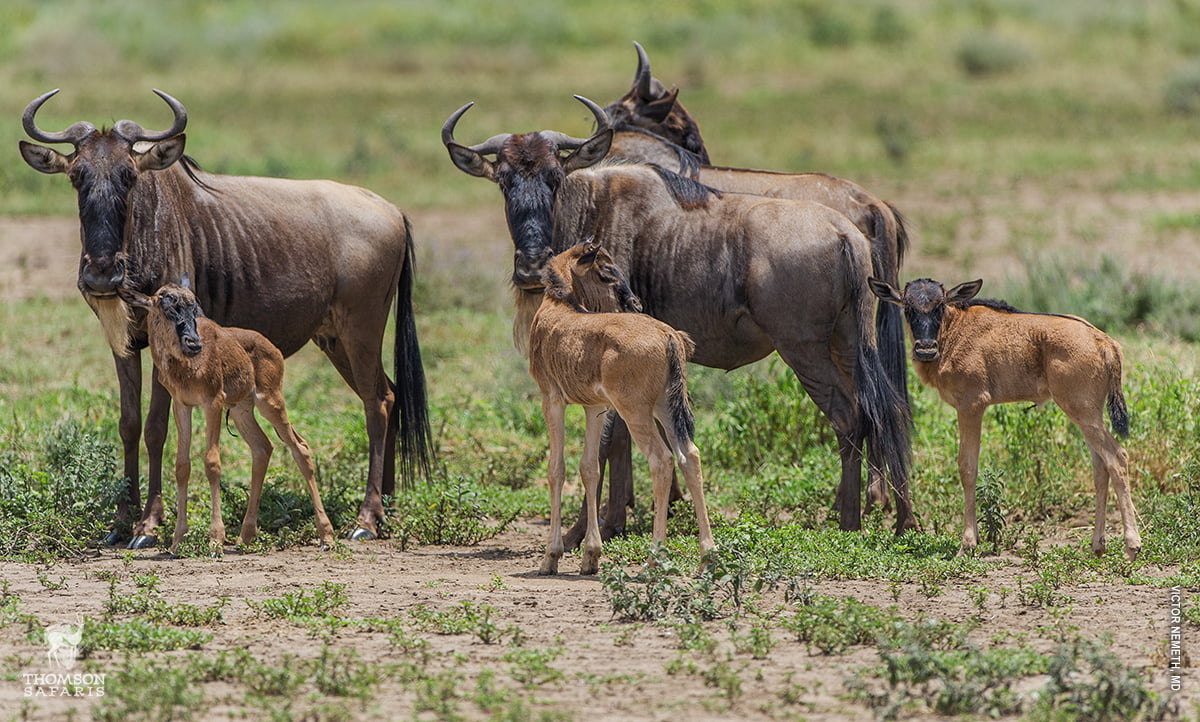
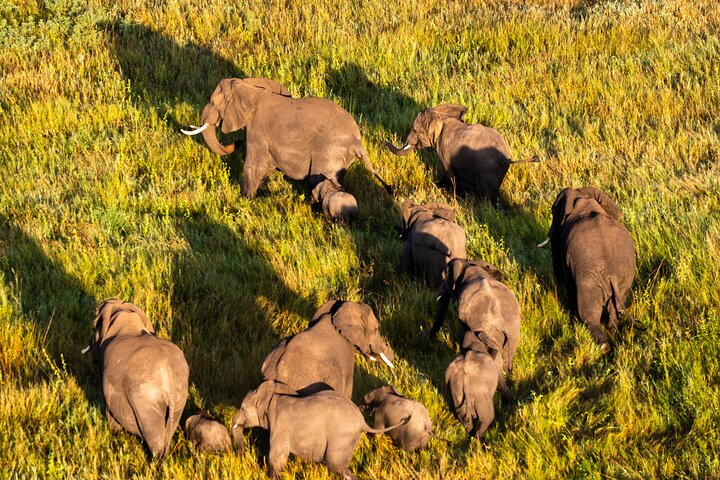
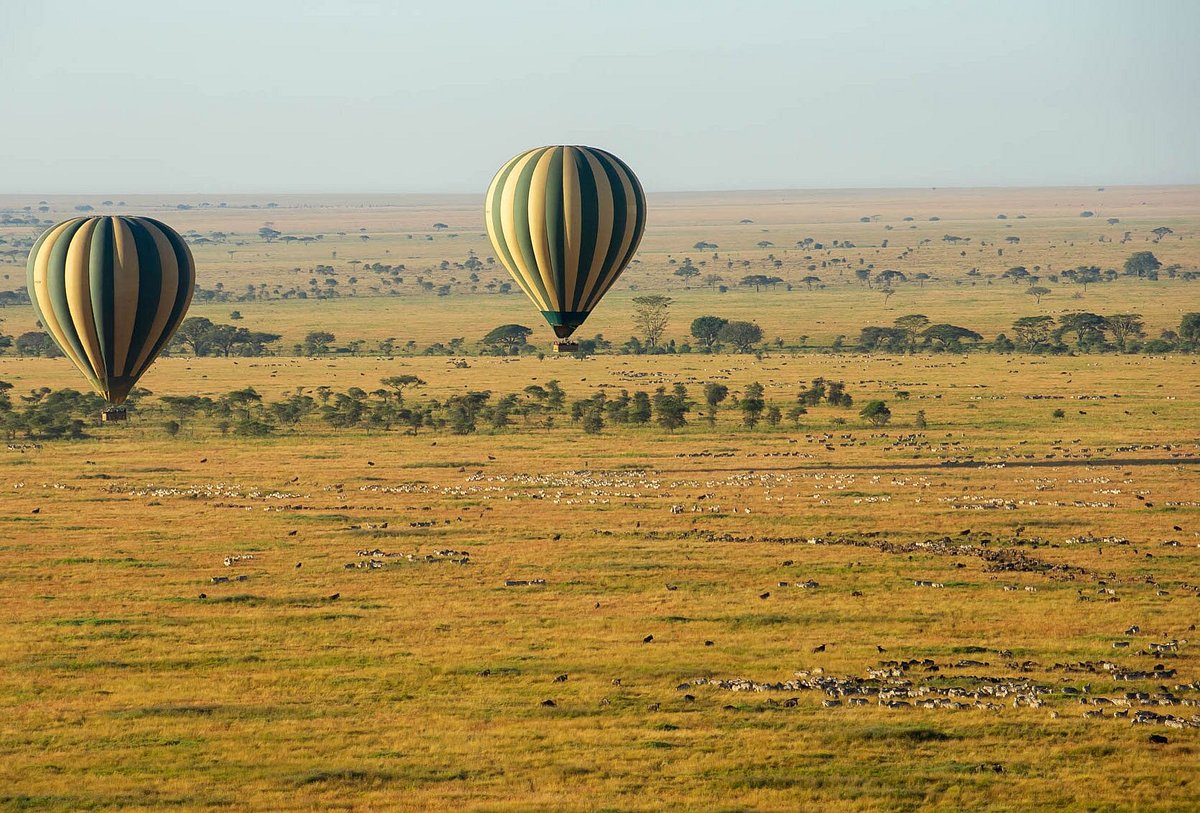
Kenya is where the word ‘safari’ still means what it was always supposed to mean. The Masai Mara in July and August is the most concentrated wildlife viewing experience in the world: 1.5 million wildebeest, predator kills, balloon flights over a golden plain at dawn. The private conservancies bordering the Mara — Olare Motorogi, Naboisho, Mara North — offer exclusivity that the main reserve cannot match, with far fewer vehicles per sighting and better guiding. Amboseli remains the finest park in Africa for elephant encounters with a mountain backdrop.
Kenya has the highest park fees in the region — the Masai Mara charges USD 200 per person per day — and its lodges at every tier tend to cost more than equivalent options in Uganda or Tanzania. What you are paying for is infrastructure, wildlife density and a guiding culture that is among the most professional anywhere. We recommend Kenya to first-time safari travellers and to anyone specifically targeting the migration.
Tanzania — Scale You Cannot Find Anywhere Else
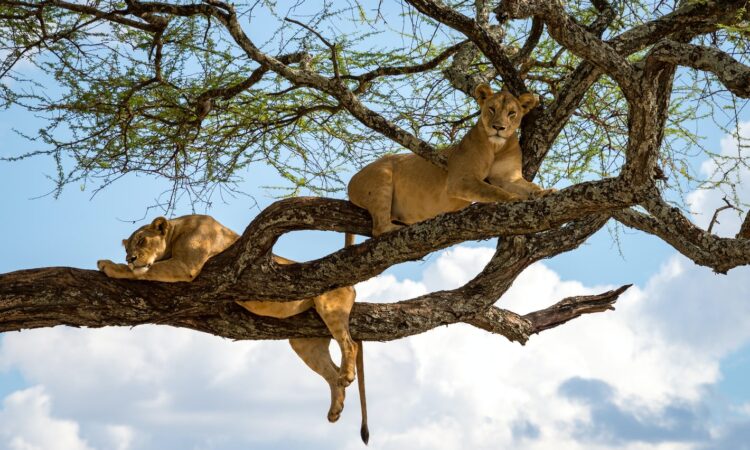
The Serengeti is simply the largest and most complete wildlife ecosystem in the world. It is bigger than Denmark, it holds lions in volumes that most parks in Africa cannot match, and the wildebeest migration moves through it for nine or ten months of the year. Ngorongoro Crater is the most photogenic single game-viewing location in Africa — a volcanic caldera enclosing 25,000 animals with nowhere to go. Tarangire in the dry season, when elephants gather in their hundreds at the river, is a sight most travellers are not prepared for.
Tanzania’s park fees are more affordable than Kenya (Serengeti USD 70 per person per day) and the accommodation options at mid-range are excellent. Adding Zanzibar at the end of a northern circuit gives the trip a natural arc — bush to beach — that a lot of our clients specifically request. We route Tanzania itineraries in and out of Kilimanjaro Airport (JRO) or Arusha.
Rwanda — Small Country, Big Experience
Rwanda is the most efficiently packaged safari destination in East Africa. Kigali is clean, modern and genuinely welcoming. Volcanoes National Park is two and a half hours from the airport by road. The gorilla families in Volcanoes are well habituated and the park authority manages the trekking experience carefully — maximum eight trekkers per family, one hour with the gorillas, rangers who know individual animals by name. Nyungwe Forest in the southwest is one of Africa’s oldest and most biodiverse rainforests, with chimpanzees, thirteen primate species and a canopy walkway at 50 metres above the forest floor. Akagera on the eastern border is a restored savannah park with all of the Big Five and two of East Africa’s finest lodges.
Rwanda is the most expensive destination in the region because of the gorilla permit (USD 1,500). The driving distances between parks are short, the roads are excellent, and nothing here feels rushed or logistically complicated. We pair Rwanda with Uganda frequently — enter Kigali, trek gorillas in Volcanoes, cross the border to Bwindi for a second gorilla trek or chimpanzees in Kibale, exit Entebbe. The East Africa Tourist Visa (USD 100, covering Rwanda, Uganda and Kenya) makes this combination straightforward.
When to Go
The honest answer is that East Africa has no genuinely bad time for a safari — there is wildlife year-round in every country. What changes by season is the concentration of animals, the condition of the roads, and what specific events you can witness. The two dry seasons — June to September and December to February — are when game viewing is at its most consistent everywhere. Here is how the calendar actually plays out:
| Period | Conditions | What Our Clients Experience |
|---|---|---|
| Jan – Feb | Dry, warm | Serengeti calving; excellent game; quiet parks; best value of the year |
| Mar – May | Long rains (Apr heaviest) | Lowest rates; lush green scenery; gorilla trekking unaffected; some remote camps closed |
| Jun – Sep | Peak dry season | Mara River crossings (Jul–Aug); maximum wildlife density; highest demand and lodge rates |
| Oct – Nov | Short rains | Migratory birds arrive; uncrowded parks; rates soften; gorilla trekking excellent |
| Dec | Dry season returns | Wildlife concentrates at water; festive-period premium rates; advance booking essential |
One thing we tell clients who ask when to come: February is the most underrated month in East Africa. The parks are quiet, the light is good, rates are below peak, and the Serengeti calving season means the predator action is extraordinary. If you have flexibility on dates, February is often where we steer people.
For gorilla trekking, season matters far less than permit availability. The gorillas are tracked year-round. What matters is getting your permit confirmed before someone else takes your date — particularly for July and August, when demand far exceeds the available allocations.
Gorilla and Chimpanzee Trekking: Permits and What to Expect
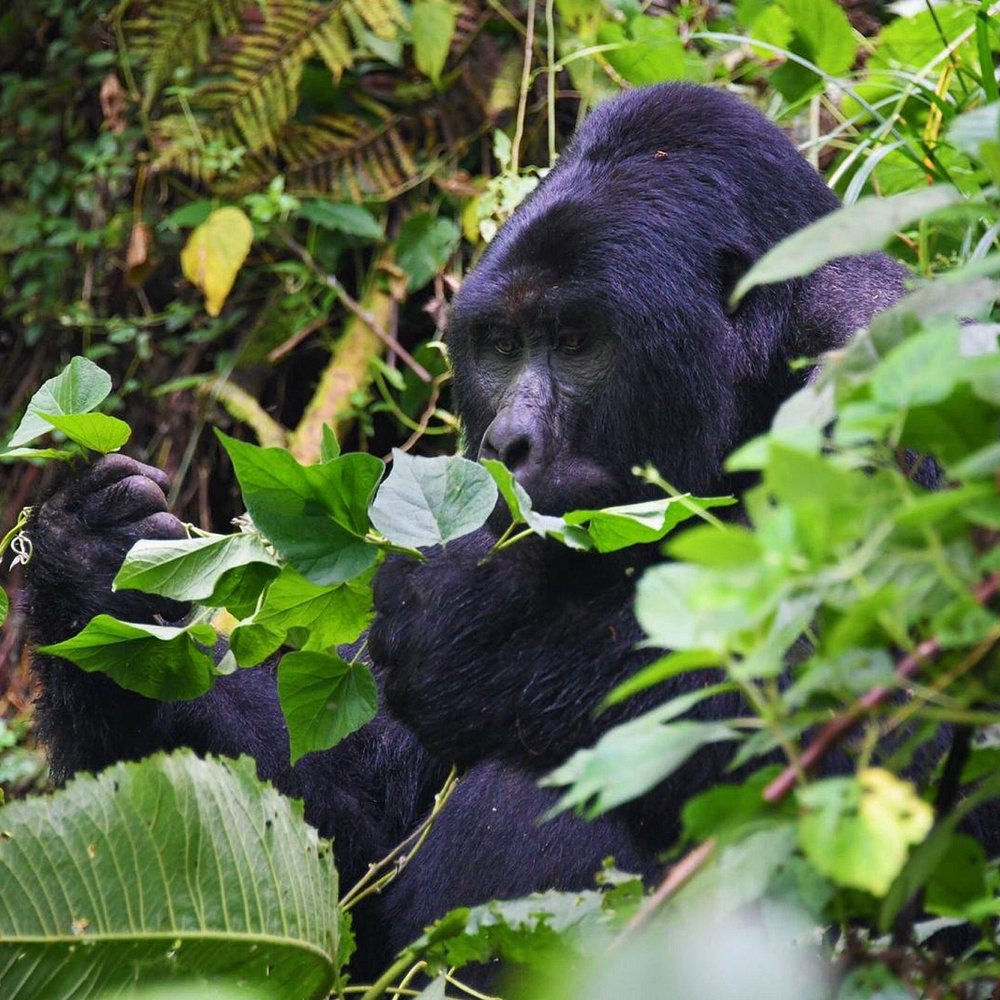
Gorilla trekking is the centrepiece of most Uganda and Rwanda itineraries we design, and for good reason. There are fewer than 1,100 mountain gorillas alive. You will be one of eight people — maximum — to spend an hour with a habituated family in the wild. Cameras and phone shutters go quiet eventually. The experience does not feel like wildlife viewing. It feels like something else.
Uganda: Bwindi and Mgahinga
Uganda Wildlife Authority allocates gorilla permits at USD 800 per person. Bwindi has four main sectors — Buhoma, Ruhija, Rushaga and Nkuringo — each with different gorilla families and different lodge options surrounding them. We select the sector based on where permits are available and which lodges we think will work best for your group. The trek from trailhead to first gorilla contact can take anything from 45 minutes to six hours — the gorillas move, and you go where they are. Once found, you have one hour. Bring rain gear; Bwindi is a rainforest regardless of season.
Uganda also offers the gorilla habituation experience (GHEP) at USD 1,500 per person — a four-hour session with a family mid-habituation. Far fewer permits, far more intimate. If this is available on your dates, it is worth the conversation.
Chimpanzee trekking in Kibale Forest costs USD 250 per person and is the finest chimp experience in Africa. We frequently combine Kibale and Bwindi in a single six or seven-day Uganda itinerary. The contrast between the two forests and the two primate species makes the trip feel complete in a way that a single-activity itinerary cannot.
Rwanda: Volcanoes National Park
Rwanda’s gorilla permit is USD 1,500. Eight habituated families are available, managed by the Rwanda Development Board. Treks are shorter on average than Uganda — one to three hours each way — and the park infrastructure and surrounding lodges are excellent. The golden monkey experience (USD 100) in the bamboo forest at the park base is worth adding: it takes two hours and is a genuinely joyful contrast to the weight of the gorilla encounter.
We secure permits for both countries through our established allocations. If you plan to trek gorillas in July or August 2027, contact us now. Those dates are genuinely competitive.
The Migration and the Big Five
The wildebeest migration is not a single event. It is a continuous circuit of 1.5 million wildebeest, 200,000 zebra and 350,000 gazelle moving between Tanzania and Kenya over the course of a year. The Mara River crossings — where the herds swim through crocodile-heavy water in full panic — happen between July and October in Kenya’s Masai Mara. The calving season in the southern Serengeti (January and February) is arguably more interesting to many of our clients: thousands of calves born daily, and every predator in the ecosystem drawn to the spectacle. We cover both in detail in our Kenya safari timing guide.
The Big Five — lion, leopard, elephant, buffalo and rhino — are all present across the region. The most reliable all-five destination is Ngorongoro Crater in Tanzania and the Masai Mara in Kenya. Rwanda’s Akagera has all five following reintroductions, and the rhino sightings there have been consistently good for our groups. Leopard is everywhere but reliably elusive — the Laikipia Plateau in Kenya and Ruaha in Tanzania are our recommended leopard destinations for clients specifically chasing the fifth of the five.
Getting There: Flights and Entry Points
There are four main entry airports for an East Africa itinerary, and which one you use first depends on which country you start in:
- Entebbe (EBB), Uganda: Our home airport. Direct flights from London (British Airways daily), Dubai (Emirates and flydubai), Amsterdam, Istanbul, Nairobi and Addis Ababa. Forty minutes from Kampala; around eight hours by road from Bwindi.
- Nairobi (NBO), Kenya: The main East Africa hub. Direct services from most European cities, the US East Coast, the Gulf and beyond. Most clients travelling to Tanzania connect via Nairobi to Kilimanjaro (JRO) — a 45-minute Precision Air or Air Tanzania hop.
- Kigali (KGL), Rwanda: Modern, efficient airport; 2.5 hours by road from Volcanoes. RwandAir connects to London, Brussels, Paris, Dubai, Mumbai and a growing number of African cities. Clients starting a Rwanda–Uganda itinerary often fly in here and exit Entebbe.
- Kilimanjaro (JRO), Tanzania: Gateway for the northern circuit. Connections via Nairobi, Addis Ababa and Doha. Arusha is 45 minutes; most Tanzania safaris begin here.
Internal flights connect the parks efficiently. We book these as part of every itinerary where road transfer times would eat too deeply into days in the field. The Entebbe–Kihihi flight (for Bwindi) saves seven hours of road time; for a five or six-day Uganda itinerary, that seven hours is significant.
Visas
The East Africa Tourist Visa — USD 100, valid 90 days, covering Uganda, Kenya and Rwanda — is the most useful single piece of travel admin for multi-country East Africa itineraries. Apply via the Uganda e-Visa portal or request it on arrival at Entebbe, Nairobi or Kigali. Tanzania is not part of the scheme; Tanzanian visas (USD 50) are obtained separately online in advance.
For Rwanda specifically, citizens of over 90 nationalities enter visa-free. Most Western passport holders fall into this category — check the Rwanda Directorate General of Immigration website to confirm yours. Uganda and Kenya require advance e-Visa applications (USD 50 each) for most nationalities outside Africa.
Health, Vaccinations and Safety
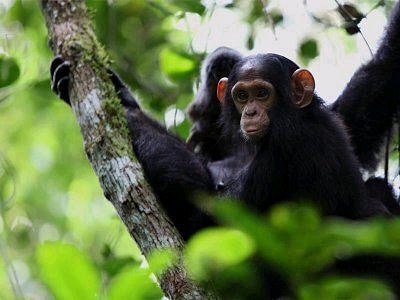
Consult a travel medicine clinic at least six to eight weeks before departure — earlier if you need the full hepatitis series. The essentials for East Africa:
- Yellow fever vaccination: Required for Uganda entry and recommended for Kenya and Tanzania. Carry your yellow fever certificate; some transit airports and land borders ask to see it.
- Malaria prophylaxis: Malaria risk exists at lower altitudes across the region. Most gorilla and chimpanzee trekking areas are at 1,500–2,500 metres where risk is lower, but savannah parks like Queen Elizabeth and Murchison are at lower elevation. Malarone (atovaquone/proguanil) is the most commonly prescribed option for East Africa; discuss with your doctor.
- Other vaccinations: Hepatitis A and B, typhoid, tetanus and meningitis (particularly for Uganda and Rwanda) should be current.
- Medical evacuation insurance: Not optional. AMREF Flying Doctors annual subscription (around USD 25) covers emergency air evacuation across the region and is something we recommend to every client regardless of budget level.
- Gorilla trekking health note: Gorillas are susceptible to human respiratory infections. All trekkers wear a mask during the one-hour encounter. Park rules require anyone with cold or flu symptoms to stand down on the day — the permit is non-refundable in this scenario. Insurance that covers permit loss due to illness is worth checking with your insurer before you travel.
The safari destinations we operate in are among the safer environments in sub-Saharan Africa. The main cities — Kampala, Nairobi, Kigali, Arusha — require normal urban caution. In the field, our guides brief you on wildlife safety protocols at every park. Following those instructions eliminates virtually all of the risk that inexperienced travellers worry about before their first trip.
What to Pack
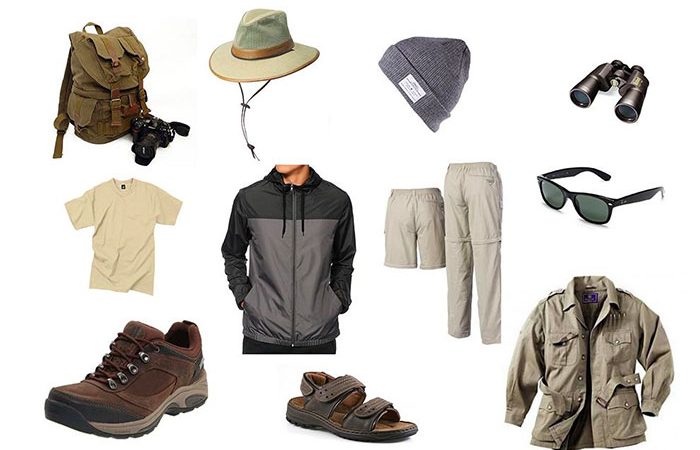
Weight limits on small bush aircraft are typically 15 kilograms in a soft-sided bag. Pack to that limit from the start; it makes every internal transfer easier. The essentials:
Clothing
- Neutral colours: khaki, olive, tan, grey. No white or bright colours in the bush — they spook wildlife and attract insects at dusk.
- Long-sleeved shirts and trousers for game drives — mornings in the Serengeti and at altitude can be cold even in July.
- A warm fleece or light down jacket for early morning starts. Temperatures before sunrise in the Mara and Serengeti regularly drop below 15°C.
- Compact waterproof jacket — afternoon showers happen in dry season too.
- Sturdy ankle-support boots for gorilla and chimpanzee trekking. Bwindi and Nyungwe trails are steep, rooted and almost always wet underfoot. This is not a hike where trainers are adequate.
- Gaiters — strongly recommended for Bwindi, Mgahinga and Nyungwe. The forest floor is wet year-round and the vegetation is dense.
Kit
- Binoculars (8×42 minimum). More than any other single item, these transform the quality of a game drive. We cannot overstate this.
- Camera with a telephoto lens (200–400mm). Most lodges charge batteries overnight; bring two batteries and several memory cards.
- Headlamp — essential for early morning vehicle departures and navigating camp after dark.
- Small daypack for trekking days — carries water, rain jacket, snacks and camera.
- DEET-based insect repellent (50%+) for savannah parks; picaridin for forest trekking.
- Sunscreen SPF 50. Equatorial UV is intense even in overcast conditions.
- Personal first aid kit with blister plasters — gorilla treks can last four to eight hours on rough terrain.
What It Costs
Ground costs for an East Africa safari run from USD 150 per person per day at budget level to USD 1,500 and above for luxury all-inclusive camps. Mid-range — the most common standard for the travellers we work with — runs USD 300–500 per person per day and covers a private vehicle with guide, full-board accommodation and all park fees. Gorilla and chimpanzee permits are separate to all accommodation quotes and are the one cost that cannot be adjusted by any operator (Uganda USD 800; Rwanda USD 1,500 per person).
For a full breakdown by country and accommodation tier, with real itinerary cost examples, see our East African safari cost guide. International flights and travel insurance are never included in safari ground quotes.
Booking Timeline for 2027

A 2027 safari is not too early to think about — in fact, for July and August dates, it is about the right time. Here is how the lead time works in practice:
- 9–12 months before travel: Confirm destination and dates. Secure gorilla and chimpanzee permits. These are the critical path item — everything else can wait; permits cannot. Peak-season July–August 2027 permits will be competed for now.
- 6–9 months before: Confirm and deposit on accommodation. Book international flights — fares are lowest 6–9 months out. Book internal flights if flying between parks.
- 3–6 months before: Visit a travel medicine clinic. Begin vaccination schedule. Arrange travel and medical evacuation insurance. Apply for visas where advance application is required.
- 4–8 weeks before: Receive your final day-by-day itinerary documents from us. Break in your trekking boots. Pack and weigh your bag.
- 1–2 weeks before: Confirm all flights. Download offline maps. Carry permit certificates and vaccination record in hand luggage — not checked baggage.
Frequently Asked Questions
How many days do I need for an East Africa safari?
Seven days is a workable minimum for a single-country trip. Ten to fourteen days gives you a comfortable two-country combination with enough time in each park to stop watching the clock. We most commonly plan Uganda–Rwanda (10–12 days), Kenya–Tanzania (10–14 days) or Uganda–Kenya (12–14 days) for first-time visitors. Anything shorter than seven days in the field leaves too much of the trip consumed by transfers.
Can I combine a safari with a beach holiday?
Yes, and it works well. Zanzibar is the standard beach extension for Tanzania — direct daily flights from Arusha and Dar es Salaam. Kenya’s coast (Mombasa, Diani, Watamu) is 45 minutes from Nairobi by air. Neither Uganda nor Rwanda has a coast, but Rwanda’s crater lake region and Uganda’s Ssese Islands on Lake Victoria both provide a quieter decompression at the end of a busy itinerary if that is what your group needs.
Is gorilla trekking physically demanding?
It requires a reasonable level of fitness. Treks start at 2,200–2,500 metres altitude on steep, slippery, root-covered trails. The time to reach the gorillas can be anywhere from 45 minutes to eight hours — you do not know in advance. Most healthy adults of average fitness complete it without serious difficulty. Porters are available at the trailhead (around USD 15–20) and can carry your bag and support you physically on steep sections. We recommend them to all clients regardless of fitness level — they are also skilled trackers who frequently spot things the main ranger group misses.
What is the East Africa Tourist Visa and how do I get it?
A single USD 100 visa valid for 90 days, covering multiple entries between Uganda, Kenya and Rwanda. Apply online via the Uganda e-Visa portal or request it on arrival at Entebbe, Nairobi or Kigali. Tanzania requires a separate visa. It is the most practical option for combined Uganda–Rwanda or Uganda–Kenya itineraries and is the visa we point almost all our multi-country clients towards.
Do I need a specialist operator or can I plan this independently?
You can plan parts of a safari independently — accommodation booking, visa applications, international flights. The part we would always recommend leaving to an operator with local relationships is permit booking, particularly for gorilla and chimpanzee trekking. Permit allocations for peak season sell out well in advance, and operators with established relationships with the Uganda Wildlife Authority and Rwanda Development Board have access that individual travellers do not. A good operator also carries real value in guide quality, in-country logistics and the practical support that matters when something does not go to plan — and on a two-week trip through four countries, something always does.
Ready to plan your 2027 safari?
The team at Superfine Safaris handles everything from permit booking to daily logistics across Uganda, Rwanda, Kenya and Tanzania. Tell us your dates, the experiences you want and your budget — we will build an itinerary around them and give you an itemised quote with no hidden costs. Get in touch here or WhatsApp our team directly.
Plan Your 2027 Safari
- ✓ Uganda, Kenya, Tanzania & Rwanda
- ✓ Gorilla & chimp permits secured
- ✓ Private & small-group itineraries
- ✓ Transparent, all-in pricing
- ✓ Expert local guides throughout
Quick Reference
| Best time | Jun–Sep, Dec–Feb |
| Daily budget | USD 150–1,500+ pp |
| Uganda gorilla | USD 800 per permit |
| Rwanda gorilla | USD 1,500 per permit |
| Key airports | NBO · EBB · KGL · JRO |
| Book permits | 3–6 months ahead minimum |