
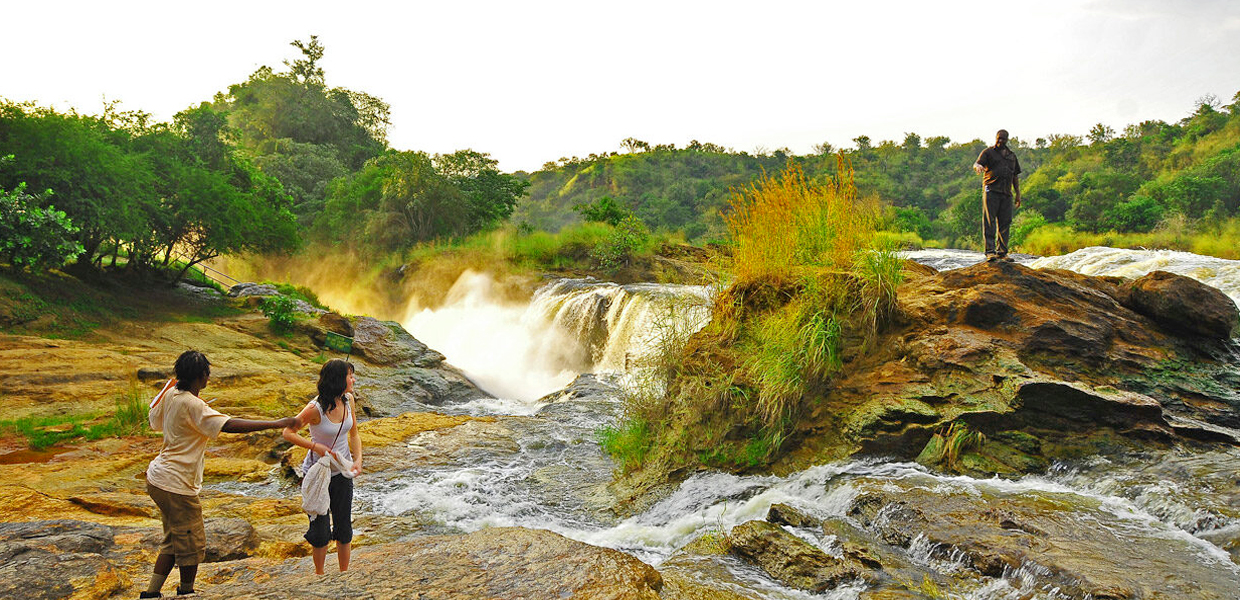
Standing at the top of Murchison Falls and looking straight down into the gorge is one of the most viscerally powerful experiences Uganda has to offer. This is the point where the entire volume of the Victoria Nile — one of the world’s great rivers — is forced through a rocky cleft just seven metres wide, creating a wall of white water and spray that drops 43 metres into a churning pool below. The sound alone is extraordinary. The hike to reach that point is short, manageable and full of wildlife along the way, and it is one of the most rewarding walks in East Africa for the payoff it delivers relative to the effort required.
The hike to the top of Murchison Falls takes approximately 45 minutes each way and follows a well-maintained trail along the south bank of the Victoria Nile from the trailhead at the base of the falls to the gorge summit. It is not a strenuous climb — any reasonably fit person can complete it — but the trail passes through active wildlife habitat and a Uganda Wildlife Authority ranger guide accompanies all walkers as standard. At Superfine Safaris Limited, this walk is a core component of every Murchison Falls itinerary we build, and the view from the top consistently produces the same reaction from every guest who reaches it: silence, followed by something between disbelief and elation.
About Murchison Falls — The Most Powerful Waterfall in the World
Murchison Falls — known historically as Kabalega Falls, after the 19th-century Bunyoro king who resisted British colonisation — is formed where a rift fault forces the Victoria Nile into an impossibly narrow gorge in the Murchison rift escarpment. The river at this point carries an average flow of approximately 300 cubic metres of water per second. All of it passes through a gap just seven metres wide. That combination of volume and constriction produces what hydrologists describe as the most powerful waterfall on earth by water pressure — a statistic that sounds abstract until you stand at the lip of the gorge and feel the air moving around you from the force of the water falling 43 metres below.
The falls mark the transition between the upper Victoria Nile — flowing northwest from Lake Victoria through Lake Kyoga and into the park — and the lower Albert Nile, which continues northwest toward Lake Albert and ultimately Sudan. The 43-metre drop and the churning Devil’s Cauldron pool at the base create a permanent mist zone that keeps the vegetation along the gorge lush year-round, even in the deepest dry season.

Getting to the Trailhead
The trailhead sits on the south bank of the Victoria Nile at the base of the falls, approximately 11 kilometres east of Paraa along the south bank road. Most visitors reach it one of two ways.
The most popular approach is the afternoon boat cruise from Paraa. The launch departs Paraa jetty at 2:00 PM, travels upstream along the Nile for about 90 minutes past hippos, crocodiles and waterbirds, and deposits passengers at the base of the falls. From there the group hikes up to the top while a vehicle drives around to collect them at the summit car park on the south bank road. This boat-plus-hike combination is the classic Murchison Falls afternoon activity and the approach Superfine Safaris Limited recommends as the standard experience — it gives you the river approach, the base of the falls and the gorge summit all in one afternoon.
The second approach is driving directly along the south bank road from Paraa. The drive takes 20 to 25 minutes and deposits you at the summit car park, from which you walk down to the gorge lip and back. Some guests prefer this when time is short or when the boat cruise has already been done on a previous day. Both approaches are valid and the view from the top is identical.
The Trail — What to Expect
The trail from the base to the summit is approximately 750 metres one way with an elevation gain of around 50 metres — enough to feel like a proper uphill walk but nothing that demands significant fitness or specialist equipment. The path passes through dense riverine forest and scrub along the south bank before opening up near the gorge rim. Walking time is 30 to 45 minutes depending on pace and wildlife stops.
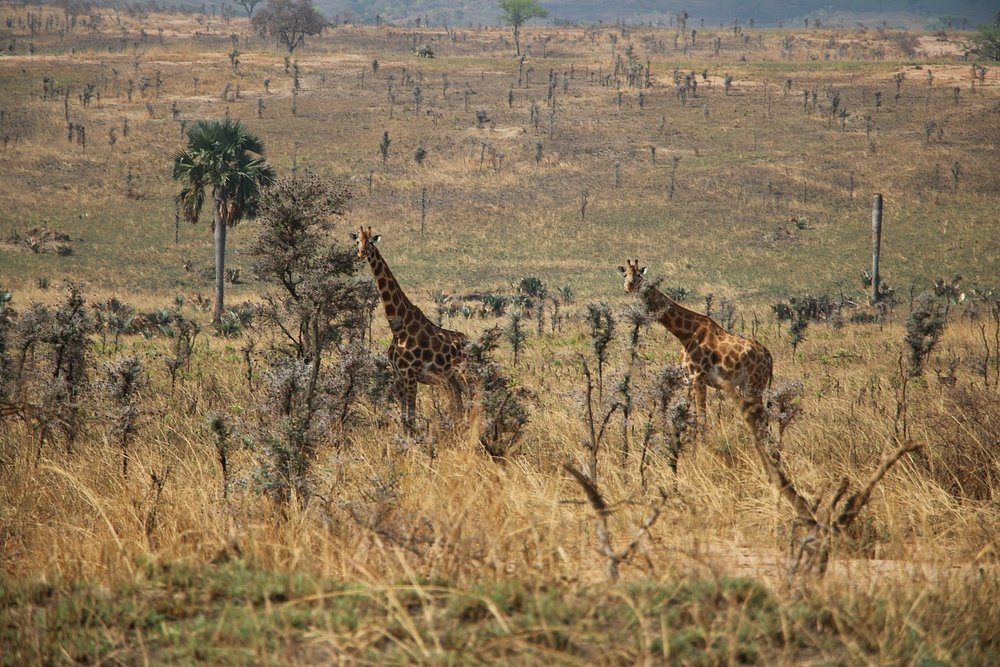
The forest along the trail is genuinely alive. Olive baboon troops move through the canopy overhead. Bushbuck stand in the undergrowth watching the group pass. Nile monitor lizards — some well over a metre long — bask on rocks near the riverbank before sliding into the water as you approach. Red-tailed monkeys call from the upper canopy. Buffalo are regularly encountered close to the trail and the UWA ranger guide manages the approach carefully, giving the animals space and repositioning the group when a herd is on the path ahead. Elephant are present in the south bank area and occasionally on the trail itself — sightings are exciting rather than alarming when you are with an experienced ranger who reads the situation correctly and knows when to stand still, when to move and when to give the animals a wide berth.
As the trail approaches the gorge, the sound of the falls builds gradually — a low rumble in the distance that becomes a roar as you near the lip. The vegetation becomes wetter from the permanent mist, and the air temperature drops noticeably in the final 200 metres. By the time you reach the gorge rim, every sense is engaged: the sound, the cold mist on your face, the smell of wet rock and river, and then the view straight down into churning white water seven metres across and 43 metres below.
The View from the Top — What You See
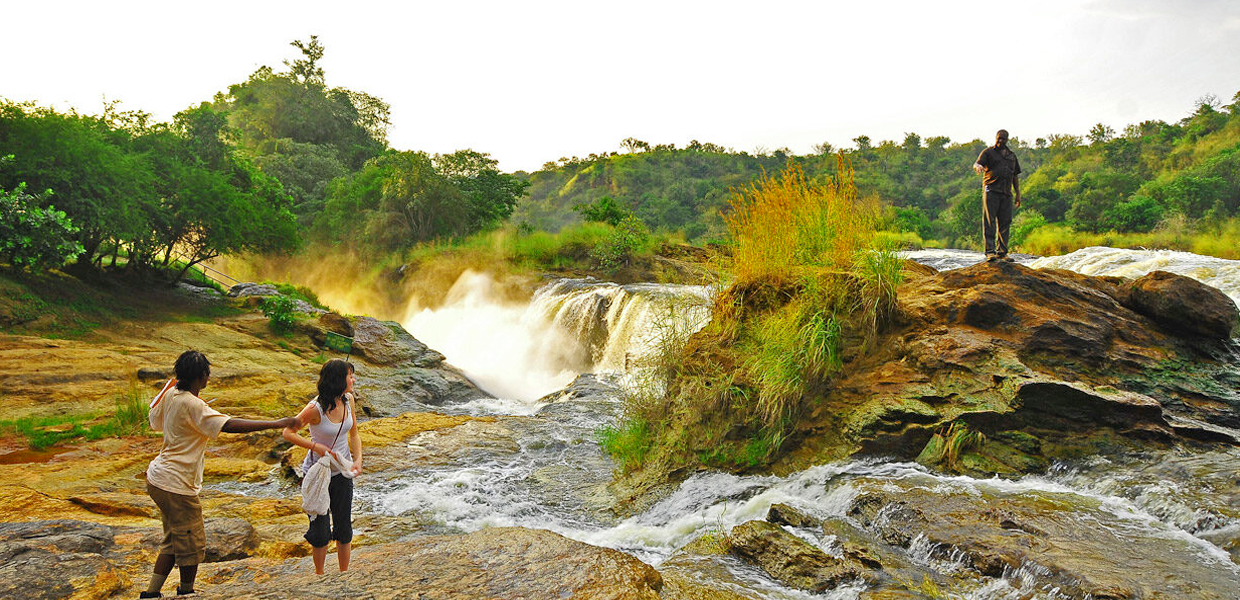
The gorge summit has two main viewpoints. The primary viewing platform looks directly down into the falls from above — both gorge walls, the compressed white water forcing through the gap and the churning pool at the base are all visible from a single vantage point. This is the photograph that defines Murchison Falls as a destination and the view that justifies the entire hike. A second viewpoint slightly further along the rim looks downstream toward Paraa, showing the river spreading wide after the falls and the flat floodplain valley opening out beyond.
Most groups spend 20 to 30 minutes at the top before beginning the descent or returning by vehicle. Photographers invariably spend longer — the light in the late afternoon, with the mist catching the sun and a rainbow forming in the spray, produces images that are genuinely difficult to replicate anywhere else in East Africa. From around 4:00 PM, when the sun is at a low enough angle from the west, the rainbow in the gorge spray is almost always present and it is exactly as good as it sounds.
Combining the Hike with the Boat Cruise

The boat-plus-hike combination is the definitive Murchison Falls afternoon and virtually every guest who does it describes it as the highlight of their Uganda trip. The afternoon boat cruise departs Paraa at 2:00 PM and travels upstream along the Victoria Nile for 17 kilometres to the base of the falls. The 90-minute journey passes through the most hippo-dense section of the river — over 2,000 animals in the park — with Nile crocodiles on every sandbank, elephants at the water’s edge and the full range of Nile waterbirds from the boat. Red-throated bee-eaters pour in and out of nesting colonies in the sandy banks. African fish eagles call from overhanging trees. The shoebill stork patrols the papyrus margins for those lucky enough to spot it.
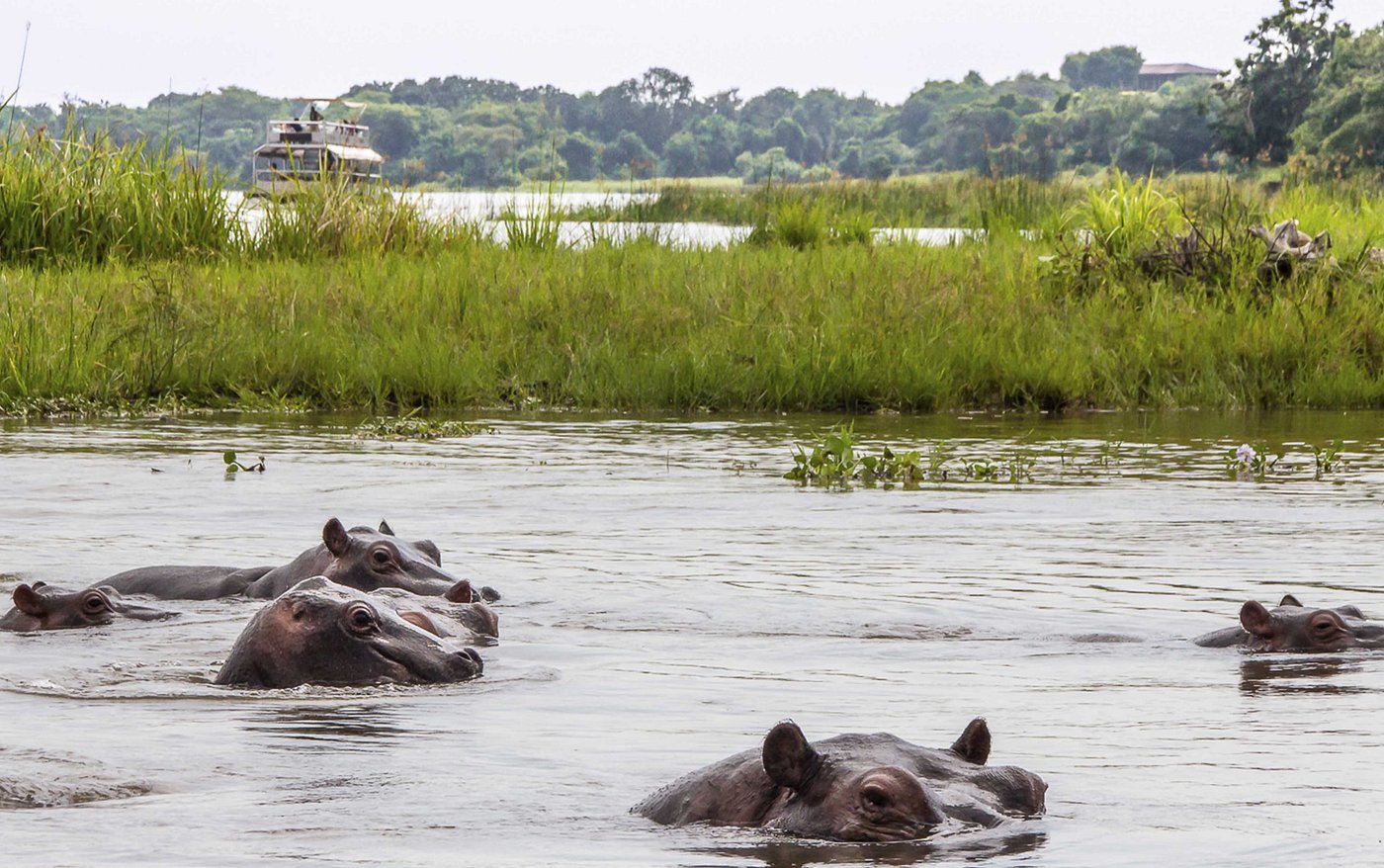
The boat drops passengers at the base of the falls where the full force of the water is immediately apparent from 50 metres below the gorge. The group hikes to the summit while the park vehicle drives around to collect them at the top car park. The whole combination — boat cruise, time at the falls base, hike to the gorge — takes approximately 4 hours and covers three completely different perspectives on the same feature in a single afternoon. Very few activities anywhere in Uganda deliver this much in one outing.
Wildlife on the South Bank Drive

The south bank road between Paraa and the falls trailhead is worth treating as a game drive in its own right, particularly on the morning vehicle approach. The riverine forest and bush along the road hold buffalo, bushbuck, warthog, olive baboon and Nile monitor lizard, and several clearings where elephants regularly emerge from the forest to drink or graze near the water. Leopard are more reliably encountered on the south bank than anywhere else in the park — the dense vegetation along the forest edge gives them cover, and experienced guides know the productive trees and clearings to check on every pass.
For birders, the south bank forest road is excellent for species absent from the open north bank savannah. Our guide to birding in Murchison Falls National Park covers the south bank species in detail — African broadbill, black bee-eater, grey-capped warbler and broad-billed roller are all reliably found in the riverine scrub and forest edge between Paraa and the falls.
Combining the Hike with North Bank Game Drives

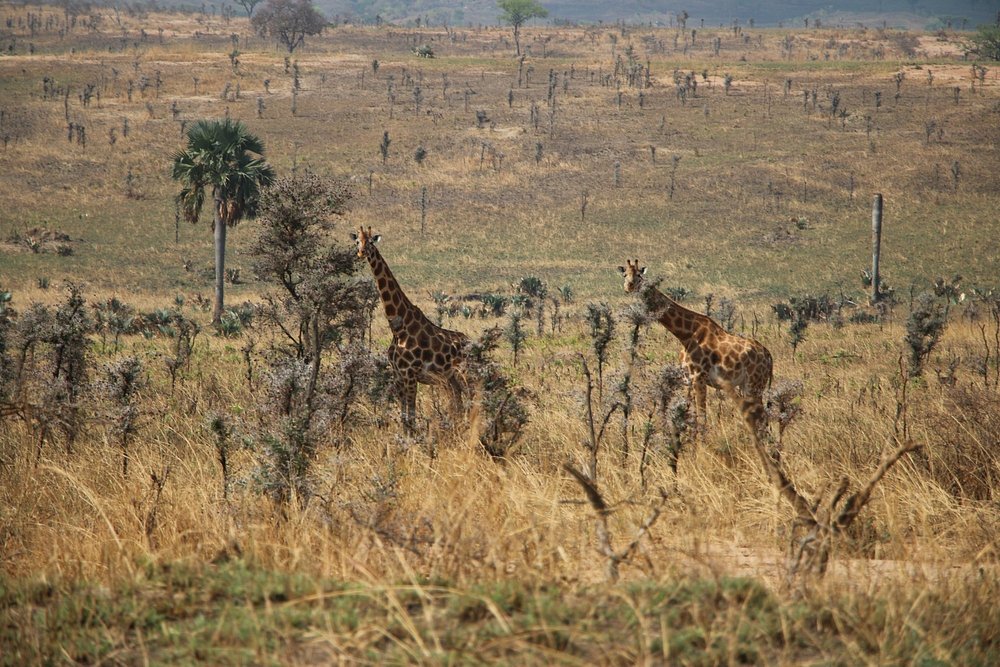
Most Murchison Falls itineraries from Superfine Safaris Limited combine the falls hike with north bank game drives for lions, Rothschild’s giraffes, elephants and Uganda kob. The standard two-day Murchison structure works like this: arrive at Paraa on Day 1 afternoon and do the boat cruise ending at the falls hike; spend Day 2 morning on the north bank Buligi circuit; and depart on Day 3 after a final morning drive or early boat cruise. This three-day structure covers all of the park’s signature activities without rush and is the minimum we recommend for a complete Murchison experience. Our 3 Days Murchison Falls Safari is built around exactly this structure.
Practical Information
The hike to the top of Murchison Falls requires no special permit beyond the standard daily park entrance fee — $40 for foreign non-residents, $25 for foreign residents and UGX 20,000 for East African citizens. A Uganda Wildlife Authority ranger guide accompanies all walking groups on the south bank trail as standard, included in the activity at no additional charge. The trail is open year-round. In the rainy season the path can be muddy and waterproof footwear is recommended. In the dry season the track is firm and comfortable in trail runners or sturdy sandals, though closed-toe shoes are always preferable for the rocky forest sections.
The hike is appropriate for children aged 6 and above, older adults with moderate fitness and guests with no specific hiking experience. There are no technical sections, significant exposure or dangerous river crossings. Carry at least one litre of water per person, sunscreen, insect repellent and a light rain layer in a small daypack. A camera is essential — the gorge view is one of the most photographed scenes in Uganda. In the late afternoon, a polarising filter significantly reduces glare from the white water in direct sunlight.
Best Time to Hike to the Top of Murchison Falls
The hike is possible every day of the year. In terms of the falls themselves, the rainy season (March to May) brings the Victoria Nile to high volume and the falls are at maximum power — the roar is louder, the mist more extensive and the sheer volume of white water more intense. In the dry season the falls are slightly lower but still extraordinary, and the firmer trail conditions make for more comfortable walking. Late afternoon between 3:30 and 5:30 PM produces the best light for photography — the low western sun catches the gorge mist and creates the rainbow in the spray that makes the top of Murchison Falls one of the most visually extraordinary viewpoints in East Africa.
How to Get to Murchison Falls National Park

Murchison Falls National Park is 305 kilometres from Kampala — approximately 5 to 6 hours by road northwest via the Kampala–Gulu highway. Domestic flights from Entebbe to Pakuba or Chobe airstrip take approximately 1 hour. All Superfine Safaris Limited Murchison Falls packages include transfers with an experienced driver-guide and cover the falls hike, boat cruise and north bank game drives as part of a single coordinated itinerary. Contact our team to plan your visit.
Frequently Asked Questions
How long is the hike to the top of Murchison Falls?
The trail from the base to the gorge summit is approximately 750 metres one way, with 30 to 45 minutes of walking each way. Total time at the falls — arrival, hike up, time at the top and descent — is typically 1.5 to 2 hours. Combined with the 90-minute boat cruise from Paraa, the full afternoon activity takes approximately 4 hours.
Is the hike to the top of Murchison Falls difficult?
No. The trail involves a gentle uphill climb of approximately 50 metres over 750 metres — well within the capability of any reasonably fit person. There are no technical sections, scrambling or significant exposure. The most challenging parts are rocky footpaths through the forest understorey that simply require attention to footing. Children aged 6 and above complete the trail comfortably.
Is it safe to hike to the top of Murchison Falls?
Yes, with the UWA ranger guide who accompanies all groups as standard. The south bank trail passes through active wildlife habitat including buffalo and elephant, and the ranger’s experience with these animals and correct protocols makes the walk genuinely safe. Independent walking without a ranger is not permitted. Superfine Safaris Limited includes the ranger guide as standard in all Murchison Falls packages that include the falls walk.
Can I swim at the base of Murchison Falls?
No. Swimming in the Victoria Nile is not permitted anywhere in Murchison Falls National Park. The river holds large numbers of Nile crocodiles throughout its length, and the pool at the base of the falls is extremely turbulent. The base is viewed from the boat at close range but not physically accessed on foot.
Do I need a separate permit to hike to the top of Murchison Falls?
No. The hike is covered by the standard daily park entrance fee. There is no separate activity permit for the falls walk, and the UWA ranger who accompanies all south bank groups is included at no additional charge. All fees are handled by Superfine Safaris Limited as part of our Murchison Falls packages.