
A hot air balloon safari over the Masai Mara is one of the most remarkable experiences available in East Africa — and one of the very few activities that changes the way you understand the landscape itself. From the ground, even on an open game drive across the Mara’s rolling savannah, your field of view is limited to what is immediately in front of the vehicle. From 300 metres in the air, drifting silently on the morning thermals, the entire Mara ecosystem unfolds beneath you: the snaking silver thread of the river, herds of wildebeest stretching to the horizon, a pride of lions moving across open ground, the forest line along the Mara River marking the boundary between grassland and riparian habitat. It is the same ecosystem, but it is a completely different experience.
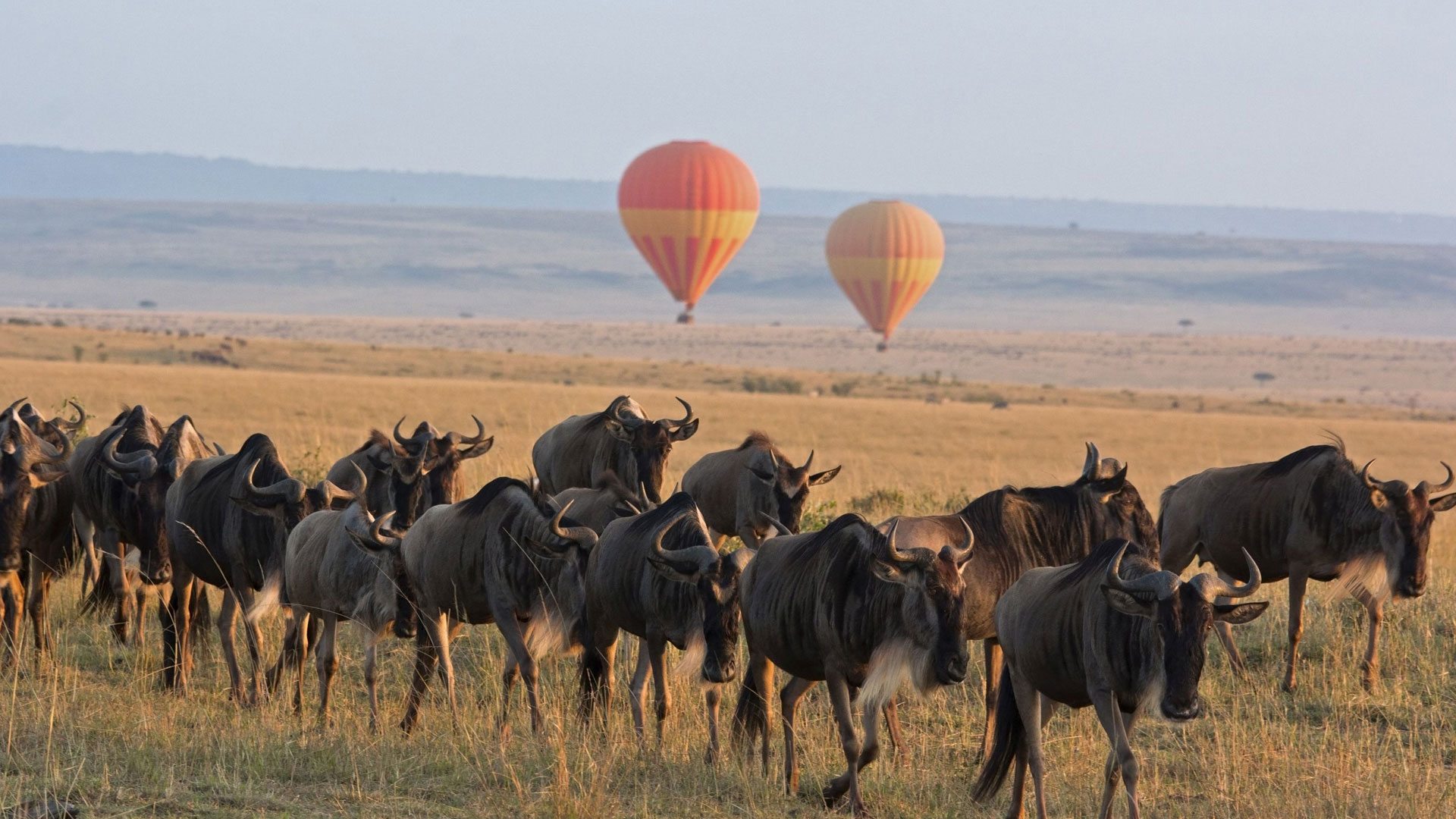
Superfine Safaris Limited includes hot air balloon safaris in Masai Mara itineraries for guests who want to add the aerial dimension to their Kenya experience, and we handle all bookings and logistics as part of the wider itinerary. This guide covers everything you need to know — the experience itself, the cost, the best time to fly, what to bring and how to combine it with your Masai Mara game drives and the wildebeest migration.
The Hot Air Balloon Safari Experience — What to Expect
A Masai Mara balloon safari begins well before sunrise. Guests are collected from their lodge or camp between 4:30 and 5:30 AM — the exact time depends on lodge location and the launch site — and driven in darkness to the balloon launch point. Arriving at the launch field in the dark, with the balloon crew already inflating the enormous envelope by gaslight and torchlight, is part of the experience. The scale of the balloon close-up, the roar of the burners filling the envelope with hot air, the pre-dawn chill — it sets a mood that is unlike the start of a standard game drive.
The briefing from the pilot covers safety procedures, what to expect during the flight and the landing. Baskets vary in size — most commercial Mara balloons carry between 12 and 16 passengers in a divided wicker basket, with passengers standing side by side facing outward. The pilot stands in a central compartment controlling the burners and altitude. The inflation takes 20 to 30 minutes and by the time the basket tips upright and the crew holds it down by hand, dawn is breaking over the Mara horizon.
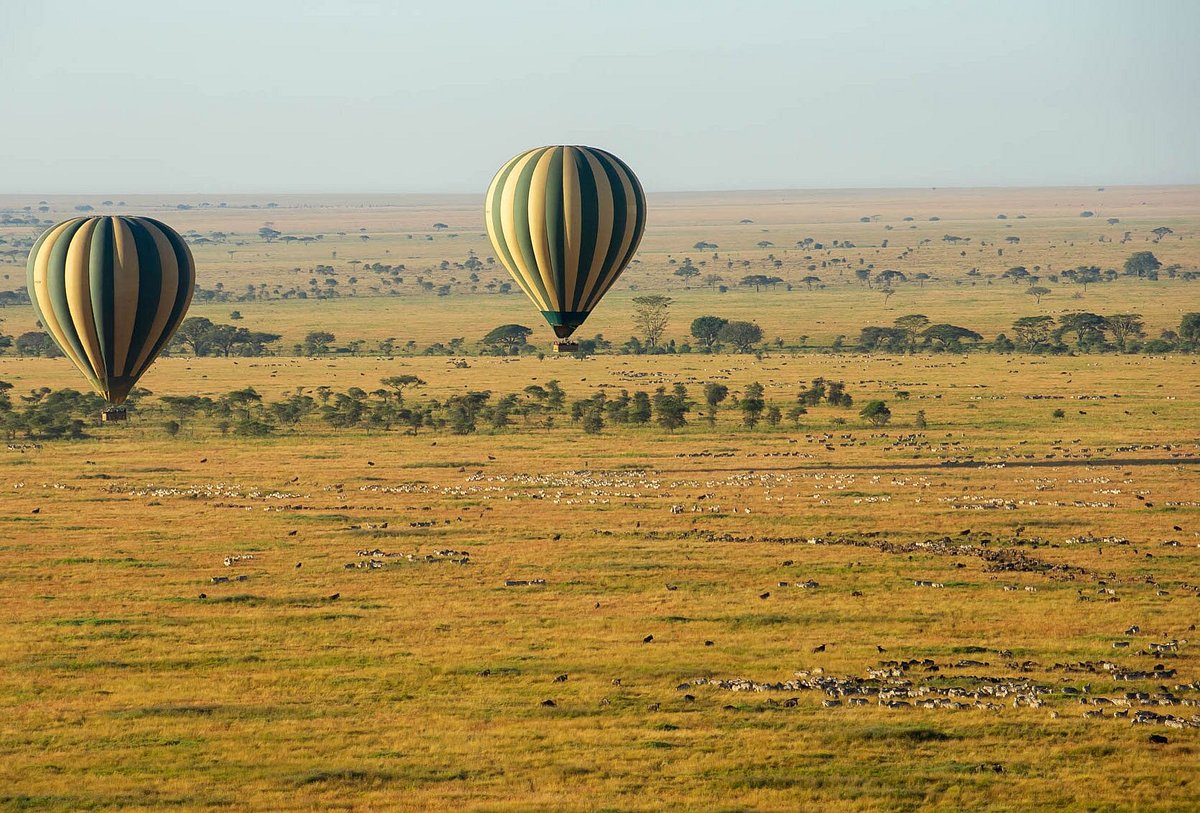
The lift-off is gentle and almost silent — the burners cut briefly and the balloon simply rises, the ground dropping away without any mechanical sensation. Within minutes you are above the tree line and the savannah opens up in every direction. The silence between burner blasts is total. Below, giraffe continue feeding without looking up. A herd of zebra moves across the grass in the early light. The Mara River appears as a dark ribbon threading through the paler grassland.
The Flight — What You See
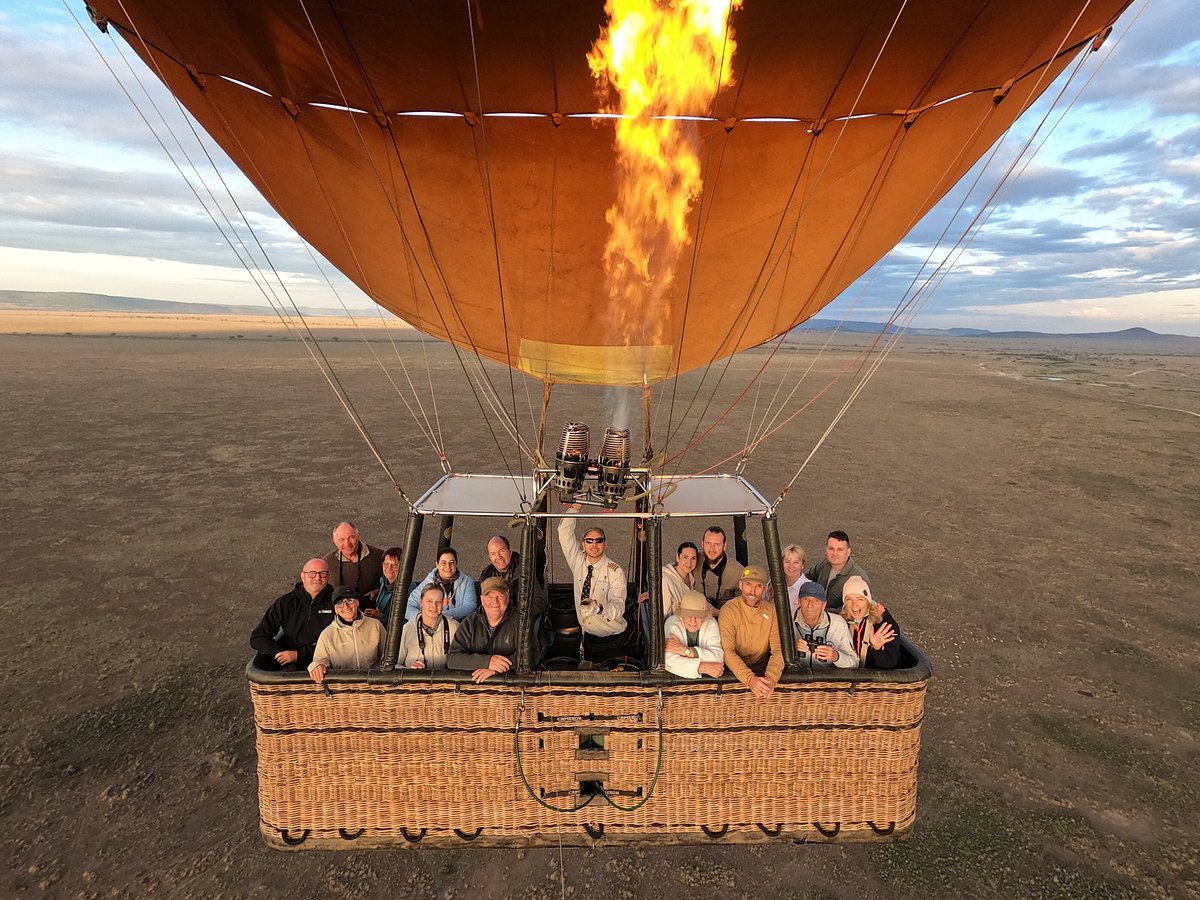
A typical balloon flight lasts between 45 minutes and one hour depending on wind conditions, covering 20 to 30 kilometres across the reserve. The pilot has limited directional control — the balloon moves with the wind — but can adjust altitude to catch different wind layers and steer the flight toward productive wildlife areas. Experienced Masai Mara balloon pilots know the reserve intimately and position the balloon to maximise wildlife visibility throughout the flight.
From the air, several things become immediately apparent that are invisible from the ground. The scale of the Mara — even the enormous reserve looks finite from above, framed by the Oloololo Escarpment to the west and the Serengeti plains rolling south into Tanzania. The patterns of animal movement — herds that appear random from ground level reveal their direction and logic from above. The drainage lines and seasonal watercourses that make certain areas productive for wildlife at different times of year are clearly visible as darker lines through the grass.
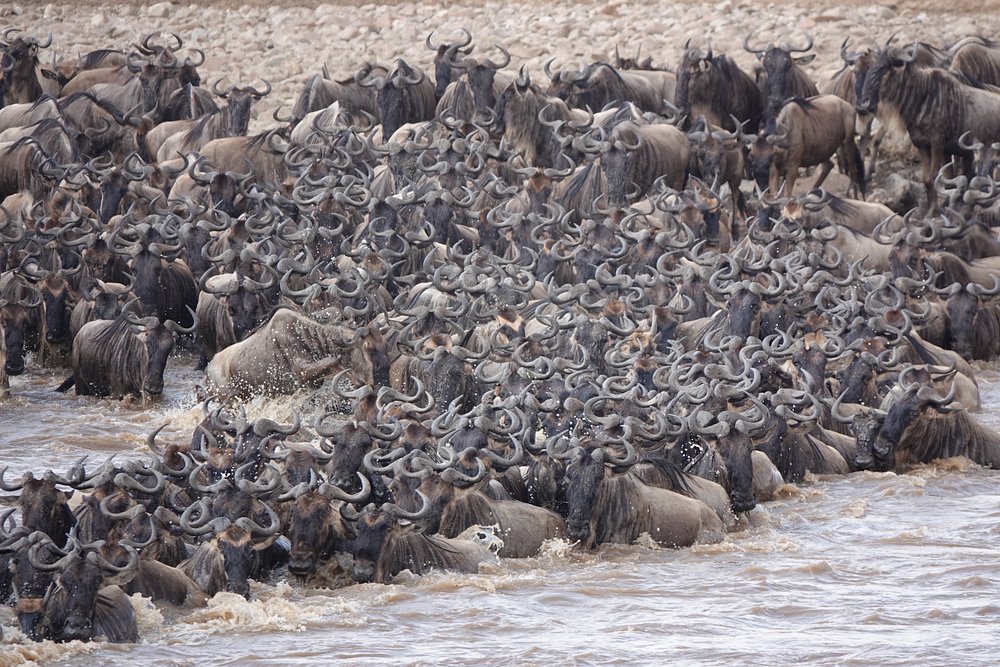
During the migration season from July to October, the view from a balloon over the Masai Mara is extraordinary. The wildebeest herds at their peak coverage can number in the hundreds of thousands visible from a single balloon flight — a moving, breathing carpet across the savannah that extends to the horizon in multiple directions simultaneously. From the air the migration is not a series of individual animals but a geological force, a mass movement that reshapes the landscape as it passes. The river crossings — visible as dense concentrations of animals at the water’s edge — can sometimes be spotted from the balloon, though the flight path is wind-dependent and cannot be directed to specific crossing points.
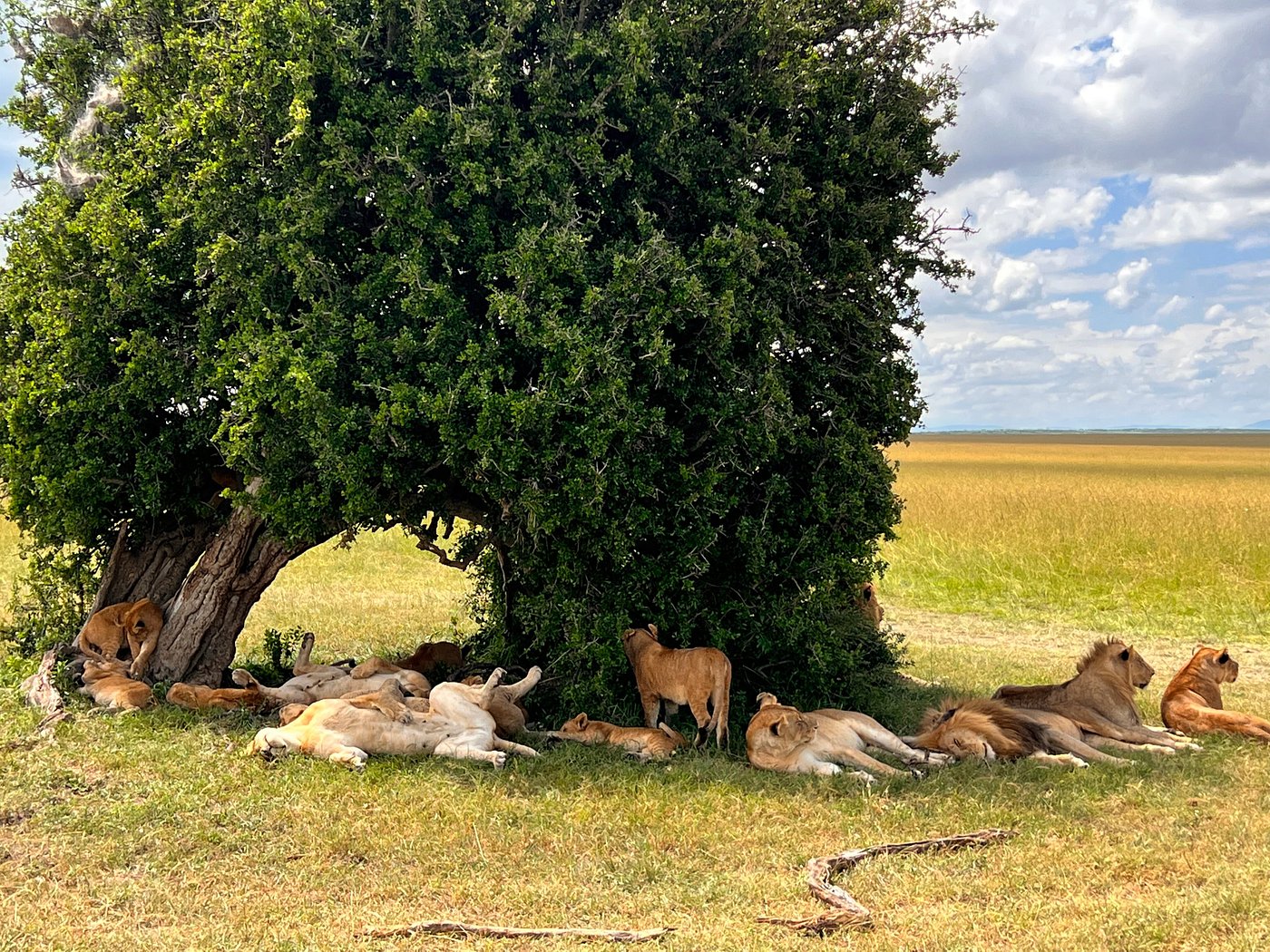
Wildlife sightings from the balloon are excellent on most flights. Lion prides are often visible resting in the open in the early morning before the heat drives them into shade. Elephant herds at the river and forest edges are easy to spot from above. Giraffe stand out clearly against the short grass. The balloon’s silent approach does not disturb animals the way a vehicle engine does — predators on a kill, female lions with cubs, cheetah on an open plain continue their behaviour undisturbed as the balloon passes overhead.
The Champagne Breakfast

The balloon safari includes a traditional champagne breakfast in the bush, served at the landing point wherever the wind takes the balloon down. The crew follows by vehicle from the launch site, and by the time passengers have helped deflate the balloon and pack the envelope, the breakfast is set up on folding tables in the grass — white tablecloths, champagne glasses, full cooked breakfast and fresh fruit, in whatever open savannah or acacia woodland the flight ends in.
This is not a token gesture. The champagne breakfast in the Masai Mara is a long-standing balloon safari tradition and it is done properly — full cooked breakfast with eggs prepared to order, local accompaniments, champagne for those who want it and fresh juice for those who don’t. The location is different every day because the landing point changes with wind direction. Some mornings the breakfast is on an open plain with wildebeest grazing 200 metres away. Some mornings it is under an acacia beside a dry lugga. The variability is part of what makes it memorable.
After breakfast, guests typically transfer to their lodge for a rest before joining the afternoon game drive. Many operators also offer a full-day option that combines the balloon safari and morning breakfast with a full game drive circuit returning in the late afternoon — an excellent use of a single Masai Mara day.
Best Time for a Hot Air Balloon Safari in the Masai Mara

Balloon flights operate in the Masai Mara throughout the year, weather permitting. The best conditions for a balloon flight are dry, calm mornings — the long dry season from June to October and the short dry season from December to February both deliver these conditions reliably. Flights are cancelled in heavy rain or strong wind, which occurs most frequently during the long wet season (March to May).
The unambiguously best period for a Masai Mara balloon safari is July to October, when the wildebeest migration herds are in the reserve. Flying over the Mara during peak migration season — August in particular — combines the most dramatic aerial wildlife view available anywhere in Africa with the reliably good dry-season weather. The sight of migration herds from 300 metres, with the Mara River visible below and the Serengeti plains extending south into Tanzania, is something that a significant proportion of guests describe as the single best moment of their entire East Africa trip.
Outside migration season, the Mara’s resident wildlife remains excellent year-round. The balloon experience in December or January — dry, clear, cold morning air producing exceptional visibility — is in many ways better for photography than the dustier August conditions. The champagne breakfast on a crisp December morning in the Mara is difficult to improve upon.
Practical Information — Cost, Booking and What to Bring

Cost: A Masai Mara hot air balloon safari costs approximately $500 to $600 per person, including the flight, the champagne breakfast and VAT. This cost is in addition to standard lodge rates and park fees. Some lodges include the balloon safari as part of a full-board package at certain times of year — check with Superfine Safaris Limited when building your itinerary.
Duration: The total balloon experience — transfer from lodge, pre-flight briefing, inflation, flight, landing, champagne breakfast and return transfer — takes approximately four to five hours from 5:00 AM to 9:30 or 10:00 AM.
Weight and age limits: Most balloon operators impose a maximum passenger weight of around 100 to 110 kg per person for basket balance and safety reasons. The minimum age is typically 7 years, though some operators set it higher at 12 years. Children must be tall enough to see over the basket edge — approximately 1.2 metres. Pregnant women and guests with significant mobility limitations are generally advised not to fly.
What to bring: Dress warmly — the Mara at 5:00 AM is cold, and the temperature at altitude is cooler still. A fleece or light down jacket is essential even in the dry season. Bring a camera with a charged battery — the light in the first 20 minutes after sunrise is extraordinary and battery drain at altitude in cold conditions is faster than expected. A wide-angle lens captures the panoramic landscape; a telephoto is useful for closer wildlife shots. Closed-toe shoes with flat soles are recommended for standing in the basket for an hour and moving through the grass at the landing point.
Booking: Balloon flights in the Masai Mara must be booked in advance, particularly during peak migration season (July–October) when availability fills weeks or months ahead. Superfine Safaris Limited manages balloon bookings as part of all Kenya itineraries — contact us to secure your dates alongside your lodge and game drive arrangements.
Combining the Balloon with Your Masai Mara Safari
A balloon safari works best as part of a Masai Mara stay of at least three nights. The standard day structure on a balloon morning is: pre-dawn transfer and flight from around 5:30 AM, champagne breakfast in the bush until around 9:30 AM, return to lodge for rest, afternoon game drive from 4:00 PM until sunset. This gives you the aerial perspective in the morning and the ground-level close-up wildlife encounters in the afternoon — two completely different experiences of the same reserve on the same day.
The balloon safari is most often scheduled on the first or second full day of a Mara stay, so that the subsequent game drives benefit from the broader landscape understanding the aerial view provides. Guides report that guests who have done the balloon flight are better at reading the landscape on subsequent drives — they can orient themselves, understand where the herds are relative to the river and predict animal movement more intuitively because they have seen the whole system from above.
Masai Mara Balloon Safari Itineraries

All Superfine Safaris Limited Masai Mara itineraries can include a hot air balloon safari as an add-on activity. The following packages are particularly well-suited to the balloon experience:
- 4 Days Mara River Crossing Safari — Four days in the Masai Mara during peak migration season, with the balloon safari included as the morning activity on Day 2 followed by an afternoon game drive. The combination of the migration river crossing from the ground and the aerial overview of the herds in a single trip is exceptional.
- 14 Days Tanzania and Kenya Great Wildebeest Migration Safari — The full migration circuit through Tanzania and Kenya, with the balloon safari in the Masai Mara section. This itinerary also includes the Serengeti, where a separate balloon safari can be added over the Tanzanian savannah for a second aerial perspective on the same migration from a different stage of the circuit.
- 8 Days Kenya and Rwanda Gorilla Trekking Safari — Masai Mara game drives and balloon safari combined with mountain gorilla trekking in Rwanda’s Volcanoes National Park.
- 10 Days Kenya Safari and Rwanda Gorilla Trekking — Extended Kenya and Rwanda itinerary with additional Mara time, ideal for building in both the balloon safari and the river crossings.
- 17 Days Kenya and Rwanda Safari — A comprehensive Kenya and Rwanda itinerary covering the Mara, Amboseli, Lake Nakuru and Rwanda gorilla and chimp trekking, with the balloon safari as a highlight of the Masai Mara days.
Frequently Asked Questions
How much does a hot air balloon safari in Masai Mara cost?
A hot air balloon safari in the Masai Mara costs approximately $500 to $600 per person, including the pre-dawn transfer from your lodge, the flight of around one hour, the traditional champagne breakfast in the bush and the return transfer. This cost is separate from lodge rates and Masai Mara National Reserve entry fees. Some luxury lodges include the balloon safari in their full-board rates at certain times — confirm with Superfine Safaris Limited when planning your itinerary.
How long is a hot air balloon safari in the Masai Mara?
The flight itself lasts approximately 45 minutes to one hour, depending on wind conditions. Including the pre-dawn transfer from your lodge, the briefing, inflation, the flight, the champagne breakfast and return transfer, the total experience takes approximately four to five hours. Most guests are back at their lodge by 9:30 or 10:00 AM, with the rest of the morning free and the afternoon available for a full game drive.
Is the Masai Mara balloon safari safe?
Yes. Balloon safaris in the Masai Mara are operated by licensed and regulated companies with Civil Aviation Authority approval. Pilots are fully certified and experienced in the specific conditions of the Mara ecosystem. Flights are cancelled in poor weather — strong wind, heavy rain or low cloud — and safety briefings are thorough. The wicker basket is robust and the standing position with basket edge support is stable throughout the flight. The balloon safari has an excellent safety record in the Masai Mara across many decades of operation.
Can children do the Masai Mara balloon safari?
Most operators set a minimum age of 7 years, and children must be tall enough to see over the basket edge — approximately 1.2 metres. Some operators set the minimum age higher at 12 years. Children typically find the balloon experience exciting and memorable rather than frightening, as the ascent and flight are extremely smooth and quiet. Confirm the specific age and height requirements with Superfine Safaris Limited when booking.
Is the balloon safari better during the migration?
The balloon safari is excellent at any time of year, but it reaches a different level entirely during the migration season from July to October. Flying over the Masai Mara with wildebeest herds numbering in the hundreds of thousands visible below — the moving mass stretching to the horizon, the river crossings visible from above — is one of the most extraordinary wildlife experiences available anywhere in Africa. If your travel dates allow, timing the balloon safari to the migration window is strongly recommended.
Book Your Balloon Safari
We handle all balloon bookings and build it into your Masai Mara itinerary.
Get a Free QuoteQuick Facts
- Duration: ~1 hour flight
- Departure: Pre-dawn (~5:30 AM)
- Cost: ~$500–$600 per person
- Includes: Champagne breakfast
- Best time: Jul–Oct (migration)
- Min age: Usually 7 years