The Bahai Temple in Uganda, officially known as the Mother Temple of Africa, is one of the country’s most remarkable religious and architectural landmarks. Perched on the scenic Kikaaya Hill in northern Kampala, the temple serves as the spiritual center of the Bahai Faith in Africa and welcomes visitors of all religions, cultures, and nationalities. It is not only a place of worship but also a symbol of unity, peace, and the oneness of humanity.
Location of the Bahai Temple
The Bahai Temple is located on Kikaaya Hill, approximately 8 kilometers north of Kampala’s city center. The temple sits within beautifully landscaped gardens covering more than 50 acres, offering breathtaking views of Kampala and its surrounding hills. The serene environment makes it one of the most peaceful places to visit in the city. Visitors can easily access the temple from all parts of the capital Kampala.
History of the Bahai Temple in Uganda
The Bahai Faith was introduced to Uganda in 1951 and experienced rapid growth among people from various ethnic and social backgrounds. By 1954, the community had grown significantly, prompting the decision to construct Africa’s first Bahai House of Worship in Kampala.
Construction of the temple began in 1958, and it was officially dedicated in January 1961. More than 1,500 people from different African countries and other parts of the world attended the inauguration ceremony. Since then, the temple has remained a prominent spiritual and cultural landmark in Uganda.
Unique Architecture
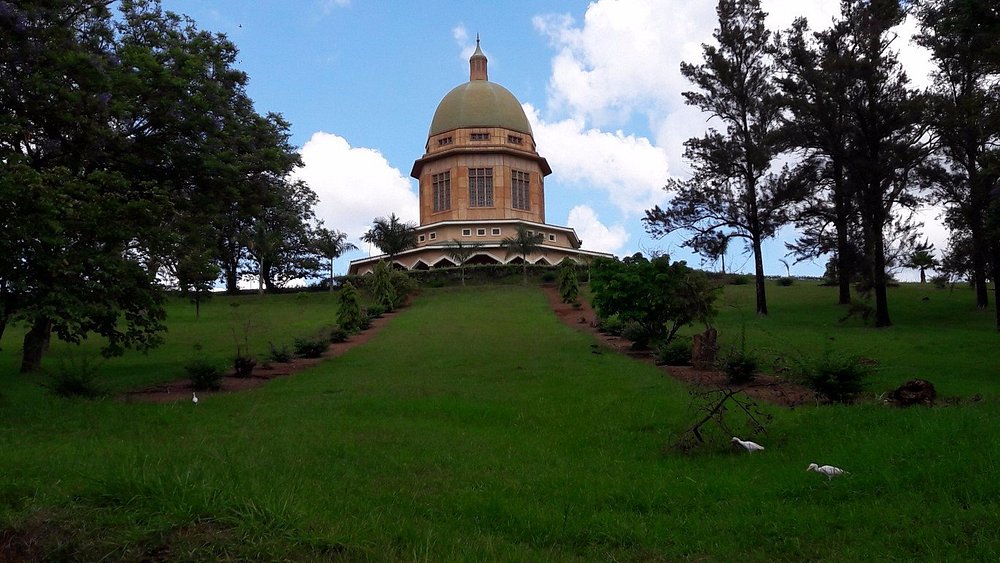
The temple’s design reflects both African traditions and Bahai principles. It was designed by architect Charles Mason Remey and resembles a traditional African hut.
Some of its notable architectural features include:
- A nine-sided structure, symbolizing unity and completeness.
- A striking green dome covered with mosaic tiles.
- Large stained-glass windows that allow natural light into the prayer hall.
- A capacity to accommodate hundreds of worshippers.
- Beautiful gardens and walking paths surrounding the building.
The temple rises more than 39 meters above the ground and was among the tallest structures in East Africa at the time of its completion.
Purpose of the Temple
 Unlike many religious buildings, the Bahai Temple is open to everyone regardless of faith. There are no sermons, rituals, or collections during services. Instead, visitors gather for prayer, meditation, and reflection.
The Bahai teachings emphasize:
- The oneness of God
- The oneness of humanity
- The unity of all religions
- Universal peace
- Equality of women and men
- Harmony between science and religion
How Many Bahai Temples Are There in the World?
As of 2026, there are 14 completed Bahai Houses of Worship (Temples) around the world. These include continental, national, and local Houses of Worship.
Continental Houses of Worship
These are the most famous Bahai temples and serve entire continents:
- Bahai House of Worship Kampala – Africa
- Bahai House of Worship Wilmette – North America
- Bahai House of Worship Sydney – Australasia
- Bahai House of Worship Langenhain – Europe
- Bahai House of Worship Panama City – Latin America
- Bahai House of Worship Apia – Pacific Islands
- Lotus Temple – Indian Subcontinent
- Temple of South America – South America
National and Local Houses of Worship
Additional temples have been established in:
- Battambang
- Norte del Cauca
- Matunda Soy
- Tanna
- Kinshasa
- Port Moresby
More Houses of Worship are planned or under construction in several countries around the world.
Tourism Significance of the Bahai Temple
The Bahai Temple is one of Uganda’s most visited religious attractions. Its peaceful gardens, impressive architecture, and panoramic views of Kampala attract tourists, pilgrims, photographers, students, and researchers throughout the year. Many visitors include the temple in their Kampala city tours alongside attractions such as the Uganda Museum, Kasubi Tombs, and the Uganda Martyrs Shrine.
Conclusion
The Bahai Temple in Uganda is far more than a beautiful building. As the Mother Temple of Africa, it represents the Bahai vision of unity, peace, and spiritual fellowship among all people. This iconic landmark remains one of Uganda’s most important religious and cultural attractions. Whether you are interested in architecture, history, spirituality, or tourism, a visit to the Bahai Temple offers a memorable and inspiring experience.