Choosing the best camera for gorilla photography can make a major difference to your Uganda gorilla trekking experience. Mountain gorillas are usually encountered in thick rainforest, where light can be limited, vegetation can interfere with autofocus and the animals can change position without warning.
Unlike photographing elephants or lions from a safari vehicle, gorilla photography often happens on foot and at relatively close range. You therefore need equipment that combines excellent image quality with portability, fast focusing and good performance in difficult lighting.
The good news is that you do not need the most expensive professional camera to take memorable gorilla photographs. The right combination of camera, lens, settings and technique can produce excellent results.
This guide explains what to look for when choosing the best camera for gorilla photography, the most useful lenses, recommended settings and practical tips for photographing mountain gorillas in Uganda.
What Makes the Best Camera for Gorilla Photography?
There is no single camera that is perfect for every gorilla photographer. Your ideal camera depends on your budget, experience and whether gorilla photography is your main purpose or part of a wider Uganda safari.
However, a good gorilla photography camera should have several important characteristics:
- Excellent performance in low light
- Fast and accurate autofocus
- Animal or eye-detection autofocus
- Good image stabilisation
- Fast continuous shooting
- Good battery life
- Weather-resistant construction
- Comfortable handling
- Compatibility with quality telephoto lenses
These features become particularly important in Bwindi Impenetrable National Park and Mgahinga Gorilla National Park, where forest conditions can change quickly.
Why Low-Light Performance Matters
One of the biggest challenges of gorilla photography is the forest environment. The canopy can block much of the available sunlight, while dense vegetation creates a mixture of shadows and brighter areas. A gorilla may therefore be sitting in relatively dark surroundings even though it is daytime.
This means your camera may need to work at higher ISO settings. A camera with good high-ISO performance allows you to maintain a sufficiently fast shutter speed without producing excessive image noise.
For this reason, photographers who consider low-light performance a priority may prefer a full-frame camera.
However, a good APS-C camera can also produce excellent photographs when paired with a suitable lens and used correctly.
Best Camera Types for Gorilla Photography
Full-Frame Mirrorless Cameras
For serious photographers, a full-frame mirrorless camera is one of the strongest options. These cameras generally offer excellent image quality, strong low-light performance, advanced autofocus, high dynamic range, animal detection, fast continuous shooting and interchangeable lenses
A full-frame mirrorless camera paired with a 70-200mm f/2.8 lens is an excellent combination for a dedicated gorilla photography safari.
APS-C Mirrorless Cameras
An APS-C mirrorless camera can be an excellent alternative, particularly for travelers who want to reduce equipment size and cost.
The smaller sensor provides a crop factor that can give telephoto lenses greater effective framing reach.
A quality APS-C camera paired with a 70-300mm or 100-400mm lens can produce impressive wildlife photographs.
The main consideration is low-light performance. When shooting at very high ISO values in the darkest parts of the forest, a good full-frame camera may provide cleaner files.
DSLR Cameras
If you already own a good DSLR, there is no need to purchase a new camera simply because mirrorless systems have become popular. A capable DSLR with a good telephoto lens can still produce excellent gorilla photographs.
The most important thing is to understand the camera and know how to adjust its settings quickly.
Recommended Cameras for Gorilla Photography
Several modern cameras are particularly well suited to the demands of wildlife photography.
Canon EOS R6 Mark II
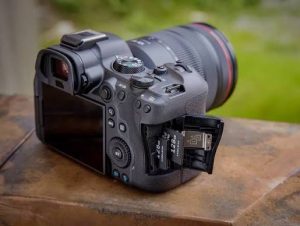 The Canon EOS R6 Mark II is an excellent choice for photographers who want strong autofocus, good low-light performance and fast shooting.
Its animal detection and eye-detection capabilities can be particularly useful when photographing gorillas moving through vegetation.
The camera also offers image stabilization and a full-frame sensor, making it a strong option for rainforest photography. This camera is best for serious enthusiasts, wildlife photographers, gorilla and general safari photography and photographers who prioritise autofocus
Nikon Z6 III
The Nikon Z6 III is another excellent option for gorilla photography. Its full-frame sensor provides a good balance between resolution and low-light performance, while its advanced autofocus system is well suited to moving wildlife.
Its relatively manageable size also makes it practical for a trekking environment where carrying heavy equipment for several hours can become tiring. Nikon Z6 111 is best for wildlife photographers, low-light photography, gorilla and safari combinations and photographers who want a versatile full-frame system
Sony A7 IV
The Sony A7 IV is a strong all-round camera for travelers who want to combine wildlife photography with landscapes, portraits and general travel photography.
Sony’s extensive lens selection also gives photographers considerable flexibility when building a wildlife kit. This camera is best for travel photographers, wildlife enthusiasts, gorilla and landscape photography and photographers already using Sony equipment
Nikon Z8
The Nikon Z8 is better suited to photographers who want high resolution and professional-level performance. Its high-resolution sensor gives photographers more room to crop photographs while retaining useful detail.
This can be useful when vegetation or distance prevents you from getting the perfect composition in the field. This is best for experienced wildlife photographers, professional photographers, large prints and photographers who frequently crop images
Canon EOS R5 Mark II
The Canon EOS R5 Mark II is another high-end option for serious wildlife photographers.
It combines high resolution with sophisticated autofocus and fast shooting performance.
It is more camera than most holidaymakers need, but it can be an excellent investment for photographers who intend to make gorilla photography a significant part of their work.
What Is the Best Lens for Gorilla Photography?
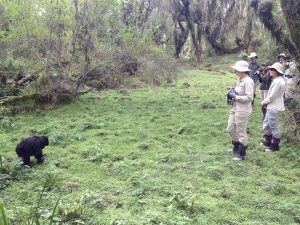 When choosing equipment, do not concentrate only on the camera body. The lens is one of the most important parts of a gorilla photography setup.
For most photographers, a 70-200mm f/2.8 lens is one of the best choices.
Why a 70-200mm Lens Works So Well
Gorillas may be relatively close during an encounter, so an extremely long lens is not always practical. A 70-200mm lens provides flexibility. At 70mm, you can photograph a gorilla together with its surroundings.
At the longer end, you can capture:
- Faces
- Eyes
- Silverback portraits
- Mothers and infants
- Expressions
- Grooming
- Feeding behaviour
The f/2.8 aperture is also valuable in the forest because it allows more light to reach the camera sensor.
Is a 100-400mm Lens Good for Gorilla Photography?
Yes. A 100-400mm lens can be a very useful option for photographers who want additional reach.
It becomes particularly valuable if your Uganda trip combines gorilla trekking with conventional wildlife safaris.
The same lens can be used for Lions, Elephants, Leopards, Antelopes, Birds and Other distant wildlife
The disadvantage is that some 100-400mm lenses have a smaller maximum aperture than a 70-200mm f/2.8.
In very dark forest conditions, this can require higher ISO settings.
What About a 500mm or 600mm Lens?
Extremely long lenses are generally unnecessary for most gorilla encounters.
A 500mm or 600mm lens is excellent for photographing distant wildlife on open plains, but gorillas can approach much closer.
A long lens can therefore make it difficult to fit the entire animal into the frame.
For a dedicated gorilla trek, versatility is often more valuable than maximum reach.
Why You Should Consider a Wide-Angle Lens
A wide-angle lens might not be the first piece of equipment you associate with gorilla photography, but it can produce some of the most meaningful photographs.
Close-up portraits show the animal. Environmental photographs show the animal within its home. A 24-70mm lens can help you photograph:
- Gorillas surrounded by vegetation
- Gorilla families
- Silverbacks in their forest habitat
- Trekking scenes
- Guides and porters
- Forest landscapes
If you are carrying two lenses, a 24-70mm and 70-200mm combination provides excellent versatility.
What Shutter Speed Is Best for Gorilla Photography?
Shutter speed is extremely important. Gorillas may appear calm, but their movements can be sudden.
For a resting gorilla, 1/250 second may be sufficient.
For general movement, 1/500 second is a safer starting point.
For playful juveniles, climbing or fast movement, consider 1/1000 second or faster.
The objective is to prevent movement from turning an otherwise beautiful photograph into a blurred image.
What ISO Should You Use?
There is no universal ISO setting for gorilla photography. Forest lighting can change significantly during the trek. You might use ISO 800 in a brighter opening and ISO 3200, 6400 or higher when the gorillas move deeper into the forest.
Do not be afraid of increasing ISO when necessary.
A sharp photograph with some noise is usually much more useful than a low-ISO photograph ruined by motion blur.
Modern cameras also provide increasingly effective noise-reduction options during post-processing.
Should You Photograph Gorillas in RAW?
For serious photography, RAW is the preferred format.
RAW files preserve substantially more information for editing than compressed JPEG files.
This is especially useful in forest conditions where the gorilla may be in shadow while bright foliage appears behind it.
RAW gives you greater flexibility when adjusting exposure, shadows, highlights, white balance, contrast, colour and noise
Should You Use Flash During Gorilla Photography?
No. Flash should not be used during gorilla encounters.
Instead, rely on natural light and adjust your camera settings accordingly.
You can compensate for low light by:
- Opening the aperture
- Increasing ISO
- Using a faster shutter speed where possible
- Using a fast lens
- Positioning yourself appropriately within the available light
Natural forest light can create a much more authentic image than artificial illumination.
How to Protect Your Camera During a Gorilla Trek
Uganda’s rainforest environment can be wet and humid. Rain can arrive unexpectedly, so camera protection should be part of your packing list.
Consider carrying:
- Camera rain cover
- Waterproof camera bag
- Dry bag
- Microfibre cloth
- Spare batteries
- Spare memory cards
- Lens cleaning cloth
- Lens hood
Keep your equipment protected whenever you are not actively photographing.
A waterproof bag can also protect your equipment if you need to move through wet vegetation.
How Many Batteries Should You Carry?
Carry at least one spare battery, and preferably two if you plan to photograph extensively.
Continuous autofocus, image stabilization, electronic viewfinders and frequent burst shooting can consume considerable power.
Start each trekking day with fully charged batteries.
If you are carrying multiple batteries, keep them protected from moisture.
How Many Memory Cards Do You Need?
Wildlife photographers can take hundreds of photographs during a single encounter.
Carry enough storage for the entire day rather than assuming that you will take only a few photographs.
Using several memory cards instead of one enormous card can also reduce the risk of losing an entire day’s photographs if a card develops a problem.
Should You Carry Two Cameras?
Two camera bodies can be useful for professional photographers.
One body could have a 70-200mm lens while the second carries a wider lens.
This means you can change perspective without changing lenses in the forest.
However, two cameras add weight.
For most travellers, one good camera with a versatile lens is more than sufficient.
Gorilla Photography Tips for Better Images
Having the best camera for gorilla photography is only the beginning.
Focus on the eyes
When photographing a gorilla’s face, try to ensure that the eye is sharply focused.
Eye contact can make a wildlife photograph much more powerful.
Photograph the entire family
Do not concentrate exclusively on silverbacks. Look for mothers with infants, juveniles playing, grooming, feeding, social interactions, resting and expressions. These moments often create a more complete visual story.
Use the vegetation
Branches and leaves are not always problems. They can help communicate the rainforest environment and make your photographs feel more natural.
Take environmental portraits
Step back occasionally and show the gorilla within the forest.
A photograph that includes the animal and its surroundings can tell a stronger story than a close-up alone.
Watch before pressing the shutter
Spend some time observing the gorillas. Look for behavioral patterns.
A gorilla that appears to be doing nothing may suddenly look directly at you, interact with another gorilla or move into a beautiful patch of light.
Best Camera for Gorilla Photography on Different Budgets
Budget-conscious photographer
Choose a good APS-C mirrorless camera with a quality 70-300mm lens.
This gives you good reach without the cost and weight of a professional full-frame system.
Mid-range photographer
A full-frame mirrorless body paired with a 70-200mm f/2.8 is an excellent combination.
This provides strong low-light performance and flexibility.
Professional photographer
A high-end full-frame body with a 70-200mm f/2.8 and a second camera body with a wider lens provides maximum flexibility.
Best Camera for Gorilla Photography: Our Recommendation
For most people planning a gorilla photography safari in Uganda, the best approach is to prioritize low-light performance, autofocus and lens quality rather than simply buying the camera with the highest resolution.
A modern full-frame mirrorless camera paired with a 70-200mm f/2.8 lens is an excellent all-round setup.
The Canon EOS R6 Mark II and Nikon Z6 III are particularly suitable examples, while Sony’s full-frame mirrorless cameras provide another strong option.
However, there is an important lesson for anyone shopping for the best camera for gorilla photography:
A camera does not take the photograph by itself.
Understanding your equipment, choosing appropriate settings, anticipating animal behavior and composing carefully are just as important.
A photographer using a familiar mid-range camera can produce outstanding gorilla photographs, while someone with an expensive professional camera can still miss the moment.
What to Pack for Gorilla Photography in Uganda
A practical photography kit should include:
- Camera body
- 70-200mm or 100-400mm lens
- Optional wide-angle or 24-70mm lens
- Spare batteries
- Memory cards
- Camera rain cover
- Waterproof bag
- Microfibre cloth
- Lens cleaning cloth
- Comfortable camera strap
If your equipment is heavy, consider hiring a porter during your gorilla trek. This can allow you to concentrate on photography rather than carrying equipment throughout the forest.
Gorilla Photography in Bwindi
Bwindi Impenetrable National Park is one of Uganda’s premier destinations for mountain gorilla trekking. The forest provides a dramatic setting for photography, but the dense vegetation means photographers need to be prepared for changing light and challenging compositions.
Instead of trying to photograph every encounter in the same way, vary your approach.
Capture close-up portraits, full-body photographs, family groups, behaviour, environmental scenes, forest details and interactions between gorillas
This creates a more complete record of your experience.
Gorilla Photography in Mgahinga
Mgahinga Gorilla National Park offers another opportunity to photograph mountain gorillas in Uganda. The volcanic landscape and forest environment can provide different photographic perspectives.
As with Bwindi, flexibility is essential. The exact location and behaviour of a gorilla family cannot be predicted, so photographers should prepare their equipment before entering the forest rather than waiting until the encounter begins.
In general, the best camera for gorilla photography is one that can handle low light, focus accurately, track movement and remain practical to carry through a rainforest.
For most serious photographers, a full-frame mirrorless camera paired with a 70-200mm f/2.8 lens provides an excellent balance of image quality, reach, low-light capability and flexibility.
For travellers who also plan extensive wildlife photography elsewhere in Uganda, a 100-400mm or 100-500mm lens may provide additional versatility.
But equipment is only one part of the experience.
The most memorable gorilla photographs often come from patience, careful observation and being ready when an unexpected moment unfolds.
Plan Your Gorilla Photography Safari with Superfine Safaris Limited
A gorilla photography safari can be combined with other wildlife and adventure experiences in Uganda.
Superfine Safaris Limited can help organise a personalised Uganda gorilla safari based on your preferred trekking location, accommodation, travel duration and photography interests.
Whether you are a professional wildlife photographer or simply travelling with a camera for the first time, careful preparation can help you make the most of your encounter with Uganda’s mountain gorillas.
Frequently Asked Questions About Gorilla Photography
What is the best camera for gorilla photography?
A modern mirrorless camera with strong autofocus, good high-ISO performance and image stabilization is an excellent choice. Full-frame models are particularly useful when photographing gorillas in darker forest conditions.
What is the best lens for gorilla photography?
A 70-200mm f/2.8 lens is one of the most versatile options. It provides enough reach for portraits while remaining useful when gorillas are relatively close.
Do I need a 600mm lens for gorilla trekking?
No. Extremely long lenses are usually unnecessary because gorillas can be encountered at relatively close distances. A 70-200mm or 100-400mm lens is generally more flexible.
What camera settings are best for gorilla photography?
A good starting point is continuous autofocus, a shutter speed of around 1/250–1/500 second, an aperture of f/2.8–f/4 and Auto ISO. Increase shutter speed when photographing active gorillas.
Can I use my smartphone to photograph gorillas?
Yes, but a dedicated camera offers significantly more flexibility, particularly in low light and when the gorillas are farther away.
Should I shoot gorilla photographs in RAW?
Yes. RAW provides greater flexibility when correcting exposure, shadows, highlights and colour during editing.
Can I use flash when photographing gorillas?
No. Avoid flash during gorilla encounters and rely on natural light.
Let us plan your safari!