The Mara River crossing is one of the most dramatic moments of the Great Migration. Every year, huge herds of wildebeest, accompanied by zebras and other grazing animals, move through the Serengeti ecosystem in Tanzania and the Maasai Mara in Kenya.
When the herds reach the Mara River, they face one of the most challenging stages of their journey: crossing deep water while navigating steep riverbanks, strong currents and waiting crocodiles.
For travelers, witnessing a Mara River crossing is an unforgettable safari experience. It combines wildlife behavior, natural drama and the unpredictability of the African wilderness. A crossing can last only a few minutes, or the animals may gather along the riverbank for hours before suddenly making their move.
The experience cannot be guaranteed because wildlife follows its own instincts and seasonal movements. This uncertainty is also what makes the Mara River crossing so special.
What Is the Mara River Crossing?
The Mara River crossing happens during the annual Great Migration when wildebeest and zebras cross the Mara River as they move between grazing areas in the Serengeti-Mara ecosystem.
The Mara River flows through northern Tanzania and Kenya’s Maasai Mara region, creating a natural obstacle along the migration route.
When the herds reach the river, they may gather along the banks in enormous numbers. The animals can remain there for some time, seemingly waiting for the right moment to cross.
Eventually, one or several animals may enter the water. Others follow, and the crossing can quickly develop into a spectacular movement of hundreds or thousands of animals.
Why the Mara River Crossing Is So Dramatic
A Mara River crossing is not simply a large group of animals moving from one side of a river to another. Several factors make it particularly dramatic.
Thousands of animals moving together
The sheer number of animals is one of the most impressive aspects of the experience. Wildebeest can gather in huge herds along the river, sometimes accompanied by zebras that move among them.
When the crossing finally begins, the sight of animals entering the water together creates an extraordinary spectacle.
The waiting game
One of the most memorable parts of the experience happens before the crossing. The herd may gather at the top of the riverbank, creating a tense atmosphere. Animals move backwards and forwards as they assess the water.
There may be a long period of waiting followed by a sudden rush towards the river. This means a Mara River crossing safari requires patience. Being at the river does not necessarily mean a crossing will happen immediately.
Crocodiles in the river
The Mara River is home to large Nile crocodiles, which take advantage of the annual migration.
Their presence adds another layer of danger to the crossing. However, it is important to remember that wildlife interactions are unpredictable. A safari guide should never promise that visitors will see a crocodile attack or a particular dramatic event. The river crossing is a natural process rather than a staged wildlife show.
What Happens During a Mara River Crossing?
The moments leading up to a crossing can be just as exciting as the crossing itself. You may see large numbers of wildebeest gathering near the river. Animals move back and forth as they assess the descent towards the water.
Then, without much warning, the herd can begin moving. The first wildebeest may cautiously enter the river. As more animals follow, the pace increases.
Wildebeest swim through the water and climb the opposite bank, often scrambling over one another as they try to reach higher ground. Zebras may also be part of the movement.
Once the animals reach the other side, they may quickly disappear into the surrounding grassland. The entire event can be over surprisingly quickly.
When Is the Mara River Crossing?
The main Mara River crossing season generally falls between July and October, when the Great Migration moves through the northern Serengeti and Maasai Mara.
However, there is no fixed crossing date. The migration is controlled by natural conditions, particularly rainfall, availability of grass and water, and the movement of the herds.
This means that travelling during the commonly recommended months increases your opportunity but does not guarantee that you will see a crossing.
Best Month for the Mara River Crossing
Mara River Crossing in July
July is an exciting time to be in the northern Serengeti and Maasai Mara region as migrating herds move towards the Mara River. Early crossings may occur, although the exact timing varies each year.
Mara River Crossing in August
August is one of the most popular months for travelers hoping to witness the Mara River crossing.
Large herds may be concentrated around the river during this period, providing opportunities for spectacular wildlife viewing.
Because August is also a popular safari period, accommodation in prime locations can fill up well in advance.
Mara River Crossing in September
September can continue to offer excellent migration viewing.
The herds may still be moving around the Mara River region, while the wider Serengeti and Maasai Mara ecosystems continue to provide excellent game viewing.
Mara River Crossing in October
October can still offer opportunities to see the migration around the Mara River, although herd movements increasingly depend on rainfall and changing grazing conditions.
Where Is the Mara River Crossing?
The Mara River forms part of the ecosystem connecting northern Serengeti National Park in Tanzania with the Maasai Mara in Kenya.
This means that travelers can experience the Great Migration from either country.
Mara River Crossing in Tanzania
Northern Serengeti is an excellent choice for travelers who want to experience the migration from the Tanzanian side.
A safari based in northern Serengeti allows you to spend several days following the herds while enjoying the area’s wider wildlife.
It can also be incorporated into a longer Tanzania safari that includes other famous destinations.
Mara River Crossing in Kenya
The Maasai Mara is another important destination for witnessing the migration.
Travelers staying in the reserve or surrounding conservancies can spend several days following the movement of wildebeest and zebras.
The advantage of a Maasai Mara safari is that even when the animals are not crossing the river, there is plenty of other wildlife to see.
Can You See the Mara River Crossing from Both Kenya and Tanzania?
Yes. The migration moves through a shared ecosystem that crosses the Kenya-Tanzania border.
A traveler can therefore plan a safari in northern Serengeti, Maasai Mara or combine both destinations.
A Kenya-Tanzania migration safari can be particularly rewarding for travelers with more time because it allows them to experience different landscapes and wildlife areas during the same journey.
Where Is the Mara River Crossing Best Viewed?
The Mara River flows through the northern Serengeti and into the Maasai Mara ecosystem in Kenya.
Travellers can therefore experience the migration from either Tanzania or Kenya, depending on their safari itinerary.
Northern Serengeti
Northern Serengeti is an excellent choice for travelers who want to experience the migration from the Tanzanian side.
Staying in the northern Serengeti reduces the distance to areas where the herds may gather around the Mara River.
It also allows travelers to combine migration viewing with the wider Serengeti safari experience.
Maasai Mara
The Maasai Mara in Kenya is another important location for viewing the migration and river crossings.
Travellers staying in the Mara can follow the movement of the herds with the help of experienced guides and spend time around suitable river-crossing areas.
The Kenyan and Tanzanian sides offer different safari experiences, so the better option depends on the overall itinerary.
How Long Should You Stay for the Mara River Crossing?
 If your primary goal is to see the Mara River crossing, staying several nights in the migration area is highly recommended.
A short visit gives you limited opportunities.
A stay of around three or more nights provides greater flexibility because your guide has more time to locate the herds and follow their movements.
It also means that your safari remains enjoyable even if the animals do not cross during your visit.
You can spend the time enjoying game drives and searching for lions, cheetahs, leopards, elephants, giraffes, buffaloes and other wildlife.
What Does a Mara River Crossing Look Like?
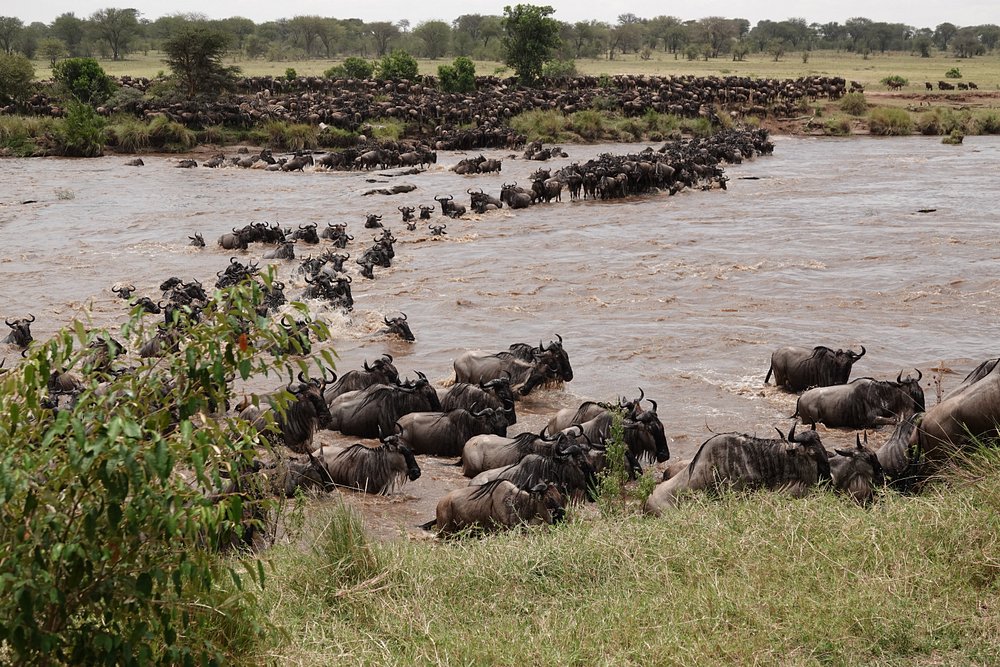
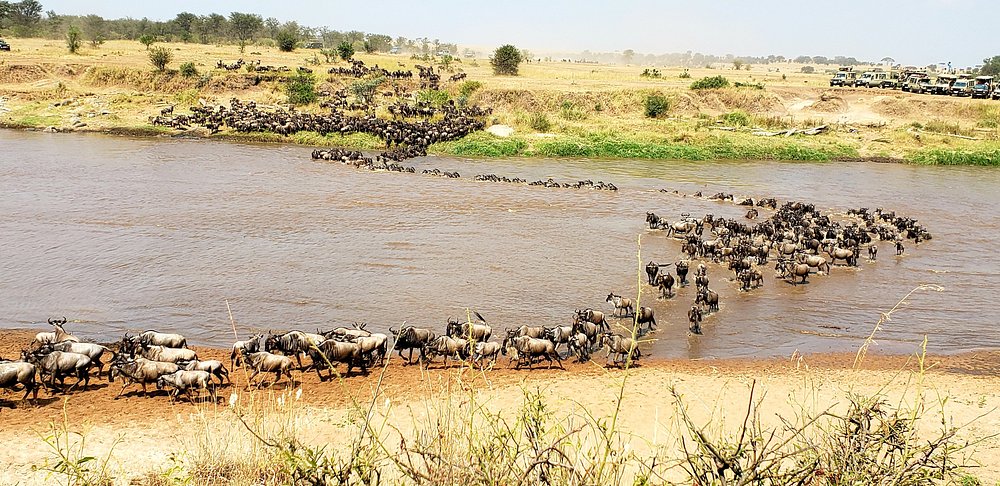
There is no standard river-crossing scene. One crossing may involve a small group of wildebeest entering the water. Another may involve thousands of animals moving almost simultaneously.
You may see animals:
- Gathering along the riverbank
- Moving towards the water and turning back
- Searching for a suitable crossing point
- Entering the river in large numbers
- Swimming across deep sections
- Climbing steep riverbanks
- Rejoining the herd after reaching the opposite side
- Moving rapidly across open grassland afterwards
Sometimes the most interesting part is simply watching the animals make decisions before they cross.
The Role of Safari Guides
An experienced safari guide can make a significant difference to the Mara River crossing experience.
Guides constantly monitor animal movements and understand the behaviour of the herds. They may communicate with other guides and use their knowledge of the ecosystem to identify areas where the migration is active.
However, responsible guides should avoid making unrealistic promises. No guide can control when or where wildebeest cross the river.
A good guide instead helps travelers understand what is happening, positions the vehicle responsibly and ensures that the experience remains respectful of the animals and the environment.
Is the Mara River Crossing Guaranteed?
No, the Mara River crossing cannot be guaranteed.
This is one of the most important things travelers should understand before booking a migration safari. Even during the peak migration months, the animals may remain on one side of the river for hours or days. They may also choose a different crossing point from the one being watched.
Rainfall can change migration patterns, while the animals themselves determine when they are ready to move. This unpredictability should not be viewed as a disadvantage. It is part of what makes a wildlife safari different from visiting a scheduled attraction.
What Other Wildlife Can You See?
A Mara River crossing safari is not only about wildebeest. The northern Serengeti and Maasai Mara are rich wildlife areas where travelers may encounter:
- Lions
- Leopards
- Cheetahs
- Elephants
- Giraffes
- Hippos
- Crocodiles
- Buffaloes
- Hyenas
- Zebras
- Gazelles
- Elands
- Warthogs
- Numerous bird species
Predators often take advantage of the concentration of prey during the migration, making the wider wildlife experience particularly rewarding.
Photography During the Mara River Crossing
 The Mara River crossing offers outstanding wildlife photography opportunities, but it can also be challenging. The action may happen suddenly, and the animals can move quickly.
A camera with a telephoto lens, fast autofocus and good low-light performance is useful. A versatile zoom lens can also help because the distance between the vehicle and animals may change throughout the experience. For better photographs:
- Keep your camera ready while waiting.
- Use a fast shutter speed for animals entering the water.
- Track individual animals rather than trying to photograph everything.
- Allow space around moving animals.
- Watch the riverbank as well as the water.
- Avoid constantly changing camera settings when the action begins.
- Bring spare batteries and sufficient memory cards.
- Follow your guide’s positioning instructions.
Sometimes the best photograph is not the largest herd but a single wildebeest struggling up the opposite riverbank or zebras moving cautiously towards the water.
What Should You Bring?
Travellers planning a Mara River crossing safari should pack for long hours outdoors. Useful items include:
- Binoculars
- Camera and telephoto lens
- Extra camera batteries
- Memory cards
- Sun hat
- Sunscreen
- Sunglasses
- Light, comfortable clothing
- Warm layer for cool mornings
- Closed walking shoes
- Drinking water
- Insect repellent
- Small day bag
Neutral-coloured clothing is generally practical for game drives.
Responsible Tourism During the River Crossing
The Mara River is a sensitive wildlife experience, and responsible tourism is essential. Visitors should never encourage drivers to chase animals, block crossing routes or move too close to the riverbank.
Vehicles should follow designated access routes and maintain appropriate distances from wildlife. Travellers should also avoid shouting, playing loud music or making sudden movements that could disturb animals.
The objective is to observe the migration without interfering with it.
Mara River Crossing Experience from Tanzania
For travelers choosing Tanzania, a safari focused on the northern Serengeti provides an opportunity to follow the migration towards the Mara River.
This can be combined with other Serengeti regions or incorporated into a longer Tanzania itinerary covering destinations such as Ngorongoro Conservation Area and Tarangire National Park.
The northern Serengeti is particularly attractive for travelers who want to combine the migration with the wider Serengeti landscape and wildlife experience.
Mara River Crossing Experience from Kenya
Travelers visiting Kenya can base themselves in the Maasai Mara during the migration season. The Mara provides excellent opportunities for game viewing beyond the river crossing, including encounters with big cats, elephants, giraffes, buffaloes and other wildlife.
A well-planned Maasai Mara safari can therefore provide a complete wildlife experience rather than focusing entirely on the river.
Can You Combine Tanzania and Kenya for the Migration?
Yes. Travelers with sufficient time can create a cross-border safari combining the northern Serengeti and Maasai Mara.
This approach can provide a broader perspective of the Great Migration and allow travelers to explore both ecosystems.
However, crossing the international border requires proper planning, including immigration arrangements, vehicle logistics and the structure of the safari.
A reputable safari operator can organize the itinerary according to the traveler’s preferred route and available time.
Why the Mara River Crossing Is Worth Experiencing
The Mara River crossing is powerful because it represents one of nature’s most dramatic survival journeys.
There is no guarantee that you will see thousands of animals cross simultaneously. You may spend hours watching the herd gather, only for the animals to move away. But when the crossing happens, the experience can be extraordinary.
The sound of hooves, animals entering the water, dust rising from the riverbank and the movement of the herd create a scene that is difficult to replicate anywhere else.
More importantly, witnessing the crossing gives travelers an opportunity to observe wildlife behaving naturally, without a script or schedule.
Plan Your Mara River Crossing Safari with Superfine Safaris
At Superfine Safaris Limited, we can help you plan a Tanzania or Kenya safari around the Great Migration and the Mara River crossing experience.
Our safari planning focuses on choosing suitable travel dates, selecting accommodation in strategic locations and allowing enough time in the migration area rather than relying on a rushed itinerary.
For the best chance of experiencing the Mara River crossing, we recommend planning early, especially for peak-season travel when accommodation in prime migration areas can fill quickly.
Mara River Crossing Experience FAQs
When is the Mara River crossing?
The main river-crossing season generally falls between July and October, although the exact timing varies according to rainfall and the movement of the migration.
Is the Mara River crossing guaranteed?
No. Wildlife movements cannot be guaranteed. Even during peak season, herds may gather without crossing or may cross at a different location.
Can I see the Mara River crossing in Tanzania?
Yes. Northern Serengeti provides opportunities to follow the migration around the Mara River area.
Can I see the crossing from Kenya?
Yes. The Maasai Mara is another major location for experiencing the Great Migration and possible Mara River crossings.
How many days do I need?
For travelers specifically targeting the crossing, spending at least three nights in the migration area provides more flexibility than a one- or two-night visit.
What is the best month for the Mara River crossing?
August is commonly a popular month for migration safaris targeting the Mara River, but there is no guaranteed crossing date because the migration responds to natural conditions.
What animals cross the Mara River?
Wildebeest are the main animals associated with the crossing, while zebras and other grazing animals may also move with the migration.
Are there crocodiles in the Mara River?
Yes. Nile crocodiles inhabit the Mara River and form part of the natural ecosystem.