Walking safaris in Lake Mburo National Park offer a different way to experience Uganda’s wildlife. Instead of watching the landscape through a safari vehicle window, you explore the park on foot with a trained guide, moving quietly through savannah, woodland and wetland habitats.
Lake Mburo National Park is particularly well suited to this style of safari because of its compact landscape and variety of habitats. Uganda Wildlife Authority lists guided walking safaris among the experiences available in the park, while its park information also highlights exploring Lake Mburo on foot, by boat, mountain bike and horseback.
For travellers who enjoy nature, photography, birdwatching and close observation of wildlife, a walking safari can become one of the most memorable parts of a Lake Mburo safari.
What Is a Walking Safari in Lake Mburo?
 A walking safari is a guided wildlife experience where you leave the safari vehicle behind and explore selected areas of Lake Mburo National Park on foot.
You are accompanied by a trained ranger or qualified guide who helps you understand the environment and identify animal tracks, droppings, plants, birds and other signs of wildlife.
The experience is not simply about covering distance. You slow down and begin noticing details that are easy to miss during a conventional game drive.
A guide may point out:
- Fresh animal tracks in the soil
- Zebra and antelope feeding patterns
- Birds calling from the woodland
- Animal droppings and signs of recent movement
- Different grasses and plants
- Insects and smaller creatures
- Changes in the landscape around wetlands and woodland
- Distant wildlife that may not be obvious to an untrained eye
This makes walking safaris particularly rewarding for travellers who want to understand the ecosystem rather than simply tick animals off a checklist.
Why Choose Walking Safaris in Lake Mburo National Park?
Lake Mburo offers a more intimate safari experience than a traditional game drive.
When you are walking, your attention naturally shifts from the road ahead to the entire environment. You hear birds calling, feel the changing terrain beneath your feet and become more aware of animal activity around you.
The park’s mixture of savannah, acacia woodland, wetlands, bush and lakes creates a varied environment for walking experiences.
- Experience wildlife at ground level
 Seeing a zebra from a safari vehicle is one thing. Standing quietly on foot while watching zebras grazing at a safe distance creates a very different experience.
Lake Mburo is particularly known for animals such as zebras and impalas, while other wildlife in the park includes buffaloes, warthogs, waterbuck, topi and eland.
Your guide determines how close it is appropriate to approach wildlife and how to move safely through the habitat.
- Learn to read the African bush
A walking safari gives your guide an opportunity to explain the smaller details of the ecosystem.
You may learn how to distinguish fresh tracks from older ones, identify animal feeding signs or understand why particular birds are associated with certain vegetation.
For visitors interested in wildlife photography, conservation or natural history, these details can add considerable depth to the safari.
- Enjoy birdwatching on foot
Lake Mburo is also an important birding destination, with woodland, wetland and lakeshore habitats supporting a wide variety of birdlife.
Walking allows birdwatchers to move slowly and stop whenever a bird catches their attention.
Bring binoculars and listen carefully. In many cases, you may hear a bird before you see it.
- Explore the landscape beyond the safari tracks
A vehicle safari naturally follows established roads and tracks. Walking changes the pace and perspective.
Instead of concentrating only on animals beside the road, you can spend time looking at vegetation, insects, birds, animal signs, rock formations and changing scenery.
It is a quieter way of experiencing Lake Mburo.
The Salt Lick Walk
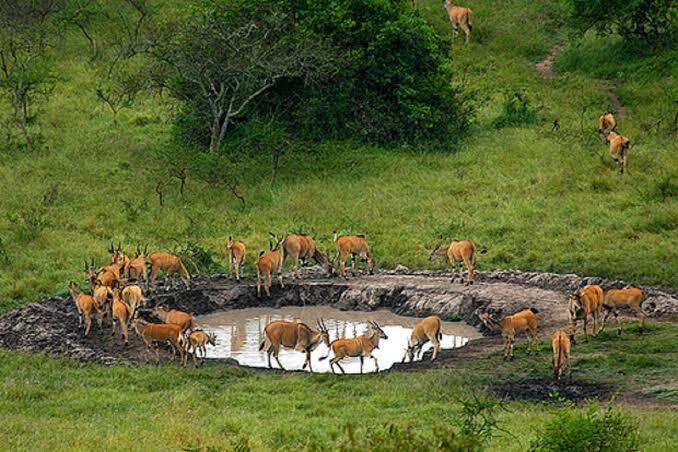 One of the established walking experiences associated with Lake Mburo is the Salt Lick Walk. The walk takes visitors through the area around Rwonyo towards a natural salt-lick area where wildlife can be observed from an elevated viewing platform.
Uganda Wildlife Authority identifies the Salt Lick Walk as one of the park’s guided walking experiences. This can be an interesting addition to a safari because the salt-lick environment attracts animals that come to obtain minerals.
The walk also gives you an opportunity to appreciate the surrounding vegetation and wildlife signs along the way.
Wildlife You May See During a Walking Safari
Wildlife sightings can never be guaranteed, particularly when travelling on foot, but Lake Mburo supports a diverse range of animals.
Depending on the area and conditions, you may encounter Zebras, Impalas, Elands, Topis, Warthogs, Waterbuck, Buffaloes, Bushbuck, Giraffes, Hippos and avariety of smaller mammals
The objective of a walking safari is not necessarily to get as close as possible to large animals. Instead, the guide manages the encounter according to the animal’s behaviour, the terrain and safety considerations.
That controlled approach is an important part of the experience.
Walking Through Different Habitats
One of the strengths of Lake Mburo is the variety of landscapes found within a relatively compact area.
Savannah
Open grassland provides opportunities to observe grazing animals and gives walkers broad views across the landscape.
Acacia Woodland
Wooded areas provide shade and habitat for numerous birds and animals. Walking through woodland can also be rewarding for visitors interested in plants and smaller wildlife.
Wetlands
Wetland areas add another dimension to the Lake Mburo ecosystem. They support water-associated birds and contribute to the park’s distinctive scenery.
Lakeside Environment
The areas around Lake Mburo provide opportunities to observe aquatic wildlife and birds. Boat trips can also complement a walking safari, allowing visitors to experience the park from another perspective.
What Makes a Walking Safari Different from a Game Drive?
A game drive allows you to cover more ground and is often useful for searching for a wide variety of wildlife.
A walking safari is slower and more focused on observation. During the walk, you explore in foot, move at a slower pace, focus on tracks, plants and smaller details. Walking is more immersive and excellent for nature enthusiasts
Can You Combine a Walking Safari with a Boat Cruise?
Yes. A walking safari can work particularly well as part of a wider Lake Mburo itinerary that includes a boat cruise and game drive. A boat trip provides a completely different perspective of the park, particularly around the lake and its shoreline. Uganda Wildlife Authority notes opportunities to see hippos, crocodiles and a variety of water-associated birds during boat trips on Lake Mburo.
A three-day safari could therefore combine:
Day 1: Travel to Lake Mburo and enjoy an evening activity
Day 2: Morning game drive followed by a walking safari or Salt Lick Walk
Day 3: Boat cruise, optional nature experience and departure
The itinerary can be adjusted depending on your interests, accommodation and onward travel plans.
Best Time for a Walking Safari in Lake Mburo
Lake Mburo can be visited throughout the year. However, walking conditions and wildlife activity can change with the seasons.
The drier periods can make some walking routes easier, while the wetter months bring greener vegetation and can be rewarding for birdwatchers and nature enthusiasts.
What Should You Wear for a Lake Mburo Walking Safari?
Comfortable clothing is important because you will be outdoors and moving through natural terrain. The recommended attire for a walking safari in Lake Mburo National Park includes,
- Lightweight, comfortable trousers
- Long-sleeved shirt
- Comfortable closed walking shoes
- A hat or cap
- Sunglasses
- Sunscreen
- Insect repellent
- Light rain jacket
- Small backpack
- Reusable drinking water bottle
- Binoculars
- Camera with a suitable lens
Neutral or natural clothing colours are generally preferable for wildlife activities because they are less visually distracting in the bush.
Is a Walking Safari Safe?
YES, walking safaris are safe but MUST be undertaken with an authorized ranger or experienced guide. Wild animals are unpredictable, and the fact that you are on foot means that following your guide’s instructions is particularly important.
Your guide will determine appropriate distances from animals, where to stop, when to move and how to respond to different wildlife situations.
Never approach wildlife independently, attempt to attract animals or leave the designated walking area without permission.
The presence of trained rangers is an important part of responsible wildlife tourism in Uganda’s protected areas. Uganda Wildlife Authority manages and protects Uganda’s national parks and other wildlife conservation areas.
Walking Safaris for Photography
Lake Mburo can be rewarding for photographers because walking encourages patience.
Rather than simply photographing animals from the vehicle, you can also concentrate on animal tracks, close-up vegetation, birds, insects, textures in the landscape, sunrise and sunset landscapes and wildlife behaviour
A telephoto lens remains useful for wildlife photography, while a smaller lens can be valuable for landscapes and environmental photographs.
For walking, however, avoid carrying unnecessary camera equipment. A lighter setup is often more comfortable.
Walking Safari and Birding
Birdwatchers can also benefit from exploring Lake Mburo on foot. The combination of acacia woodland, papyrus wetlands, lakeshores and open savannah creates different birding environments. Uganda Wildlife Authority highlights Lake Mburo’s bird diversity and identifies areas around the lake, acacia woodland and wetlands as important birding habitats.
A walking safari gives you time to stop, listen and scan the vegetation rather than constantly moving between wildlife sightings.
For serious birders, we can design a Lake Mburo itinerary around birding rather than treating birdwatching as a short activity between game drives.
How Long Should a Lake Mburo Walking Safari Take?
The duration depends on the walking experience selected and the overall safari itinerary.
Some travellers prefer a shorter guided walk as part of a broader safari, while others may want to dedicate more time to walking, photography and nature observation.
For visitors travelling through western Uganda, Lake Mburo is also conveniently positioned between Kampala and destinations farther west. UWA describes it as one of Uganda’s more accessible savannah parks, with road access from Kampala and connections towards western Uganda.
This makes it practical to include a walking experience within a longer Uganda safari.
Sample 3-Day Lake Mburo Walking Safari
Day 1: Kampala to Lake Mburo National Park
Leave Kampala in the morning and travel towards Lake Mburo. After arriving in the park area and checking into your lodge, you can enjoy an afternoon activity depending on your arrival time.
Overnight: Lake Mburo
Day 2: Game Drive and Walking Safari
Start the day with a game drive through the park, looking for zebras, impalas, elands, topis, warthogs and other wildlife. Later, take part in a guided walking safari. Your guide introduces you to the smaller details of the ecosystem, from animal tracks and plants to birds and wildlife signs.
Overnight: Lake Mburo
Day 3: Boat Cruise and Departure
Enjoy a morning boat cruise on Lake Mburo before beginning your journey back towards Kampala or continuing to another destination.
The route can also be extended to include destinations such as Bwindi Impenetrable National Park, Queen Elizabeth National Park or Kibale National Park.
Combining a Lake Mburo Walking Safari With Gorilla Trekking
For travellers visiting Uganda specifically for gorilla trekking, Lake Mburo can be incorporated into a longer western Uganda safari.
A possible route is:
Kampala → Lake Mburo → Bwindi Impenetrable National Park → Lake Bunyonyi → Kampala or Kigali
This combination brings together savannah wildlife, walking, lakeside scenery and the mountain forests of southwestern Uganda.
For travellers starting or ending in Rwanda, the itinerary can be adjusted accordingly.
Responsible Walking Safaris
Walking through a protected area comes with a responsibility to respect the environment.
During your Lake Mburo walking safari stay with your guide, do not feed wildlife, do not leave rubbish behind, avoid picking plants or flowers, keep noise levels low, maintain the distance advised by your guide, avoid disturbing birds and other wildlife and follow park regulations
Responsible tourism helps protect the environment while ensuring that local communities and conservation efforts continue to benefit from tourism.
Why Book a Lake Mburo Walking Safari With Superfine Safaris?
At Superfine Safaris Limited, we design Uganda safaris around the interests of our travellers rather than simply following a fixed route.
Our team is based in Uganda, and our experience across Uganda and East Africa allows us to combine activities such as walking safaris, game drives, boat cruises, birding and cultural experiences into practical itineraries.
For a Lake Mburo walking safari, we can help arrange the park activities, accommodation, transportation and onward travel as part of a private Uganda safari.
Whether you want a short Lake Mburo walking experience or a longer itinerary combining the park with gorilla trekking and other wildlife destinations, we can tailor the journey around your travel dates, budget and interests.
Book Walking Safaris in Lake Mburo National Park
A walking safari adds another dimension to a Uganda wildlife holiday. It is slower, quieter and more focused on the details of the natural environment.
If you would like to explore Lake Mburo National Park on foot, contact Superfine Safaris Limited to plan a private walking safari in Uganda.
We can combine your Lake Mburo walking experience with game drives, boat cruises, birding, cultural experiences, gorilla trekking and other destinations across Uganda and East Africa.
Frequently Asked Questions
Are walking safaris available in Lake Mburo National Park?
Yes. Guided walking safaris are among the activities offered in Lake Mburo National Park, including the Salt Lick Walk around the Rwonyo area.
What animals can I see while walking in Lake Mburo?
Possible sightings on a walking safari include zebras, impalas, elands, topis, warthogs, waterbuck, buffaloes and other wildlife. Sightings are never guaranteed because animals move freely through the park.
Is a ranger required for a walking safari?
Walking in the park should be done through an authorized guided experience. Your ranger or guide helps you navigate the environment and manage wildlife encounters safely.
Can I combine a walking safari with a game drive?
Yes. Combining the two is an excellent way to experience different aspects of Lake Mburo National Park
Can I take photographs during a walking safari?
Yes. Photography is permitted, but your guide will advise you on safe distances and appropriate behaviour around wildlife.
Is Lake Mburo good for birdwatching?
Yes. The park’s combination of wetlands, woodland, savannah and lakeshore habitats supports a diverse bird population.
Can Superfine Safaris arrange a private Lake Mburo walking safari?
Yes. Superfine Safaris Limited can arrange private Lake Mburo safaris with walking experiences, accommodation, transportation and additional activities according to your itinerary.
Contact Us for planninng