A 5 day Tanzania safari itinerary covering Tarangire, the Serengeti and Ngorongoro Crater is the most efficient way to experience the northern circuit — long enough to do each park properly, short enough to pair with Zanzibar or connect seamlessly with a Rwanda gorilla trek. In five days you will cover Tanzania’s three best-known parks, see the Big Five, and have a genuine chance of encountering the Great Migration if your timing is right. This guide walks through the itinerary day by day, with lodge recommendations at each tier and a full cost breakdown.
5-Day Tanzania Safari Itinerary at a Glance
| Day | Route | Highlight |
|---|---|---|
| Day 1 | Arrive Arusha / Kilimanjaro → Tarangire NP | Afternoon game drive, elephant herds, baobabs |
| Day 2 | Tarangire NP — full day | Elephant concentrations, lions, walking safari option |
| Day 3 | Tarangire → Central Serengeti | Drive through Ngorongoro highlands, Seronera afternoon drive |
| Day 4 | Central Serengeti — full day | Big cats, wildebeest, Seronera Valley leopards |
| Day 5 | Serengeti → Ngorongoro Crater → Arusha | Crater descent, black rhino, return flight |
5-Day Tanzania Safari Day by Day
Day 1: Arrive Kilimanjaro and Drive to Tarangire
Most visitors fly into Kilimanjaro International Airport (JRO) via Nairobi, Addis Ababa, Doha or Amsterdam. If your flight lands in the morning, you can be inside Tarangire National Park by early afternoon — there is no reason to overnight in Arusha on a five-day schedule.
Tarangire is 120km southwest of Arusha on a paved road, about two hours by vehicle. The park is best known for the largest elephant concentrations in Tanzania: during June–October, several thousand elephants converge on the Tarangire River, the only permanent water in the area. The landscape is distinctive — ancient baobab trees up to 1,000 years old frame the savanna in a way that looks unlike anywhere else in East Africa.
Check in to your camp and head out on a late-afternoon game drive (roughly 3–6pm). Tarangire has reliable lion sightings year-round, regular leopard encounters in the riverine acacias, cheetahs on the open plains and one of the highest buffalo concentrations in Tanzania. The park is often underrated compared to the Serengeti and Ngorongoro — that is partly what makes it so rewarding.
Overnight Tarangire — lodge options: Budget/mid-range: Tarangire Sopa Lodge ($180–280), Tarangire Tented Camp ($220–320). Luxury: Oliver’s Camp ($600–900), andBeyond Tarangire Tree Lodge ($900–1,400).
Day 2: Full Day in Tarangire National Park
A full day in Tarangire rewards the early start. The Tarangire River circuit — along the river’s southern bank — is the most productive area for elephants, hippos and the riverine predators that follow them. In the dry season (June–October), it is not unusual to encounter herds of two or three hundred elephants at the water at the same time.
The Silale and Gursi swamps in the north of the park draw extraordinary mixed herds in the dry season: zebra, wildebeest, eland, oryx, hartebeest and impala moving together in their thousands. The scale of this movement is one of the genuinely underreported wildlife spectacles in Tanzania. Most visitors on a five-day Tanzania safari itinerary pass through Tarangire too quickly; two nights here gives you time to experience it properly.
Optional morning activity: a walking safari with an armed ranger. Two hours on foot in the riverine acacias reveals the ecosystem at a different scale — termite architecture, dung beetle behaviour, bark textures and birds that simply don’t register from a vehicle. Most mid-range and luxury camps include or offer this as an add-on.
Tarangire is also one of Tanzania’s top birding parks, with over 550 recorded species. The yellow-collared lovebird, ashy starling and northern pied babbler are regional specialities rarely seen elsewhere.
Overnight: Tarangire (same camp).
Day 3: Tarangire to Central Serengeti via Ngorongoro
The drive from Tarangire to the Serengeti is one of the most scenic in Tanzania. From the park gate, the road heads northwest through Mto wa Mbu — a roadside market town at the base of the rift escarpment — and then climbs steeply through the Ngorongoro Conservation Area. Within 30 minutes the acacia savanna gives way to montane forest and the temperature drops noticeably. The crater rim sits at 2,300m.
A brief stop at one of the Ngorongoro overlooks is standard on this drive. The crater is 20km across and 600m deep — the scale only becomes real when you see it from the rim. From here, the road continues west, descending from the highlands into the Serengeti ecosystem. The moment the forest opens onto the short-grass plains and the horizon stretches to the horizon is one of those genuinely memorable arrival moments in East African safari travel.
You arrive in the central Serengeti (Seronera area) by early afternoon. Afternoon game drive in the Seronera Valley — the permanent-water zone that supports the highest leopard density in Africa, multiple resident lion prides, and cheetahs on the open short-grass plains to the east.
Overnight: Central Serengeti. Mid-range: Serengeti Serena Safari Lodge ($280–420), Serengeti Sopa Lodge ($230–380). Luxury: Four Seasons Serengeti ($700–1,200), Singita Grumeti ($1,800–3,500), andBeyond Serengeti Under Canvas ($900–1,600).
Day 4: Full Day in the Serengeti
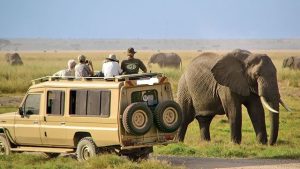 The Serengeti is Tanzania’s largest national park at 14,763 km² — larger than the whole of Northern Ireland. On a five-day Tanzania safari itinerary, you have one full day here, so the structure matters. The most productive format: morning drive from 6am (the cool hours, best for predator activity), back to camp by 10am for breakfast and rest through the midday heat, then afternoon drive from 3–6pm.
The central Seronera Valley is where wildlife concentrates year-round because of the permanent rivers. The sycamore fig trees along the Seronera and Orangi rivers are known leopard resting spots — most morning drives yield at least one sighting. Multiple lion prides patrol the kopjes (granite outcrops) that punctuate the plains. Cheetahs hunt on the open short-grass areas east of Seronera, often using termite mounds as vantage points before a chase.
Migration timing: Between June and October, the wildebeest herds may be in or passing through the central Serengeti on their way north to the Mara River. Between January and March, the southern Serengeti (Ndutu area, about 90 minutes south of Seronera) is the calving ground — half a million calves born in six weeks, with extraordinary predator activity. Your driver-guide will have daily reports on herd locations and can adjust your driving area accordingly.
The Serengeti has 500+ bird species, including the kori bustard (the world’s heaviest flying bird), martial eagle, secretary bird, and a remarkable variety of raptors. Birders who factor in time specifically for birds get a great deal from Serengeti game drives even when the big cats are resting.
Overnight: Central Serengeti (same camp).
Day 5: Ngorongoro Crater Descent and Return to Arusha
Early departure from Serengeti at 5:30am. The drive to Ngorongoro takes about two hours on the main road through the conservation area. Descend into the Ngorongoro Crater at 7am — the road switchbacks steeply down the inner wall, and the crater floor opens up below you.
The Ngorongoro Crater is a collapsed volcanic caldera 20km wide and 600m deep, containing a fully enclosed ecosystem of around 25,000 large mammals. It is the densest concentration of wildlife in Africa and arguably the single most productive half-day of game driving available anywhere on the continent. Key sightings: multiple resident lion prides (30–40 lions live permanently in the crater), black rhino (Tanzania’s most important surviving population, around 26 individuals — regularly seen near the central marshes), large hippo pools, flamingos on the soda lake, buffalo herds in the hundreds, and cheetahs on the open plains.
Crater rules require vehicles to exit by 1pm (entry is limited to six hours). From the exit gate, it is a 2.5-hour drive to Arusha and Kilimanjaro Airport. Most afternoon international flights depart at 4–6pm — timing works comfortably. If your flight is the next morning, overnight in Arusha: the Arusha Coffee Lodge (luxury), Ngare Sero Mountain Lodge (mid-range) and Arusha Naaz Hotel (budget) are all solid options.
5-Day Tanzania Safari Cost Breakdown
Tanzania’s park fees are among the highest in Africa but are non-negotiable government levies that go directly to conservation. The Ngorongoro Crater descent has a separate per-vehicle fee on top of the conservation area entry. Here is what to budget for a 5 day Tanzania safari itinerary at different tiers:
| Cost Item | Budget | Mid-Range | Luxury |
|---|---|---|---|
| Park entry fees (Tarangire 2 days + Serengeti 2 days) | $280 | $280 | $280 |
| Ngorongoro Conservation Area entry + crater fee | $295 | $295 | $295 |
| Lodging: 4 nights (Tarangire 2 + Serengeti 2) | $700–1,000 | $1,300–1,900 | $3,000–6,000 |
| Private 4WD vehicle + driver-guide (5 days) | $550–750 | $750–1,100 | $1,100–1,500 |
| Meals where not included | $150–200 | $0 (all inclusive) | $0 (all inclusive) |
| Total per person (excluding international flights) | ~$1,975–$2,525 | ~$2,625–$3,575 | ~$4,675–$8,075 |
Costs per person drop when two people share a vehicle and lodge room — transport and some room supplements are priced per vehicle or per room, not per head. For a complete breakdown of all Tanzania park fees and lodge tiers, see our Tanzania safari cost guide.
Best Time for a 5-Day Tanzania Safari
The northern circuit parks work year-round, but different months offer different experiences:
June–October (dry season): Best conditions for Tarangire — the elephant concentration on the river is at its peak. The Serengeti herds are moving north toward the Mara River during this period. Ngorongoro Crater is clearer. This is peak season; book lodges and this itinerary at least three to six months ahead.
January–March: The southern Serengeti calving season produces one of the most dramatic predator-prey spectacles in Africa. If you swap Day 3–4 to the southern Serengeti (Ndutu area) rather than central Seronera, this five-day itinerary becomes even more impactful. Tarangire is drier and hotter in February–March; water-dependent animals are more concentrated.
November–December: Short rains bring green landscapes and lower prices. Game viewing remains good in all three parks. Fewer visitors means a quieter experience — particularly in the Serengeti, where the lack of a vehicle convoy at big sightings makes a significant difference to the experience.
April–May (long rains): The heaviest rain period. Some camps close; roads can be difficult. Rates drop significantly. Suitable for experienced travellers who accept reduced accessibility in exchange for lower prices and genuine solitude.
How to Get the Most from 5 Days in Tanzania
Fly into Seronera instead of driving. If you can afford the extra $250–300 per person each way, flying from Arusha directly into Seronera Airstrip cuts the three-hour land drive each way and gives you an extra half-day of game driving. On a five-day schedule, this is worth considering the time saving is real.
Start early every morning. 6am game drives are not optional on a five-day schedule. The difference in predator activity, light quality and vehicle density between a 6am departure and a 7:30am departure is substantial.
Two nights in Tarangire, not one. Most organised tours put a single night in Tarangire and rush to the Serengeti. Two nights in Tarangire is the correct allocation — the park rewards an early morning and a full-day drive, and can’t be fully appreciated in a single afternoon.
Book permits and accommodation well in advance. The Ngorongoro Crater now requires advance permit booking — you cannot simply drive in on the day. Serengeti lodges at the luxury and mid-range level fill months ahead during peak season (June–October).
Frequently Asked Questions
Is 5 days enough for a Tanzania safari? Five days is enough to cover the three best parks on the northern circuit — Tarangire, Serengeti and Ngorongoro — and see the Big Five. It is not enough to add Zanzibar as well (that needs 7 days minimum). For a trip that feels unhurried throughout, 7 days is better.
Do I need a yellow fever vaccination for Tanzania? Only if you are arriving from a yellow fever endemic country. Most visitors from Europe, North America, Australia or East Asia do not need a yellow fever certificate to enter Tanzania. Malaria prophylaxis is strongly recommended.
What visa do I need for Tanzania? Most nationalities need a Tanzania e-visa ($50, applied online at immigration.go.tz before travel). US citizens pay $100. Some African nationalities enter visa-free. See our Tanzania visa guide for the full current list.
Can I see the Great Migration on a 5-day Tanzania safari? Possibly. Between July and October the main herds are in the central and northern Serengeti; between January and March they are calving in the southern Serengeti (Ndutu). On a central-circuit 5-day itinerary, you will encounter wildebeest and zebra herds regardless of season. River crossings at the Mara River are only accessible if you drive to the northern Serengeti, which this itinerary does not include — for that, use a 7-day plan.
What airport should I fly into for a northern circuit safari? Kilimanjaro International Airport (JRO) is the main gateway, about two hours from Tarangire and three hours from the Serengeti by road. Arusha Airport (ARK) is smaller but closer to the city and serves domestic connections to Seronera, Ngorongoro and Zanzibar.