An African elephant safari is one of the most extraordinary wildlife experiences on Earth. Watching a matriarch lead her family across a dust-red plain, calves tumbling at her feet, is a sight that never leaves you. Africa’s elephants are the largest land animals alive, and East Africa holds some of the highest elephant concentrations anywhere in their range. This guide covers everything you need to plan the perfect African elephant safari, biology, behaviour, the best parks, and expert viewing tips.
African Elephant Facts
Africa is home to two distinct elephant species: the African bush elephant (Loxodonta africana) and the smaller African forest elephant (Loxodonta cyclotis). On an African elephant safari in East Africa, you will almost always encounter bush elephants, the largest land animals on the planet.
Size and Physical Features
Bull African bush elephants can weigh up to 6,000 kg (13,000 lbs) and stand 3.3 metres at the shoulder. Females are smaller, typically 2,700–3,600 kg. Their tusks — elongated upper incisor teeth — grow over 2 metres in older bulls and are used for digging, stripping bark, and sparring with rival males. Elephants also carry a remarkably sensitive trunk containing over 40,000 muscles, used for drinking, feeding, smelling, communicating, and greeting.
Intelligence and Memory
Elephants have the largest brain of any land animal and demonstrate exceptional cognitive abilities: problem-solving, tool use, self-recognition in mirrors, and pronounced empathy. The phrase “an elephant never forgets” reflects their extraordinary long-term memory — matriarchs have been recorded leading herds to waterholes they last visited during droughts more than 30 years earlier.
Elephant Social Structure
African elephant social life is built around the matriarch-led family unit of 8–15 closely related females and their calves. The matriarch’s experience and memory are the group’s survival asset — she leads them to water and food sources across vast seasonal ranges. Adult bulls leave their birth group between ages 10–15 and live more solitary lives, associating with female groups briefly during musth — a periodic state of heightened testosterone linked to mating. During good rains, families gather into aggregations of 50–500 individuals, producing some of the most dramatic scenes in African wildlife.
African Elephant Behavior: What to Watch For on Safari
Knowing what you are watching transforms an African elephant safari from impressive to deeply moving. Elephants communicate through vocalisations, touch, and infrasound, low-frequency rumbles inaudible to humans that travel kilometres through the ground. Watch for these key behaviours:
- Mud bathing: Elephants coat themselves in mud to cool down and protect skin from sun and insects. Waterholes at midday are prime viewing spots for this entertaining behaviour.
- Greeting ceremonies: When family members reunite, the display is electrifying — spinning, rumbling, trumpeting, entwining trunks. These emotional reunions reveal the depth of elephant family bonds.
- Calf play: Young elephants are endlessly playful — mock-charging, wrestling, sliding down muddy banks. Calves staying close to their mothers while older siblings play nearby is one of the most endearing African elephant safari scenes.
- Musth bulls: Bulls in musth are identifiable by temporal gland secretions running down their cheeks and constant urine dribbling. They are unpredictable and potentially dangerous — experienced guides maintain safe distances.
- Mourning behaviour: Elephants show remarkable responses to death, returning to and touching the bones of deceased family members. Witnessing this behaviour is a rare and profound safari experience.
Best Parks for an African Elephant Safari in East Africa
Amboseli National Park, Kenya
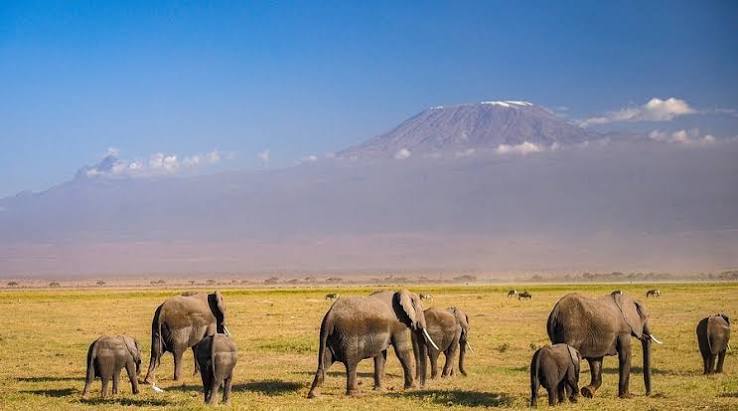
Amboseli National Park is widely regarded as East Africa’s finest African elephant safari destination. Set beneath Kilimanjaro, Amboseli hosts large, habituated elephant herds that move freely around the park’s open swamps and plains. The park is famous for its legendary big-tusked bulls — some carrying tusks that sweep to the ground — and the combination of elephants against a snow-capped mountain backdrop is unmatched anywhere on the continent.
Tarangire National Park, Tanzania
During the dry season (June–October), Tarangire National Park hosts the largest elephant concentrations in Tanzania — sometimes over a thousand animals congregating around the Tarangire River. The park’s ancient baobab landscape creates stunning photographic backdrops, and the sheer density of elephants in the dry season makes Tarangire one of the most reliable African elephant safari destinations anywhere.
Serengeti National Park, Tanzania
The Serengeti ecosystem supports over 6,000 elephants. While sightings are less concentrated than in Amboseli or Tarangire, encountering a herd crossing the Serengeti plains during the great wildebeest migration season creates cinematically dramatic moments that define the African elephant safari experience.
Murchison Falls National Park, Uganda
Murchison Falls National Park holds Uganda’s largest elephant population — several thousand animals roaming the savannah north of the Nile. The boat cruise to the base of the falls regularly passes within metres of elephants drinking and bathing on the riverbank, making this one of the most intimate African elephant safari experiences in the region.
Queen Elizabeth National Park, Uganda
Queen Elizabeth National Park offers a very different elephant experience — set among crater lakes, dense forest, and open savannah. Elephant herds gather along the Kazinga Channel, where the boat safari produces close encounters with these giants alongside hippos, crocodiles, and hundreds of water birds.
Best Time for an African Elephant Safari
Elephants can be seen on an African elephant safari year-round, but the dry season concentrates them around water sources for the most reliable sightings:
- June–October (dry season): Best for elephant sightings across Tanzania and Uganda. Herds concentrate at rivers and waterholes. Thinner vegetation improves visibility across open plains.
- January–February: Excellent window for Amboseli — elephants move widely and Kilimanjaro is frequently clear of cloud, producing stunning photography conditions.
- November–May (wet season): Elephants disperse more widely as water becomes available across the landscape. Baby elephants are born during this period — calves of just a few days old are regularly seen in the green months.
African Elephant Safari Viewing Tips
- Stay in the vehicle at all times. Elephants are wild and unpredictable despite their generally calm demeanour; mock charges can escalate without warning.
- Give way on tracks. If an elephant blocks the road, switch off the engine and wait quietly. Attempting to pressure the elephant to move can trigger a charge.
- Read their ears. Flattened ears and a raised trunk signal threat display. Ears pinned back with a direct, silent charge is a genuine threat — your driver will respond immediately.
- Be at waterholes at dawn and dusk. Elephant activity peaks in the early morning and late afternoon. Positioning at a waterhole before dawn can produce scenes of entire herds arriving simultaneously.
- Use a telephoto lens. Even when elephants approach close, a 300–500mm lens gives beautiful frame-filling portraits. Keep movements slow and your silhouette low inside the vehicle.
African Elephant Conservation
The African bush elephant is classified as Vulnerable and the African forest elephant as Endangered on the IUCN Red List. The ivory poaching crisis of the 1980s reduced continental elephant populations by over 50%. While international trade bans and anti-poaching efforts have allowed some populations to recover, poaching and human-elephant conflict remain serious threats.
Responsible wildlife tourism plays a direct role in elephant conservation. By booking a licensed African elephant safari, you contribute to the economic incentives that motivate communities and governments to protect elephants and their habitat. Superfine Safaris partners with conservancies and national parks committed to elephant protection across Kenya, Tanzania, and Uganda.
Plan Your African Elephant Safari
Whether you encounter a family group at a Tarangire waterhole, a lone tusker silhouetted against Kilimanjaro in Amboseli, or a herd of hundreds at Murchison Falls, an African elephant safari delivers moments of pure, unforgettable wonder. These are encounters with the world’s largest land animal — intelligent, deeply social, and utterly magnificent.
Contact our team to design a tailored African elephant safari across Kenya, Tanzania, or Uganda. We will place you in the right park at the right time for the best possible encounters with Africa’s greatest land giants.