An African lion safari is on nearly every wildlife traveller’s bucket list — and for good reason. Hearing a lion roar at dusk, watching a pride hunt across moonlit grass, or finding a male sprawled in a tree above the Kazinga Channel are experiences that define Africa. Lions are the most social of the big cats, the apex predators of the savannah, and among the most thrilling animals to encounter in the wild. This guide tells you everything you need to know to plan the perfect African lion safari.
African Lion Facts
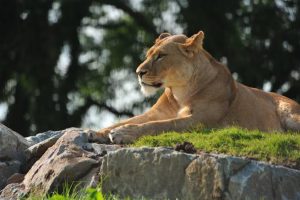 The African lion (Panthera leo) is the second-largest cat on Earth after the tiger. Adult males weigh 150–250 kg and measure up to 2.5 metres from nose to tail. Females are smaller at 120–180 kg but are the primary hunters of the pride. The lion’s iconic mane — unique among all cat species — signals age and health to rivals and females: darker, fuller manes indicate older, healthier males and are preferred by females as mates.
Lion Vocalisation: The Roar
A lion’s roar is audible up to 8 kilometres away. It serves primarily as a territorial announcement and a contact call between pride members. Lions roar most frequently at dawn and dusk, and hearing the full pride roaring in concert at first light is one of the defining sounds of an African lion safari. Both males and females roar, though the male’s roar is deeper and more resonant.
How Long Do Lions Live?
Wild lions typically live 10–14 years, though females often live longer than males. Males spend their prime years establishing and defending territories; once ousted by rival coalitions, lone males rarely survive long. The mortality rate among young cubs is high — up to 80% in some populations — largely due to infanticide by incoming males and food competition.
African Lion Pride Dynamics
Lions are the only truly social cat species. A typical pride consists of 4–6 related adult females, their cubs, and a coalition of 1–4 males who hold the territory. The females are the core of the pride related lionesses, often sisters and cousins, that remain together for life. Male coalitions, frequently brothers, compete fiercely to hold prides; the average tenure of a ruling coalition is just 2–3 years before they are ousted by younger rivals.
When a new coalition takes over a pride, they typically kill all cubs sired by the previous males — a brutal but evolutionarily rational strategy that brings females quickly back into oestrus. Watching a pride at rest — cubs climbing over sleeping males, females grooming each other in the shade — reveals a complex, tender social world that makes the African lion safari uniquely engaging among all wildlife encounters.
Lion Hunting Behaviour
Lionesses do the majority of hunting, usually cooperatively, taking prey ranging from Thomson’s gazelle to Cape buffalo. Lions are ambush predators that rely on stealth and coordination rather than speed — their top speed of 80 km/h is maintained for only 100–200 metres. Successful hunts are most common at dawn, dusk, and on dark, moonless nights.
The overall hunting success rate is around 25–30% for a solo lioness, rising to 30–40% when hunting cooperatively. On an African lion safari, watching a coordinated hunt — lionesses flanking, one driving, another cutting off the escape route — is among the most thrilling sights in all of wildlife watching.
Best Parks for an African Lion Safari
Masai Mara National Reserve, Kenya
The Masai Mara is Kenya’s premier African lion safari destination and consistently ranks among the best lion-viewing areas in the world. The Mara’s large, habituated prides have been studied continuously for decades, and vehicle-habituated lions here are remarkably tolerant of close approach. During the wildebeest migration (July–October), lioness hunting activity intensifies as enormous prey herds move through the reserve.
Serengeti National Park, Tanzania
The Serengeti holds the largest lion population in Africa, approximately 3,000 individuals across the ecosystem. The park’s broad open plains give unobstructed sightlines for watching lion behaviour, and kopjes (granite outcrops) are favourite lion resting spots that act as natural viewing platforms. The Serengeti is also famous for coalition males with exceptional dark manes.
Queen Elizabeth National Park, Uganda
Queen Elizabeth National Park is home to the famous tree-climbing lions of Ishasha — a lion pride with the unusual habit of resting in the branches of fig trees, a behaviour seen in only a handful of places worldwide. This quirk makes Queen Elizabeth’s Ishasha sector a bucket-list destination for any African lion safari.
Kidepo Valley National Park, Uganda
Remote Kidepo Valley National Park in northeastern Uganda hosts one of East Africa’s highest lion densities. The park’s isolation means fewer vehicles and far more exclusive African lion safari encounters. Large prides roam the valley floor and rocky escarpments in an utterly wild setting.
Ngorongoro Crater, Tanzania
The Ngorongoro Crater contains a dense, genetically isolated lion population within its enclosed ecosystem. The crater’s open floor gives exceptional visibility, and encounters with the crater’s distinctive black-maned males are a highlight of any Tanzania African lion safari.
Best Time for an African Lion Safari
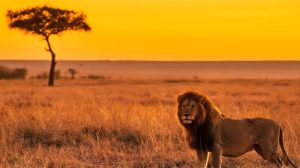 Lions can be seen on an African lion safari throughout the year, but different seasons offer different experiences:
- Dry season (June–October): Prey concentrations are highest and grass is short, making lions far easier to spot. This is the peak African lion safari season across Tanzania and Uganda.
- Migration season in Kenya (July–October): Lions in the Masai Mara are actively hunting wildebeest and zebra, dramatically increasing the chance of witnessing a hunt.
- Wet season (November–May): Long grass makes spotting harder, but the landscape is lush, cubs born during the rains are growing fast, and the Serengeti’s calving season (January–March) draws lions from across the ecosystem to the Ndutu plains.
African Lion Safari Viewing Tips
- Drive at dawn: Lions are most active in the first two hours after sunrise. Night hunts end at dawn, and feeding lions are found by tracking vultures descending onto kills.
- Follow the vultures: Descending vultures almost always mark a kill. Getting to the site quickly often means arriving before the lions have finished feeding and while scavenging activity is highest.
- Check kopjes and trees: Lions rest through the heat of the day in shade — on kopjes, under umbrella acacias, and (in Ishasha) in fig trees. A systematic check of these landmarks often reveals what a scan of open ground misses.
- Be patient at kills: If lions are on a large kill, they may remain for 24–48 hours. Returning to a known kill site at different times of day produces changing cast of scavengers — hyenas, jackals, vultures — that add to the full ecosystem drama.
- Look for cubs at dens: Ask your guide whether any prides are known to be denning nearby. Cubs emerge at 4–6 weeks and are endlessly photogenic in the early morning light.
African Lion Conservation
African lions are classified as Vulnerable on the IUCN Red List. Lion populations have declined by approximately 43% over the past 21 years, and fewer than 25,000 lions remain across sub-Saharan Africa. The primary threats are habitat loss, human-wildlife conflict (retaliatory killing by herders), prey base depletion, and trophy hunting in some regions.
Community conservancies — like those surrounding the Masai Mara and in Kidepo’s buffer zones play a vital role in lion conservation by giving local communities economic incentives to coexist with lions rather than kill them. Your African lion safari dollars fund this work directly.
Plan Your African Lion Safari
From the tree-climbing lions of Ishasha to the great dark-maned males of the Ngorongoro Crater and the hunting prides of the Masai Mara, East Africa offers African lion safari experiences of extraordinary variety and drama. Contact our team to design an itinerary tailored to your dates and interests — we know exactly where the best lion sightings are, season by season, park by park.