Horseback safaris in East Africa offers a perspective on the wilderness that no vehicle can replicate. Moving silently through the bush at the same speed and height as the animals around you, the wildlife does not register you as a threat, zebras graze within metres, giraffes stretch overhead, and elephants continue their unhurried business as you pass. This profound sense of connection with the landscape and its animals is what sets a horseback safari in East Africa apart from every other safari experience. This guide covers the best destinations, what to expect, riding requirements, and everything you need to know to plan your horseback safari in East Africa.
Why Horseback Safaris in East Africa?
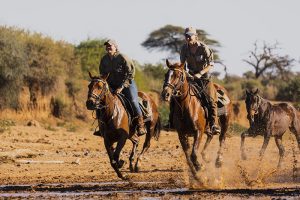
The appeal of a horseback safaris in East Africa lies in what it removes as much as what it adds. Without engine noise or the metal shell of a vehicle, all five senses engage with the bush simultaneously — the smell of wild sage after rain, the sound of an oxpecker alarm call, the texture of the air as a herd of zebra parts around you at a canter. Horses are universally recognised as prey animals by African wildlife, which means game animals that would flee from a vehicle simply observe a passing horseback safari East Africa ride with mild curiosity. The encounters this produces — running alongside wildebeest, standing still as elephants cross the path ahead — are genuinely unlike anything else in African safari travel.
Best Destinations for Horseback Safaris in East Africa
Laikipia Plateau, Kenya
The Laikipia Plateau in central Kenya is the finest horseback safari East Africa destination on the continent. A patchwork of private ranches, conservancies, and community land covering over one million acres, Laikipia supports remarkable wildlife, elephant, lion, leopard, cheetah, African wild dog, Grevy’s zebra, reticulated giraffe, and both black and white rhino in an unfenced landscape where riding is not restricted to tracks or roads. Several Laikipia ranches have offered horseback safaris for decades, with experienced wranglers who know exactly how to position riders for the finest encounters. Multi-day riding safaris camping under the stars between consecutive ranches are the gold standard of the horseback safari East Africa experience.
Chyulu Hills, Kenya
The Chyulu Hills ecosystem linking Amboseli to Tsavo is extraordinary horseback safari in East Africa territory. The rolling green volcanic hills, ancient lava flows, and open plains support large elephant herds, lion, and an abundance of plains game. Riding through Chyulu at dawn with Kilimanjaro on the horizon is widely regarded as one of the most beautiful horseback safari East Africa experiences available anywhere.
Masai Mara Conservancies, Kenya
Several private conservancies surrounding the Masai Mara National Reserve offer horseback safari East Africa experiences on their land, where riding is unrestricted. Cantering alongside migrating wildebeest herds in July–October, with the Mara’s open plains stretching to the horizon, is the most iconic horseback safari in East Africa moment. The conservancy setting means no vehicle pressure and genuinely wild encounters with the full spectrum of Mara wildlife.
Serengeti Ecosystem, Tanzania
The Serengeti ecosystem, particularly in private concession areas outside the national park boundary, offers superb horseback safari East Africa experiences across vast open plains. The sheer scale of the Serengeti — horizons unbroken in every direction — creates a horseback safari East Africa setting of incomparable grandeur. Riding across the Serengeti at first light, as the horizon turns orange and the first wildebeest silhouettes appear, is a memory no vehicle safari can manufacture.
Murchison Falls Area, Uganda
The buffer zones and community land surrounding Murchison Falls National Park in northern Uganda offer a more adventurous horseback safari East Africa experience. Uganda’s less-travelled parks and open savannah landscapes appeal to riders who want a truly off-the-beaten-track horseback safari in East Africa combined with the country’s outstanding general wildlife.
What Level of Riding Experience Do You Need?
Horseback safari East Africa operators cater to a range of experience levels, but most programmes require at minimum a confident, competent rider. Here is a typical breakdown:
- Beginner riders: Limited to slow walking trails in controlled areas with an experienced lead guide. Access to game areas with dangerous wildlife (lion, elephant, buffalo) is generally restricted. Suitable for introductory experiences rather than full bush horseback safaris.
- Intermediate riders (walk, trot, canter confidently): Can participate in full multi-day horseback safari East Africa programmes with access to the main game areas. This is the minimum level for most Laikipia and Mara conservancy rides.
- Experienced riders (comfortable at all paces, independent seat): Access to the full range of horseback safari in East Africa experiences including fast canters alongside game, river crossings, and remote multi-day wilderness rides.
Always declare your riding experience accurately to your operator. Safety on a horseback safari East Africa depends entirely on being matched to the right horse and the right programme for your skill level.
What to Expect on a Horseback Safari in East Africa
A typical horseback safari East Africa day begins at first light. Riders are introduced to their allocated horse — well-trained, locally bred animals accustomed to African wildlife — and given a safety briefing on behaviour around game. The morning ride of 3–5 hours covers 15–25 km depending on terrain and game encountered. Mid-day is spent at camp resting through the heat. An afternoon ride of 2–3 hours leads to a sundowner stop before returning to camp for dinner around the fire.
Multi-day horseback safari East Africa programmes move camp each night, with luggage transferred by vehicle between locations. Sleeping in fly-camps — lightweight tented camps set up in a new location each evening — is the most immersive version of the experience, placing you in complete wilderness with no permanent infrastructure around you.
Safety on Horseback Safaris in East Africa
Safety is paramount on any horseback safari East Africa programme. Reputable operators employ professional horsemasters who have years of experience guiding rides in big-game country and know how horses and wildlife interact. Standard safety protocols include:
- Maintaining controlled riding positions at all times in areas with dangerous game
- An experienced armed guide at the front and rear of the riding group
- Strict briefings on behaviour around elephants, buffalo, and big cats
- Carrying personal emergency communication devices on all rides
Best Time for Horseback Safaris in East Africa
The dry season (June–October) is the best time for a horseback safari in East Africa. Dry ground is safer for horses — firm footing reduces the risk of falls on slippery terrain — and shorter grass gives better visibility of dangerous game ahead. The January–February short dry season is an excellent alternative. The long rains (March–May) are generally avoided — muddy tracks are hazardous for horses, and the long grass of the wet season limits visibility around dangerous animals.
What to Pack for a Horseback Safari in East Africa
- Long riding trousers or jodhpurs: Protects legs from chafing. Lightweight cotton jodhpurs are ideal for tropical temperatures.
- Riding boots or sturdy ankle boots: Essential for safety in stirrups. Open shoes are not permitted on any horseback safari East Africa programme.
- Helmet: Most operators provide helmets, but serious riders may prefer to bring their own certified riding helmet.
- Neutral-coloured clothing: As with all East Africa safaris, avoid bright colours and white. Earth tones are essential.
- Sunscreen and lip balm: Exposure on horseback is greater than in a vehicle — apply high-SPF sunscreen to all exposed skin.
Plan Your Horseback Safari in East Africa
A horseback safari in East Africa is one of the most exhilarating and intimate wildlife experiences on the planet. Contact our team to find the right horseback safari East Africa programme for your riding level, preferred destination, and travel dates. We work with the finest specialist horseback safari operators across Kenya, Tanzania, and Uganda and can design a bespoke riding itinerary around your interests.