Katavi National Park is Tanzania’s most remote and least-visited major national park, situated in the far west of the country near the border with the Democratic Republic of Congo. Covering approximately 4,471 square kilometres of open floodplains, miombo woodland, and seasonal lakes, Katavi National Park delivers one of Africa’s most raw and unfiltered safari experiences. The park is famous for its extraordinary concentrations of hippopotamus and Nile crocodile during the dry season, when thousands of hippos crowd into shrinking pools along the Katuma River, watched over by prides of lions and herds of cape buffalo that come to drink.
Location and Getting to Katavi
Katavi National Park lies in the Katavi Region of western Tanzania, roughly 600 kilometres southwest of Arusha and 40 kilometres from the town of Mpanda. The park’s remoteness is a large part of its appeal — visitor numbers are extremely low compared to the northern circuit parks, meaning wildlife encounters are genuinely exclusive. Getting to Katavi requires either a charter flight from Arusha, Dar es Salaam, or Mahale Mountains Airstrip, or a very long overland journey by road and ferry. Most visitors arrive by scheduled or chartered light aircraft.
Charter flights from Arusha to Katavi take approximately two hours and can be combined with a stop at Mahale Mountains National Park on Lake Tanganyika, which lies roughly 100 kilometres to the north. The Mahale-Katavi combination is one of Tanzania’s most coveted wildlife circuits, chimpanzee trekking in Mahale’s lakeside forest followed by big-game concentrations on Katavi’s open plains.
Wildlife in Katavi National Park
 Katavi’s wildlife spectacle peaks during the dry season from June to October, when the seasonal lakes and floodplains dry up and hippos are forced to concentrate in the remaining pools of the Katuma River and Lakes Katavi and Chada. At peak dry season it is not unusual to see 200 or more hippos in a single pool, jostling and bellowing in the mud. The surrounding banks are carpeted with Nile crocodiles sunbathing between feeding runs.
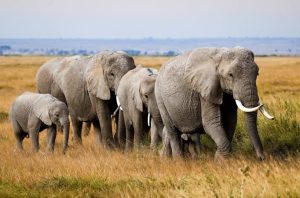
Lions are numerous in Katavi and are frequently seen resting near hippo pools waiting for opportunities, or following the large buffalo herds that move across the floodplains. Leopards inhabit the woodland edges and are seen on night drives. Cheetah are present but less commonly encountered. Elephants move through in large family groups, and Katavi is home to one of Tanzania’s largest elephant populations outside of Ruaha and Selous. Roan antelope, sable antelope, Defassa waterbuck, topi, zebra, and giraffe populate the open grasslands.
Birdlife is superb and largely unexplored compared to northern Tanzania. Miombo woodland species predominate, including the Böhm’s bee-eater, straw-tailed whydah, pale-billed hornbill, and Racket-tailed roller. Waterbird concentrations on the lakes include open-billed stork, yellow-billed stork, saddle-billed stork, and large numbers of pelican and cormorant.
Activities in Katavi National Park
- Game drives: Morning and afternoon game drives on Katavi’s open floodplains and woodland tracks are the primary activity. The park has relatively few vehicles and an abundance of wildlife, so game drives here feel genuinely wild. Night drives are permitted with a Tanzania National Parks guide, offering chances for leopard, serval, aardvark, and bush baby.
- Walking safaris: Katavi is one of Tanzania’s best parks for walking safaris. Armed rangers lead walks through miombo woodland and along the edges of the floodplains, tracking wildlife on foot and reading the landscape. Walking safaris in Katavi offer a level of immersion rarely found in busier parks.
- Hippo pool viewing: At the height of the dry season the Katuma River hippo pools are among the most dramatic wildlife concentrations in Africa. Many camps position their viewing platforms or sundown spots directly overlooking the pools. Watching territorial battles and listening to the constant bellowing at dawn and dusk is unforgettable.
- Fly camping: Some of Katavi’s camps offer mobile or fly camping experiences — spending a night in the bush away from the main camp with a guide and armed ranger. This deep-wilderness experience epitomises what makes Katavi special.
- Birding: Dedicated birding walks and drives with experienced guides can target Katavi’s miombo specials and the waterbirds on the seasonal lakes. The park is relatively under-birded, adding an element of discovery to every birding session.
Best Time to Visit Katavi National Park
The best time to visit Katavi National Park is from June to October, the dry season, when wildlife concentrations around water are at their peak. July, August, and September are considered the prime months, coinciding with maximum hippo and crocodile concentrations on the Katuma River and the best lion-sighting opportunities. Katavi is not recommended during the long rains from March to May, when many camps close and the park becomes impassable.
The short rains in November and December are light and many visitors choose these months for lower rates and lush green landscapes. The floodplains begin to fill in December and January, and game becomes more dispersed but the birding improves dramatically with arriving migratory species.
Where to Stay in Katavi
Accommodation in Katavi is intentionally limited and exclusively in the high-end luxury tented camp category, which helps to maintain the park’s exclusive feel. Chada Katavi is widely considered one of Africa’s finest bush camps and is located directly on the floodplain with spectacular views of wildlife. Katavi Wildlife Camp offers a similarly authentic experience at a slightly more accessible price point. Both camps offer full-board accommodation with all guided activities, bush meals, and bush walks included.
Camp capacities are small — typically six to twelve guests at most — ensuring that wildlife encounters remain private and camp life is relaxed and unhurried. Meals are often taken in the bush, guided by the sounds and sights of the surrounding wildlife.
Combining Katavi with Mahale Mountains
The Katavi-Mahale circuit is Tanzania’s most iconic off-the-beaten-track safari. After experiencing Katavi’s dramatic floodplains and hippo spectacles, visitors fly or take a boat transfer north to Mahale Mountains National Park, where chimpanzee trekking in one of Africa’s most beautiful forest settings awaits. The contrast between the two parks open grassland and dense forest, hippos and chimps, big sky and deep shade — makes this combination extraordinarily varied and satisfying. Add a night or two on Lake Tanganyika for swimming and snorkelling to complete a western Tanzania wilderness adventure.
Superfine Safaris designs tailor-made western Tanzania itineraries that combine Katavi and Mahale with the northern circuit parks or with Zanzibar, allowing visitors to experience the full breadth of Tanzania’s unmatched wildlife and landscapes.