An African wild dog is one of the most sought-after wildlife experiences on the continent and one of the rarest. With fewer than 6,000 individuals remaining across sub-Saharan Africa, the African wild dog is the continent’s most endangered large predator. Yet those lucky enough to find a pack in full hunting cry, moving at 60 km/h across open ground in perfect coordination, will tell you there is nothing in African wildlife to compare with it. This guide covers everything you need to know to plan an African wild dog safari.
African Wild Dog Facts
The African wild dog (Lycaon pictus) also called the painted wolf, painted dog, or Cape hunting dog is not closely related to domestic dogs or wolves, but belongs to its own ancient canid lineage. Adults weigh 18–36 kg and stand about 75 cm at the shoulder. Their coat is a unique mosaic of black, white, brown, and yellow patches, with no two individuals sharing the same pattern. Large rounded ears, long legs, and a lithe build reflect a lifestyle built entirely around long-distance, high-speed cooperative pursuit.
The Highest Hunting Success Rate in Africa
African wild dogs are the most successful hunters in Africa by kill rate. While lions succeed on roughly 25–30% of hunts and leopards on 38%, wild dogs achieve a success rate of 60–80% — the highest of any large social predator on Earth. This extraordinary efficiency comes from their cooperation, stamina, and communication. Rather than ambushing prey, wild dogs run quarry to exhaustion over distances of 3–5 km, taking turns at the front of the pack to manage fatigue.
African Wild Dog Pack Dynamics
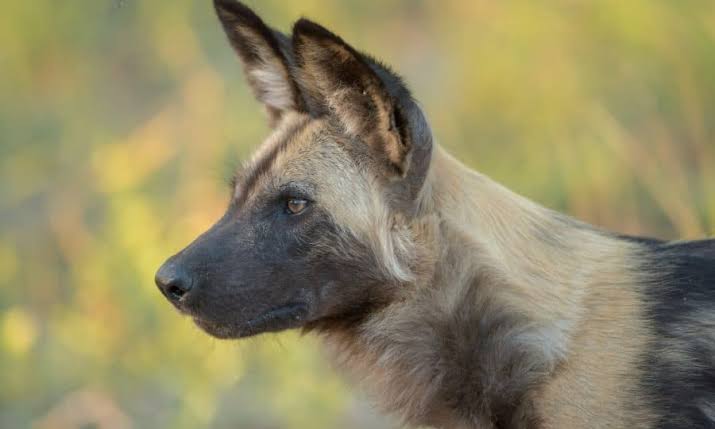 Wild dogs live in packs of 6–20 individuals led by a dominant breeding pair the alpha male and female. The entire pack participates in raising pups, which is unusual among carnivores: pack members regurgitate food for pups, guard the den, and “babysit” while others hunt. This cooperative breeding system is one of the reasons wild dogs are such effective survivors in an ecosystem dominated by larger competitors.
Wild dogs communicate through an extraordinary range of vocalisations including a distinctive high-pitched twittering call used to rally the pack before a hunt — the sound that announces a wild dog safari encounter is about to begin. They also use touch extensively: pre-hunt ceremonies involve frantic greeting, licking, and play behaviour that builds group cohesion before the chase.
The African Wild Dog Hunt
A wild dog hunt is fundamentally different from a lion or leopard ambush. The pack selects a target animal — typically an impala, wildebeest calf, or Thomson’s gazelle — and simply runs it down. Individual dogs take turns leading the chase, rotating to the front as the leader tires. The quarry is disembowelled quickly once caught. The entire sequence, from the initial twittering assembly to the first feeding, often takes under 10 minutes.
Watching an African wild dog pack hunt is widely considered the single most exciting predator encounter in East Africa. The speed, coordination, and vocalisation are visceral and overwhelming in a way that even a lion kill rarely matches. On an African wild dog safari, witnessing a hunt is the pinnacle experience.
Best Places for an African Wild Dog Safari
Serengeti National Park, Tanzania
The Serengeti ecosystem holds one of East Africa’s more stable wild dog populations, though packs range over enormous territories of hundreds of square kilometres. Sightings in the Serengeti are unpredictable but electrifying when they occur. The dry season and early morning drives give the best chances on an African wild dog safari in the Serengeti.
Murchison Falls National Park, Uganda
Murchison Falls National Park hosts a small but growing wild dog population in its northern sector. Sightings are rare but increasing as the population recovers under improved anti-poaching protection. An African wild dog safari encounter in Murchison is an exceptional rarity that most experienced Africa travellers have never witnessed.
Kidepo Valley National Park, Uganda
Remote Kidepo Valley National Park in northeastern Uganda is one of the best places in Uganda to encounter African wild dogs. The park’s isolation from hunting pressure and its large, undisturbed savannah ecosystem support a resident pack. Finding wild dogs in Kidepo’s vast valley landscapes is among the most thrilling African wild dog safari experiences in East Africa.
Ruaha National Park, Tanzania
Ruaha in southern Tanzania holds one of Africa’s largest wild dog populations. For serious African wild dog safari enthusiasts, Ruaha is the gold standard — reliable packs, habituated individuals, and experienced guides who can track dogs across the park’s open miombo woodland. If wild dogs are your primary target, Ruaha is the most reliable destination in East Africa.
Best Time for an African Wild Dog Safari
- Denning season (June–August): Wild dogs den for 10–12 weeks while the alpha female raises pups. During this period, the pack returns to the den daily to feed the pups, making their location predictable — the best possible window for an African wild dog safari if the den site is known.
- Dry season (June–October): Short grass and concentrated prey make wild dog packs easier to spot and their hunts more visible across open ground.
- Year-round with radio-collar tracking: Some reserves use GPS-collared wild dog packs for research. Guides with access to real-time collar data can locate packs reliably at any time of year — ask your safari operator about this option.
African Wild Dog Safari Tips
- Be at the den before dawn: Wild dogs begin their morning hunt at first light. If a den site is known, arriving before sunrise gives you the best chance of witnessing the pre-hunt rally call and departure.
- Follow the pack at distance: Once a hunt begins, experienced guides follow the pack at a respectful distance without crowding the dogs. Too many vehicles pressure wild dogs and can cause them to abandon a hunt.
- Prioritise specialist operators: Wild dog sightings require deep knowledge of pack territories and movement patterns. Choosing an operator with specific wild dog expertise dramatically increases your chances on an African wild dog safari.
- Allow multiple days: Wild dogs range over huge territories. Building three or more game drives into your schedule in a known wild dog area, rather than a single day visit, multiplies your chances significantly.
African Wild Dog Conservation
The African wild dog is listed as Endangered on the IUCN Red List. Its global population of approximately 6,000 individuals is fragmented across 39 countries, with no single population exceeding 500 animals. The primary threats are habitat fragmentation (which prevents genetic exchange between packs), road kills, snaring, disease (particularly canine distemper and rabies transmitted from domestic dogs), and direct persecution by farmers.
Conservation initiatives including community buffer zones, livestock guardian programmes, and vaccination campaigns for domestic dogs near wild dog range are showing results. Supporting responsible African wild dog safari tourism funds the research and community programmes that underpin these efforts.
Plan Your African Wild Dog Safari
An African wild dog safari demands patience, specialist knowledge, and a willingness to spend time in the right places — but the reward of watching Africa’s rarest predator hunt in full pack is incomparable. Contact our team to plan a safari specifically designed around wild dog encounters, incorporating the most reliable destinations across Tanzania and Uganda at the best time of year for your dates.