The d Arusha to Serengeti drive is one of East Africa’s great overland journeys, a full day on the road that passes through some of Tanzania’s most dramatic landscapes before arriving at the world’s most famous wildlife park. At approximately 325 kilometres from Arusha town to the Serengeti’s Naabi Hill gate, the journey takes between 5 and 7 hours of driving without stops, and most visitors use it as an opportunity to break the route with game drives in Tarangire National Park or the Ngorongoro Crater along the way. This guide covers the full route, road conditions, stopping points, and the honest answer to whether you should drive or fly.
Arusha to Serengeti Drive: Distance and Drive Time
| Segment | Distance | Approximate Drive Time | Road Surface |
|---|---|---|---|
| Arusha to Makuyuni junction | ~105 km | 1.5 hours | Tarmac (good) |
| Makuyuni to Lodoare Gate (Ngorongoro) | ~75 km | 1 hour | Tarmac to Karatu, then murram |
| Lodoare Gate through Ngorongoro Conservation Area | ~80 km | 1.5–2 hours | Gravel/murram, steep in sections |
| Naabi Hill Gate to central Serengeti | ~75 km | 1–1.5 hours | Gravel/dirt tracks |
| Total: Arusha to Serengeti (Seronera) | ~325 km | 5.5–7 hours driving |
These times are for driving only, without game drives or extended stops. Add 2–3 hours if you plan a game drive in Ngorongoro or Tarangire along the way. Most Tanzania safari operators plan the Arusha–Serengeti transfer as a full day, departing Arusha at 07:00–07:30 and arriving at the Serengeti lodge in time for an afternoon game drive.
The Route: Arusha to Serengeti Step by Step
Arusha to Makuyuni (105 km) — Tarmac Road
The first section leaves Arusha heading west on the A104 road. The road is tarmac and in reasonable condition for the Tanzanian road network. You pass through the town of Mto wa Mbu — a good place to stop for fresh fruit, local crafts, and a bathroom break. Mto wa Mbu sits at the entrance to Lake Manyara National Park and marks the start of the Great Rift Valley escarpment. The views from the escarpment road down into the Rift Valley floor are one of the most dramatic moments of the whole journey.
Optional Stop: Lake Manyara National Park
Lake Manyara lies immediately south of Mto wa Mbu and is one of Tanzania’s most underrated parks. A 2–3 hour game drive here offers excellent elephant, hippo, flamingo, tree-climbing lions (in season), and one of Tanzania’s finest concentrations of bird species. Manyara works best as an add-on to the Arusha–Serengeti drive on itineraries of 7 days or more — on a shorter trip, the time is usually better spent continuing to the Serengeti. For a full overview see our Tanzania safari itinerary guide.
Optional Stop: Tarangire National Park (Detour)
Tarangire National Park is reached via a different junction from Arusha — turning south before Mto wa Mbu rather than continuing west. It is not directly on the Arusha–Serengeti route but sits close enough (90 km from Arusha, 2 hours) to be included as a first-night stop on itineraries of 8 days or more. Tarangire’s dry-season elephant concentrations are extraordinary — herds of 100+ animals gather along the Tarangire River between July and October. A night here before continuing to the Serengeti is one of Tanzania’s finest itinerary combinations.
Makuyuni to Lodoare Gate — Karatu Town and the Ngorongoro Highlands
From Makuyuni the road continues west and begins to climb into the Ngorongoro Highlands. The town of Karatu is the last major supply point before the Ngorongoro Conservation Area — fuel up here and make any final purchases. Above Karatu the road passes through lush highland coffee farms and patches of montane forest before reaching Lodoare Gate, the main entrance to the Ngorongoro Conservation Area. Gate entry fees are payable here for all passengers and vehicles.
Through the Ngorongoro Conservation Area
The Ngorongoro Conservation Area (NCA) is not just the Crater — it is an enormous protected area of highland forest, Maasai pastoralist land, and savannah stretching from the crater rim to the Serengeti border. The drive through the NCA is one of the most scenic sections of the entire journey. The road climbs to the Ngorongoro Crater rim at approximately 2,300 metres, passing through dense cloud forest. Views into the Ngorongoro Crater from the crater rim road on a clear morning are unforgettable.
The road descends from the highlands toward the Serengeti on the western side. This section — from the crater rim to Naabi Hill Gate — is on gravel and murram, with some steep gradients. In the wet season (March–May, November) the road can become very muddy and difficult. A 4WD vehicle is essential for this section year-round.
Naabi Hill Gate — Entering the Serengeti
Naabi Hill Gate is the main entry point to the Serengeti National Park from the east. The gate sits on the short grass plains of the southern Serengeti — the same plains where the wildebeest calving season happens in January and February, and where cheetah and lion are regularly seen on open ground. From Naabi Hill Gate it is approximately 75 km of gravel track to Seronera in the central Serengeti, where most Serengeti lodges are clustered. Naabi Hill itself has a small visitor centre and viewpoint — worth a brief stop to stretch and scan for wildlife before the final drive in.
Road Conditions on the Arusha to Serengeti Drive
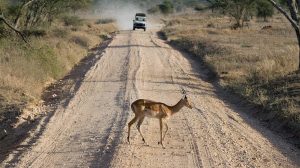
- Dry season (June–October): Best road conditions. The murram sections through Ngorongoro are firm and dust rather than mud. Corrugations on the gravel sections can make for a rattling ride but progress is steady. Dust can be very heavy on the Serengeti plains tracks in August–September
- Short dry season (January–February): Generally good. Roads are firm and most of the southern Serengeti plains are accessible — important for the calving season game viewing
- Long rains (March–May): The most challenging period. The Ngorongoro highland section can have significant mud and some operators temporarily close certain routes. The Serengeti plains in the south can be impassable for 2WD vehicles. All vehicles on this route should be 4WD with high clearance
- Short rains (November–December): Variable. November can be wet and muddy in the highlands; December improves progressively
For timing your Tanzania safari around road and weather conditions, read our best time to visit Tanzania guide.
Should You Drive or Fly Arusha to Serengeti?
Both options have genuine merit and the right choice depends on your itinerary length and priorities.
Driving from Arusha to Serengeti
- The drive itself is a wildlife and landscape experience — you pass through the Ngorongoro Crater area, the Rift Valley escarpment, and the Serengeti plains. Driving is part of the safari
- It allows natural stops at Lake Manyara, the Ngorongoro Crater rim viewpoint, and Naabi Hill
- Significantly cheaper than charter flights
- Practical on itineraries of 8+ days where you have time for a full driving day
Flying from Arusha to Serengeti
- Scheduled flights from Kilimanjaro International Airport (JRO) or Arusha airport to Seronera or other Serengeti airstrips take approximately 1 hour. Charter flights take a similar time
- On a 5–6 day itinerary, the driving day represents a significant portion of your total time. Flying gives you that day back for game drives
- Fatigue: a 6–7 hour drive on rough roads after a long intercontinental flight is tiring. Many travellers choose to fly in on arrival day and drive out at the end of the trip (or vice versa) as a compromise
- Flying allows you to access remote Serengeti areas — the Northern Serengeti (Kogatende), Western Corridor (Grumeti), or Southern Serengeti (Ndutu) — that would require another half day of driving beyond Seronera from the Arusha road
The most common approach on a 7–10 day Tanzania itinerary: fly in to the Serengeti at the start (save time, start game drives immediately), drive out via Ngorongoro and Tarangire at the end (see more parks, end in Arusha for the flight home). This gives you the best of both approaches.
What to Bring for the Drive
- Water — carry at least 2 litres per person for the driving day. The Ngorongoro highlands section has no reliable resupply
- Snacks and a packed lunch — most operators provide a packed lunch from your Arusha hotel or lodge. There are no restaurants on the road between Karatu and Seronera
- Camera accessible — wildlife appears even on the transfer drive; keep your camera within reach from the Ngorongoro section onwards
- Warm layer — the Ngorongoro Crater rim at 2,300 metres can be cold, particularly in the early morning. Even in the dry season a fleece is useful
- Dust protection — in dry season the gravel tracks produce significant dust. A buff or light scarf is useful if you plan to have the roof hatch open on the Serengeti plains
For a full packing list for the Tanzania safari, read our Tanzania safari packing list. For visa and entry requirements, see our Tanzania visa guide. Contact Superfine Safaris to build your Tanzania itinerary — we will advise on the right combination of driving and flying for your dates and trip length.