Choosing the best time to visit East Africa for a safari depends on what you most want to see. East Africa’s wildlife is spectacular year-round, but different seasons deliver dramatically different experiences. From the epic wildebeest migration and predator action of the dry season to the lush green landscapes and newborn wildlife of the wet months. This month-by-month guide tells you everything you need to know to pick the best time to visit East Africa for your specific priorities.
East Africa’s Seasons at a Glance
East Africa experiences two distinct seasons: the dry season and the wet season. Unlike temperate regions where these seasons follow a simple winter–summer pattern, East Africa’s calendar is more nuanced — the wet season splits into two separate rainy periods, and the best time to visit East Africa shifts from country to country and park to park.
- Long rains: March–May (heaviest rainfall, lowest tourist numbers, some roads impassable)
- Long dry season: June–October (peak safari season, excellent game viewing, highest prices)
- Short rains: November–December (brief rains, light and manageable, good wildlife viewing continues)
- Short dry season: January–February (second peak, excellent for Serengeti calving, Amboseli, gorilla trekking)
Month-by-Month Guide to the Best Time to Visit East Africa
January & February
One of the best times to visit East Africa overall. The short dry season delivers clear skies, low grass, and excellent game viewing. The Serengeti’s southern plains around Ndutu are at their most spectacular — calving season brings 500,000 wildebeest calves born in a compressed six-week window, drawing every predator in the ecosystem. Cheetahs are exceptionally active. Amboseli is at its finest: Kilimanjaro is frequently clear of cloud, elephant herds are large and active, and the light is superb for photography. Gorilla trekking in Bwindi and Rwanda’s Volcanoes National Park is excellent — dry weather makes the forest trails significantly easier to navigate.
March, April & May
The long rains bring heavy, sustained rainfall across most of East Africa, this is the low season and the least recommended time to visit East Africa for most travellers. Some parks, particularly in Uganda and western Tanzania, can become temporarily inaccessible. However, the “green season” has genuine advantages: rates at lodges and camps drop significantly (often 20–40% below peak prices), crowds disappear entirely, and the landscape is extraordinarily lush and photogenic. Birding is exceptional, Palearctic migrants are still present through April, and breeding plumage on resident species is at its finest. For experienced safari travellers seeking exclusivity and value, the long rains can represent the best time to visit East Africa for a different kind of experience.
June
June marks the beginning of the long dry season and the start of the best time to visit East Africa for peak game viewing. Grass is drying, water sources are contracting, and wildlife begins concentrating around rivers and waterholes. The wildebeest migration is building toward the Mara — massive herds are moving north through the central Serengeti. Tarangire National Park enters its finest season as elephants congregate in enormous numbers along the Tarangire River. Uganda’s savannah parks — Murchison Falls and Queen Elizabeth — are at peak wildlife viewing condition.
July, August & September
The absolute peak of the safari season and arguably the best time to visit East Africa for the wildebeest migration. By July, the great herds have reached the Masai Mara in Kenya, and the famous river crossings at the Mara and Talek rivers reach their peak intensity through August and September. Watching a herd of tens of thousands of wildebeest plunge into a crocodile-filled river is the defining wildlife spectacle of East Africa — and July–October is the only window in which it occurs. Across all parks, game viewing is superb: dry grass, concentrated wildlife, and clear skies create ideal conditions. This is also the busiest and most expensive period — advance booking of 6–12 months is essential for prime camps.
October
October sees the migration begin its return journey south as the first short rains appear. River crossing activity in the Masai Mara diminishes, though the herds remain in the ecosystem well into October. This is an excellent shoulder month — still dry enough for outstanding game viewing, with slightly lower prices and fewer vehicles than peak August. Kidepo Valley in Uganda is superb in October — large herds of Burchell’s zebra, buffalo, and elephants in a landscape just beginning to green.
November & December
The short rains typically last 4–6 weeks across most of East Africa, bringing brief afternoon showers that rarely disrupt game drives. November and December remain excellent times to visit East Africa — the landscape is transforming from brown to green, newborn animals appear in the savannah, and migratory birds begin arriving in enormous numbers. The Serengeti’s wildebeest herds are dispersed across the southern short-grass plains. The Ngorongoro Crater is superb year-round but particularly atmospheric in the green-season mist. Rwanda and Uganda maintain excellent gorilla trekking conditions.
Best Time to Visit East Africa by Activity
Wildebeest Migration
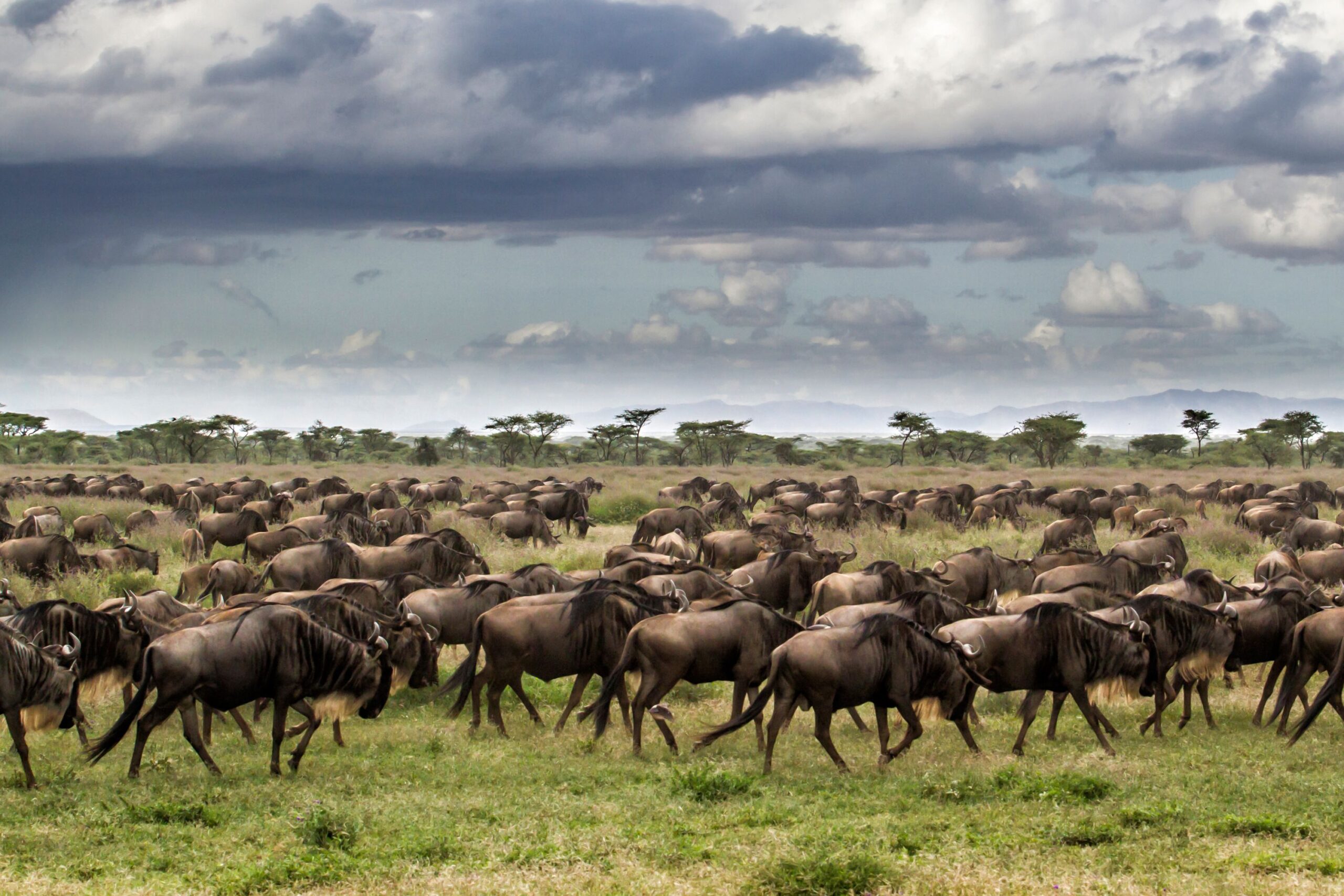 The best time to visit East Africa for the wildebeest migration is July–October for river crossing action in the Masai Mara, and January–March for the calving season in the southern Serengeti. The migration is year-round — the herds never stop moving — but these two windows deliver the most dramatic sightings.
Mountain Gorilla Trekking
Gorilla trekking is possible year-round in Uganda and Rwanda, but the best time to visit East Africa for gorilla trekking is during the dry seasons — June–September and December–February. Dry forest trails are significantly easier to walk, gorilla families are found at lower altitudes, and the risk of permit cancellation due to heavy rain is minimal. The long rains (March–May) are the only period to avoid if possible.
Chimpanzee Trekking
Chimpanzee trekking in Kibale Forest, Uganda, is excellent year-round. The dry seasons (June–September, December–February) are preferred — chimpanzees move more predictably in dry conditions and the forest floor is easier to navigate. During the long rains, some tracks become impassable but trekking continues.
Birding
The best time to visit East Africa for birding is November–April when Palearctic migrants are present across the region, supplementing the already remarkable resident species list. December through February sees maximum bird diversity — resident species in breeding plumage alongside European and Asian migrants wintering in East Africa.
Big Five Game Viewing
The dry season (June–October) is universally the best time to visit East Africa for the full Big Five experience — short grass, concentrated wildlife around water, and predictable daily movement patterns make finding lion, leopard, elephant, buffalo, and rhino considerably easier than in the wet season.
Best Time to Visit East Africa by Country
- Kenya: July–October (migration peak in Masai Mara), January–February (Amboseli, dry northern parks). Avoid April–May for most parks.
- Tanzania: June–October (Serengeti, Tarangire, Ngorongoro), January–March (calving season, Ndutu). Avoid April–May in the northern circuit.
- Uganda: June–September and December–February (gorilla trekking, savannah parks). Avoid March–May for forest trekking. Savannah parks good year-round.
- Rwanda: June–September and December–February (Volcanoes NP gorilla trekking). Avoid March–May for the Virunga forest. Akagera savannah excellent June–October.
Plan Your East Africa Safari Around the Best Season
Understanding the best time to visit East Africa is the most important step in planning a successful safari. Our team plans itineraries year-round and can advise on the best combination of countries and parks for your specific travel dates. Contact us to start planning — we will design an East Africa safari itinerary that maximises the wildlife experiences you most want to have, whatever time of year you are travelling.