A leopard safari in Africa is the ultimate test of patience and reward in one. No big cat is more elusive, more perfectly camouflaged, or more thrilling to find than the leopard. Spotting a rosette-patterned coat draped over a branch high in an acacia tree — a kill hoisted beyond reach of lions and hyenas — is a moment every safari traveller remembers for life. This guide tells you everything you need to know to maximise your chances on a leopard safari in Africa.
African Leopard Facts
The African leopard (Panthera pardus pardus) is the most widespread of Africa’s big cats, found across a greater range of habitats than any other large predator — from dense rainforest to open semi-desert. Adult males weigh 60–90 kg, females 30–60 kg. Their distinctive coat pattern — dark rosettes on a golden-yellow ground — provides near-perfect camouflage in dappled forest light and among the rocks and grass of the savannah.
Strength and Athleticism
Pound for pound, the leopard is the strongest of the big cats. It is the only large predator that routinely hoists prey heavier than itself into trees — a 50 kg impala carried several metres up a vertical trunk. This behaviour is unique to leopards and is a direct adaptation to competition with lions and spotted hyenas, both of which will steal a kill from the ground. Finding a carcass wedged in an acacia fork is one of the surest signs of a leopard on a leopard safari in Africa.
Nocturnal and Solitary
Leopards are predominantly nocturnal, most active from dusk through the early hours before dawn. They are intensely solitary — adults come together only briefly for mating, and territory overlap between individuals of the same sex triggers aggression and scent-marking. During daylight hours, leopards rest in deep shade, in rocky kopjes, or high in trees — often completely invisible to passing safari vehicles. Finding a resting leopard on a midday leopard safari in Africa requires years of local knowledge and sharp eyes.
Leopard Hunting and Feeding Behaviour
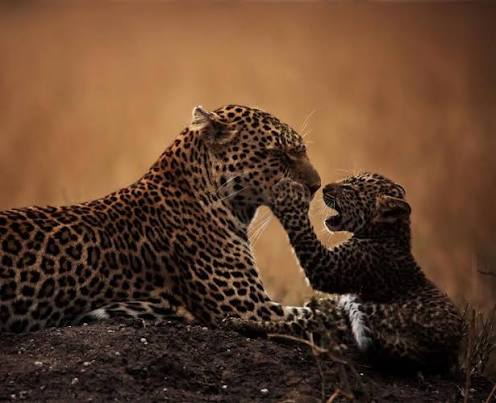 Leopards are ambush hunters, using cover and patience to close the distance to prey before an explosive short-range dash and suffocating throat bite. They are generalist hunters taking an enormous range of prey — from dung beetles and lizards to adult male eland weighing over 900 kg. The majority of kills are medium-sized ungulates: impala, Thomson’s gazelle, bushbuck, and reedbuck.
What makes the leopard uniquely fascinating on a leopard safari in Africa is the hoisting behaviour. After a kill, the leopard drags it to the base of a tree and then — using extraordinary muscular strength and a vertical climbing technique — hauls it up into the branches. A carcass wedged in a fork 5–10 metres above the ground can feed a leopard for 3–5 days while remaining safe from competitors.
Best Parks for a Leopard Safari in Africa
Masai Mara National Reserve, Kenya
The Masai Mara hosts some of the most habituated leopards in East Africa. Several territories within the reserve are well-known to guides, and vehicle-accustomed individuals allow remarkable close-range observation. The riverine forest along the Mara River and its tributaries is prime leopard territory — dense enough for cover, full of impala, and laced with the tall trees leopards use for hoisting kills.
Serengeti National Park, Tanzania
The Serengeti holds a large leopard population concentrated particularly in the kopje country of the Seronera Valley — the central Serengeti’s rocky outcrops and sausage-tree forests are classic leopard safari Africa territory. Sightings here tend to be excellent year-round, and the leopards of the Seronera area are exceptionally habituated to vehicles. The Lobo area in the northern Serengeti also produces outstanding leopard encounters.
Lake Manyara National Park, Tanzania
Lake Manyara National Park is one of the few places in Tanzania where leopards are regularly seen in the dense groundwater forest near the park entrance. The park’s compactness means less driving between sightings, and encounters with leopards in the forest understory provide a strikingly different leopard safari Africa experience to the open-country sightings of the Serengeti.
Samburu National Reserve, Kenya
Samburu National Reserve in Kenya’s northern frontier is excellent leopard safari Africa territory. The Ewaso Ng’iro River corridor provides dense riverine vegetation that leopards use extensively, and several resident individuals in Samburu are well known to local guides. The reserve’s desert-adapted wildlife and dramatic semi-arid scenery make it a compelling destination in its own right.
Ngorongoro Crater, Tanzania
The Ngorongoro Crater leopard population is relatively small but sightings are frequent on the crater rim and forested escarpment. Finding a leopard draped over a mahogany branch on the crater rim at sunrise is one of East Africa’s most striking wildlife images.
Best Time for a Leopard Safari in Africa
Unlike lions, leopards can be seen year-round without a strongly preferred season on a leopard safari in Africa. That said:
- Dry season (June–October): Reduced vegetation makes spotting easier and prey concentrations bring leopards to predictable areas. This is the best period for open-country leopard sightings in the Serengeti and Mara.
- Wet season (November–May): Leopard activity can actually increase as they target the abundant small prey (hares, mongooses, birds) that the rains bring out. Forest leopard sightings in Manyara and Samburu are often better in the green season.
- Night drives (where permitted): Leopards are most active after dark. Parks that allow night drives — including several private conservancies around the Mara — dramatically increase leopard encounter rates on a leopard safari in Africa.
Leopard Safari Tips: How to Find Africa’s Most Elusive Cat
- Search the trees first: Before scanning the ground, check every acacia, sausage tree, and fig tree at middle height. A dangling tail or the outline of a head and paws against the sky are the classic gives.
- Look for the kill: A carcass wedged in a tree fork almost certainly means the leopard is nearby — either feeding, resting in an adjacent tree, or on the ground below. Station yourself downwind and wait.
- Listen for alarm calls: Impala bark sharply, baboons give loud two-syllable alarm calls, and birds — particularly go-away birds — call persistently when a leopard is nearby. Alarm calls in otherwise quiet bush are one of the best leopard locators.
- Trust your guide: An experienced guide who knows the territories of resident leopards in a specific park is worth more than any tracking technique. Local knowledge is the single biggest factor in leopard safari Africa success.
- Be patient: A leopard once found will often reveal extraordinary behaviour if you simply wait — descending to drink, dragging a fresh kill up into a tree, or a mother calling her cubs from cover. Patience is always rewarded.
Leopard Conservation
The African leopard is classified as Vulnerable on the IUCN Red List and has lost over 60% of its historical range. Main threats include habitat fragmentation, retaliatory killing by livestock herders, bushmeat snaring (which inadvertently catches leopards), and illegal trade in skins and body parts. Despite this, the leopard’s adaptability means it persists in fragmented landscapes where lions and cheetahs have long disappeared — making it both a resilience success story and an ongoing conservation priority.
Plan Your Leopard Safari in Africa
A leopard safari in Africa rewards preparation, patience, and expert guidance. From the habituated leopards of the Masai Mara to the kopje-dwelling individuals of the Serengeti Seronera Valley, East Africa offers some of the finest leopard viewing anywhere on the continent. Contact our team to build a safari itinerary focused on maximising your leopard encounters — we know the best territories, the most reliable guides, and exactly where to be at first light.