
The southern Serengeti is the calving ground of the great wildebeest migration and one of the most remarkable wildlife spectacles in Africa. Centred on the Ndutu ecosystem — a mosaic of short-grass plains, acacia woodland and shallow lakes straddling the southern boundary of Serengeti National Park and the Ngorongoro Conservation Area — this remarkable zone transforms between January and March into the birthplace of approximately 500,000 wildebeest calves in a single season. The short grass, volcanic soil and proximity to the Ngorongoro highlands make this area unlike any other section of the Serengeti: flat, open and astonishingly rich in predators. This guide covers everything you need to plan a southern Serengeti safari, whether you are targeting the calving season or exploring the zone’s year-round wildlife potential.

Where Is the Southern Serengeti?
The southern Serengeti encompasses the short-grass plains that stretch from the southern boundary of Serengeti National Park northward to the Seronera area. The core of the southern zone is the Ndutu ecosystem — a large area centred on Lake Ndutu and Lake Masek that lies partly within the Ngorongoro Conservation Area and partly within the Serengeti. Because the Ndutu area straddles two protected zones, access rules differ from the rest of the Serengeti: there is no park entry fee in the Ndutu area (which falls under the NCA), and game viewing can take place off-road during calving season, which is why it often produces closer and more intimate wildlife encounters than the rest of the park.
Other key southern Serengeti areas include Kusini — a remote and exclusive section with very few camps and almost no day visitors — and the Moru kopjes, a granite outcrop area in the central-south of the park where rock hyrax, lion and leopard are regularly encountered. The southern Serengeti is approximately four hours from Arusha by road via the Ngorongoro Conservation Area, or a 35-minute domestic flight to Ndutu airstrip from Arusha. For the full context of how the southern Serengeti fits into a Tanzania itinerary, see our Tanzania safari itinerary guide.
The Calving Season — January to March
The calving season is the defining event of the southern Serengeti and one of the greatest wildlife spectacles on earth. Between late January and early March — with the absolute peak in the second and third weeks of February — more than 8,000 wildebeest calves are born every day on the short-grass plains of Ndutu. The timing is not random: the wildebeest return to the southern Serengeti each year specifically because the short volcanic grass of the Ndutu plains is the most nutritious grass in the ecosystem, ideal for lactating mothers. The concentrated birth pulse — approximately 80 percent of all calves born within a three-week window — evolved as a predator-swamping strategy: by flooding the plains with calves simultaneously, enough survive that the predators cannot possibly eat them all.

A newborn wildebeest calf can stand within minutes of birth and run with the herd within hours — a survival adaptation that no amount of predator pressure has been able to overcome at the population level. Watching a birth on the Ndutu plains is one of the most moving wildlife experiences available in Tanzania: the mother protecting the calf from circling hyena in the first moments, the calf finding its feet on the short grass, and the herd moving on within the hour. The southern Serengeti calving season is also the best time to observe multi-predator interactions — lion, cheetah, spotted hyena, jackal, bat-eared fox and African wild dog all converge on the calving grounds simultaneously.
For the full migration calendar from calving in the south through the western corridor, the northern crossings and the return south, see our wildebeest migration in Tanzania guide.
Wildlife in the Southern Serengeti
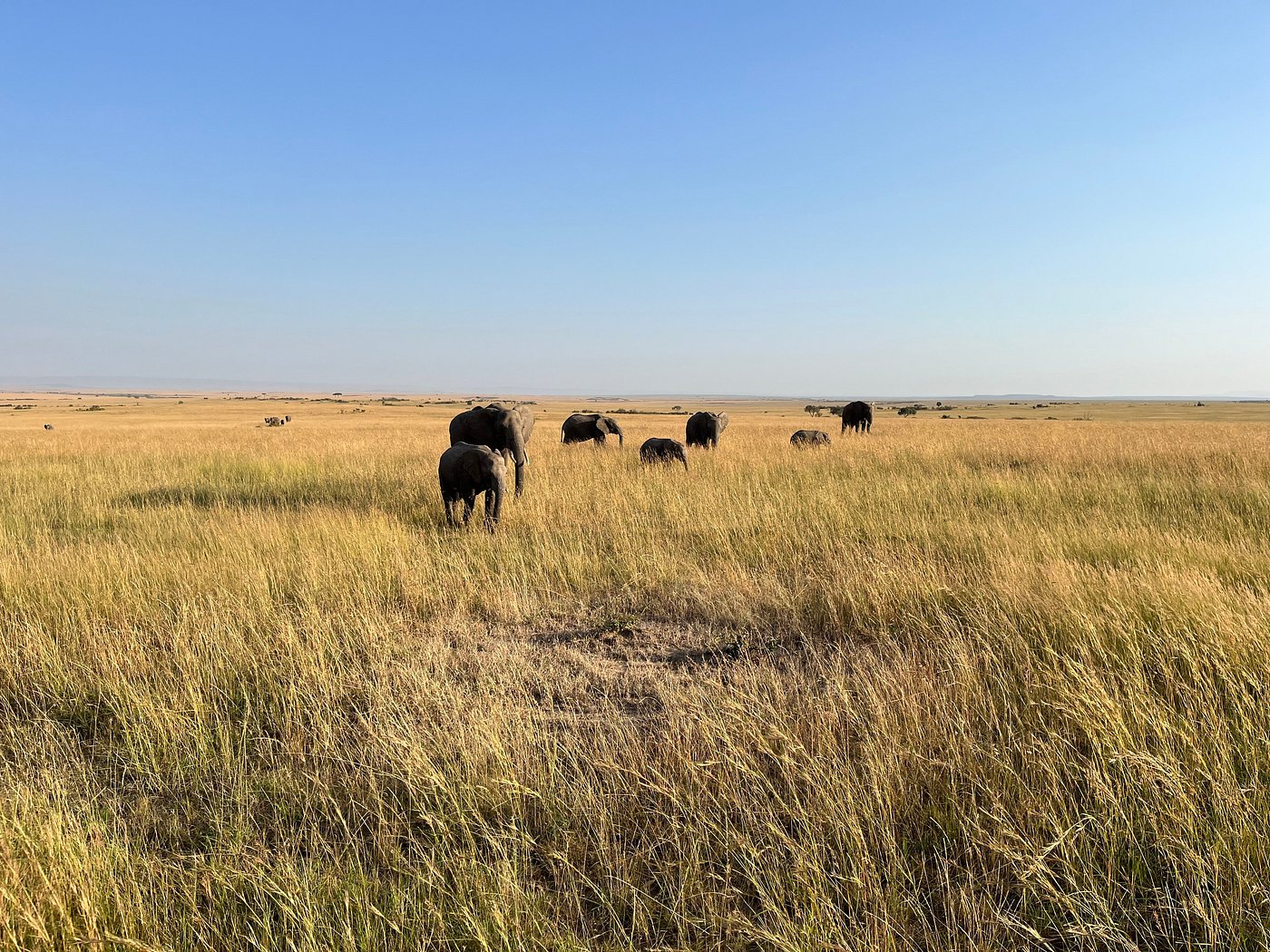
This part of Tanzania is exceptional for predators year-round, and during calving season it holds one of the highest predator densities of any savannah ecosystem in Africa. The open, flat terrain of the short-grass plains means that predators are highly visible — there is nowhere to hide — and the combination of species concentrated in the same area produces extraordinary multi-predator encounters that are difficult to replicate elsewhere in the park.
Cheetah are perhaps the defining predator of the southern Serengeti. The open plains provide ideal hunting conditions and Ndutu holds one of the highest cheetah densities in East Africa. A cheetah hunt on the Ndutu plains — visible from beginning to end across hundreds of metres of flat grass — is one of the most electrifying sequences in wildlife. Lion are abundant across the southern zone, with the Moru kopjes holding particularly large and stable prides. Spotted hyena are extremely numerous during calving season, with clan sizes increasing as food availability peaks. African wild dog are irregular but regularly sighted in the southern zone, and the Ndutu woodland fringe provides suitable denning habitat.

Elephant move through the southern Serengeti but are less concentrated here than in the northern zone — the short-grass plains do not provide the browse that elephants prefer. Giraffe are present in the acacia woodland fringing the short-grass plains. Zebra travel with the wildebeest and are present in large numbers throughout the calving season, with their own foaling period overlapping the wildebeest calving. Eland — the world’s largest antelope — are frequently encountered on the southern Serengeti plains, moving in herds of several dozen animals that can be mistaken at a distance for wildebeest. The wildlife in Serengeti National Park guide covers the full species list across all zones of the park.
Southern Serengeti vs Central Serengeti
The southern and central Serengeti serve different purposes in a Tanzania safari and the comparison depends heavily on travel dates. The central Serengeti (Seronera) is the best year-round zone — permanent water in the Seronera River valley concentrates wildlife predictably across all months, and leopard, lion and hippo can be found with reliability regardless of season. The central zone also has the highest vehicle numbers in the park.
The southern Serengeti is at its absolute best between January and March, when it holds a spectacle unavailable anywhere else in Tanzania. Outside this period — particularly from June through October when the migration is in the north — the southern Serengeti has lower wildlife densities than the central or northern zones, though the resident cheetah population and the kopje predators remain present year-round. The ideal itinerary combines both: two to three nights in the southern Serengeti (Ndutu) with two to three nights in the central or northern zone. See our northern Serengeti safari guide for a comparison with the other end of the park.
Activities in the Southern Serengeti
Game Drives
Game drives in the southern Serengeti during calving season are conducted on the short-grass plains and in the Ndutu woodland fringe. A key advantage of the Ndutu area is the ability to drive off-road (within the NCA section), which allows vehicles to position precisely for predator-prey encounters rather than observing from a fixed track. Morning drives focus on the freshest action — lion and hyena from overnight kills, cheetah beginning to hunt, the newborn calves taking their first steps with their mothers. Afternoon drives shift to the cheetah and wild dog activity that peaks in the cooler hours. During calving season the sheer density of wildebeest on the plains can be disorienting — visible in every direction to the horizon, the sound of the herd audible before dawn from camp.

Outside calving season, game drives in the southern Serengeti cover the Moru kopjes area (lion and leopard year-round), the Simba kopjes, and the Ndutu woodland (resident elephant, giraffe and cheetah). The top 10 things to do in Serengeti covers the full range of activities across all zones.
Hot Air Balloon Safaris
A hot air balloon safari in the southern Serengeti during calving season is one of the most remarkable perspectives on a wildlife event available in East Africa. Drifting above the Ndutu plains at first light during February or March — when the wildebeest are at maximum density and calves are visible in every direction below — gives a sense of scale that no ground-level drive can replicate. Balloon flights from the Ndutu area end with a champagne bush breakfast.
Walking Safaris
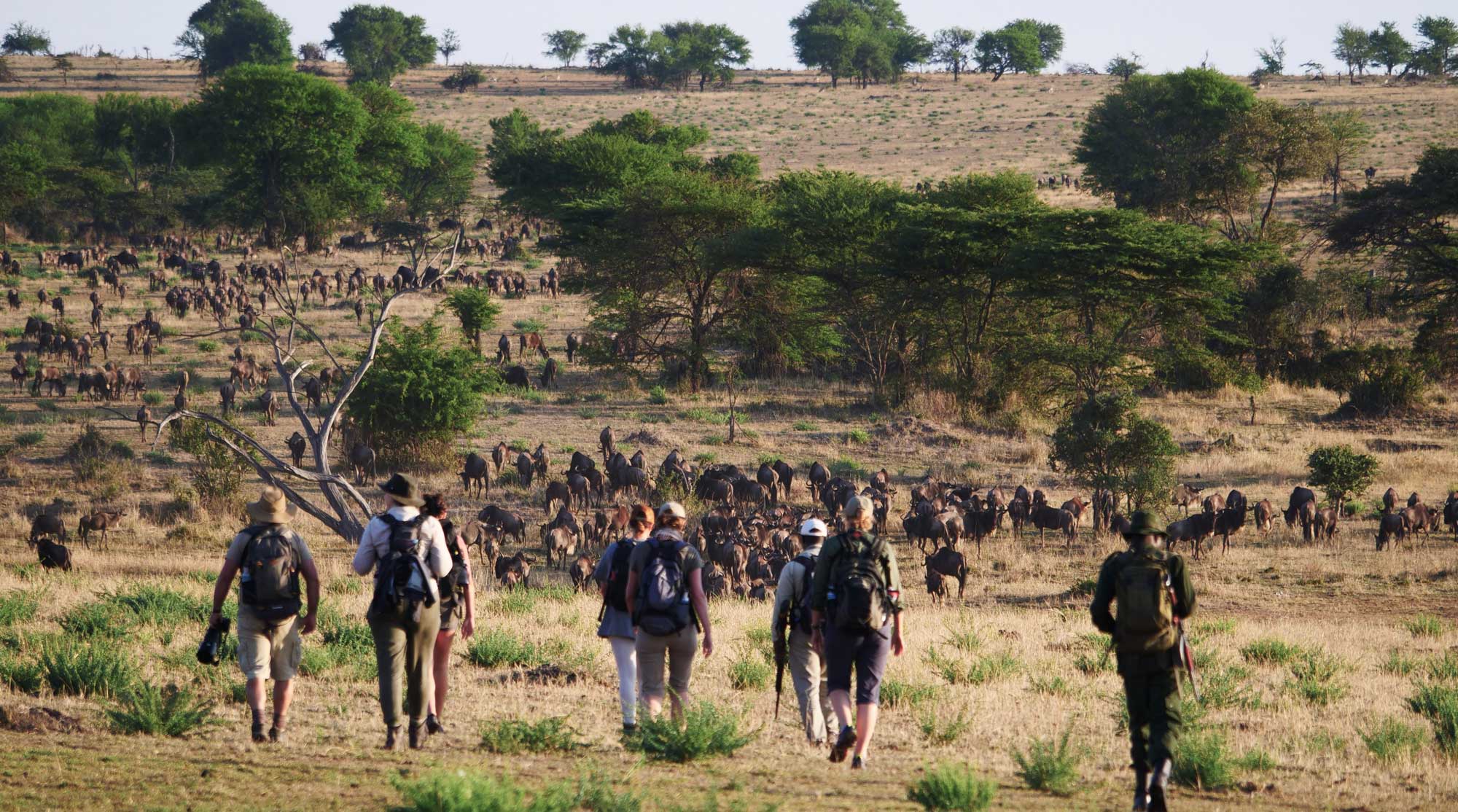
Guided walking safaris in the Ndutu area allow guests to experience the ecosystem on foot — the short-grass plains, the acacia woodland fringe and the lake shores all offer a different perspective from a vehicle-based safari. Walking in the Ndutu area during calving season requires care given the predator concentrations, but with an armed ranger guide it is one of the most immersive ways to experience the calving grounds. The bird life of the Ndutu woodlands and the lake margins is exceptional, and a walking safari gives the time and pace to appreciate it properly.
Best Time to Visit the Southern Serengeti
The best time to visit the southern Serengeti for the calving season is late January to mid-March, with peak calving activity in February. The wildebeest return to the Ndutu plains following the short rains in November and December, and the herds are typically present in full numbers from early January. By late March or April the herds begin moving northward into the western Serengeti corridor as the long rains arrive.
For predator viewing without the migration, the southern Serengeti is productive year-round in the Moru kopjes and Kusini areas. The dry season (June–October) concentrates wildlife around the few remaining water sources and produces excellent predator-prey encounters even in the absence of the migration herds. For the complete monthly breakdown and how this zone fits into the migration calendar, see our best time for wildebeest migration guide.
Where to Stay in the Southern Serengeti
Accommodation in the southern Serengeti and Ndutu area falls into three broad categories: permanent lodges, seasonal tented camps and mobile camps that relocate to follow the migration. The Ndutu area has a small number of permanent camps — most notably Ndutu Safari Lodge, the historic original Ndutu camp set in the acacia woodland on the edge of the plains. Several high-end seasonal tented camps operate in the Ndutu area from December to March, positioned to maximise access to the calving grounds during peak season.
The Kusini section of the southern Serengeti has extremely limited accommodation — Serengeti Kusini is one of the most exclusive camps in Tanzania, with very few guests at any one time and almost no other vehicles on its game circuits. For guests who prioritise exclusivity and private game viewing over the density of wildlife at Ndutu, Kusini is the alternative. For the full range of options, see our luxury lodges in Serengeti National Park guide.
Getting to the Southern Serengeti
The southern Serengeti is reached by road from Arusha through the Ngorongoro Conservation Area (approximately four hours, passing through Karatu and the NCA gate) or by domestic flight to Ndutu airstrip from Arusha (approximately 45 minutes). Most southern Serengeti safari itineraries combine the Ndutu area with the Ngorongoro Crater — the two destinations are less than an hour apart and complement each other perfectly for a Tanzania wildlife circuit. The classic southern Tanzania circuit adds Tarangire National Park for elephants, making a three-destination itinerary of approximately eight to ten days. See our Tanzania drive times guide for full routing details.
Southern Serengeti Safari Itineraries
- 8 Days Tanzania Wildlife Safari — Covers Tarangire, the southern Serengeti (Ndutu), the Ngorongoro Crater and central Serengeti in an eight-day northern Tanzania circuit.
- 10 Days Tanzania Classic Safari — A comprehensive ten-day itinerary that includes two nights in the calving grounds alongside Tarangire, the central Serengeti, Ngorongoro and Lake Manyara.
- 7 Days Tanzania Wildebeest Migration Experience — When timed for January–March, this itinerary incorporates the southern Serengeti calving season alongside the central Serengeti and Ngorongoro Crater.
- 15 Days Best of Tanzania Safari — The most comprehensive Tanzania itinerary, covering the southern and northern Serengeti, Ngorongoro, Tarangire and a Zanzibar beach extension.
Contact Superfine Safaris Limited to design a custom southern Serengeti itinerary timed around the calving season or the year-round predator circuits.
Southern Serengeti FAQ
Is the southern Serengeti only worth visiting during calving season?
No — the resident cheetah and lion populations are present year-round, and the Moru kopjes area produces reliable predator sightings in every month. However, January to March is unquestionably the peak season, when the combination of wildebeest density and predator concentration is unmatched anywhere in East Africa.
Can I combine the southern Serengeti with the Ngorongoro Crater?
Yes — this is the most common combination in Tanzania itineraries. The two destinations are less than an hour apart and offer very different but complementary wildlife experiences. The Ngorongoro Crater safari guide covers the crater in detail.
How does the southern Serengeti compare to the northern Serengeti?
The two zones have fundamentally different seasonal appeal. The southern Serengeti (Ndutu) peaks in January–March for calving; the northern Serengeti (Kogatende) peaks in July–October for Mara River crossings. A complete Tanzania migration safari ideally includes both zones — see the northern Serengeti safari guide for details.
What is the Ndutu ecosystem and is it inside Serengeti National Park?
The Ndutu ecosystem straddles the boundary between Serengeti National Park and the Ngorongoro Conservation Area. The Ndutu area itself (including Ndutu Safari Lodge) falls within the NCA rather than the Serengeti. This is significant for two reasons: NCA rules allow off-road driving (unlike the Serengeti), and there is no additional Serengeti park entry fee for game viewing in the Ndutu area. The distinction matters little for wildlife — the animals move freely across the boundary — but it affects logistics and costs.
Plan Your Southern Serengeti Safari
Get a free, no-obligation quote for a tailor-made southern Serengeti itinerary timed around the calving season or year-round wildlife.
- ✓ Calving season timing optimised
- ✓ Expert English-speaking safari guides
- ✓ Ndutu & Ngorongoro camps arranged
- ✓ Domestic flights arranged
- ✓ All park fees included
Quick Facts
- Location: Southern Serengeti & Ndutu, Tanzania
- Key areas: Ndutu, Kusini, Moru kopjes
- Calving season: Jan–Mar (peak Feb)
- Migration present: Nov–Mar
- From Arusha: ~4 hr drive via Ngorongoro
- Nearest airstrip: Ndutu airstrip