Ziwa Rhino Sanctuary in central Uganda is one of the most remarkable conservation success stories in East Africa and the only place in Uganda where you can see wild white rhinoceros on foot. Home to a growing population of southern white rhino reintroduced after being hunted to extinction in Uganda by the 1980s, Ziwa offers an extraordinarily intimate Ziwa Rhino Sanctuary trekking experience alongside an outstanding diversity of other wildlife and birds.
This guide covers everything you need to know to visit Ziwa Rhino Sanctuary and incorporate it into your Uganda safari.
The Story of Ziwa Rhino Sanctuary
White rhinoceros were once widespread across Uganda but were eliminated entirely by poaching and civil war by the mid-1980s. The Ziwa Rhino Sanctuary was established in 2005 as a partnership between the Ugandan government, Uganda Wildlife Authority, and the Rhino Fund Uganda, a non-profit organisation dedicated to restoring wild rhino populations to the country.
The first rhinos, six southern white rhino from Kenya and two from Disney’s Animal Kingdom arrived at Ziwa Rhino Sanctuary between 2005 and 2006. Under round-the-clock armed protection and careful management, the population has grown steadily. Today, Ziwa Rhino Sanctuary is home to over 30 white rhino — a remarkable recovery in less than two decades. The long-term goal is to reach a population of 50–60 animals before reintroducing rhinos to Uganda’s national parks, beginning with Murchison Falls.
Rhino Trekking at Ziwa Rhino Sanctuary
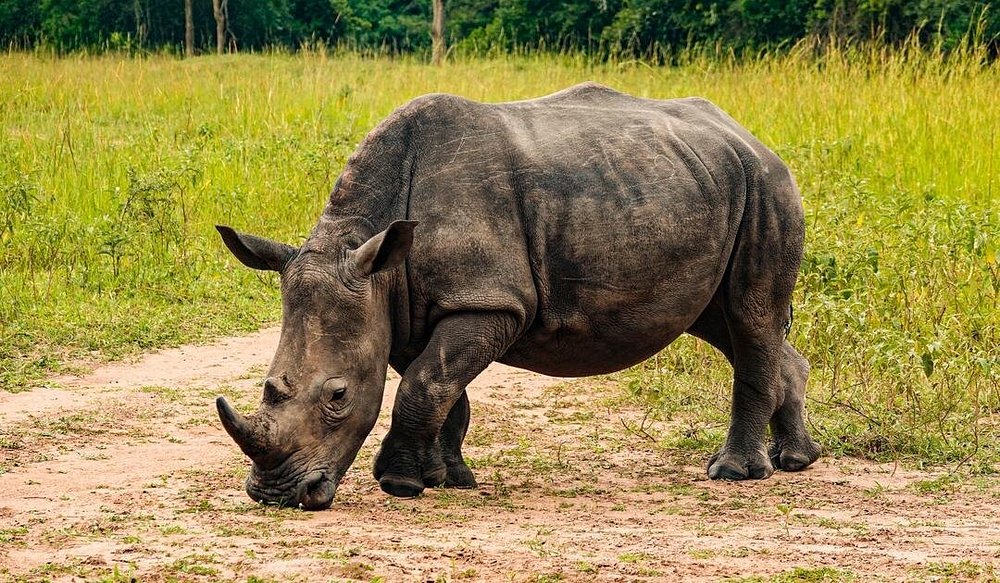 The centrepiece of any Ziwa Rhino Sanctuary visit is the rhino trek, a guided walk on foot through the sanctuary’s 7,000 hectares of savannah, woodland, and wetland to find and observe white rhino at close range. This is a genuinely exceptional wildlife experience, white rhino are the second-largest land animals on Earth, and standing 10–20 metres from a 2,000 kg bull in the open bush, with no vehicle between you and the animal, produces a visceral sense of scale and wildness that game-drive encounters rarely deliver.
Ziwa Rhino Sanctuary treks are led by experienced armed rangers who track the rhinos using radio telemetry and years of knowledge of individual animals’ movements and personalities. Treks begin from the Ziwa Rhino Sanctuary visitor centre and last 1–3 hours depending on where the rhinos are located. The sanctuary’s rhinos are habituated to the presence of rangers and visitors, allowing calm, sustained observation.
What You Will See at Ziwa Rhino Sanctuary
White rhino are the most social of the five rhino species — groups of 2–6 individuals are commonly encountered at Ziwa Rhino Sanctuary, and the sight of a mother with calf grazing in the open savannah is both photographically extraordinary and deeply moving from a conservation perspective. During the morning hours, rhinos are most active — feeding, mud-wallowing, and interacting with each other. Afternoons are quieter as the animals rest in shade.
Other Wildlife at Ziwa
Sanctuary
Beyond the rhinos, Ziwa Rhino Sanctuary supports an impressive diversity of wildlife and is one of Uganda’s finest birding destinations:
- Shoebill stork: The swamps of Ziwa Sanctuary are among the most reliable places in Uganda to see the prehistoric shoebill stork — one of Africa’s most sought-after bird species. Boat trips on the sanctuary’s papyrus-lined channels regularly produce outstanding shoebill sightings at close range, often allowing photography without disturbance.
- Oribi and Jackson’s hartebeest: The sanctuary’s grasslands support populations of oribi and Jackson’s hartebeest — both sought-after species for Uganda wildlife enthusiasts.
- Nile monitor lizards: The wetland fringes host large Nile monitors, regularly seen basking on logs along the water channels during morning boat trips.
- Over 300 bird species: The Sanctuary has recorded over 300 bird species including the African fish eagle, saddle-billed stork, African jacana, grey crowned crane (Uganda’s national bird), African pygmy kingfisher, and multiple species of bee-eater. The sanctuary is an outstanding birding destination in its own right, independent of the rhino experience.
The Boat Trip: Finding the Shoebill
The boat trip through Ziwa Rhino Sanctuary’s papyrus swamps is one of the best shoebill experiences in Uganda. The shoebill (Balaeniceps rex) is a massive, prehistoric-looking bird standing 1.2 metres tall, with a distinctive shoe-shaped bill used to ambush lungfish in shallow papyrus channels. It is classified as Vulnerable and has a world population estimated at just 3,000–5,000 individuals. Finding one standing motionless in a papyrus channel at Ziwa Rhino Sanctuary — eyeing the water with prehistoric intensity — is an extraordinary wildlife encounter that many Uganda safari travellers rank alongside gorilla trekking in personal impact.
Getting to Ziwa Rhino Sanctuary
Ziwa Rhino Sanctuary is located approximately 180 km north of Kampala on the main highway to Murchison Falls National Park, making it a natural stopping point on the drive between Kampala/Entebbe and Murchison Falls. The drive from Kampala takes approximately 3 hours. Most travellers visit Ziwa Rhino Sanctuary as a half-day stop en route to Murchison — arriving in the morning for a rhino trek and boat trip, then continuing north to Murchison Falls for the afternoon. Combining Ziwa Rhino Sanctuary with Murchison Falls in a single Uganda itinerary is the most efficient and rewarding use of the sanctuary’s location.
Accommodation at Ziwa Sanctuary
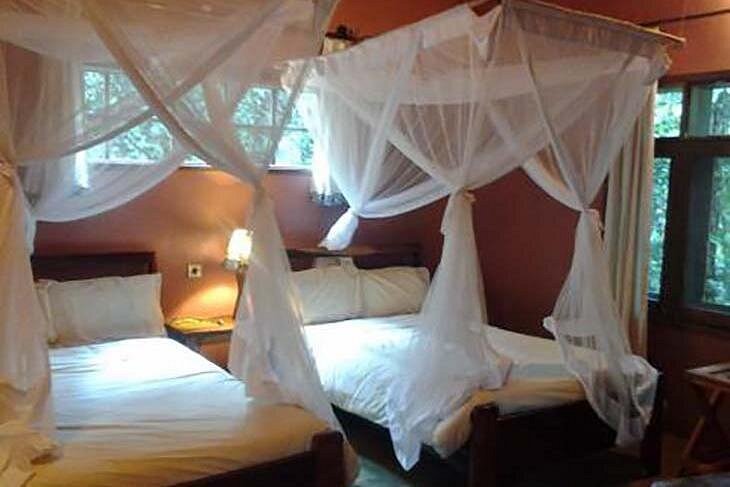 Ziwa Rhino Sanctuary offers overnight accommodation at the Ziwa Rhino Sanctuary Guesthouse — a simple but comfortable facility set within the sanctuary grounds, allowing guests to experience the sanctuary at dawn and dusk when wildlife activity is highest. Overnight guests can book additional rhino tracking sessions, night walks, and early morning boat trips that day visitors cannot access. Staying overnight at Ziwa Rhino Sanctuary transforms the experience from a transit stop into a meaningful conservation destination in its own right.
Ziwa Sanctuary Fees and Practical Information
- Rhino trekking permit: USD 40 per person (non-residents). Permits are purchased on arrival at the visitor centre. No advance booking required for individual travellers though groups should contact the sanctuary in advance.
- Boat trip (shoebill): Approximately USD 20–30 per person. Duration 1.5–2 hours.
- Opening hours: Treks depart at approximately 06:00, 09:00, 11:00, 15:00, and 17:00 (times subject to change — confirm on arrival).
- What to wear: Sturdy walking shoes or boots, long trousers, neutral-coloured clothing, insect repellent, sunscreen, and a hat. The trek involves walking through long grass and mixed terrain.
Best Time to Visit Ziwa Rhino Sanctuary
Ziwa Rhino Sanctuary is excellent year-round, but the dry season (June–October and December–February) offers the best conditions for both rhino trekking and the boat trip. During the dry season, rhinos are more easily located in the shorter grass and shoebill sightings are particularly reliable as water levels in the papyrus channels concentrate fish in predictable spots. The wet season brings lush vegetation that makes tracking slightly harder, but the sanctuary remains fully operational and rhino sightings are guaranteed.
Plan Your Visit to Ziwa Rhino Sanctuary
Ziwa Rhino Sanctuary is an essential stop on any Uganda safari itinerary and one of the most compelling conservation experiences in East Africa. Whether you stop for a morning rhino trek en route to Murchison Falls or spend a night to experience the full range of activities, the sanctuary rewards every minute invested. Contact our team to incorporate Ziwa Rhino Sanctuary into your Uganda safari itinerary — we regularly pair it with Murchison Falls, Kibale Forest, and Bwindi for a comprehensive northern Uganda experience.