
A Masai Mara safari is the most iconic wildlife experience in Kenya and one of the greatest game-viewing destinations on earth. The Masai Mara National Reserve sits in southwest Kenya, forming the northern section of the vast Serengeti–Mara ecosystem that stretches across the Tanzania border — a continuous landscape of open savannah, riverine forest and floodplain supporting the largest concentration of large mammals anywhere in the world.
Whether you are watching lion prides hunt on the open plains, drifting above the herds in a hot air balloon at dawn, or witnessing the thunder of a wildebeest Mara River crossing during the annual migration, a Masai Mara safari delivers wildlife encounters that stay with you for the rest of your life. This guide covers everything you need to plan your Masai Mara safari , the wildlife, activities, costs, best time to go, where to stay and how to get there.

Why the Masai Mara Safari Is Africa’s Most Celebrated Wildlife Experience
The Masai Mara has been the subject of more wildlife documentaries than any other game reserve in the world the BBC’s Big Cat Diary, Dynasty and numerous National Geographic productions have all been filmed here. That is not a coincidence. The Masai Mara safari delivers three things that very few other destinations in Africa can match simultaneously: exceptional year-round Big Five sightings, the world’s greatest wildlife spectacle in the form of the wildebeest migration, and the kind of open savannah landscape where predators can be seen over long distances from a vehicle with unobstructed sightlines.
The reserve itself covers 1,510 square kilometres , but the broader Masai Mara ecosystem, including the private conservancies bordering the reserve and the Serengeti National Park to the south, extends to over 25,000 square kilometres of protected and community-managed land. Wildlife moves freely across this entire area, which is why a Masai Mara safari in any season produces results that more confined reserves cannot replicate.
Masai Mara Safari Wildlife — What You Will See

The Masai Mara supports all of the Big Five which are lion, leopard, elephant, African buffalo and black rhinoceros , alongside cheetah, spotted hyena, African wild dog, giraffe, zebra, hippopotamus, crocodile and over 95 species of mammal. The open grassland terrain means that on a Masai Mara safari you can typically see animals over distances of several kilometres, which dramatically improves the quality and volume of sightings compared with more heavily wooded parks.
Lions are the most reliably spotted predator on any Masai Mara safari. Multiple resident prides hold defined territories across the Mara Triangle, Musiara Marsh and the central reserve. The Marsh Pride made famous by the BBC’s Big Cat Diary series and subsequently by the Dynasties documentary occupies the area around Musiara Marsh. Lion sightings are a near-daily occurrence on morning drives during the dry season.

Cheetah are more reliably seen in the Masai Mara than almost anywhere else in East Africa. The Mara’s open short-grass plains give cheetah the unobstructed sightlines they need for hunting and for keeping cubs safe, and the reserve’s cheetah population is large, healthy and highly visible. Leopard are present across the reserve but most reliably encountered in the riverine woodland along the Mara, Talek and Sand rivers, where fig and sausage trees provide daytime resting sites.
Elephant herds of 20 to 50 animals are encountered year-round, often crossing game drive tracks or visiting the rivers at close range. Hippopotamus congregate in large pods in the Mara and Talek rivers — the pool at Governor’s Camp near Musiara is one of the best hippo-viewing sites in Kenya. The Masai Mara also hosts the world’s densest population of Nile crocodile, which become especially visible during the wildebeest river crossings when prey is abundant.
The Great Wildebeest Migration — A Masai Mara Safari Highlight
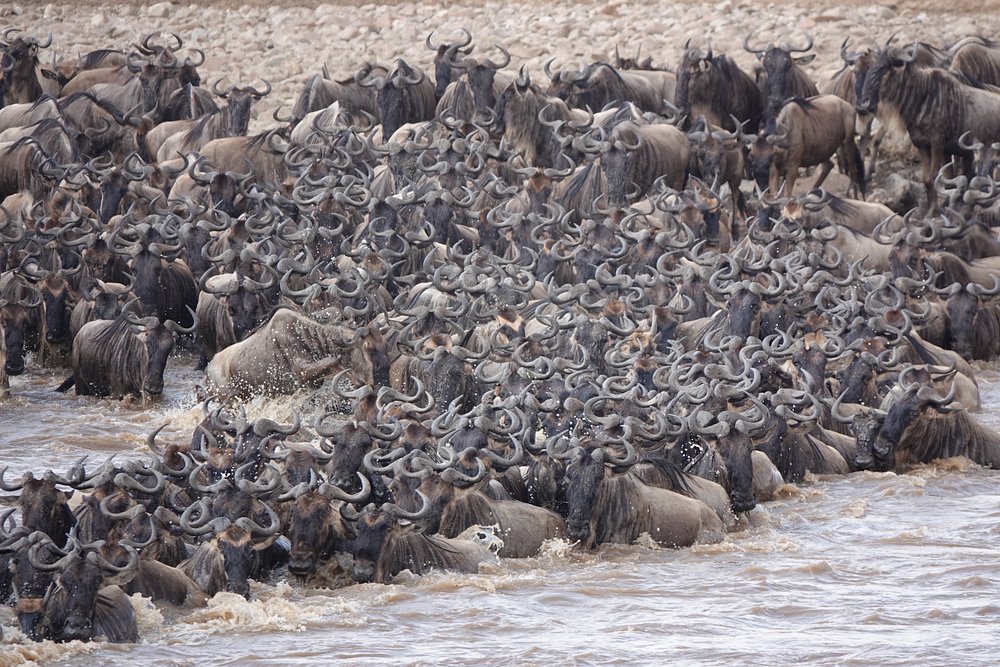
The Great Wildebeest Migration transforms the Masai Mara safari between July and October each year. Approximately 1.5 million wildebeest, 200,000 zebra and half a million Thomson’s gazelle arrive from Tanzania’s Serengeti following the seasonal rains, and the Mara River crossings — where the herds plunge into crocodile-filled water in chaotic, massive surges — are the images that define the Masai Mara for much of the world. Witnessing a major Mara River crossing in person is among the most extraordinary wildlife experiences available anywhere on earth.
The migration is genuine and annually consistent, but the timing and location of individual crossings is unpredictable — herds may cross at the same point repeatedly or move to a new point with no warning. Planning a Masai Mara safari around the migration requires a minimum of three nights in the area during peak season to give yourself a reasonable chance of witnessing a major crossing event. For the full circuit, month-by-month breakdown and crossing logistics, read our complete wildebeest migration guide. For the specific crossing points and what to expect at the riverbank, see our dedicated Mara River crossing guide. For a comparison of viewing the migration from the Kenyan side versus the Tanzanian side, see Tanzania vs Kenya wildebeest migration.
Masai Mara Safari Activities
Game Drives
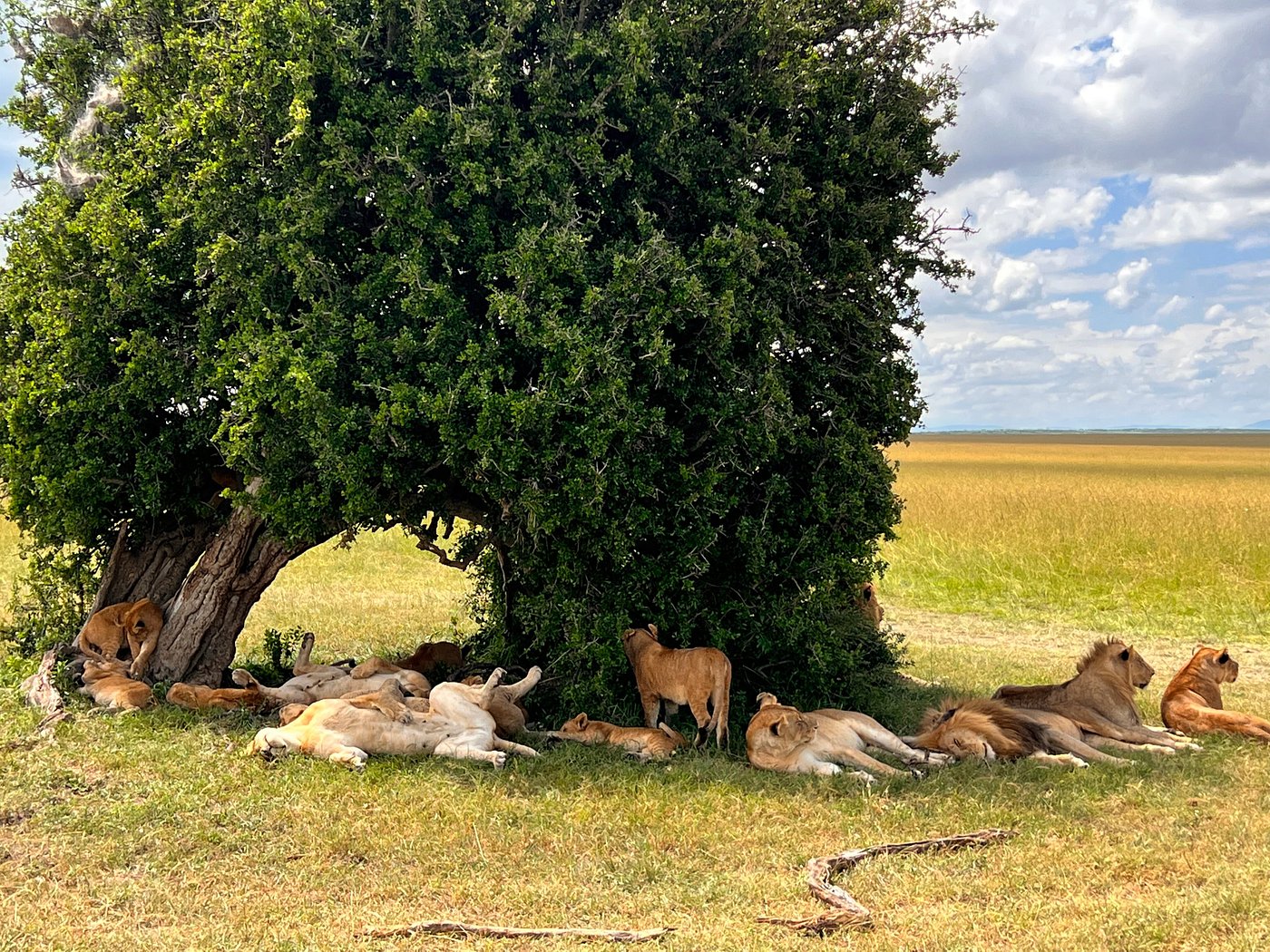
The morning game drive is the core of a Masai Mara safari and the activity everything else is built around. Departing at first light — around 6:00 AM — morning drives catch predators active from the night’s hunt, herds on the move before the midday heat, and the extraordinary warm light that makes Masai Mara photography so distinctive. Afternoon drives from around 4:00 PM catch the cooling of the day, predators becoming active again, and the sunset over the open plains.
Game drives within the Masai Mara National Reserve are conducted on designated tracks — off-road driving is not permitted in the national reserve. Private conservancies bordering the reserve allow off-road driving, enabling vehicles to position themselves beside animals in ways that track-bound drives cannot. For a full list of experiences available within the Mara, see our top 10 activities in the Masai Mara National Reserve.
Hot Air Balloon Safari
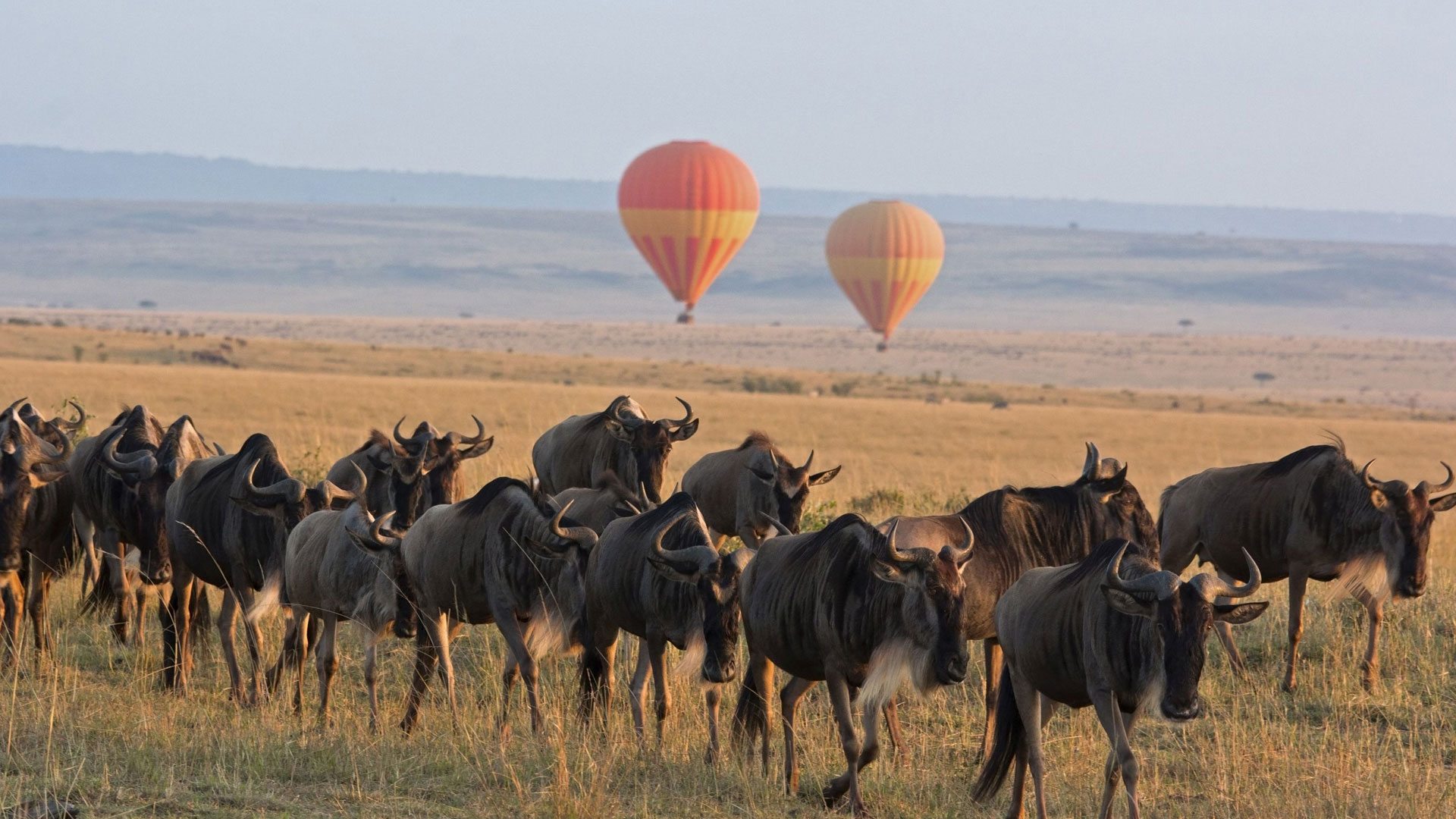
A hot air balloon safari is the Masai Mara’s most iconic activity after the ground-level game drive. Departing pre-dawn and ascending at first light, the balloon drifts silently across 20 to 30 kilometres of the reserve over approximately one hour, giving an aerial perspective on the landscape and the herds that no vehicle-based drive can replicate. During the migration season, drifting above hundreds of thousands of wildebeest from 300 metres is one of the most remarkable sights available anywhere in the world. The flight ends with a champagne breakfast in the bush wherever the wind has carried the balloon.
Night Game Drives
Night drives are not permitted within the Masai Mara National Reserve but are available through conservancy camps in Olare Motorogi, Mara North, Naboisho and other private conservancies. A night drive on a Masai Mara safari opens access to the ecosystem’s nocturnal animals — civets, genets, servals, honey badgers and the full spectrum of predators in low light. Drives are conducted in open vehicles with a guide and spotlight. For guests staying in a private conservancy camp, a night drive replaces the evening game drive and significantly expands what a Masai Mara safari itinerary can include.
Walking Safaris
Guided walking safaris are available in the Masai Mara ecosystem through private conservancy camps and specialist operators. A walking safari covers terrain inaccessible to a vehicle — dry riverbeds, rocky outcrops, dense riverine woodland — and the experience of moving through the African bush on foot with a qualified guide and armed ranger is completely different from vehicle-based game viewing. Walks focus on smaller ecological details alongside larger wildlife and provide a depth of understanding of the Mara ecosystem that no number of game drives can replace.
Masai Cultural Village Visits

The Masai people have coexisted with the wildlife of the Mara ecosystem for centuries, and a visit to a Masai village is an important part of any complete Masai Mara safari. Village visits typically last two hours and include a tour of the manyatta, demonstrations of traditional skills, and the opportunity to buy beadwork directly from the community. The quality of experience varies with the guide’s skill in facilitating genuine interaction — ask your camp which villages they recommend and why.
Birding

With over 450 bird species recorded, the Masai Mara is a serious birding destination in its own right. The open savannah supports an outstanding raptor community — martial eagle, bateleur, long-crested eagle, secretary bird and many species of vulture are all present. The Mara River and its tributaries hold kingfishers, herons, fish eagles and migrant bee-eaters that arrive from Europe in large colonies. Palearctic migrants — storks, raptors, swallows and waders — arrive between October and April, significantly increasing the species count for guests who include the Masai Mara on a birding-focused Kenya safari.
Masai Mara Safari Costs — What to Budget
A Masai Mara safari has several cost components that should be understood separately. Park entry fees for the national reserve are USD 100 per day for non-resident adults (Kenyan citizens pay a lower rate). Vehicle fees are charged additionally. Private conservancy levies — payable only by guests staying in camps within that conservancy — range from USD 80 to USD 150 per person per night on top of accommodation costs, covering the conservation fees paid directly to Masai landowners. The conservation model is worth the premium: it directly funds community conservation and delivers a vastly more exclusive game-viewing experience than the open reserve.
Accommodation costs in the Masai Mara range from USD 200 per person per night at mid-range national reserve lodges to USD 800–1,500 per person per night at luxury private conservancy camps. Most camps at the upper end offer all-inclusive rates covering accommodation, all meals, park fees, game drives and a conservancy levy. Hot air balloon safaris cost approximately USD 450–550 per person and are booked directly through balloon operators — Governors’ Balloon Safaris and Skysafari Balloon Safaris are the main operators.
A standard three-night Masai Mara safari package from Nairobi — including domestic flights, accommodation, park fees, and daily game drives at a mid-range conservancy camp — typically ranges from USD 1,800 to USD 3,500 per person depending on season and camp. Superfine Safaris Limited provides detailed quotes based on your specific travel dates and accommodation preferences — contact us to discuss your Masai Mara safari budget.
Masai Mara National Reserve vs Private Conservancies
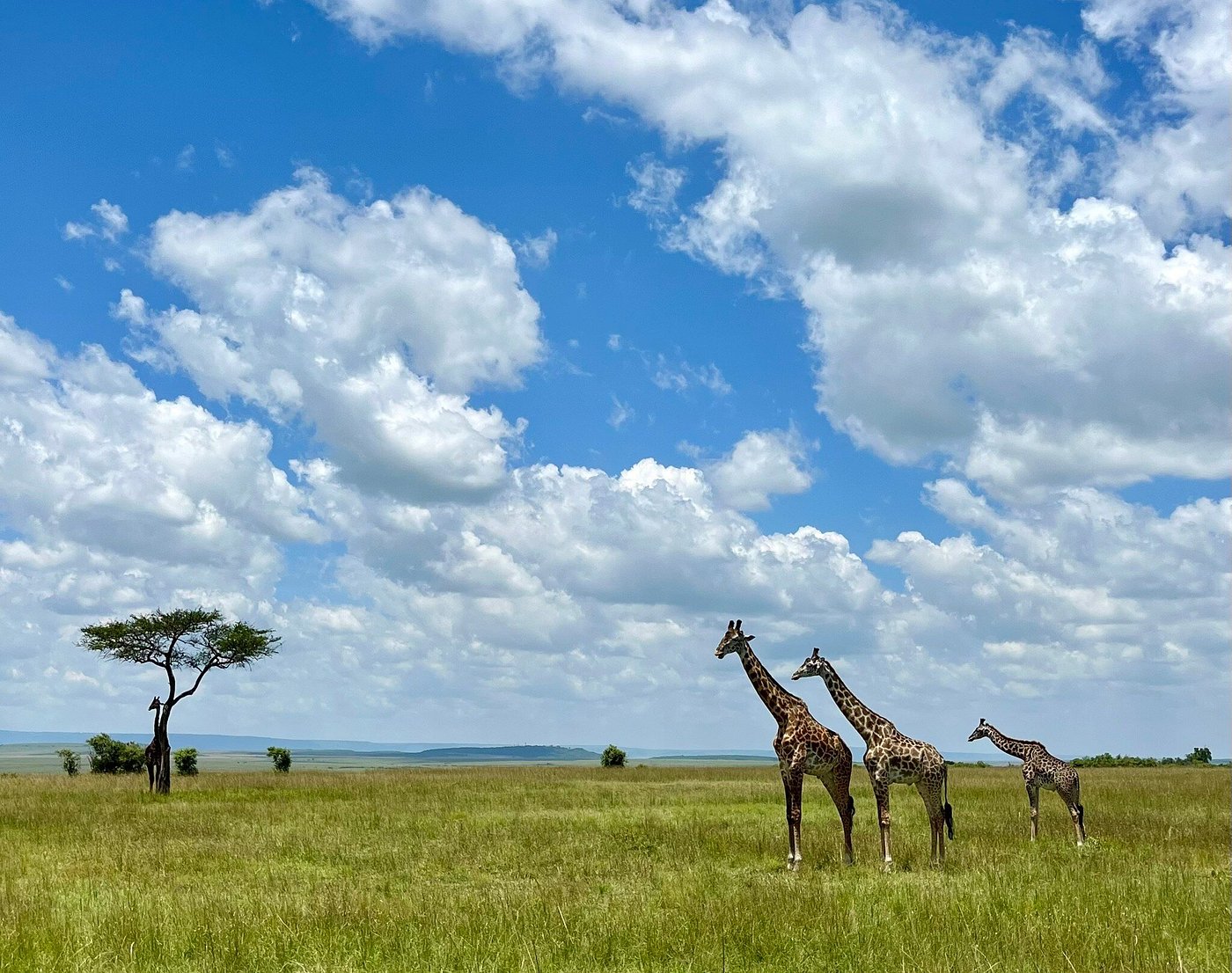
One of the most important decisions when planning a Masai Mara safari is whether to stay inside the national reserve or in one of the private conservancies that border it on the north and east.
The national reserve is managed by Narok County, open to any visitor paying the entry fee, and vehicle numbers are not controlled. During peak migration season, popular crossing points and major predator sightings can attract 15 to 30 vehicles simultaneously. Game drives must follow designated tracks.
The private conservancies — Olare Motorogi, Mara North, Naboisho, Ol Kinyei, Mara Naboisho and others — collectively cover more than 200,000 acres adjacent to the national reserve. They are managed in partnership with private operators and strictly control visitor numbers: only guests staying in camps within a given conservancy may use it. Wildlife moves freely between the reserve and the conservancies, so game-viewing quality is equivalent or better — but with a fraction of the vehicles, plus off-road driving, night drives and walking safaris that the reserve alone cannot offer. For a Masai Mara safari focused on exclusivity, photography and the full range of activities, a private conservancy camp is the right choice.
Best Time for a Masai Mara Safari
The Masai Mara is a productive game-viewing destination in every month of the year, but two windows offer the best conditions. The long dry season from July to October is peak season — the short grass opens up sightlines, wildlife concentrates at permanent water sources, and the wildebeest migration arrives from July onwards and peaks through August and September. This is the most popular and most expensive period for a Masai Mara safari.
The short dry season from December to early February is an excellent lower-cost alternative, with very good wildlife viewing, significantly fewer vehicles than the peak July–October period, and the presence of Palearctic migratory birds. Accommodation rates are typically 20–30% lower than peak-season rates for equivalent properties.
The long rains from March to May bring green landscapes, excellent birding and very low visitor numbers — the trade-off is that tracks on the open plains can become difficult after heavy rain, and some conservancy camps close during April. The short rains in October and November are generally light, tracks remain passable, and October in particular is good value — some migration herds are still present in early October and accommodation rates start dropping after the September peak. For a detailed monthly breakdown of conditions, read our Kenya safari travel tips guide.
Where to Stay on a Masai Mara Safari

Masai Mara safari accommodation spans a wide range. The national reserve holds established mid-range and upper-mid-range lodges — Mara Serena Safari Lodge, Fig Tree Camp, Keekorok Lodge, Mara Sopa Lodge — with good facilities and direct access to the reserve’s game circuits. Luxury conservancy camps — Angama Mara, Mahali Mzuri, Sanctuary Olonana, Governors’ Camp, Ol Seki Hemingways, Cottar’s 1920s Safari Camp — offer the full private conservancy experience: intimate settings, off-road driving, night drives, walking safaris and high staff-to-guest ratios.
For migration season, camps near the Mara River in the northern reserve or Mara Triangle give the best access to the most active crossing points. Governors’ Camp, Governors’ Il Moran and Sanctuary Olonana are all positioned on or near the river in this zone. Superfine Safaris Limited can advise on the best camp for your budget and travel dates — contact us to discuss options.
How to Get to the Masai Mara

The Masai Mara is approximately 270 kilometres southwest of Nairobi. The most practical option for international visitors is a scheduled domestic flight from Nairobi’s Wilson Airport to one of the Mara’s airstrips — Keekorok, Ol Kiombo, Musiara or Serena. Flights take 45 minutes and run multiple times daily with Air Kenya, Safarilink and Fly540. Arriving at JKIA in the morning and connecting to the Mara for an afternoon game drive on the same day is straightforward with a well-planned itinerary.
The road journey via the B3 through the Great Rift Valley takes five to six hours depending on Nairobi traffic and road conditions on the final section. Road transfers make sense for guests combining the Masai Mara with Naivasha or Nakuru on a longer Kenya circuit. For guests combining a Masai Mara safari with a Uganda itinerary — gorilla trekking in Bwindi, chimpanzee trekking in Kibale or a Murchison Falls safari — daily flights connect Entebbe to Nairobi JKIA. Read our Uganda safari vs Kenya safari guide for a full comparison of both destinations, or our Kenya and Rwanda safari combo guide for itineraries combining the Mara with mountain gorilla trekking in the Volcanoes.
Masai Mara Safari Packages and Itineraries
Superfine Safaris Limited offers the following safari packages featuring the Masai Mara. All packages are fully customisable — contact us to build a private Masai Mara safari around your specific travel dates and budget.
- 4 Days Mara River Crossing Safari
A dedicated four-day Masai Mara safari package built around the peak July–October migration season. Morning and afternoon game drives are positioned to maximise time at the most active Mara River crossing points. Ideal as a standalone Masai Mara safari or as the Kenya component of a longer East Africa trip. - 14 Days Tanzania and Kenya Great Wildebeest Migration Safari
The complete migration circuit following the herds through both the Serengeti in Tanzania and the Masai Mara in Kenya. This is the definitive wildebeest migration safari, covering both the calving season in the southern Serengeti and the Mara River crossings in Kenya. - 8 Days Kenya and Rwanda Gorilla Trekking Safari
Combines a Masai Mara safari with mountain gorilla trekking in Rwanda’s Volcanoes National Park — the most popular combination itinerary in East Africa. Big Five game viewing and gorilla encounters within a single eight-day trip. - 10 Days Kenya Safari and Rwanda Gorilla Trekking
An extended Kenya and Rwanda combination with additional Masai Mara time and the option to include Amboseli for elephant and Kilimanjaro views. The extra two days over the eight-day version significantly improve the probability of witnessing a major river crossing during migration season. - 17 Days Kenya and Rwanda Safari
The most comprehensive Kenya and Rwanda itinerary — covering the Masai Mara, Lake Nakuru, Amboseli, Volcanoes National Park and Nyungwe Forest. Combines the full Masai Mara safari experience with the breadth of Rwanda’s primate and bird highlights.
Contact Superfine Safaris Limited to discuss a custom Masai Mara safari package combining the reserve with any other Kenya or East Africa destination. We design private and small-group itineraries for all travel styles and budgets.
Frequently Asked Questions About a Masai Mara Safari
When is the best time to go on a Masai Mara safari?
The best time for a Masai Mara safari is July to October for the wildebeest migration and river crossings, or December to February for excellent game viewing with fewer crowds and lower prices. The reserve is worth visiting year-round — lions, cheetah, elephant and all other resident wildlife are present in every season. The long rains (March–May) bring the lowest prices but the wettest conditions.
How many days do I need for a Masai Mara safari?
A minimum of three full days (three nights) is recommended for a Masai Mara safari. This gives enough time for multiple morning and afternoon game drives, a hot air balloon safari, and a reasonable chance of witnessing a wildebeest river crossing during migration season. Two nights is the practical minimum for a standalone Masai Mara visit; four nights is the optimal length for migration season.
What is the difference between the Masai Mara and the Serengeti?
The Masai Mara and the Serengeti are part of the same ecosystem separated only by the Kenya–Tanzania border. The migration moves between both: calving season is in the southern Serengeti (January–March), the herds move north through the Serengeti and arrive in the Masai Mara from July onwards, then return south in November. A Masai Mara safari offers slightly higher predator densities and more open terrain for cheetah; the Serengeti offers more geographic variety and the calving season experience. Our Tanzania vs Kenya migration guide covers the detailed comparison.
Is the Masai Mara good for a first safari?
Yes — the Masai Mara is one of the best destinations in Africa for a first safari. The open terrain makes wildlife spotting straightforward even for inexperienced guests, the volume and variety of species is exceptional, and the infrastructure of lodges, camps, domestic flights and experienced guides is very well developed. A Masai Mara safari is reliably productive at any level of experience.
Can I combine a Masai Mara safari with Uganda or Rwanda?
Yes, and this is one of the most popular East Africa itineraries. A Masai Mara safari combined with gorilla trekking in Uganda’s Bwindi Forest or Rwanda’s Volcanoes National Park covers two of the continent’s most sought-after wildlife experiences in a single trip. Daily flights connect Entebbe and Nairobi, making the combination logistically straightforward. See our Kenya and Rwanda safari page for detailed itinerary options, or our game safaris in East Africa overview for a broader look at how the Mara fits into a multi-country itinerary.
Plan Your Masai Mara Safari
Tell us your travel dates and we’ll build a Masai Mara safari itinerary around your budget.
Quick Facts
- Size: 1,510 km² (reserve + 200,000 ac conservancies)
- Location: Southwest Kenya, Narok County
- From Nairobi: 270 km / 45 min flight
- Entry fee: USD 100/day (non-resident adult)
- Best safari months: Jul–Oct, Dec–Feb
- Migration: Jul–Oct in the Mara
- Open: Year-round