A Tanzania safari packing list looks different from any other African destination, and for good reason. On a single trip you might go from an open 4×4 at dawn on the Serengeti plains to an afternoon game walk in Tarangire, a quick charter flight over the Rift Valley, and a week on the white sands of Zanzibar. Each setting has its own demands. The key to packing right for Tanzania is understanding those differences before you start, and then being ruthlessly disciplined about what you actually need, because Tanzania’s bush charter flights have strict luggage limits that will punish overpacking.
This guide covers everything on a practical Tanzania safari packing list: clothing by activity, footwear, photography, health, documents, money, and the bush-flight luggage rules every Tanzania visitor needs to know.
Understand Tanzania’s Climates Before You Pack
Tanzania spans three very different environments, each with different packing implications:
- Northern circuit parks (Serengeti, Ngorongoro Crater, Tarangire, Lake Manyara) — warm to hot days with surprisingly cool mornings and evenings, especially June through September when the Serengeti’s altitude and exposed game drive vehicles can make dawn feel genuinely cold. The Ngorongoro Crater rim sits at 2,300m and nights there are cold year-round
- Southern parks (Ruaha, Selous/Nyerere) — hotter and more humid than the north, with fewer tourists and walking safaris as a standard activity
- Zanzibar — tropical, humid, and warm throughout the year, with a beach wardrobe requirement that is completely different from the safari circuit
Most Tanzania safari itineraries include at least two of these environments. A classic Tanzania safari itinerary combines the northern circuit with a Zanzibar extension, meaning your packing list needs to cover both. Layering is the answer: pack items that work across multiple settings rather than separate wardrobes for each.
Clothing for Safari Game Drives
The clothing rules on a Tanzania safari packing list are driven by two things: sun exposure during long open-vehicle game drives, and the dust. The Serengeti’s dry season (June–October) produces fine red dust that gets into everything — your bag, your camera, your lungs. Covered skin, neutral colours, and quick-dry fabrics are the right combination.
Colour Rule
Wear neutral, earthy tones: khaki, tan, olive, sand, sage, and brown. Bright whites show dust and disturb wildlife. Electric blues, reds, and yellows can spook animals. Dark navy and black attract tsetse flies in some Tanzania bush areas. Neutral colours also help you blend into the landscape during walking safaris and game walks.
Clothing Checklist: Game Drive Safari
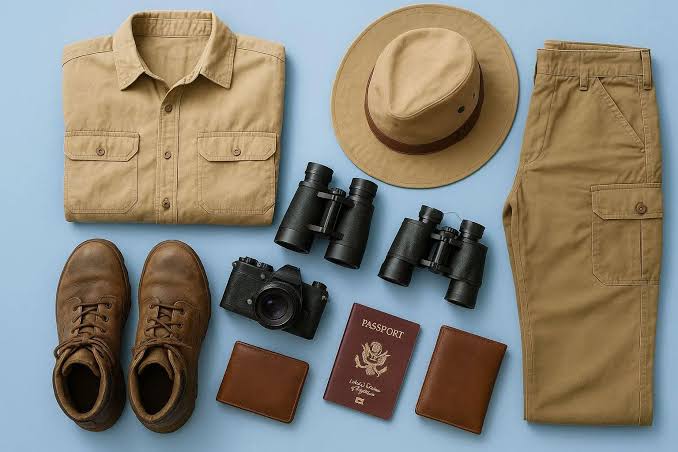
 Long-sleeved safari shirts × 3–4 — your most-used item. Full sleeves protect arms from sun, wind chill on fast game drives, and insects at dusk. Collared shirts protect the back of the neck. Go for lightweight, moisture-wicking fabric that dries overnight
- Short-sleeved shirts × 2 — for midday stops and the hottest hours in lower-altitude parks like Tarangire
- Safari trousers × 2–3 — zip-off convertible trousers are the most versatile item in your kit: trousers for cool mornings and bush walks, shorts when temperatures rise midday. Avoid stiff denim — it is heavy, slow to dry, and uncomfortable on full-day drives
- Warm fleece or lightweight down jacket × 1 — non-negotiable for the Serengeti. Morning game drives in open vehicles at 5:30 AM in July can feel genuinely cold. The Ngorongoro Crater rim is cold enough for a down jacket most months
- Waterproof rain jacket × 1 — packable and lightweight. The wet seasons (March–May, November) bring afternoon downpours. Even in the dry season a rain layer is useful for early morning dew and cold wind at speed
- Casual evening clothes × 2–3 outfits — smart casual is the standard at Tanzania safari lodges. No formal wear is needed; a clean shirt and light trousers or skirt is fine everywhere
- Wide-brimmed hat × 1 — preferably with a strap or chin cord for windy game drives in open vehicles. A brim that blows off is useless
- Buff or neck gaiter × 1 — for dust on long drives, warmth at dawn, and protecting your face during dry season game drives
- Swimwear × 2 — most Serengeti and Ngorongoro lodges have plunge pools. Pack two so one is always dry
 Long-sleeved safari shirts × 3–4 — your most-used item. Full sleeves protect arms from sun, wind chill on fast game drives, and insects at dusk. Collared shirts protect the back of the neck. Go for lightweight, moisture-wicking fabric that dries overnight
Clothing for Walking Safaris
If your itinerary includes a walking safari — and Tanzania’s southern parks offer some of the best walking safari experiences in Africa — you need a few additions to your standard game drive kit. On foot in the bush, long sleeves and covered legs are about more than sun: thorns, nettles, and insects are all more of a factor than from a vehicle.
- Ankle-supporting hiking boots — firmly broken in before you travel. New boots cause blisters; blisters derail a multi-day walking itinerary
- Thick wool or synthetic socks × 3–4 pairs — cushioned, moisture-wicking, and worn with boots to prevent blisters and insect bites at ankle height
- Extra long-sleeved shirt × 1 — dedicated to walking safaris so your clean lodge shirt stays clean
- Lightweight gaiters — useful for tall grass and thorny bush. Some destinations have stinging plants; gaiters protect the gap between boot top and trouser hem
Packing for Zanzibar
A Zanzibar beach extension requires a near-complete wardrobe switch. The Indian Ocean coast is tropical and hot, and the beach vibe is entirely different from the bush. Zanzibar is also a majority-Muslim island — covering up when away from the beach (in Stone Town, local villages, and inland areas) is both respectful and expected.
- Swimwear × 3 — you’ll be in the water often. Three gives you rotation without laundry pressure
- Light cotton or linen clothes — loose, breathable fabrics that handle the humidity. Pack more than you think; the heat and salt air mean you’ll change often
- Sarong or light cover-up × 1–2 — essential for visiting Stone Town’s historic streets, local markets, and any inland areas. A light long skirt or loose trousers work equally well
- Sandals × 1 pair — flip-flops for beach; a slightly more structured sandal for walking Stone Town’s cobblestones
- Light cardigan or long-sleeve layer × 1 — for air-conditioned restaurants and cooler evenings on the terrace
- Reef-safe sunscreen (SPF 50) — the Indian Ocean’s coral reefs are directly damaged by chemical sunscreens. Choose mineral-based (zinc oxide, titanium dioxide) to protect both you and the reef
Check out our guide to things to do in Zanzibar to plan the beach portion of your trip — the island offers far more than sunbathing, from spice farm tours and sunset dhow cruises to world-class snorkelling and diving on Mnemba Atoll.
Photography Gear for Tanzania
Tanzania is among the world’s top wildlife photography destinations. The combination of Serengeti’s open plains (superb for wide-angle landscapes), the density of animals in Ngorongoro Crater, the drama of the Mara River crossing, and the opportunity for aerial shots during a hot air balloon safari over the Serengeti makes this a trip where photography gear genuinely earns its place in your bag.
- Camera with strong ISO performance — dawn light is low; a body that handles ISO 1600–3200 cleanly opens up the golden hour shots
- Telephoto lens (300–600mm) — for wildlife portraits from the vehicle. A 100–400mm zoom is a practical general-purpose option. Pure wildlife photographers often bring a 500mm or 600mm prime
- Wide-angle lens — for Serengeti plains landscapes, sunset silhouettes, balloon safari overhead shots, and environmental shots of lodges at golden hour
- Bean bag lens support — the single most useful safari photography accessory. Laid on the vehicle window frame, it gives you a stable, vibration-absorbing shooting platform. A tripod is impractical in a moving vehicle
- Dust-proof camera bag or cover — Serengeti dry-season dust is extraordinarily fine and pervasive. It penetrates zipped bags and coats sensor elements. A weather-sealed camera body helps; so does keeping your kit covered between shots
- Extra batteries × 3 — cold mornings drain batteries, and long game drives mean you may not be back at the lodge for 8–10 hours
- Large memory cards × 4+ — during a Mara River crossing you will shoot hundreds of frames in minutes. Run out of card here and you will not forgive yourself
- Lens cleaning kit — blower, lens wipes, microfibre cloth. Clean every morning before you head out; dust on the front element creates haze in bright conditions
- Portable power bank — for charging phones and camera batteries on full game drive days away from the lodge
- Universal adapter (Type G, UK-style 3-pin) — Tanzania runs on 240V with UK-type plugs
Health Essentials
- Anti-malarial medication — Tanzania is malaria-endemic throughout the country, including Zanzibar and all safari parks. Start your course before departure as directed by your doctor. Atovaquone/proguanil (Malarone) and Doxycycline are the most commonly prescribed options for Tanzania
- DEET insect repellent (50%) — apply at dawn and dusk when mosquito activity peaks. Combined with long sleeves and trousers at these times, DEET is your most effective protection
- Yellow fever certificate — required at Tanzanian immigration if you are arriving from or transiting through a yellow fever endemic country. If your routing includes Uganda, Kenya, Rwanda, or any South American endemic zone, carry your yellow fever certificate. It will be checked
- First aid kit — blister plasters (especially for walking safari days), ibuprofen, antihistamines, antiseptic wipes, rehydration sachets, and any prescription medication. Remote parks can be hours from medical facilities
- Sunscreen (SPF 50) — the equatorial sun at altitude on Tanzania’s open plains is intense, and game drives expose you directly to it for hours. Reapply every two hours
- Sunglasses (polarised) — reduce glare during dawn and dusk drives when light comes at low angles across the plains. Polarised lenses also improve wildlife visibility through vegetation
- Hand sanitiser × 2 — one for game drive use, one for camp/lodge use. Remote parks have limited running water at picnic sites
Documents and Money
- Passport — valid for at least 6 months beyond your travel dates, with at least one blank page
- Tanzania eVisa — apply online before travel (USD 50 single entry). The East Africa Tourist Visa that covers Uganda, Kenya, and Rwanda does not include Tanzania; Tanzania requires its own visa
- Yellow fever certificate
- Travel insurance documents — medical evacuation cover is essential. Ruaha and Selous are remote; emergency evacuation by charter aircraft to Dar es Salaam is the only option in a serious medical emergency, and it is expensive without insurance
- USD cash (new, clean bills) — the US Dollar is universally accepted across Tanzania’s tourist circuit. Bring a mix of denominations: $1 and $5 bills for tipping guides, trackers, and lodge staff; $20 and $50 for major payments. Post-2009 bills preferred — older notes are often rejected
- Credit/debit card — accepted at quality lodges, Arusha hotels, and Zanzibar resorts. ATM access is limited outside Arusha, Dar es Salaam, and Stone Town
The Bush Flight Luggage Rule: Read This Before You Pack
This is the most important practical constraint on any Tanzania safari packing list. If your itinerary includes charter flights between parks — and most multi-destination itineraries do — you will fly in small bush aircraft operated by companies like Coastal Aviation, Auric Air, or Grumeti Air. Every one of these operators enforces strict luggage limits with no exceptions:
- Maximum 15kg total per person — checked and hand luggage combined. Some operators allow 20kg; confirm with your specific itinerary
- Soft bag mandatory — no hard-shell suitcases. Your bag must be soft-sided so it can be squeezed into the aircraft’s flexible hold. A wheeled bag with protruding rigid wheels may not be accepted even if the shell is soft
- Recommended bag — a collapsible soft duffel bag (50–65L) is the standard Tanzania safari bag. It fits anywhere, weighs less than a wheeled case, and can be squeezed around other passengers’ bags in the hold
If you are arriving in Tanzania with a full-size hard suitcase, most Arusha hotels and Dar es Salaam lodges will store luggage for you while you are on the bush circuit. Decant what you need for safari into a soft duffel at your gateway hotel, leave the rest in storage, and collect it on your return.
Useful Extras Worth Packing
- Binoculars (8×42 or 10×42) — for spotting distant predators on the Serengeti plains and picking out birds across Tanzania’s extraordinary avifauna. A must for anyone interested in Tanzania birding safaris
- Headlamp — for bush camp walks at night and early morning pre-dawn departures. Some remote camps have limited lighting on walkways to dining areas
- Reusable water bottle — Tanzania and Zanzibar both face plastic pollution challenges. Quality lodges provide filtered water refills; bring your own bottle
- Dry bag (small, 5L) — for boat safaris on the Rufiji River in Selous, canoe excursions on Lake Manyara, or Zanzibar dhow trips. Also useful on hot air balloon flights where condensation and dew are a factor at dawn
- Earplugs — the Serengeti at night is extraordinarily alive: lions roaring, hyenas whooping, elephants moving through camp. Beautiful, but not always conducive to sleep if your tent is close to a waterhole
What NOT to Bring to Tanzania
- Camouflage clothing — illegal or heavily restricted across Tanzania and all East African countries. Leave any military-pattern clothing at home; it will be confiscated
- Single-use plastic bags — Tanzania has banned plastic carrier bags. They will be removed at the airport or border crossing. Bring reusable fabric tote bags for shopping and day use
- Flash photography gear — if your Tanzania itinerary includes any chimpanzee trekking at Mahale Mountains or Gombe Stream, flash is prohibited. Standard practice across Tanzania’s wildlife experiences
- Hard-shell suitcases — incompatible with bush flights. See luggage limits above
- Excess valuables — expensive watches, jewellery, and luxury accessories add nothing to a safari and create unnecessary risk. Simple, practical gear is the right call
The Migration: Extra Preparation if You’re Timing Your Trip Around It
If your Tanzania safari is timed around the Great Wildebeest Migration, a few additional notes are worth adding to your packing list. The Mara River crossings happen in the northern Serengeti from roughly July through October. During these months, conditions at the riverbank can be muddy and chaotic — waterproof boots and a dust/splash cover for your camera are both worth having. The fast-action crossing sequences require fast autofocus and burst shooting; make sure your camera’s buffer is cleared and memory cards are fresh each morning you head to the river.
For a full breakdown of when and where the migration moves through the year, read our guide to the best time for the wildebeest migration in Kenya and Tanzania.
Plan Your Tanzania Safari
Tanzania delivers some of the most iconic wildlife experiences on earth — from calving season in the southern Serengeti in February to the dramatic river crossings of the northern Serengeti in August, the overwhelming density of the Ngorongoro Crater, and the untouched wilderness of Ruaha and Selous. Combined with a Zanzibar beach ending, a Tanzania safari itinerary offers genuine variety and memories that last decades.
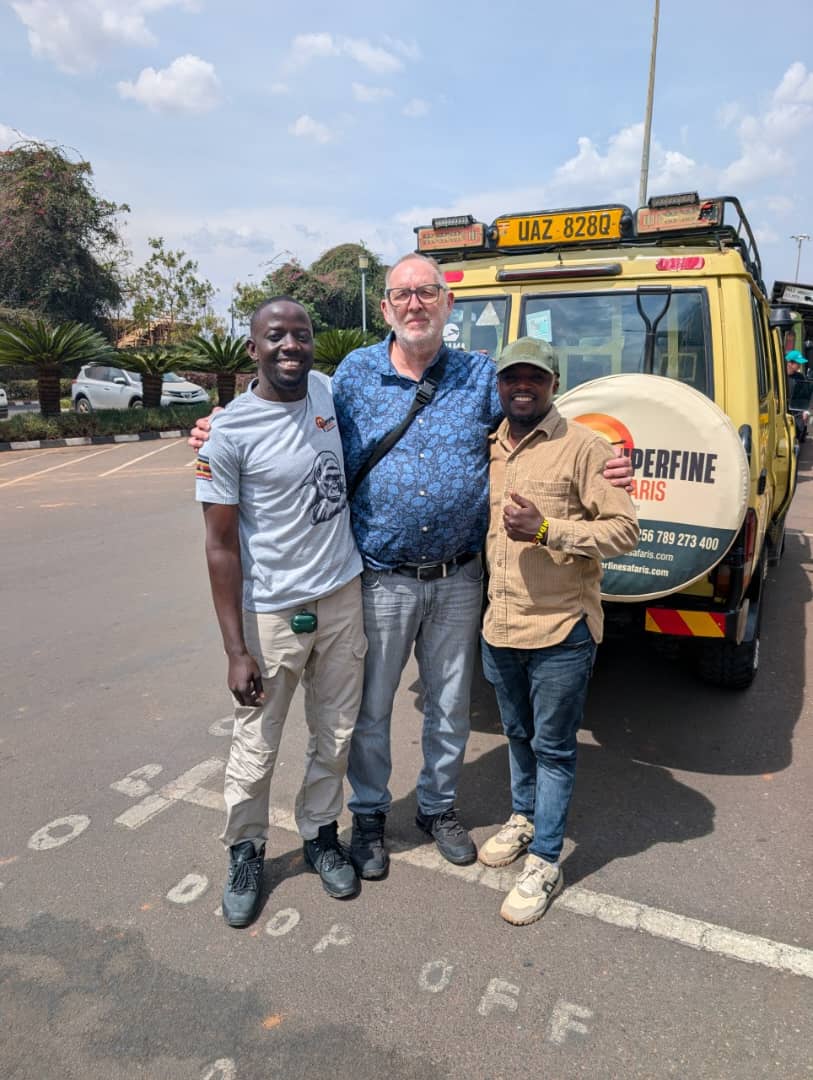
Superfine Safaris Limited builds tailored Tanzania safari itineraries from the northern circuit to the remote south, with or without Zanzibar or Kilimanjaro extensions. Browse our Tanzania safari booking tips and our Tanzania safari itinerary guide, or contact us directly to start planning.