Understanding Tanzania safari regions is the first and most important step in planning a Tanzania trip. Tanzania is the largest country in East Africa and its wildlife areas fall into four distinct geographic circuits, the Northern Circuit, the Southern Circuit, the Western Circuit and the coastal region, each with its own character, its own wildlife, its own travel logistics and its own ideal visitor. The Serengeti and Ngorongoro Crater in the north are among the most famous safari destinations on earth. The southern parks , Nyerere and Ruaha National Parks are wilder, less visited and arguably more rewarding for serious wildlife travellers. The western parks hold some of Africa’s only habituated chimpanzee populations. And the coast, anchored by Zanzibar, offers a natural extension to any safari itinerary. At Superfine Safaris, we plan Tanzania itineraries across all four regions; this guide tells you what each one offers, who it suits, and how to choose between them.
The Four Tanzania Safari Regions at a Glance
| Region | Key Parks | Best Known For | Access |
|---|---|---|---|
| Northern Circuit | Serengeti, Ngorongoro, Tarangire, Lake Manyara | Great Migration, Big Five, Maasai culture | Fly to Kilimanjaro / Arusha |
| Southern Circuit | Nyerere (Selous), Ruaha, Mikumi | Wild dog, walking safaris, remoteness | Fly from Dar es Salaam |
| Western Circuit | Mahale Mountains, Katavi, Gombe Stream | Chimpanzee trekking, Lake Tanganyika | Multi-leg charter flights |
| Coastal / Islands | Zanzibar, Mafia Island, Pemba | Beach, diving, spice culture | Short flight from Dar es Salaam |
The Northern Circuit — Tanzania’s Most Iconic Safari Region
The Northern Circuit is what most people mean when they say “Tanzania safari.” Anchored by the city of Arusha and accessed through Kilimanjaro International Airport, the northern cirucuit contains the parks that define Tanzania’s global safari reputation: the Serengeti ecosystem, the Ngorongoro Conservation Area, Tarangire National Park and Lake Manyara National Park. It is the most visited of Tanzania’s safari regions, with the best infrastructure, the widest range of lodge options and the easiest logistics for first-time Africa travellers.
What the Northern Circuit has that no other Tanzania safari region can match is the Great Wildebeest Migration , the year-round movement of approximately 1.5 million wildebeest through the Serengeti-Mara ecosystem. The specific drama of the migration changes by month: calving on the southern plains from January to March, the Grumeti River crossing in June to July, the famous Mara River crossings from July to October, and the return south from November through December. Planning a Northern Circuit itinerary around a specific migration phase is one of the most rewarding safari planning decisions a traveller can make, and Superfine Safaris designs itineraries around the exact month and movement location for every client.
Serengeti National Park
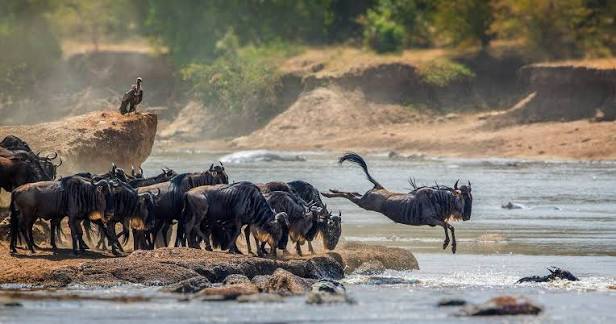 The Serengeti National Park is Tanzania’s largest and most celebrated national park — 14,763 square kilometres of open savannah, acacia woodland and kopje-studded plains that stretch north into Kenya’s Masai Mara. Its name in Maasai means “endless plains,” and the landscape earns it: on the central Seronera grasslands and the southern short-grass plains, the horizon genuinely disappears. The Serengeti holds all five of the Big Five, exceptional predator diversity — lion, leopard, cheetah, wild dog and spotted hyena — and the only annual wildlife migration of its scale anywhere on earth.
Superfine Safaris recommends private concession camps over central Seronera lodges wherever possible in the Serengeti. The concession areas — the Lamai, Sayari and Wogakuria areas in the north, the Namiri Plains in the east for cheetah, the private zones around Ndutu in the south — allow off-road driving, keep visitor numbers low and fund additional conservation in buffer zones outside the park boundary. They represent the best of what the Northern Circuit’s safari regions offer at the high end.
Ngorongoro Conservation Area
The Ngorongoro Crater is one of the world’s most remarkable natural features a collapsed volcano caldera 600 metres deep and 19 kilometres across, containing a self-sustaining ecosystem with an estimated 25,000 large mammals including the highest density of predators in Africa. It is the most reliable place on the continent to see black rhino in the wild, with a population of approximately 26 individuals descended from a handful reintroduced after poaching wiped out the original population. In a single morning’s drive in the crater you can expect to encounter lion, elephant, buffalo, hippo, hyena, jackal and, if luck is with you, a black rhino moving through the short-grass floor.
The Ngorongoro Conservation Area is also the only protected area in East Africa where a permanent human population , the Maasai lives alongside wildlife under an integrated management framework. This is not a compromise: the Maasai’s traditional land-use patterns are part of the ecosystem’s ecological function, and Superfine Safaris includes Maasai community interactions in all Ngorongoro itineraries.
Tarangire National Park
Tarangire National Park is the Northern Circuit’s most underappreciated park, and the one Superfine Safaris most often recommends for travellers who want a less-visited experience within the northern Tanzania safari regions. The park is famous for three things: elephant, baobab trees and exceptional birding. In the dry season (June to October), the Tarangire River is one of the few permanent water sources in a large area, pulling elephant herds of hundreds in from the surrounding wilderness some of the largest elephant gatherings anywhere in Africa. The baobab landscapes of Tarangire’s southern zones are unlike anything in the rest of Tanzania’s northern circuit.
Tarangire is also the best northern Tanzania park for night drives, walking safaris and fly camping — activities that the more crowded Serengeti and Ngorongoro cannot offer at the same quality. Its private concession areas, particularly around Tarangire Hills and the Silale swamps, deliver exceptional dry-season game viewing with the kind of privacy that the main northern Tanzania safari regions rarely provide.
Lake Manyara National Park
Lake Manyara is the smallest and most compact of the Northern Circuit’s parks but one of the most rewarding for its size. The park runs along the base of the Rift Valley escarpment and the alkaline lake it surrounds; its narrow strip of groundwater forest, acacia woodland, open floodplains and lakeside alkaline flats creates remarkable habitat diversity in a small area. Manyara is famous for its tree-climbing lions — a behaviour unique to this park and to Ishasha in Uganda’s Queen Elizabeth National Park — and for flamingo concentrations on the lake when water levels allow. It is typically visited as a half-day or one-night stop between Arusha and the Ngorongoro Crater, and Superfine Safaris includes it on most Northern Circuit itineraries for this reason.
The Southern Circuit — Tanzania’s Wild and Remote Safari Region
The Southern Circuit is where serious wildlife travellers go when the Northern Circuit’s crowds become the story rather than the wildlife. It is less visited, harder to reach and less developed in its infrastructure and all of those qualities are, in the right context, exactly what make it extraordinary. The southern Tanzania safari regions centre on two parks: Nyerere National Park (formerly the Selous Game Reserve) and Ruaha National Park, together forming one of the largest wildlife areas in Africa.
The Southern Circuit is accessed from Dar es Salaam, either by a short charter flight to a bush airstrip or, for Mikumi, by road. Most clients fly. The lodges here are camps rather than permanent lodges — smaller, more intimate, and more genuinely in the landscape — and the game viewing is done by combination of vehicle, boat and on foot, which is not possible in the same way in the northern parks. If you want a Tanzania safari that feels genuinely remote, the southern circuit’s parks are the answer.
Nyerere National Park (Selous)
Nyerere National Park is the largest protected area in Africa, 54,600 square kilometres, roughly the size of Denmark — and one of the least visited for its size. It was known as the Selous Game Reserve for most of its history, renamed Nyerere in 2019 after Tanzania’s founding president. The park contains exceptional concentrations of elephant, buffalo, hippo, crocodile and wild dog — the African wild dog population here is one of the largest on the continent, and Nyerere is one of the most reliable places in Africa to find them. The Rufiji River system, which cuts through the northern section of the park, is the setting for boat safaris that deliver a completely different perspective from the standard vehicle game drive: close approaches to hippo pods, crocodile-lined banks, and an intimacy with the landscape that no vehicle can replicate.
Ruaha National Park
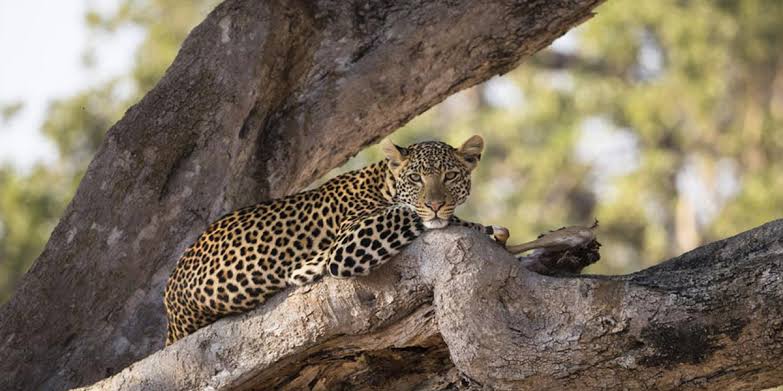 Ruaha National Park is Tanzania’s second-largest national park and, in the view of many experienced safari guides, its finest. It holds Tanzania’s largest elephant population, significant lion and leopard populations, wild dog, both species of kudu, roan and sable antelope — species not found in the northern parks — and the Great Ruaha River as its central feature. The landscape is drier and more dramatic than the north: baobab-studded hills, riverine forests, open miombo woodland and the wide sandy bed of the Ruaha River in the dry season. Ruaha’s size and remoteness mean it is genuinely under-visited — on many game drives you will see no other vehicles — and the walking safari experience here is among the best in Tanzania’s southern safari regions.
Mikumi National Park
Mikumi is the most accessible of the southern Tanzania safari regions — it sits directly on the Dar es Salaam to Zambia highway, a five-hour drive from the coast. It functions primarily as a shorter introduction to Tanzania’s southern wildlife for visitors with limited time, or as a road safari stop on the way to Ruaha. The wildlife is genuine and varied — lion, elephant, giraffe, zebra, wildebeest and hippo all occur in good numbers — but Mikumi’s proximity to the road limits the sense of remoteness that defines the southern circuit at its best. Superfine Safaris includes Mikumi on itineraries that combine a Dar es Salaam start with a Ruaha or Nyerere visit and do not have the time or budget for a charter flight.
The Western Circuit — Tanzania’s Most Exclusive Safari Region
The western Tanzania safari regions sit on the shore of Lake Tanganyika and in the remote wilderness between the lake and the Zambian border. This is the most expensive and logistically demanding part of Tanzania to visit, requiring multiple charter flights and significant advance planning. It is also, for the right traveller, the most extraordinary. The western circuit is where you go for chimpanzee trekking, for encounters with one of the world’s deepest lakes, and for a complete absence of the tourist infrastructure that defines the northern parks. Superfine Safaris plans western circuit itineraries for experienced Africa travellers who want to go beyond the familiar.
Mahale Mountains National Park
Mahale Mountains National Park contains one of Africa’s most habituated chimpanzee communities — the M-group, which has been studied by Japanese researchers since the 1960s and contains approximately 60 individuals. Trekking with them through Mahale’s montane forest, with Lake Tanganyika visible below through the canopy, is one of the most distinctive wildlife experiences available anywhere on earth. There are no roads in Mahale — the only access is by boat across the lake or by charter aircraft — and the lodges on the lakeshore are among the most beautiful and most remote in Africa. Superfine Safaris regards Mahale as one of the world’s great safari experiences and plans it as either a standalone destination or in combination with Katavi and the southern circuit.
Katavi National Park
Katavi is arguably the most remote major national park in Tanzania — far from any city, with a single airstrip and a handful of camps. In the dry season (May to October), the Katuma River and seasonal floodplains contract to isolated pools and hippo wallows, concentrating wildlife at extraordinary densities. Hippo fights, crocodile feeding frenzies and lion prides in the hundreds of individual animals are dry-season Katavi features that no other Tanzania safari region can match. It is not a beginner’s park — the distances are long, the camp conditions are basic by Serengeti standards, and the experience demands an appetite for genuine wilderness — but for clients who have already done the north and south, Katavi changes what they think a safari can be.
Gombe Stream National Park
Gombe is tiny — just 52 square kilometres — and famous for a single reason: it is where Jane Goodall began her chimpanzee research in 1960, a project that transformed the scientific understanding of primate behaviour and still continues today. Trekking with Gombe’s chimpanzees is one of the most historically loaded wildlife experiences in Africa. The park is accessible only by boat along Lake Tanganyika from Kigoma town, which makes it a natural companion to Mahale, and Superfine Safaris combines the two on extended western circuit itineraries for clients who want the complete chimpanzee experience.
The Coastal Region — Beach and Island Tanzania
Tanzania’s coastal safari region is anchored by Zanzibar, one of East Africa’s most recognisable destinations — an archipelago of coral islands off the Tanzanian coast, famous for its historic Stone Town, white-sand beaches, spice plantations and excellent snorkelling and diving. Most Superfine Safaris Tanzania itineraries include a Zanzibar extension: fly from the northern circuit directly to Zanzibar, spend three to five days on the beach, and depart from Zanzibar airport. The combination of a Serengeti safari and a Zanzibar beach week is the single most popular Tanzania itinerary we build, and for good reason — it pairs two entirely different but equally extraordinary experiences in a single trip.
Mafia Island, south of Dar es Salaam, is smaller and quieter than Zanzibar and is the better choice for serious divers: the Mafia Island Marine Park contains some of the best coral reef diving in the Indian Ocean, and whale shark aggregations around the island from October to March attract snorkellers from around the world. Superfine Safaris includes Mafia as an alternative to Zanzibar for clients who prioritise marine wildlife over beach infrastructure.
Pemba Island, north of Zanzibar, is Tanzania’s most remote island destination — less developed, less visited, with exceptional wall diving and a clove-growing culture that predates the tourism industry. It suits travellers who want the Indian Ocean experience without the Zanzibar crowds.
Which Tanzania Safari Region Is Right for You?
The honest answer depends on what you are looking for — and how many times you have been to Africa.
First-time visitors: The Northern Circuit is the right choice. The Serengeti and Ngorongoro deliver the safari benchmark experience — the Big Five, the Migration, the landscape — with reliable logistics and a wide range of lodge options at every price point. Add Tarangire for elephant and birding, Zanzibar for the beach, and you have a complete Tanzania trip. See our 5-day Tanzania itinerary and 7-day Tanzania itinerary for how we build the northern circuit.
Repeat visitors and serious wildlife travellers: The Southern Circuit is where the Northern Circuit’s crowd-free alternative lives. Nyerere’s wild dog and boat safaris, Ruaha’s elephant and kudu, Mahale’s chimpanzees — these are experiences with no equivalent in the north. Superfine Safaris builds southern circuit itineraries from 7 days upward; they require more planning lead time than the north and are suited to clients who have already established their Africa baseline.
Families and honeymoon travellers: The Northern Circuit with a Zanzibar beach extension is the most natural Tanzania itinerary for both. Families appreciate the Northern Circuit’s reliable game viewing and the beach end; honeymoon couples value the combination of Serengeti intimacy and Zanzibar romance. Our 10-day Tanzania itinerary covers both.
Adventure travellers: The Western Circuit — Mahale, Katavi, Gombe — combined with a northern circuit foundation trip is the most ambitious Tanzania itinerary we build. It requires 12 to 14 days minimum and a budget that reflects the charter-only access to western parks. Contact Superfine Safaris to plan a western circuit itinerary; it is not a trip we recommend designing without specific guidance on logistics and timing.
Best Time to Visit Each Tanzania Safari Region
| Region | Peak Season | Why | Green Season Value |
|---|---|---|---|
| Northern Circuit | Jun–Oct | Dry, Mara River crossings Jul–Oct | Jan–Mar: calving on southern plains |
| Ngorongoro Crater | Year-round | Self-contained ecosystem | Apr–May: lush, fewer visitors |
| Tarangire | Jun–Oct | Dry season elephant concentrations | Nov–Dec: newborn wildlife, birding |
| Nyerere (Selous) | Jun–Oct | Dry, boat safaris best | Dec–Mar: green, excellent birding |
| Ruaha | Jun–Oct | River concentrates wildlife | Nov–Dec: lush, fewer visitors |
| Mahale / Western | May–Oct | Dry season, Tanganyika calm | Jul–Aug: peak for chimps and lake |
| Zanzibar / Coast | Jun–Oct, Dec–Mar | Dry and warm, calm Indian Ocean | Avoid Apr–May (long rains) |
See our full Tanzania safari guide for a detailed month-by-month breakdown of conditions across all regions.
Combining Tanzania’s Safari Regions
The most rewarding Tanzania itineraries combine more than one region. The classic combination is the Northern Circuit plus Zanzibar — achievable in 7 to 10 days and covering the two most distinctive Tanzania experiences in a single trip. The more ambitious combination is the Northern Circuit plus Southern Circuit — covering the Serengeti and Ngorongoro in the north, then flying south to Nyerere or Ruaha for the wild-dog and boat-safari experience. This requires 10 to 14 days and rewards the planning effort significantly.
Combining Tanzania’s regions with Kenya is another natural extension: the Serengeti and the Masai Mara share the same ecosystem, and a safari that crosses the border in either direction — beginning in Arusha, ending in Nairobi, or vice versa — gives you the Migration story from both sides. Superfine Safaris builds these cross-border itineraries regularly and handles all logistics for the Namanga border crossing or the Kenya-Tanzania charter flight route. See our 10-day Tanzania itinerary for examples of how we structure these combinations.
How Superfine Safaris Plans Tanzania Safari Region Itineraries
Superfine Safaris plans Tanzania itineraries with a specific focus on which Tanzania safari region suits each client’s priorities, travel dates and budget. We do not default to the Northern Circuit simply because it is the most famous. For clients who value privacy over iconic landscapes, we recommend the southern or western circuits. For clients on a first Africa trip, we build Northern Circuit itineraries around the specific migration phase that will be active during their dates. For clients combining Tanzania with Kenya, Rwanda or Uganda, we design the routing to minimise transit time and maximise wildlife time in each destination.
Every Superfine Safaris Tanzania itinerary includes private concession lodges wherever available — properties whose conservation levy structures, community employment depth and environmental practices we have evaluated independently. We do not include lodges simply because they are well-reviewed. Contact Superfine Safaris to start planning your Tanzania safari across any combination of the country’s four major regions.
Frequently Asked Questions: Tanzania Safari Regions
What are the main Tanzania safari regions? Tanzania has four main safari regions: the Northern Circuit (Serengeti, Ngorongoro, Tarangire, Lake Manyara), the Southern Circuit (Nyerere, Ruaha, Mikumi), the Western Circuit (Mahale Mountains, Katavi, Gombe Stream) and the coastal region (Zanzibar, Mafia Island, Pemba). Each offers a different wildlife experience, different logistics and a different character.
Which Tanzania safari region is best for first-time visitors? The Northern Circuit. It has the most reliable game viewing, the best infrastructure and the widest range of lodge options. The Serengeti and Ngorongoro Crater are world-class safari destinations for good reason, and the logistics are straightforward for first-time Africa visitors. Add Zanzibar for the beach extension and you have a complete Tanzania first trip.
Which Tanzania safari region is best for seeing the Great Migration? The Northern Circuit — specifically the Serengeti. The calving season on the southern Serengeti plains runs from January to March; the dramatic Mara River crossings happen from July to October in the northern Serengeti near the Kenya border. The specific region within the Serengeti to be in depends entirely on the time of year.
Is the Southern Circuit better than the Northern Circuit? Not better — different. The Southern Circuit’s Nyerere and Ruaha parks offer wild dog, walking safaris, boat safaris and genuine remoteness that the north cannot match. But the Northern Circuit’s Migration, Ngorongoro Crater and Big Five reliability are unequalled elsewhere. Many experienced travellers prefer the south precisely because it lacks the north’s crowds; many first-time visitors prefer the north because the experience is more certain. Superfine Safaris helps clients identify which matches their priorities.
What is the Western Circuit and is it worth visiting? The Western Circuit — Mahale Mountains, Katavi and Gombe Stream — is Tanzania’s most remote and most expensive safari region. It requires charter flights, significant advance planning and a higher budget than the northern or southern circuits. For the right traveller — particularly those interested in chimpanzee trekking, Lake Tanganyika and genuinely off-the-beaten-track Africa — it is extraordinary. Superfine Safaris plans western circuit itineraries but recommends it specifically for clients with prior East Africa experience.
Can I combine multiple Tanzania safari regions in one trip? Yes, and Superfine Safaris regularly designs itineraries that do this. The most popular combination is the Northern Circuit plus Zanzibar (7–10 days). The most ambitious is Northern plus Southern or Western (12–14 days). Combining Tanzania with Kenya by crossing the Serengeti-Mara border is also a natural itinerary. See our 7-day Tanzania itinerary and 10-day Tanzania itinerary for examples.