Chimpanzee filming in Kibale Forest National Park is an exciting opportunity for wildlife filmmakers, documentary producers, photographers and conservation organizations interested in capturing wild chimpanzees in their natural habitat. Located in western Uganda, Kibale Forest is one of Africa’s most important primate destinations, famous for its large chimpanzee population, diverse forest ecosystem and long-standing primate research programs. Its habituated chimpanzee communities provide opportunities to document different aspects of chimpanzee behavior, from feeding and grooming to social interactions, communication and movement through the forest canopy.
For filmmakers planning a wildlife documentary or professional production, Kibale Forest National Park offers more than an opportunity to observe chimpanzees. It provides a natural setting for telling stories about primate behavior, forest conservation, biodiversity and the relationship between wildlife and surrounding communities. However, chimpanzee filming requires careful preparation, appropriate permissions and respect for wildlife protection regulations.
At Superfine Safaris Limited, we help international visitors and wildlife enthusiasts organize chimpanzee experiences in Kibale Forest National Park. We can assist with accommodation, transportation, chimpanzee activity arrangements and safari logistics for visitors planning photography expeditions, wildlife documentaries and primate-focused holidays.
Why go for Chimpanzee Filming in Kibale Forest National Park?
Kibale Forest National Park is among the most recognized chimpanzee destinations in Africa. Situated near Fort Portal in western Uganda, the park protects approximately 795 square kilometres of tropical rainforest, woodland and other natural habitats.
The forest supports an impressive variety of wildlife, including 13 recorded primate species. Its chimpanzee population makes it particularly attractive to filmmakers interested in observing and documenting wild primates.
There are several reasons why chimpanzee filming in Kibale is worth considering.
A significant chimpanzee population: Kibale is home to a substantial population of wild chimpanzees, including communities that have become accustomed to the presence of researchers and authorised visitors.
Habituated chimpanzee communities: Habituation allows researchers and authorised observers to follow chimpanzees more consistently, creating opportunities to document their natural behaviour without deliberately interfering with their activities.
Diverse chimpanzee behaviour: Filmmakers may have opportunities to capture feeding, grooming, communication, maternal care, territorial displays and interactions between different members of a chimpanzee community.
Rich forest biodiversity: Beyond chimpanzees, Kibale supports numerous other primates, forest birds, butterflies and plant species that can add valuable context to a wildlife documentary.
Research and conservation opportunities: The park’s history of primate research provides an important foundation for documentary projects exploring chimpanzee conservation, forest ecology and wildlife protection.
Chimpanzee Filming Opportunities in Kibale Forest
Chimpanzee filming in Kibale can take different forms depending on the objectives of the production, the filming permissions granted and the availability of authorised access to particular locations.
Chimpanzee Filming During the Habituation Experience
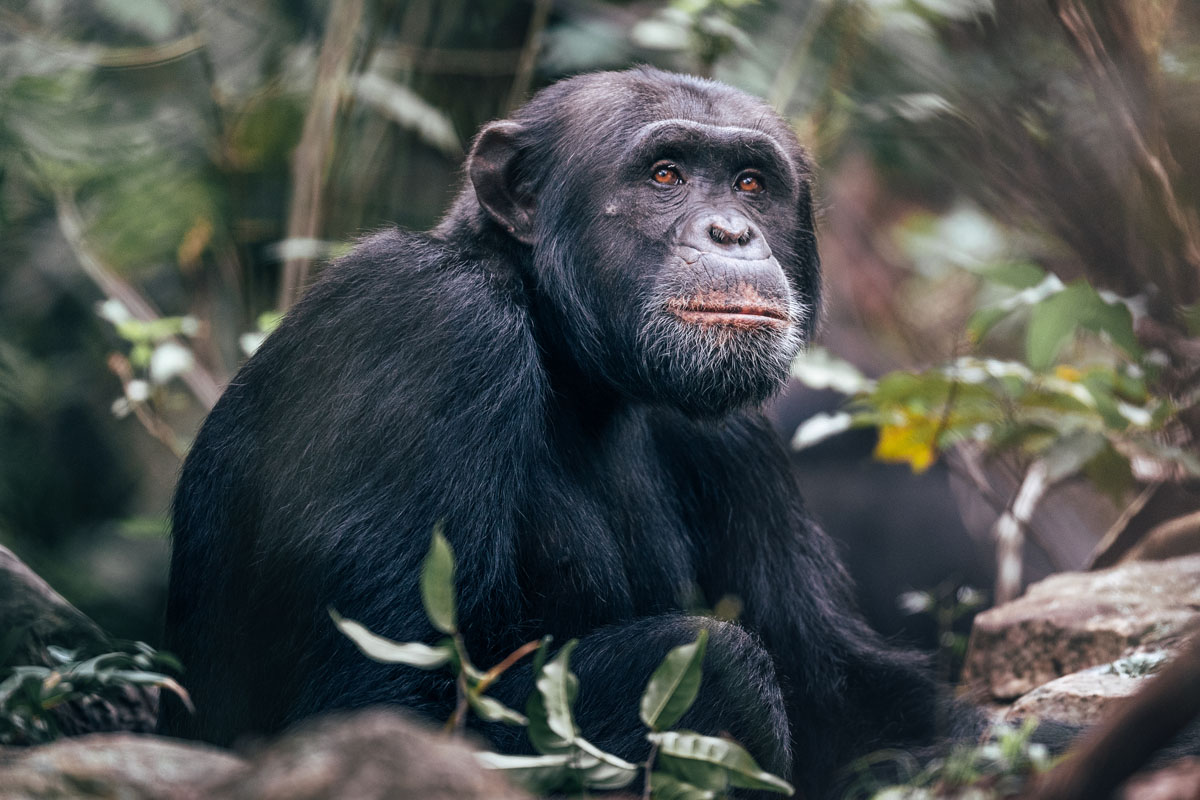 The Chimpanzee Habituation Experience is one of the most interesting activities for visitors hoping to understand chimpanzee behaviour in Kibale Forest.
Unlike standard chimpanzee trekking, which provides a maximum of one hour with the chimpanzees, the habituation experience allows visitors up to four hours observing a semi-habituated chimpanzee community.
During this experience, participants may observe chimpanzees as they move through the forest, search for food, interact with other individuals and engage in different social activities.
For wildlife filmmakers, these extended observation opportunities can provide useful insights into chimpanzee behaviour.
Possible filming subjects include:
- Chimpanzees feeding on wild fruits and vegetation.
- Mothers caring for their infants.
- Grooming and social bonding.
- Chimpanzees communicating through calls and gestures.
- Young chimpanzees playing and interacting.
- Chimpanzees travelling through the forest canopy.
- Nest building and resting behaviour.
The habituation experience is particularly interesting for productions focusing on chimpanzee social structures and daily activities.
However, participating in the Chimpanzee Habituation Experience does not automatically grant permission to undertake professional or commercial chimpanzee filming. Production teams must obtain the relevant filming approval separately.
Chimpanzee Filming During Standard Chimpanzee Trekking
Standard chimpanzee trekking is another way to experience the chimpanzees of Kibale Forest.
The activity begins at the Kanyanchu visitor centre, where visitors receive a briefing before entering the forest with experienced park guides and trackers.
Once the chimpanzees are located, visitors are allowed a maximum of one hour to observe them, subject to park regulations.
This experience can provide opportunities to capture chimpanzees feeding, grooming, playing and interacting within their natural environment.
Standard trekking is primarily a tourism activity rather than a dedicated professional filming programme. Visitors interested in taking personal photographs or videos should follow the applicable visitor guidelines, while professional documentary teams must arrange the necessary filming permissions in advance.
Professional Chimpanzee Documentary Filming
Kibale is an important location for wildlife documentaries exploring chimpanzee behaviour, primate conservation and tropical rainforest ecosystems.
Professional production companies may be interested in developing documentaries around subjects such as:
- The daily lives of wild chimpanzees.
- Chimpanzee family relationships and social structures.
- Communication and intelligence among chimpanzees.
- The relationship between chimpanzees and their forest habitat.
- Chimpanzee conservation in Uganda.
- Research and habituation programmes.
- Threats facing chimpanzees and other forest wildlife.
Professional chimpanzee filming requires more detailed preparation than an ordinary wildlife visit. Production teams should establish the intended filming locations, equipment requirements, crew size and filming schedule before applying for permission.
Where filming involves research activities, additional coordination with the responsible research institutions may be necessary.
Chimpanzee Filming for Conservation and Educational Projects
Kibale also offers opportunities for educational and conservation-focused productions.
These projects may document the importance of protecting chimpanzee habitats, the work of conservation organizations and the role of surrounding communities in safeguarding wildlife.
Filmmakers can explore themes such as forest conservation, sustainable tourism, environmental education and the relationship between people and wildlife.
Depending on the approved production programme, supporting footage may include forest landscapes, conservation activities, local community initiatives and other biodiversity within the Kibale ecosystem.
Chimpanzee Filming Permits and Requirements in Uganda
Obtaining the appropriate authorization is one of the most important steps when planning chimpanzee filming in Kibale Forest National Park.
The requirements depend on the nature of the production. Personal photography, educational projects, academic research and commercial documentaries may be subject to different conditions.
Uganda Wildlife Authority Filming Permission
Kibale Forest National Park is managed by the Uganda Wildlife Authority (UWA). Filmmakers intending to undertake professional wildlife filming within the park should contact UWA to establish the applicable filming authorisation, fees and conditions.
A production application may require information about:
- The purpose and subject of the documentary.
- Proposed filming dates and duration.
- The number of production crew members.
- Camera and sound recording equipment.
- Intended filming locations.
- The type of production, whether commercial, educational or non-commercial.
- Any specialized filming activities.
UWA determines the applicable conditions and access arrangements. A standard chimpanzee trekking or habituation permit should not be assumed to cover professional filming.Uganda Filming Production Requirements
International and local production teams should also establish whether they require a filming production permit through the Uganda Communications Commission (UCC).
The applicable requirements can depend on the production type, ownership, distribution and nature of the project.
It is advisable to confirm the relevant procedures before travelling to Uganda, allowing enough time for applications and any additional documentation.
Research and Institutional Permissions
Some filming projects may involve research locations or scientific activities within Kibale.
For example, the Kanyawara research area has a long history of chimpanzee research associated with the Makerere University Biological Field Station.
If your documentary involves researchers, research facilities or activities at a particular study site, you should coordinate with the responsible institution and obtain any additional permissions required.
Drone Filming and Specialised Equipment
 Drone filming in Kibale requires particular attention because aerial operations within protected wildlife areas are subject to restrictions and additional authorisation.
Production teams planning to use drones, specialised lighting, large camera rigs or other technical equipment should declare these requirements when making their applications.
Permission to undertake ground-based chimpanzee filming does not automatically authorise drone operations.
Rules and Ethical Considerations for Chimpanzee Filming
Chimpanzees are endangered great apes with complex social structures and behaviours. Their protection must remain the priority during every filming activity.
Professional filmmakers and visitors should observe the following principles.
Maintain the required viewing distance: Follow the minimum distance requirements and instructions provided by park authorities and guides. Never approach chimpanzees simply to obtain close-up footage.
Avoid disturbing natural behavior: Do not chase, surround, shout at or attempt to attract chimpanzees for better camera shots.
Do not use flash photography: Flash can disturb wildlife and should not be used during chimpanzee viewing.
Never feed or touch chimpanzees: Human food and physical contact can expose chimpanzees to diseases and interfere with their natural behaviour.
Follow the instructions of authorised guides: Filming should take place only within approved areas and under the conditions established by the relevant authorities.
Observe health precautions: Chimpanzees are vulnerable to several human respiratory diseases. Anyone who is unwell should follow the park’s health restrictions.
Protect the forest environment: Avoid littering, damaging vegetation or leaving equipment and other materials behind.
Ethical chimpanzee filming is essential for ensuring that wildlife documentaries and photography projects contribute to conservation awareness without compromising animal welfare.
Best Time for Chimpanzee Filming in Kibale Forest
Chimpanzee filming in Kibale can be organised throughout the year, subject to filming approval and availability. However, seasonal weather conditions can influence the filming experience.
June to September: These are generally drier months, with conditions that can make moving through the forest easier for filmmakers carrying cameras and other equipment.
December to February: Another relatively dry period that is suitable for wildlife observation and forest exploration.
March to May: These months generally receive more rainfall. The forest becomes particularly lush, although wet conditions can make carrying filming equipment and navigating forest trails more challenging.
October to November: These months also experience considerable rainfall, but filming remains possible with suitable preparation and waterproof equipment.
There is no guaranteed season for capturing particular chimpanzee behaviours. Feeding patterns, movement and social interactions depend on several natural factors, including fruit availability and the activities of individual chimpanzee communities.
For this reason, professional production teams should allow sufficient time for filming rather than relying on a single encounter.
What Equipment Do You Need for Chimpanzee Filming?
Preparing the right equipment is essential for a successful chimpanzee filming expedition in Kibale.
The rainforest presents different filming challenges, including changing light conditions, dense vegetation, humidity and occasional rainfall.
A professional filming team may need:
- Professional video cameras.
- Telephoto and zoom lenses.
- Tripods and monopods, where permitted.
- Extra camera batteries.
- Memory cards and portable storage devices.
- Waterproof camera covers.
- Lens cleaning equipment.
- Audio recording equipment.
- Headphones.
- Protective equipment bags.
Personal essentials are equally important. Waterproof hiking boots, long-sleeved clothing, lightweight rain jackets, insect repellent and a comfortable backpack can make moving through the forest easier.
All equipment should be declared and approved where required. Filmmakers should confirm restrictions on lighting, tripods, audio equipment and other specialised accessories before their visit.
How Many Days Are Needed for Chimpanzee Filming in Kibale?
The duration of a chimpanzee filming expedition depends on the production objectives and the type of footage required.
For a short wildlife filming project, two to three days in the Kibale area may provide a useful starting point, excluding long-distance transfers.
For a professional documentary requiring different behavioural scenes, interviews, conservation footage and supporting wildlife sequences, a longer stay is advisable.
A sample four-day filming itinerary could look like this:
Day 1: Arrival in Kibale Forest
Transfer to Kibale, check into your accommodation and prepare filming equipment. The production team can also review the filming programme and confirm arrangements with the relevant authorities.
Day 2: Chimpanzee filming
Undertake approved chimpanzee filming activities, accompanied by authorised park personnel. Focus on the specific subjects and behaviours covered by the filming programme.
Day 3: Additional chimpanzee and wildlife filming
Continue with approved filming activities. Depending on the production objectives, capture additional footage of other primates, forest vegetation and biodiversity.
Day 4: Supporting footage and departure
Capture any remaining approved scenes, conservation-related material or community footage before departing Kibale.
The actual filming schedule must be agreed upon with the relevant authorities. Ordinary visitor viewing limits should not be exceeded without specific authorization.
Where to Stay During a Chimpanzee Filming Expedition
Choosing suitable accommodation is an important part of planning chimpanzee filming in Kibale. Production teams need comfortable rooms, reliable meals and convenient access to the forest.
Some accommodation options around Kibale include:
Primate Lodge Kibale: Located within the forest environment near the Kanyanchu visitor centre, it is a convenient choice for visitors participating in chimpanzee activities.
Ndali Lodge: Situated near the Ndali-Kasenda crater lakes, this lodge offers scenic accommodation overlooking the surrounding landscape.
Kyaninga Lodge: Known for its elevated location and views of Lake Kyaninga and the Rwenzori Mountains, it is an appealing option for travellers seeking a high-end stay.
Turaco Treetops: Located near Kibale Forest, it offers accommodation surrounded by natural vegetation and is suitable for visitors exploring the area.
Chimpanzee Forest Guesthouse: Provides accommodation near the park and is worth considering for travellers looking for a comfortable stay.
For larger production teams, we recommend confirming room availability, equipment storage, meal arrangements and transport schedules before finalising accommodation.
Other Wildlife Filming Opportunities Around Kibale
Although chimpanzees are the main attraction, Kibale offers opportunities to capture other wildlife and natural features that can enrich a documentary.
The park is home to several primate species, including red colobus monkeys, black-and-white colobus monkeys, L’Hoest’s monkeys, blue monkeys, red-tailed monkeys and grey-cheeked mangabeys.
Wildlife filmmakers may also be interested in documenting forest birds, butterflies, insects, indigenous trees and the rainforest ecosystem.
Bigodi Wetland Sanctuary, located outside the national park, offers additional opportunities for birdwatching, nature photography and community-based conservation stories. Separate filming arrangements may be required.
Combining chimpanzee filming with these additional subjects can provide a broader picture of Kibale’s ecological importance.
Organizing Chimpanzee Filming in Kibale with Superfine Safaris Limited
Planning a chimapanzee filming expedition requires more than choosing a destination. Accommodation, transportation, filming schedules, equipment preparation and wildlife access arrangements must all be considered.
At Superfine Safaris Limited, we organise tailor-made travel arrangements for visitors exploring Kibale Forest National Park and other wildlife destinations in Uganda.
We can assist with:
- Transportation from Entebbe or Kampala to Kibale.
- Accommodation arrangements near the national park.
- Chimpanzee tracking and habituation experience bookings.
- Safari logistics for wildlife photographers and production teams.
- Coordination of travel arrangements around approved filming programmes.
- Experienced driver-guides familiar with western Uganda.
- Extended primate and wildlife safaris across Uganda.
For professional productions, we can help coordinate the travel arrangements while the required filming permissions are obtained from the responsible authorities.
Whether you are producing a chimpanzee documentary, planning a conservation project or organising a wildlife photography expedition, Superfine Safaris Limited can help make your visit to Kibale more convenient.
Contact Superfine Safaris Limited to plan your chimpanzee filming trip in Kibale Forest National Park, Uganda.
Frequently Asked Questions About Chimpanzee Filming in Kibale
- Can I undertake chimpanzee filming in Kibale Forest National Park?
Yes. Chimpanzee filming is possible, provided the appropriate permissions and filming conditions are obtained from the Uganda Wildlife Authority and other relevant authorities where applicable.
- Do I need a special permit for chimpanzee filming in Kibale?
Professional and commercial filming generally requires specific filming authorization. A standard chimpanzee trekking or habituation permit does not automatically cover professional documentary production.
- Can I film chimpanzees during the habituation experience?
The habituation experience provides up to four hours of observation with a semi-habituated chimpanzee community. However, professional filming must be separately authorised, and participants must follow the conditions established by UWA.
- How long can I film chimpanzees in Kibale?
Standard chimpanzee trekking allows a maximum of one hour with the chimpanzees, while the habituation experience allows up to four hours. Professional productions must obtain specific approval for any alternative arrangements.
- Can international production companies film chimpanzees in Uganda?
Yes. International production companies can organise wildlife documentaries and other approved filming projects in Uganda, subject to the applicable production and wildlife filming requirements.
- Can I use drones for chimpanzee filming in Kibale?
Drone operations require additional authorisation. Filmmakers must establish the applicable wildlife and aviation requirements before planning aerial filming within or around the national park.
- What is the best time for chimpanzee filming in Kibale?
June to September and December to February are generally drier periods and can be more convenient for filming crews. However, chimpanzee filming is possible throughout the year, depending on weather conditions and filming approval.
- Can I combine chimpanzee filming with gorilla trekking in Uganda?
Yes. You can combine your Kibale filming expedition with mountain gorilla trekking in Bwindi Impenetrable National Park. Other possible additions include Queen Elizabeth National Park, Lake Bunyonyi and Lake Mburo National Park.