The Nairobi to Masai Mara drive is one of the most popular road journeys in East Africa and one of the most rewarding. The route takes you from Kenya’s modern capital through the dramatic Great Rift Valley escarpment and into the vast, wildlife-filled grasslands of the Mara ecosystem. Whether you are driving yourself or travelling with a guide, understanding the Nairobi to Masai Mara drive in advance makes for a smoother, more enjoyable journey. This guide covers the route options, road conditions, distances, timings, and everything else you need to know.
Distance and Journey Time from Nairobi to Masai Mara
The distance to Masai Mara main gate entrances from Nairobi is approximately 270–330 km depending on the route and specific gate you are heading to. Under good conditions with an early start, the Nairobi to Masai Mara drive takes 5–6 hours by road — though this can extend to 7–8 hours during the long rains when murram (unpaved) sections become difficult.
Many travellers choose to fly rather than drive — charter flights from Wilson Airport in Nairobi take just 45 minutes. If time is limited on your safari, flying is the better option. If you want to experience the landscape and have the flexibility of a vehicle at your destination, the Nairobi to Masai Mara drive is a genuinely scenic and rewarding journey.
The Two Main Drive Routes from Nairobi to Masai Mara
Route 1: Via Narok (Most Common)
The most widely used Nairobi to Masai Mara drive route runs southwest from Nairobi on the B3 highway through Kikuyu and Naivasha, descends the Rift Valley escarpment past the stunning viewpoints above Lake Naivasha, and continues through the agricultural town of Narok, the last major stop for fuel, groceries, and supplies before the Mara. From Narok, the route continues south on a murram road for approximately 90 km to the Sekenani Gate (the main eastern entrance to Masai Mara National Reserve).
Key landmarks on this Nairobi to Masai Mara drive route:
- Rift Valley Escarpment viewpoint (approx. 60 km from Nairobi): Pull over at the escarpment viewpoint above Naivasha for a dramatic panorama across the Rift Valley floor. On clear mornings, Mount Longonot volcano is visible rising from the valley.
- Naivasha town (approx. 90 km): Optional stop at Lake Naivasha for a brief boat trip or to visit the Crescent Island game sanctuary — a worthwhile addition if your Nairobi to Masai Mara drive schedule permits.
- Narok town (approx. 160 km): Fill up with fuel here — it is the last reliable fuel stop before the Mara. Stock up on snacks and water if you have not already.
- Sekenani Gate (approx. 270 km): The main Masai Mara entrance from the Narok direction. Pay park fees here (USD 80 per person per day for non-residents) and collect your receipt.
Route 2: Via Bomet and Mara Entrance Gates (Western Approach)
An alternative Nairobi to Masai Mara drive route runs via the A104 southwest through Narok and continues to Bomet and Kilgoris, entering the Mara through the Oloololo (Musiara) or Olare Orok gates on the western and northern sides. This route is longer (approximately 330–350 km) but gives access to the northern Mara, which borders the conservancies and is closest to the famous Mara River crossing points. If your camp is in the Mara Triangle or the northern conservancies, this western route may be more direct than approaching via Sekenani.
Road Conditions from Nairobi to Masai Mara
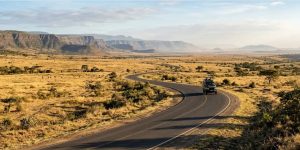 Road conditions vary significantly on the Nairobi to Masai Mara drive depending on the season and the specific section of road:
- Nairobi to Narok (B3 highway): Fully paved and generally in good condition. The main challenge is traffic leaving Nairobi — departing before 06:30 avoids the worst congestion.
- Narok to Sekenani Gate (murram road): This 90 km section is unpaved and the condition varies dramatically by season. In the dry season (June–October, January–February), the road is firm and passable in a standard 4WD. During the long rains (March–May), sections can become deeply rutted and require a high-clearance 4WD. Some sections have been graded and improved in recent years, but always check current road conditions with your operator before travel.
- Vehicle requirement: A 4WD vehicle is essential for the Nairobi to Masai Mara drive — standard saloon cars are not suitable for the murram sections regardless of season.
Departure Time Advice
Getting the timing right on the Nairobi to Masai Mara drive significantly improves the experience:
- Depart Nairobi by 06:00–06:30: Nairobi traffic is heavy from 07:00 onwards. An early departure clears the city before congestion builds and allows you to arrive at the Mara in time for an afternoon game drive — almost always worth the early start.
- Allow 6–7 hours total: Budget 5–6 hours driving plus 30–60 minutes for stops at the Rift Valley viewpoint, Narok fuel stop, and gate check-in.
- Avoid driving after dark in the Mara: Night driving inside the reserve is not permitted, and driving on murram roads after dark outside the reserve is inadvisable. Arrive at your camp before dusk.
What to See on the Nairobi to Masai Mara Drive
The drive is not simply a transfer, the route passes through some genuinely interesting landscapes and communities:
- Rift Valley escarpment: The descent from the highlands into the Rift Valley is one of Kenya’s most dramatic road experiences — the valley floor opens up over 600 metres below, with the lake glinting in the distance and volcanic mountains rising from the flat valley floor.
- Maasai homesteads and livestock: From Narok southward, the landscape becomes increasingly Maasai — red-robed herders with cattle, goats, and camels, traditional circular bomas (homesteads), and hand-painted roadside signage. This is the cultural world the Masai Mara’s Maasai wildlife guardians inhabit year-round.
- First wildlife sightings: Giraffe, zebra, and Thomson’s gazelle are frequently seen from the road in the final 30–40 km before Sekenani Gate, as the landscape transitions into open savannah. The anticipation this creates makes the final section of the Nairobi to Masai Mara drive particularly exciting.
Fly vs Drive Options from Nairobi to Masai Mara
Both options have genuine advantages on the Nairobi to Masai Mara route:
- Flying (Wilson Airport to Mara airstrip): 45 minutes, USD 180–250 per person one way on scheduled services, more on charter. Dramatic aerial views over the Rift Valley. Saves 10–12 hours of road travel across a round trip — equivalent to an entire game drive day. Best option for shorter itineraries.
- Driving the Nairobi to Masai Mara route: More affordable, provides maximum flexibility for stops and detours, allows you to bring more luggage (flights have strict 15 kg weight limits), and delivers the genuine road-trip experience through the Rift Valley. Best for travellers with 3+ days in the Mara who want the full experience.
Combining Masai Mara with Other Parks
The Nairobi to Masai Mara drive route passes close to several other excellent wildlife destinations that can be incorporated into a Kenya safari itinerary:
- Lake Naivasha: A 2–3 hour detour from the main Nairobi to Masai Mara drive route. Excellent for hippos, fish eagles, and the Crescent Island walking safari.
- Lake Nakuru National Park: A 1.5-hour detour northwest of Naivasha. Flamingo spectacles, white rhino, lions, and leopards in a compact park — a worthwhile addition if your Kenya safari itinerary includes a night near the lake.
- Amboseli National Park: A separate 4-hour drive southeast of Nairobi rather than on the Masai Mara route, but easily combined as a Kenya circuit — Nairobi to Amboseli, then Amboseli to Masai Mara via Narok.
Plan Your Nairobi to Masai Mara Safari
Whether you drive the Nairobi to Masai Mara route in a private 4WD with a guide or fly in on a morning charter, the Masai Mara awaits with some of the finest wildlife watching in Africa. Contact our team to plan your Kenya safari itinerary — we will advise on the best Nairobi to Masai Mara drive timing for your dates and design an itinerary that makes the most of every day in the Mara ecosystem.