
Ol Pejeta Conservancy on the Laikipia plateau is Kenya’s most important rhino sanctuary and one of the most rewarding wildlife destinations in the country. Located 200 kilometres north of Nairobi between the Aberdare Range and Mount Kenya, this 90,000-acre conservancy is home to the world’s last two northern white rhinos — Najin and Fatu, mother and daughter, the sole surviving members of their subspecies — as well as one of East Africa’s largest black rhino populations and the full complement of Laikipia wildlife including lion, leopard, cheetah, elephant, buffalo and Grevy’s zebra. For travellers building a Kenya safari itinerary that goes beyond the Masai Mara, Ol Pejeta Conservancy delivers conservation significance and wildlife density in equal measure.
The Equator and the Laikipia Plateau
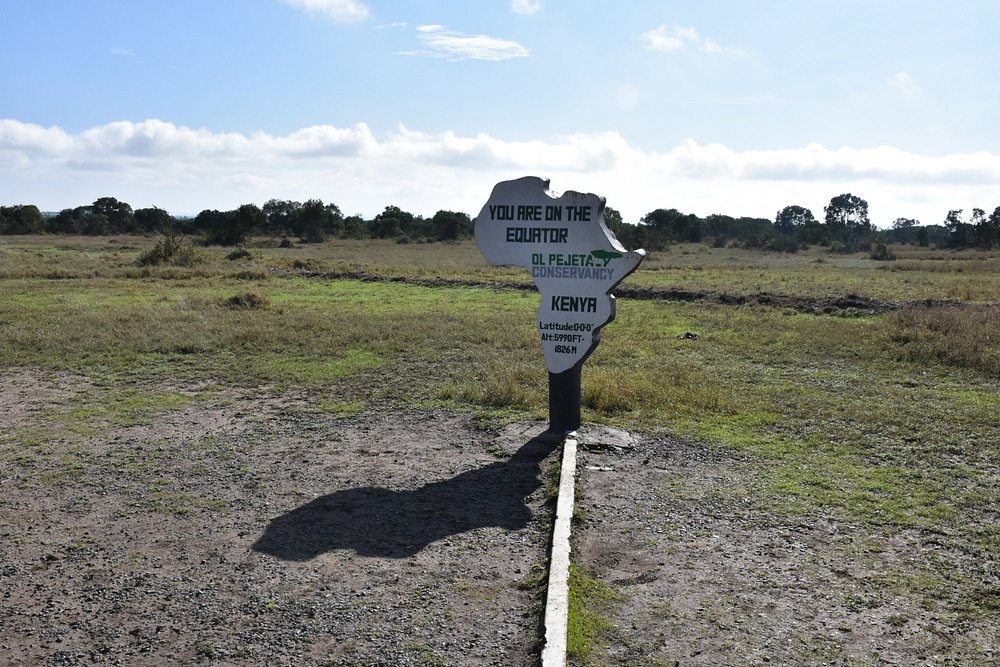
Ol Pejeta Conservancy sits at 1,820 metres elevation on the Laikipia plateau, and the equator runs directly through it — marked by a modest Africa-shaped sign that has become one of the more photographed spots on any Kenya safari. Standing with one foot in each hemisphere while a black rhino grazes 200 metres away is a quietly surreal experience that captures Laikipia’s character: wild, serious and understated in a way that the more visited parks to the south are not.
The Laikipia plateau itself is a landscape of open grass plains, acacia woodland and black cotton soil that turns the tracks into a challenging network after rain. The plateau receives more reliable rainfall than the Mara or Amboseli, which keeps the grass green through much of the year and the water holes productive even in the dry months. The conservancy’s position between two mountain ranges — the Aberdares to the south and Mount Kenya to the east — creates a wildlife corridor that sees movement between ecosystems throughout the year.
The Northern White Rhino: The Last Two on Earth
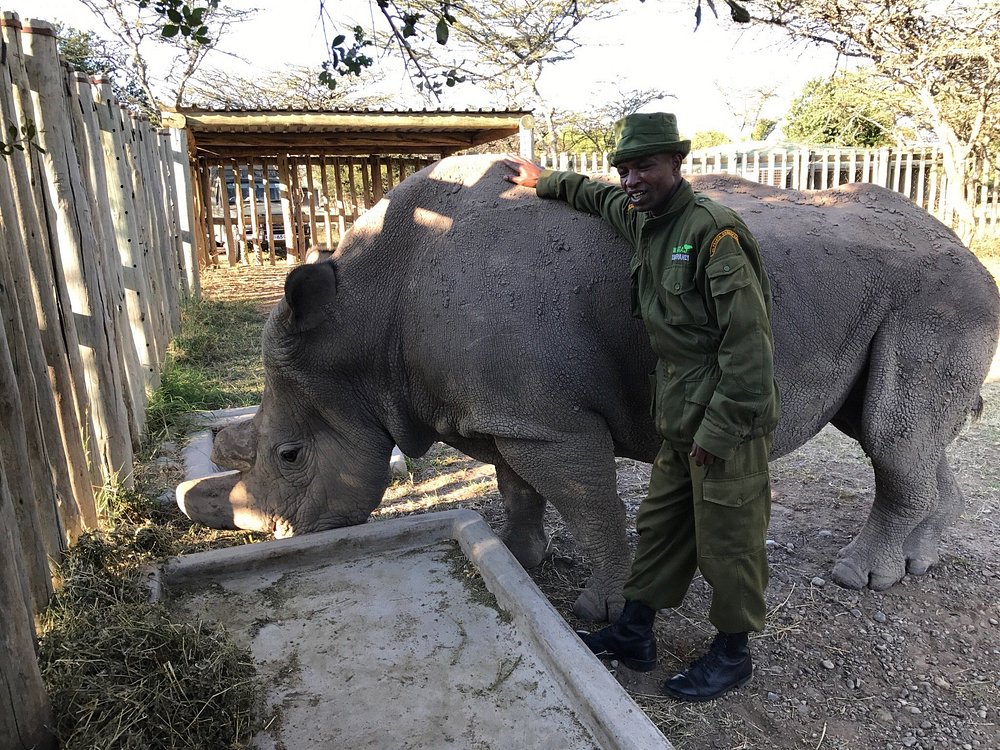
The defining reason to visit Ol Pejeta Conservancy is the northern white rhino. Najin and Fatu are the last two individuals of the northern white rhino subspecies alive anywhere on the planet. Both are female; the subspecies cannot reproduce naturally. An ongoing scientific programme using stored genetic material and southern white rhino surrogate mothers represents the only route to a future for the subspecies, and the team at Ol Pejeta and international scientific partners are actively pursuing it. In the meantime, Najin and Fatu live in a dedicated section of the conservancy under 24-hour armed guard — the most protected animals in Kenya.
Visitors can meet Najin and Fatu on a dedicated tour that operates inside their sanctuary enclosure, accompanied by one of the rangers who knows each animal individually. The tour is intimate — small groups only — and the ranger’s account of each rhino’s personality, history and the daily care regime they receive gives the encounter a depth that a game drive sighting alone cannot match. The experience of standing close to the last two northern white rhinos on Earth, understanding what they represent and what is being done to prevent the total loss of the subspecies, is one we find difficult to describe neutrally: it stays with visitors long after the safari ends.
Black Rhino: Kenya’s Largest Population

Ol Pejeta holds over 110 black rhinos — the largest single black rhino population in East Africa — and encounters are considerably more reliable here than at Lake Nakuru or any other Kenya park. The conservancy’s Baraka sanctuary offers a close encounter experience with an elderly blind black rhino, providing an up-close introduction to the species in a managed setting before a game drive in search of wild individuals. The combination of the sanctuary visit and an open-vehicle game drive across the main conservancy typically produces multiple rhino sightings in a single day — an encounter rate that Kenya’s other parks rarely match for this critically endangered species.
Unlike the heavily fenced rhino enclosures at some Kenya parks, most of Ol Pejeta’s black rhino population moves freely across the full 90,000 acres. Rangers with radio contact to field monitors direct vehicles to where rhino have been tracked, and the sightings are typically in open terrain that allows photography without obstruction. Compared to a rhino sighting in dense bush at Nakuru or Nairobi National Park, Ol Pejeta’s open savannah positions offer longer viewing time and clearer observation of behaviour. For travellers based in Nairobi considering a Laikipia excursion, the black rhino encounter at Ol Pejeta is the strongest single argument for the longer drive north.
Elephants and the Full Laikipia Wildlife Roster

Beyond the rhinos, Ol Pejeta’s elephant population — herds that move between the conservancy and the wider Laikipia ecosystem — provides the kind of open-plains elephant viewing that makes Laikipia comparable to the Masai Mara for the quality of the photographic opportunities. Family groups of ten to thirty animals are commonly encountered in the early morning before they move into shade, and bulls are regularly seen at the conservancy’s water holes at dusk. Lion and cheetah are resident, leopard are present but elusive in the acacia woodland, and Grevy’s zebra — the larger, more narrowly striped northern species found in Kenya’s semi-arid north — share the plains with the more common plains zebra.
The Ewaso Nyiro River forms the western boundary of the conservancy and concentrates hippo, crocodile and a productive riverside bird list including fish eagle, kingfisher and grey heron. Walking safaris along the river bank — guided by armed rangers — provide a ground-level perspective on the conservancy that a vehicle game drive cannot replicate. Night drives, which are permitted at Ol Pejeta but not in Kenya’s national parks, reveal the aardvark, porcupine, genet and serval that are invisible during daylight game drives. This combination of activities — day drive, walking safari and night drive — is unique to the private conservancy model and is one of the main reasons travellers choose Ol Pejeta over a national park for the Laikipia section of their Kenya itinerary.
Getting to Ol Pejeta and Where to Stay
Ol Pejeta Conservancy is 200 kilometres north of Nairobi on the A2 highway — approximately 3.5 hours by road via Nanyuki town. It is also accessible by air through Nanyuki Airstrip, with scheduled flights connecting to Nairobi’s Wilson Airport in 45 minutes. Travellers combining Ol Pejeta with a Mount Kenya hiking itinerary use Nanyuki as the staging point for both destinations, keeping the logistics efficient. The road circuit from Nairobi through the Aberdares, Ol Pejeta and back via Samburu National Reserve is one of Kenya’s most rewarding northern Kenya circuits for travellers who have already done the Mara and Amboseli.
Accommodation inside the conservancy ranges from Sweetwaters Serena Camp — the longest-established property, positioned near a floodlit water hole — to Ol Pejeta Bush Camp for a more intimate tented experience, and Kicheche Bush Camp at the higher end of the market. All properties include conservancy fees and game drives. The two to three-night stay is the recommended minimum; the northern white rhino encounter, a full day’s game drive and an evening night drive justify at least two nights at the conservancy.
Before travelling, check our Kenya eTA and tourist visa guide for entry requirements and our Kenya safari packing list for what to bring — including warm layers for early morning game drives at Laikipia’s 1,820-metre elevation, where mornings are noticeably cooler than at sea-level parks.
Combining Ol Pejeta with Other Kenya Destinations
Ol Pejeta works best as part of a Kenya northern circuit rather than a standalone destination. The most common combination we build pairs it with the Masai Mara for the wildebeest migration experience, Samburu National Reserve for the northern special five, and Lewa Wildlife Conservancy — which shares an unfenced boundary with Ol Pejeta — for additional rhino, reticulated giraffe and Grevy’s zebra. The result is a Kenya safari that covers the great southern migration, northern endemic species and the world’s most significant rhino conservation project in a single itinerary. For context on how Ol Pejeta compares with Kenya’s national park circuit, our guide to Kenya’s top national parks covers the full landscape. And for those considering a broader East Africa trip, our East Africa safari cost guide helps set realistic budget expectations across Kenya, Uganda, Tanzania and Rwanda.
Frequently Asked Questions
Can I see the northern white rhinos at Ol Pejeta?
Yes — and this is one of the few genuine once-in-a-lifetime wildlife experiences left anywhere in the world. Najin and Fatu live in a dedicated sanctuary enclosure within the conservancy, and a guided visit allows small groups to meet them accompanied by their personal rangers. The experience is booked through the conservancy or your safari operator. We strongly recommend building it into any Ol Pejeta itinerary; it is not the same as a standard game drive sighting and should not be skipped.
Is Ol Pejeta suitable for a day trip from Nairobi?
It is possible but not ideal. The 200-kilometre drive takes 3.5 hours each way, leaving limited time in the conservancy. A minimum two-night stay at a conservancy lodge or camp gives you morning and evening game drives, the northern white rhino visit, a walking safari and a night drive — the combination that makes Ol Pejeta worth the journey. If time is genuinely short, fly to Nanyuki Airstrip in 45 minutes and fly back the same day, which at least gives a full day in the conservancy. See our day trips from Nairobi guide for alternatives that work better on a single day.
What makes Ol Pejeta different from Kenya’s national parks?
Three things: the northern white rhinos (found nowhere else on Earth), night drives (permitted here but not in national parks), and walking safaris (also not permitted in most national parks). The private conservancy model also means lower visitor numbers and more flexibility in how game drives are conducted — off-road driving, extended stays at sightings and vehicle positioning for photography are all possible here in ways that national park rules do not permit.
Planning an Ol Pejeta Conservancy safari?
We build Kenya safaris that combine the Masai Mara, Ol Pejeta northern white rhino encounter and Samburu into a single circuit. Contact us or WhatsApp our team to start planning.
Plan Your Kenya Safari
- ✓ Ol Pejeta & Laikipia safaris
- ✓ Northern white rhino visits
- ✓ Masai Mara & Amboseli circuits
- ✓ Night drives & walking safaris
- ✓ Transparent all-in pricing
Ol Pejeta at a Glance
| Location | Laikipia plateau, central Kenya |
| Size | 90,000 acres |
| N. white rhinos | 2 (last on Earth) |
| Black rhino | 110+ (largest pop. in E. Africa) |
| Elevation | 1,820 m (crosses the equator) |
| From Nairobi | 200 km / 3.5 hrs |
| Night drives | Yes — unique in Kenya |
| Best time | Year-round; dry Jul–Oct & Jan–Feb |