Uganda is now recognized as one of East Africa’s rewarding safari destinations, with national parks where travelers can encounter elephants, lions, buffaloes, giraffes, hippos, Uganda kobs, chimpanzees and many other species. But the wildlife seen today tells a much bigger story than a successful safari.
Uganda’s wildlife has survived some extraordinarily difficult decades.
Political instability, armed conflict, weak protection systems and widespread poaching severely affected many of the country’s wildlife areas, particularly during the 1970s and 1980s. Some animal populations collapsed, while others disappeared completely from particular landscapes.
The recovery that followed was not immediate. It involved rebuilding protected-area management, strengthening ranger operations, restoring habitats, controlling poaching, relocating animals and increasingly working with communities living alongside wildlife.
Today, Uganda’s conservation story is one of recovery, resilience and ongoing challenges.
The latest State of Wildlife Resources in Uganda Report 2026 shows measurable recovery in several species. Between the 2021–2022 and 2023–2025 survey periods, buffalo increased from 32,235 to 41,548, Uganda kob from 166,526 to 175,109, hippos from 8,226 to 9,026, zebras from 17,762 to 20,942 and waterbucks from 16,638 to 22,623.
However, recovery is not uniform. Some species remain under pressure, reminding us that conservation is an ongoing process rather than a finished success story.
Uganda’s Wildlife Before the Crisis
Uganda’s protected areas were once famous for extraordinary concentrations of wildlife.
Murchison Falls Conservation Area, for example, supported huge elephant populations during the 1960s. Historical estimates indicate that Uganda had more than 30,000 elephants at the time, with approximately half occurring in the Murchison Falls area.
Queen Elizabeth National Park was similarly renowned for its wildlife abundance.
Large populations of elephants, hippos, buffaloes, Uganda kobs and other species occupied the savannahs, wetlands and forests of western Uganda.
The country’s protected areas were becoming important destinations for wildlife tourism, but political instability would dramatically change this trajectory.
What Happened to Uganda’s Wildlife During the Years of Conflict?
The political turmoil of the 1970s and subsequent conflicts had a devastating effect on wildlife conservation.
Law enforcement and wildlife protection systems weakened, leaving animals increasingly exposed to uncontrolled hunting and poaching.
Murchison Falls suffered particularly severe losses. Historical conservation assessments describe it as one of the national parks most heavily damaged during Uganda’s political turmoil of the 1980s, with wildlife intensively poached.
Elephants were targeted for ivory, while other animals were hunted for meat.
In Murchison Falls National Park, decades of uncontrolled hunting reduced elephant numbers dramatically. The Uganda Conservation Foundation notes that elephant numbers fell by more than 80% from their earlier levels.
Queen Elizabeth National Park experienced a similar collapse.
Hippos, elephants and other large mammals were among the species heavily affected by poaching and insecurity.
The consequences extended beyond individual animals. When large numbers of herbivores disappeared, the ecological balance of entire landscapes changed.
Rebuilding Uganda’s National Parks
Wildlife recovery began as Uganda’s political and security situation stabilized.
The restoration of protected areas required much more than simply stopping poaching. Conservation authorities and their partners had to rebuild the foundations of wildlife management.
This included:
- Re-establishing ranger patrols
- Recruiting and training conservation staff
- Removing snares and traps
- Improving park infrastructure
- Monitoring wildlife populations
- Restoring damaged habitats
- Strengthening anti-poaching operations
- Working with surrounding communities
- Reintroducing or translocating wildlife where appropriate
The process took decades.
There was no single moment when Uganda’s wildlife suddenly returned. Recovery happened gradually, species by species and park by park.
The Recovery of Wildlife in Murchison Falls
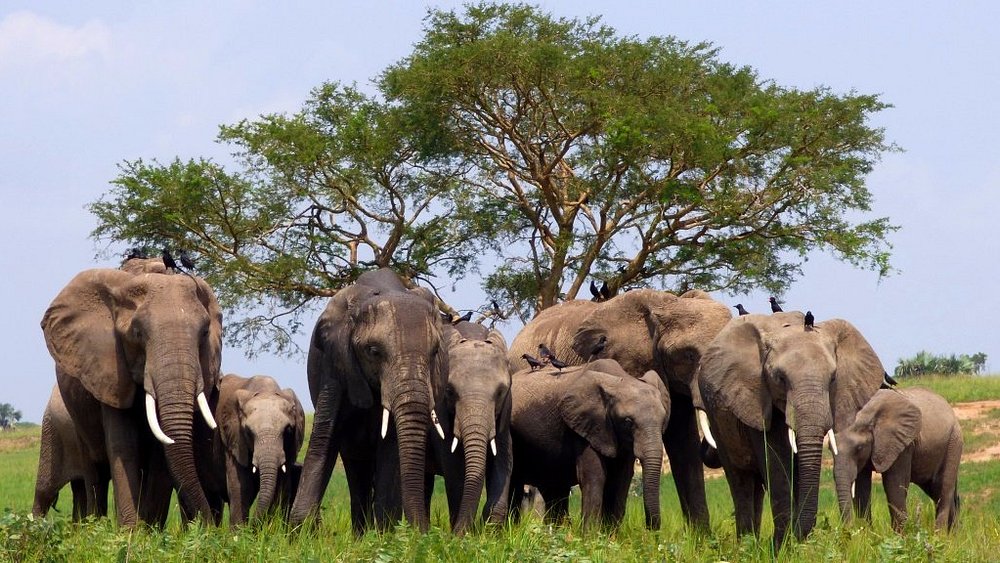 Murchison Falls National Park is one of the clearest examples of Uganda’s conservation recovery.
The park had suffered enormous wildlife losses during years of conflict and poaching. Once stronger conservation management was restored, wildlife populations began to rebuild.
Elephants gradually returned to parts of the park, while Uganda kobs, buffaloes, giraffes and other herbivores increased.
Today, Murchison Falls is one of Uganda’s most important safari destinations.
Visitors travelling through the park can encounter large herds of buffalo and Uganda kob, elephants around water sources and the Victoria Nile, giraffes moving across the savannah and hippos along the river.
The recovery is particularly remarkable when viewed against the park’s history.
However, Murchison’s recovery should not be interpreted as complete. Poaching, habitat pressure and human-wildlife conflict remain ongoing conservation concerns.
Queen Elizabeth National Park’s Wildlife Recovery
Queen Elizabeth National Park also demonstrates how wildlife can recover after severe population declines. The park is now famous for its diversity of wildlife and landscapes, including African elephants, Buffaloes, Uganda kobs, Hippos, Lions, Leopards, Warthogs, Antelopes and Chimpanzees in the Kyambura Gorge area
Historical assessments found that Queen Elizabeth’s wildlife populations, including buffalo and kob, had recovered to or even exceeded some early-1970s levels following rehabilitation efforts. However, the park continues to face complex challenges.
Human-wildlife conflict, disease outbreaks, habitat pressure and pressure on wildlife outside protected areas can affect long-term conservation.
Lion conservation is particularly complicated because predators sometimes come into conflict with livestock owners living around the park. Conservation organizations have therefore increasingly explored approaches that involve local communities in protecting both livelihoods and wildlife.
Kidepo Valley: Restoring Wildlife in a Remote Landscape
 Kidepo Valley National Park in northeastern Uganda has its own conservation story. The park’s remoteness helped preserve some of its wilderness character, but political instability, insecurity and poaching also affected wildlife.
One of the most remarkable recent developments is the return of rhinos to Kidepo.
Rhinos disappeared from the Kidepo landscape decades ago, with the last known rhino killed in 1983. In March 2026, Uganda began reintroducing southern white rhinos to the park, beginning with two animals as part of an initial plan involving eight rhinos.
This is more than a new attraction for safari visitors. It represents an attempt to restore a species that once formed part of Kidepo’s ecological heritage.
Uganda’s broader rhino recovery began at Ziwa Rhino Sanctuary, where a breeding programme established in 2005 helped rebuild the country’s rhino population after the species had disappeared from the wild.
The return of rhinos to Kidepo therefore demonstrates how conservation can move from protection to active restoration.
Wildlife Translocation as a Conservation Tool
Sometimes wildlife does not naturally recolonize an area quickly enough.
In such situations, conservation authorities can use translocation, carefully moving animals from one suitable population or ecosystem to another.
Uganda has used this approach in Kidepo.
In 2023, the Uganda Wildlife Authority began moving 200 Uganda kobs from the Murchison Falls Conservation Area to Kidepo Valley. This followed an earlier translocation of 110 kobs in 2017. UWA reported that the population had increased through natural breeding after the first translocation.
Such projects can help strengthen populations, restore species to areas where they have declined and improve the long-term ecological health of protected landscapes.
The Return of Stronger Conservation Management
One of the biggest factors behind Uganda’s wildlife recovery has been the rebuilding of conservation institutions and protected-area management.
Rangers are essential to this process.
They patrol protected areas, remove snares, respond to wildlife crime, monitor animals and help protect important habitats.
Technology has also become increasingly important.
Modern wildlife conservation involve:
- GPS tracking
- Camera traps
- Wildlife surveys
- Radio collars
- Geographic information systems
- Digital reporting
- Aerial monitoring
These tools allow conservationists to understand where animals move, identify threats and make better management decisions.
Communities Have Become Part of the Conservation Story
Protecting a national park cannot be achieved by putting up a boundary and expecting neighboring communities to stay completely disconnected from the landscape.
People living around Uganda’s national parks depend on land and natural resources for agriculture, livestock and livelihoods.
As wildlife populations recover, animals may also move outside protected areas in search of food and water. This can create conflict.
Recent research highlights the complexity of human-wildlife conflict in Uganda. Elephants, for example, can damage crops around Murchison Falls, Queen Elizabeth, Kibale and Kidepo, while lions can come into conflict with livestock owners around Queen Elizabeth and other protected landscapes.
This is why modern conservation increasingly involves communities.
Projects in Uganda have supported activities such as Beekeeping, sustainable agriculture, conservation education, community tourism, youth conservation programmes, livelihood development and human-wildlife conflict mitigation
The objective is to make wildlife conservation beneficial to the people who share the landscape with animals.
Tourism Has Helped Support Wildlife Recovery
Tourism has become an important part of Uganda’s conservation model.
Visitors pay park fees, accommodation providers employ local people, safari companies hire guides and drivers, and communities can benefit from tourism-related enterprises.
A healthy wildlife population therefore has economic value beyond the animals themselves.
Murchison Falls, Queen Elizabeth, Kidepo Valley, Lake Mburo and other protected areas attract travellers from around the world.
For visitors booking a Uganda wildlife safari, a game drive is therefore more than an opportunity to take photographs. It is also an opportunity to witness the results of decades of conservation work.
Uganda’s Wildlife Recovery Is Still Ongoing
It would be misleading to suggest that every species in Uganda has completely recovered.
The 2026 State of Wildlife Resources report shows that several populations are increasing, but some flagship species remain under pressure. Elephant numbers in monitored protected areas declined from 6,621 in 2021–2022 to 6,352 in 2023–2025, while lions declined from 314 to 291 during the same comparison period.
Uganda continues to face threats including:
- Habitat fragmentation
- Agricultural expansion
- Human-wildlife conflict
- Illegal wildlife use
- Climate variability
- Infrastructure development
- Unsustainable resource use
- Poaching
Uganda has made significant progress, but protecting wildlife requires continuous investment and vigilance.
What Uganda’s Recovery Means for Safari Travelers
For someone planning a Uganda safari today, it can be easy to see elephants crossing the savannah, hippos resting in the Nile, giraffes browsing among acacia trees or buffalo moving across the plains without knowing how different these landscapes once looked.
Understanding that history makes the safari experience more meaningful.
A game drive in Murchison Falls is not simply about finding wildlife. It is an opportunity to see a recovering ecosystem.
A safari in Queen Elizabeth National Park provides a chance to experience a landscape that has endured enormous pressure and continues to support important populations.
A visit to Kidepo offers something even more distinctive: a remote wilderness where conservationists are actively restoring species and strengthening ecological resilience.
Why Uganda’s Conservation Story Matters
Uganda’s experience demonstrates that wildlife populations can recover when protection, habitat management, science, tourism and community involvement work together.
It also shows that conservation cannot be treated as a one-time project.
The recovery of elephants, buffaloes, kobs, giraffes, hippos and other wildlife is encouraging. The return of rhinos to Kidepo adds another remarkable chapter to Uganda’s conservation journey. Meanwhile, the challenges facing lions, elephants and other species show why continued protection remains essential.
For travelers, this makes Uganda an especially meaningful safari destination.
Experience Uganda’s Wildlife Recovery with Superfine Safaris Limited
At Superfine Safaris Limited, we believe that a Uganda safari should be about more than ticking animals off a checklist. It should help you understand the landscapes, people, wildlife and conservation stories that make Uganda unique.
Whether you are planning a Murchison Falls safari, a Queen Elizabeth National Park safari, a Kidepo Valley safari, a gorilla trekking experience in Bwindi or a longer Uganda wildlife safari, we can help you create an itinerary that combines exceptional wildlife viewing with a deeper appreciation of Uganda’s natural heritage.
Contact Us Now