East Africa is where safari was invented, and where it still delivers its most concentrated, most diverse and most emotionally powerful wildlife experiences. This East Africa safari guide covers every country in the region, every major ecosystem and every planning decision you will face, from the first search to the moment you land. Whether you are drawn by the Great Migration, by mountain gorillas, by the Big Five or simply by the idea of waking up in the Serengeti, this East Africa safari guide gives you the full picture.
Why East Africa Safari Leads the World
Five of the world’s ten most celebrated safari destinations sit inside East Africa. The region holds the largest single land mammal migration on earth, the planet’s entire wild mountain gorilla population, more bird species than any comparable land area, and a concentration of apex predators — lion, leopard, cheetah, wild dog, spotted and striped hyena — that no other region comes close to matching. Tanzania’s Serengeti alone covers 30,000 km². Uganda lists more bird species (1,066) than the whole of Europe. Rwanda’s Volcanoes National Park protects 12 habituated gorilla families, each accessible by permit.
East Africa also has infrastructure that works. International flights land at Nairobi, Kilimanjaro, Entebbe, Kigali, Dar es Salaam and Zanzibar every day. Roads connecting the main parks have improved dramatically over the past decade. Lodge standards at the top end rival anywhere in the world. This is not frontier travel — it is the world’s most developed safari destination, visited by over four million international tourists annually.
East Africa Safari Guide: The Four Countries
Each country in East Africa offers a distinct safari character. Understanding the differences is the first step to building an itinerary that matches what you are actually looking for.
Bwindi gorilla trekking, Queen Elizabeth, Murchison Falls, Kibale chimps and the Pearl of Africa’s extraordinary biodiversity.
Serengeti, Ngorongoro Crater, the Great Migration, Kilimanjaro, Zanzibar beaches and the remote southern circuit.
Masai Mara, Amboseli, Tsavo, Samburu, Lake Nakuru and the northern frontier — Kenya’s safari circuit in full.
Volcanoes NP gorilla trekking, Nyungwe Forest chimps, Akagera Big Five and the world’s most iconic mountain gorilla experience.
Most Superfine Safaris itineraries combine two or three countries. The classic combination is Kenya and Tanzania for the Migration circuit, or Uganda and Rwanda for a gorilla-focused trip. Multi-country routes that take in the Migration AND gorilla trekking — Kenya or Tanzania plus Uganda or Rwanda — require 10–14 days minimum to do justice to both. Contact us to talk through the best combination for your dates and priorities.
The Great Migration
The Great Migration is the defining event in East African wildlife viewing. Each year, approximately 1.5 million wildebeest, 200,000 zebra and 500,000 Thomson’s gazelle circuit between Tanzania’s Serengeti and Kenya’s Masai Mara, following the rains and the fresh grass. The cycle runs year-round — the herds are always somewhere in the ecosystem — but the most dramatic moments follow a rough seasonal rhythm.
- January–March (southern Serengeti): Calving season. Up to 8,000 wildebeest calves born per day. Concentrated predator action — lion, cheetah, leopard and hyena all hunting the vulnerable newborns.
- April–May (central Serengeti): The herds consolidate and begin moving north. Long rains make roads difficult but the landscape is spectacular and lodges are at their cheapest.
- June–July (western Serengeti): The herds reach the Grumeti River. Grumeti River crossings — less famous than the Mara but spectacular — begin.
- July–September (northern Serengeti and Masai Mara): The Mara River crossings. Crocodile-filled water, panicking wildebeest, waiting predators. The most photographed wildlife event on earth. Kenya or Tanzania — both sides of the river deliver.
- October–November (return south): The herds move back through the Loliondo corridor. Short rains begin. Quieter than peak crossing season but still exceptional.
See our complete Tanzania Safari Guide for the full Serengeti circuit breakdown and our Kenya Safari Guide for the Masai Mara section of the Migration.
Gorilla Trekking in East Africa
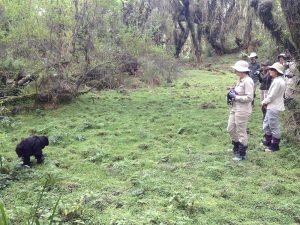 Mountain gorillas exist only in one place: the Virunga Massif and Bwindi Impenetrable Forest, straddling the borders of Uganda, Rwanda and the DRC. Of the approximately 1,000 surviving mountain gorillas, roughly half live in Uganda’s Bwindi, and the remainder are split between the Virunga volcanoes shared by Uganda (Mgahinga), Rwanda (Volcanoes NP) and DRC (Virunga NP — not currently accessible for tourism).
For practical tourism purposes, gorilla trekking means Uganda or Rwanda:
- Uganda: permit costs USD 800 per person per trek. Bwindi Impenetrable Forest has 22 habituated gorilla families accessible to visitors, the largest number anywhere. Mgahinga Gorilla NP has one habituated family. The trek itself is typically more demanding (steeper terrain) but the forest is wilder and the experience more remote. See the Uganda Safari Guide for full planning details.
- Rwanda: permit costs USD 1,500 per person per trek. Volcanoes National Park has 12 habituated families. Roads to the park from Kigali are better, lodges are more polished and international connections through Kigali are faster. The premium is significant but the overall experience is smoother. See the Rwanda Safari Guide for full planning details.
For a couple doing one trek each, the difference between Uganda and Rwanda is USD 1,400 in permit costs alone. Many itineraries combine both: fly into Kigali (Rwanda), trek in Volcanoes NP, then overland to Bwindi (Uganda) for a second trek before flying out of Entebbe. This open-jaw routing adds variety and spreads the permit cost across two different gorilla experiences.
East Africa Safari Guide: Best Time to Visit
East Africa does not have a single “best time” — the right month depends on what you want to see and where you want to go.
| Month | Highlights | Avoid |
|---|---|---|
| Jan–Feb | Wildebeest calving (S. | |
| Serengeti); dry, hot, excellent game viewing; gorilla trekking year-round | Not ideal for Mara crossings | |
| Mar–May | Lower prices (20–40% off peak); lush green landscapes; excellent birding; gorilla trekking fine | Long rains; some roads become difficult; fewer visitors (pro or con) |
| Jun–Sep | Peak season. | |
| Mara River crossings (Jul–Sep); Grumeti crossings (Jun–Jul); dry, cool, best game viewing everywhere; gorilla permits hard to get — book 6–12 months ahead | Most expensive; most crowded; permits book out fast | |
| Oct–Nov | Short rains (lighter than long rains); herds returning south through Serengeti; good value; dramatic skies for photography | Short rains can disrupt some northern Kenya routes |
| Dec | Festive season; good game viewing in most parks; short dry spell mid-December; gorilla trekking excellent | Prices peak over Christmas and New Year; books out early |
The short answer: June to September is the best overall month for game viewing across all four countries. January and February are excellent and significantly cheaper. March to May is the best value window if you can accept some rain and fewer fellow travellers.
Planning a Multi-Country East Africa Safari
East Africa rewards multi-country itineraries. A single country in 7 days gives you a good safari; two countries in 10–14 days gives you a great one. The practical constraints are: international flight routing, internal transfers, and permit lead times for gorilla trekking.
Routing principles:
- Fly into and out of different airports (open-jaw routing) to avoid backtracking. Nairobi in / Entebbe out is the most common East Africa open-jaw. Kigali in / Entebbe out works well for a gorilla-focused trip.
- Combine Big Five game viewing with a unique experience. Tanzania or Kenya for game drives + Uganda or Rwanda for gorilla trekking = the classic East Africa combination.
- Allow a minimum of 2 full days per major park. One night is not enough for anywhere.
- Build one transit day per country border crossing. Road crossings between Rwanda and Uganda (Katuna/Cyanika) are smooth but the drive takes half a day.
Popular combinations Superfine Safaris runs:
- 10 days: Masai Mara (Kenya) + Serengeti (Tanzania) — Migration circuit, fly between parks
- 10 days: Bwindi (Uganda) + Volcanoes NP (Rwanda) — Double gorilla trek with Kigali city stay
- 14 days: Serengeti + Ngorongoro (Tanzania) + Bwindi (Uganda) — Migration and gorillas
- 14 days: Masai Mara (Kenya) + Amboseli (Kenya) + Volcanoes NP (Rwanda) + Akagera (Rwanda)
- 21 days: Full East Africa circuit — Kenya, Tanzania, Uganda, Rwanda with Zanzibar beach extension
East Africa Safari Cost Overview
East Africa safari cost varies enormously by country, tier and time of year. As a broad guide:
- Tanzania: USD 400–700/day pp (mid-range fly-in) to USD 1,000–3,000+/day pp (luxury). Budget road safaris from USD 200/day. See the full Tanzania safari cost guide.
- Kenya: USD 400–700/day pp (mid-range) to USD 800–2,500+/day pp (luxury). Masai Mara conservancy fees add USD 100–200/day. See the full Kenya safari cost guide.
- Rwanda: The USD 1,500 gorilla permit dominates the budget. Mid-range all-in from USD 500–900/day pp. See the full Rwanda safari cost guide.
- Uganda: USD 800 gorilla permit. Bwindi lodges from USD 200–1,500+/night. Overall mid-range from USD 300–600/day pp.
The gorilla permit is the single biggest variable in any East Africa budget. A couple doing one trek each in Rwanda (USD 3,000 in permits alone) vs Uganda (USD 1,600) saves USD 1,400 before any other costs are compared. For everything else, budget primarily determines lodge quality — the wildlife is the same at every price point.
Getting to East Africa: Flights and Entry Points
East Africa has six main international airports, each serving a different safari routing:
- Nairobi Jomo Kenyatta (NBO): The busiest hub in East Africa. Direct flights from London (British Airways, Kenya Airways, ~8.5 hrs), Amsterdam, Frankfurt, Dubai, Doha, Mumbai and most major African cities. Best entry point for Kenya safaris and for itineraries that start in Kenya before moving to Tanzania or Uganda.
- Kilimanjaro (JRO) / Dar es Salaam (DAR): Best entry points for Tanzania safaris. JRO is closer to the northern circuit (Serengeti, Ngorongoro); DAR is better for Zanzibar extensions and the southern circuit (Ruaha, Nyerere).
- Zanzibar (ZNZ): Direct charter and regional connections. Best for trips combining Tanzania game drives with a Zanzibar beach stay at the end.
- Entebbe (EBB): Uganda’s main airport, 40 minutes from Kampala. Direct from London (Entebbe Express via Gatwick), Amsterdam, Dubai, Doha, Nairobi and multiple African cities. Best entry for Uganda safaris and gorilla itineraries.
- Kigali (KGL): Rwanda’s capital. Direct from London Heathrow (RwandAir, ~8.5 hrs), Brussels, Amsterdam, Dubai and Nairobi. The fastest connection to mountain gorillas and increasingly used as an East Africa hub given RwandAir’s route network.
East Africa Visa Guide
Visa requirements in East Africa are genuinely complex , each country has its own rules, and multi-country itineraries require advance planning.
East Africa Tourist Visa (EATV): A single USD 100 visa covering Kenya, Uganda and Rwanda. Valid for 90 days, multiple entry across the three countries. The right choice for any itinerary combining these three. Apply online at the Kenyan or Ugandan immigration portals before travel.
Tanzania: Tanzania is NOT covered by the EATV. A separate eVisa costs USD 50 for most nationalities, applied online at eservices.immigration.go.tz.
Country-by-country summary:
- Kenya: eVisa USD 50 for most nationalities; part of EATV
- Tanzania: eVisa USD 50; not part of EATV
- Uganda: eVisa USD 50 single-entry; part of EATV
- Rwanda: eVisa USD 50; free for African Union citizens; part of EATV
For a 14-day Kenya + Tanzania + Uganda itinerary, the cheapest visa combination is EATV (USD 100, covers Kenya + Uganda) plus Tanzania eVisa (USD 50) = USD 150 total per person.
Health, Safety and Practical Planning
Yellow fever vaccination is mandatory for entry to Uganda and Rwanda, and required for Tanzania and Kenya if you are arriving from a yellow fever endemic country. Get vaccinated at least 10 days before travel and carry your yellow card.
Malaria is present in all four countries at varying levels. Consult a travel health clinic 6–8 weeks before departure for current prophylaxis recommendations. Most safari areas are low-to-medium risk during dry season and higher risk during rains.
Safari safety: East Africa’s national parks are genuinely wild. Follow guide instructions at all times, do not exit vehicles in unfenced game areas, and treat all wildlife as unpredictable. Gorilla trekking requires meeting RDB (Rwanda) or UWA (Uganda) health guidelines — visitors with active colds or infectious illness are asked not to trek to protect the gorillas’ immune systems.
Travel insurance: Medical evacuation from remote safari areas is expensive and sometimes life-saving. Buy comprehensive travel insurance that specifically covers medical evacuation, gorilla trekking as an activity, and trip cancellation including permit costs. This is not optional.
East Africa Safari: Frequently Asked Questions
How many days do I need for an East Africa safari?
Seven days is the absolute minimum for a single-country safari with meaningful time in two or three parks. Ten to fourteen days is the sweet spot for most travellers enough to combine two countries or cover one country thoroughly with a beach extension. Twenty-one days allows a full East Africa circuit. The most common mistake is trying to fit too many parks into too few days every additional transit costs you half a day of actual game time.
Is East Africa safe for tourists?
The main safari destinations Kenya, Tanzania, Uganda and Rwanda, all have well-established tourism infrastructures and are safe for tourists who follow standard travel precautions. Rwanda ranks among the safest countries in Africa by most measures. Kenya and Tanzania have isolated security issues in border regions and coastal cities that do not affect the main safari circuits. Uganda’s western parks (Bwindi, Queen Elizabeth) are safe; the far north and northeast have different risk profiles. Your operator and the UK Foreign Office travel advisories are the most current sources for specific guidance.
What is the difference between a fly-in and a road safari?
A fly-in safari uses light aircraft to move between parks, saving 4–8 hours of road travel per leg and accessing remote airstrips near the best camps. It costs 2–5× more per day than an equivalent road safari and is the standard approach for Tanzania’s northern circuit at mid-range and above. A road safari drives between parks in a 4×4 vehicle, which costs less, allows more flexibility, and lets you see wildlife en route — but adds significant travel time. Both are valid; the right choice depends on your budget and how you want to spend your time.
Can I self-drive a safari in East Africa?
Self-drive safaris are possible in Kenya and Rwanda. Kenya’s parks allow self-drive on main game-drive circuits; a 4×4 is essential for the wet season. Rwanda is a small country with good roads and self-drive gorilla logistics are manageable. Tanzania’s parks technically allow self-drive but the road conditions and park size make a guide almost essential for value. Uganda’s remote parks and gorilla permit logistics strongly favour a guided approach. In all cases, a knowledgeable local guide dramatically improves wildlife sightings — self-drive is cheaper but not necessarily better.
What should I pack for an East Africa safari?
Neutral-coloured, lightweight clothes (khaki, olive, beige — avoid blue and black which attract tsetse flies); a warm layer for early morning game drives (temperatures drop sharply at altitude and before dawn); sturdy walking shoes for gorilla trekking (waterproof boots if visiting April–May or October–November); quality binoculars (8×42 minimum); sun protection; and a dry bag for camera equipment during river crossings or rain. For gorilla trekking specifically, long-sleeved shirts and long trousers are mandatory to protect against nettles and insects on the forest floor.