Packing for Rwanda is different from packing for an open savannah safari. The centrepiece of most Rwanda itineraries is gorilla trekking in dense montane rainforest at altitude — and that demands specific gear. Get it wrong and you will spend your trek cold, wet, scratched by nettles, and struggling for grip on slippery volcanic slopes. Get it right and the only thing on your mind is the gorillas, 10 metres away in the bamboo. This Rwanda safari packing list covers everything: gorilla trekking essentials, Kigali city wear, photography kit, health requirements, and the customs rule that catches nearly every first-time visitor off guard.
Rwanda’s No-Plastic-Bags Rule
Rwanda banned single-use plastic bags in 2008 one of the earliest such bans in the world. This applies to everyone, including visitors. Customs officers at Kigali International Airport confiscate plastic carrier bags at the point of entry. Pack your belongings in fabric bags, zip-lock bags, or reusable pouches instead. This is not optional, and it is strictly enforced. Rwanda is notably clean by East African standards plastic-free packing contributes to that.
Gorilla Trekking Clothing: What to Wear in Volcanoes National Park
Gorilla trekking in Volcanoes National Park involves hiking through dense rainforest on slopes of the Virunga volcanoes, at elevations between 2,500 and 3,600 metres. It can be wet, muddy, cold, and covered in stinging nettles. Your clothing needs to handle all of that while keeping you comfortable.
Colour Rules for Gorilla Trekking
Wear neutral, earthy colours: khaki, olive, dark green, tan, brown, and grey. Avoid black and very dark navy — gorillas can perceive dark colours as threatening and it is recommended not to wear them in close proximity to the animals. Avoid bright colours and camouflage patterns.
Gorilla Trekking Clothing Checklist
- Long-sleeved shirt (1–2) — lightweight but full coverage protects against nettles and scratches. Quick-dry fabric is ideal
- Fleece or mid-layer jacket — essential for the altitude. Mornings at the park headquarters (around 2,500m) can be cold, especially June to August. A fleece you can shed mid-trek
- Waterproof jacket — a packable waterproof outer layer is mandatory. Rwanda’s Virunga forests can receive rain at any time. Go for something you can stuff in your daypack
- Long trousers — essential for nettles and forest debris. Lightweight, quick-dry trekking trousers work well. Avoid jeans — they are heavy, restrict movement, and slow to dry when wet
- Gaiters — arguably the most important item specific to gorilla trekking. Nettles and thorns grow densely along many trails. Gaiters protect the gap between your boot and trouser leg. Long gaiters extending to the knee are recommended. Often available to rent at the park briefing room, but bringing your own is more comfortable
- Gardening gloves or thin work gloves — for gripping vegetation on steep slopes and protecting hands from nettles. Buy an inexpensive pair before travel — they are used once and discarded or donated
- Hat or buff — warmth in the cold mornings; protects against rain and dripping vegetation in the forest
- Surgical or N95 mask — required by park regulations within 10 metres of gorillas. Mountain gorillas are susceptible to human respiratory viruses. Your briefing pack includes one but bring your own as backup
Footwear for Gorilla Trekking
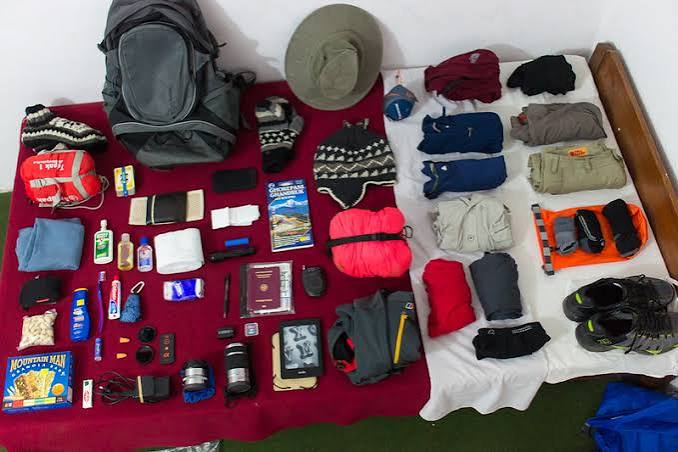 Ankle-height waterproof hiking boots with good grip are the best footwear for gorilla trekking. The volcanic slopes can be slippery even in dry season, and wet season trails are deeply muddy. Waterproofing matters. Boots that cover the ankle provide support on uneven ground and sit above gaiter height for full nettle protection. Break them in before travel — blisters on a gorilla trek are a serious problem.
Hiking poles are recommended, particularly for the descent. Many trekkers find the downhill more demanding than the climb on wet, steep slopes. A porter will carry your daypack and assist you through difficult terrains, porter hire is strongly recommended and directly supports the local community.
Photography Gear for Gorilla Trekking
Gorilla trekking presents unique photography challenges. The forest canopy creates low, dappled light — nothing like the bright open light of a savannah game drive. Flash photography is strictly prohibited in the presence of gorillas.
- Camera with good low-light performance — a camera that performs at ISO 3200–6400 without excessive noise makes a significant difference. Most modern mirrorless and DSLR cameras handle this well
- 50–200mm zoom lens — a 70–200mm or equivalent range is ideal. You may be as close as 7 metres to the gorillas, but a longer focal length lets you fill the frame with individual faces. A wide-angle lens for environmental shots is a useful addition
- Waterproof camera cover or rain sleeve — protect your gear from forest drizzle
- Extra batteries and memory cards — cold temperatures and altitude can reduce battery performance. Charge everything the night before
- Small dry bag or waterproof pouch — for camera gear during rain sections of the trek
Daypack for the Trek
A 20–30 litre daypack is ideal. Pack light you will be on your feet for 2 to 6 hours depending on your gorilla family’s location. Contents: 2 litres of water, energy snacks (nuts, dried fruit, a protein bar), your waterproof jacket, gloves, mask, sunscreen, a small first aid kit, and your camera. Your porter carries the pack for much of the trek — hire one.
Kigali City Wear
Kigali is a modern, clean, relatively formal African capital. Smart casual clothing is appropriate for restaurants, hotels, and city visits. Shorts and t-shirts are fine during the day. Kigali sits at approximately 1,500 metres — evenings can be cool. A light cardigan or layer for evenings is useful. Rwanda is conservative in dress outside the city; modest clothing showing covered shoulders and knees is appropriate in local communities, markets, and rural areas.
Health and Medical Essentials
- Yellow fever certificate — required if arriving from a yellow fever endemic country (Uganda, Kenya, DRC, and most of sub-Saharan Africa and South America). This is a hard entry requirement, not a recommendation. See our Rwanda visa guide for entry requirements
- Malaria prevention — Rwanda is malaria-endemic at lower altitudes, including Kigali. Volcanoes National Park (above 2,500m) has minimal malaria risk. Consult your travel doctor for the right anti-malarial for your itinerary
- Altitude awareness — the Virunga volcanoes and Nyungwe Forest are at significant altitude. Acclimatise by arriving a day early if possible. Symptoms of mild altitude sickness (headache, nausea) can affect some trekkers
- Hand sanitiser — required before entering gorilla habitat. Provided at the park but bring your own
- Personal prescription medications — carry in original packaging with supporting documentation
- Insect repellent (DEET-based) — for lower altitude areas and evenings in Kigali
- Sunscreen — high altitude means stronger UV exposure on open slopes
Documents and Money
- Passport — 6 months’ validity beyond your travel dates
- Rwanda visa or EAC entry documentation — pre-approved or on arrival. See our Rwanda visa guide
- Gorilla trekking permit — USD 1,500 per person. Must be pre-booked through Rwanda Development Board. This is booked by your tour operator; confirm you have the confirmation document. See our guide to gorilla trekking costs and permits
- Yellow fever certificate — keep a physical copy and a photo on your phone
- Travel insurance certificate — covering gorilla trekking as an activity (confirm with your insurer; some classify it as adventure travel)
- USD and Rwandan Francs (RWF) — USD is widely accepted at hotels and lodges. Local markets, transport, and smaller establishments use RWF. ATMs in Kigali dispense both. Cards work at hotels; carry cash for tips and local purchases
What NOT to Bring to Rwanda
- Single-use plastic bags — confiscated at customs (see above)
- Camouflage clothing — illegal in Rwanda for civilians
- Drone equipment without a permit — drones require advance authorisation in Rwanda
- Dark clothing (black, dark navy) for gorilla trekking — wear neutral colours only
- Flash equipment for gorilla photography — strictly prohibited
Plan Your Rwanda Safari
For a full overview of what to do in Rwanda beyond gorilla trekking, read our Volcanoes National Park guide. For guidance on the best time to book your trek, see our gorilla trekking seasons guide. Contact Superfine Safaris to plan your Rwanda gorilla safari.