
The Susa A Gorilla Family is one of the most memorable mountain gorilla families found in Rwanda’s Volcanoes National Park. For many travelers, the attraction is not simply the opportunity to see gorillas in the forest. Susa A has a remarkable story connected to the history of gorilla research, conservation and tourism in the Virunga Mountains.
A trek in search of this family takes visitors into the beautiful volcanic landscape of northern Rwanda, where thick forests, bamboo vegetation and steep mountain slopes provide a natural home for endangered mountain gorillas.
If you are planning a Rwanda gorilla trekking safari, learning about Susa A before your trip can make the experience even more meaningful.
The Remarkable History of Susa A
Susa A has a special place in the history of mountain gorilla research. The original Susa group was studied during the early development of scientific research into mountain gorillas in the Virunga Mountains. This period is strongly associated with Dian Fossey, whose long-term observations helped introduce the fascinating social lives of mountain gorillas to a global audience.
Fossey’s work went far beyond simply watching gorillas. She spent years documenting their relationships, feeding habits, communication, reproduction and social behaviour. Her research also highlighted the dangers faced by gorillas and helped strengthen international interest in their protection.
For this reason, a Susa A trek can have a deeper meaning for visitors who are interested in the history of primate research and conservation.
You are walking through the same broader mountain environment that became important in the story of modern gorilla conservation.
Susa A and the Famous Gorilla Twins
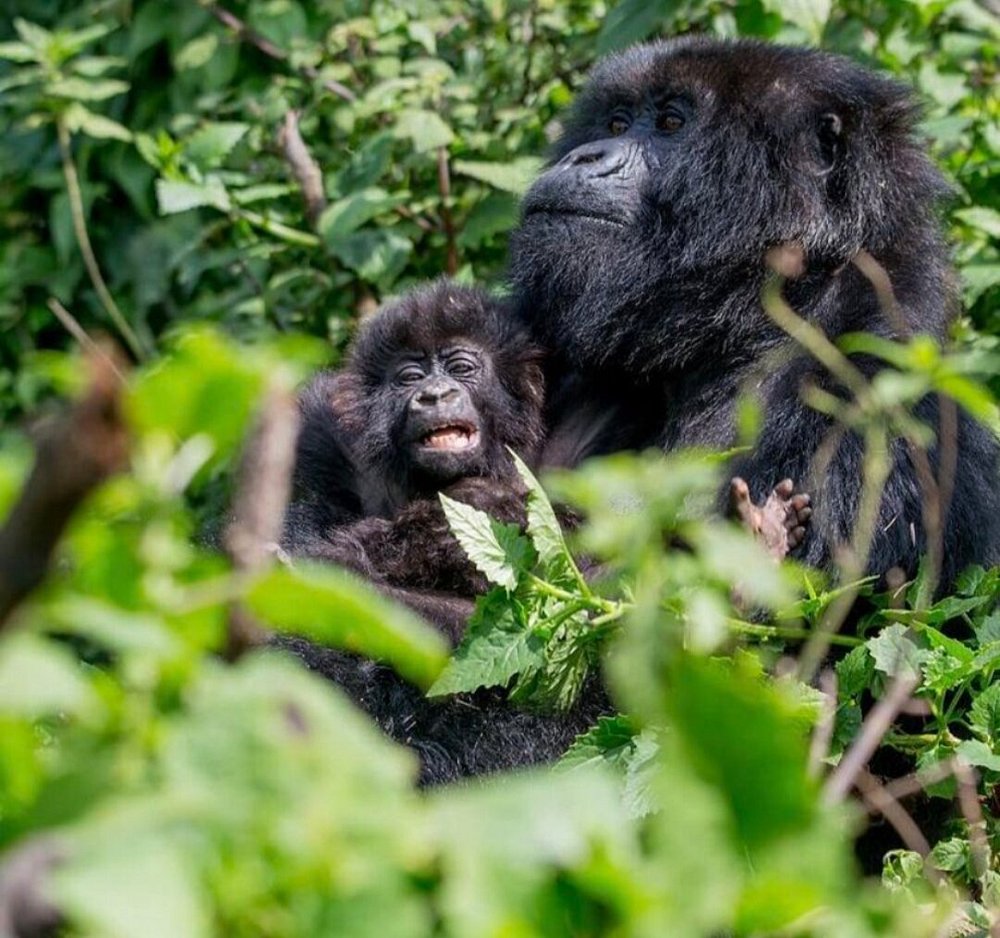 Another reason the Susa family became particularly well known is its history of twin gorillas.
Twin births are uncommon among mountain gorillas, making the arrival and survival of twins a notable event. Members of the Susa lineage have included famous twin gorillas whose early lives attracted considerable interest from researchers and conservationists.
The story of the twins also provides an opportunity to appreciate how vulnerable young mountain gorillas can be. Infants depend heavily on their mothers during their early development, while the wider group provides a protective social environment.
For visitors, seeing a young gorilla within the family can be one of the most emotional moments of the trek.
How the Susa Gorilla Family Changed Over Time
One of the most interesting things about Susa A is that its history is not a simple story of one group remaining together for generations.
The original Susa group became very large. As different individuals matured and social circumstances changed, the group eventually divided.
Some of the resulting groups developed their own identities and territories. Karisimbi gorilla family, (SUSA B), for example, has historical links to the original Susa group.
This process demonstrates something important about mountain gorilla society: gorilla families are constantly evolving.
A group may look very different several years later because of births, deaths, transfers of females, changes in leadership and the formation of new groups.
Where Does Susa A Live?
Susa A lives in the montane environment of Volcanoes National Park, one of Rwanda’s most important protected areas.
The park forms part of the larger Virunga conservation landscape shared by Rwanda, Uganda and the Democratic Republic of Congo.
The landscape is spectacular. The volcanoes rise above forests covered in mist, while bamboo and other vegetation create an ideal habitat for mountain gorillas.
The gorillas move through this environment looking for food and suitable resting areas. Their movements mean that visitors cannot know exactly where the family will be located until trackers establish its position.
What Makes Susa A Special for Gorilla Trekking?
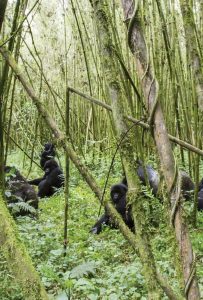 There are many habituated gorilla families in Rwanda, but Susa A has several qualities that make it particularly interesting.
A strong conservation history
The family’s history is closely connected to the early scientific study of mountain gorillas.
A fascinating social structure
Watching the members interact provides an opportunity to see how gorillas communicate and maintain relationships.
A history of famous young gorillas
The family’s association with twin births has contributed to its popularity among researchers and visitors.
A spectacular mountain setting
The trek takes place within the dramatic Virunga landscape, making the journey itself part of the experience.
An opportunity for photography
The forest environment, gorillas and volcanic scenery provide excellent opportunities for responsible wildlife photography.
What Is a Susa A Gorilla Trek Like?
Just like in other gorilla families, trekking begins very early. Travelers gather at the Kinigi Park headquarters of Volcanoes National Park where they are first registered and briefed on the dos and donts of gorilla trekking
Still at the headquarters, travelers are grouped into small groups of eight and each group allocated a gorilla family to trek. Each group of travelers is also given two-armed ranger guides to escort them. At 8:00am, the actual trek begins!
There is no fixed route to the gorillas. Instead, trackers use information about the family’s previous movements to help locate them.
Some days may involve a relatively short hike. On other days, you may need to walk for several hours through challenging terrain.
The forest can be muddy, particularly after rainfall. Slopes can also be steep, and thick vegetation may make walking slower. But the whole feeling changes completely once the gorillas are located.
The sounds of the forest become less important as your attention turns to the animals nearby. You might see a silverback resting beneath vegetation, a mother carrying her infant or young gorillas chasing one another through the undergrowth.
These moments are what make the physical effort worthwhile.
What Can You See When You Meet Susa A?
Every gorilla encounter is different. The family may be feeding when you arrive. On another day, the gorillas might be resting, grooming or moving through the forest.
You may observe silverbacks watching over the group, mothers caring for infants, young gorillas playing, juveniles climbing vegetations, adults feeding, gorillas grooming one another, social interactions between family members, different forms of gorilla communication and resting behaviour among others
One of the most interesting things to observe is how individual gorillas behave differently.
Some may be curious about visitors, while others may largely ignore them and continue with their normal activities.
Is Susa A Gorilla Trekking Difficult?
The difficulty of the trek depends largely on where the gorillas are located on the day of your visit. The Virunga Mountains are not flat terrain, and parts of the forest can be steep. Rain can also turn paths into muddy trails.
Travelers should therefore be prepared for a genuine mountain hiking experience.
Your fitness level is important, but you do not have to be an experienced mountaineer to enjoy gorilla trekking. A reasonable level of fitness, suitable footwear and proper preparation can make a significant difference.
If you have concerns about the physical demands, discuss them with your safari operator before your trip so the appropriate arrangements can be considered.
Best Time for a Susa A Gorilla Trek
Gorilla trekking in Rwanda is available throughout the year.
Many travelers prefer dry periods when rainfall is generally lower because hiking trails can be more comfortable. However, mountain weather is unpredictable, and rain can occur even during the drier months.
The rainy periods also have their advantages. The forest becomes beautifully green, vegetation flourishes and the mountain landscape can be especially scenic.
Instead of focusing exclusively on weather, consider your preferred travel dates, accommodation budget and the other experiences you want to include in your Rwanda safari.
What to Wear for Susa A Gorilla Trekking
Your clothing should be practical rather than fashionable.
A good outfit for gorilla trekking include long trousers, long-sleeved shirt, strong hiking boots, waterproof jacket, warm outer layer, gardening or hiking gloves, comfortable socks, hat or cap
The gardening gloves are particularly useful because you may need to hold vegetation while moving through the forest.
A waterproof backpack is also helpful for protecting your camera, phone and other belongings.
What Should You Carry?
A small backpack should contain the essentials you need for the day.
Consider carrying drinking water, snacks, camera, extra batteries, power bank, sunscreen, insect repellent, rain protection, tissues, personal medication and waterproof bags for electronics
Avoid carrying unnecessary heavy items because you may be walking for several hours.
Susa A and the Dian Fossey Legacy
It is difficult to discuss Susa A without mentioning Dian Fossey. Her work changed how many people viewed mountain gorillas. Rather than portraying them simply as powerful wild animals, her research revealed complex social communities with individual personalities, relationships and family bonds.
Her conservation efforts also helped draw attention to the need to protect their habitat.
Today, visitors to Volcanoes National Park can learn about this history while experiencing the environment where generations of mountain gorillas have lived.
Travellers interested in this story can also combine gorilla trekking with a visit to the Dian Fossey memorial site, creating a safari that connects wildlife viewing with conservation history.
Susa A Gorilla Family and Responsible Tourism
A gorilla trek should always be approached with respect for the animals.
Mountain gorillas are wild animals, even though habituated groups are accustomed to carefully managed human encounters.
Visitors should listen to their guides and follow all park regulations concerning behaviour, distance, photography and health.
Do not attempt to touch a gorilla, attract its attention or interfere with its activities.
Responsible behaviour helps protect both the visitors and the gorillas and ensures that tourism remains compatible with conservation.
Why Gorilla Tourism Matters
Mountain gorilla conservation depends on continued protection of their habitat and responsible management of tourism.
Gorilla trekking brings visitors into communities surrounding protected areas and supports a network of people working in tourism and conservation.
Guides, trackers, drivers, accommodation providers, local businesses and community initiatives all form part of the wider tourism economy.
For travellers, this means that a gorilla safari can provide more than a memorable wildlife encounter. It can also contribute to the broader economic value of keeping the forest protected.
Susa A for Wildlife Photographers
For photographers, Susa A offers an exciting combination of wildlife and landscape photography.
The forest environment creates a natural setting for portraits of gorillas, while the surrounding vegetation adds depth to photographs.
Because light can be limited beneath the forest canopy, photographers should carry suitable equipment and be prepared to work with changing conditions.
Most importantly, photography should never take priority over responsible behaviour. The animals’ comfort and safety come first.
Combining Susa A With Other Rwanda Experiences
A Susa A gorilla trek can easily form the centerpiece of a longer Rwanda holiday.
Depending on the length of your trip, you can combine gorilla trekking with:
- Golden monkey trekking
- Dian Fossey’s grave hike
- Kigali city experiences
- Cultural activities
- Lake Kivu
- Nyungwe Forest
- Chimpanzee trekking
- Akagera National Park
- Boat trips and wildlife viewing
This makes it possible to experience several sides of Rwanda rather than travelling solely for gorilla trekking.
Frequently Asked Questions About Susa A Gorilla Family
What is the Susa A Gorilla Family?
Susa A is a habituated mountain gorilla family living in Volcanoes National Park in northern Rwanda. It has a particularly important place in the history of gorilla research and conservation.
Why is Susa A famous?
The family is especially known for its historical connection with Dian Fossey’s gorilla research, its large original population and its history of twin births.
Where can I trek Susa A?
Susa A is found in Volcanoes National Park in Rwanda’s Virunga Mountains.
Is Susa A difficult to trek?
The difficulty varies according to the family’s location. Because the gorillas can range through mountainous terrain, some treks can be physically demanding.
Can children trek Susa A?
Gorilla trekking has age requirements set by the relevant authorities. Families travelling with children should confirm the current regulations before booking. The age limit for gorilla trekking is 15 years
What happens if the gorillas move far away?
The trackers follow the gorillas’ movements and guide visitors through the forest. Trekking distances can therefore vary considerably from one day to another.
How far in advance should I plan a Rwanda gorilla safari?
It is advisable to plan well ahead, particularly during popular travel periods, because gorilla trekking permits and suitable accommodation can become limited.
Plan Your Rwanda Gorilla Trek With Superfine Safaris
The Susa A Gorilla Family offers one of the most fascinating ways to experience Rwanda’s mountain gorillas. Its story connects today’s gorilla tourism with decades of research, conservation and changing gorilla family dynamics.
For a traveller, however, the real magic begins when the forest suddenly reveals the animals themselves.
Standing quietly near a mountain gorilla, watching a young one play or seeing a silverback calmly observing his family is an experience that cannot be fully captured in photographs or words.
Lets start planning