If you are searching for eco-friendly lodges in Bwindi Impenetrable Forest, you are already asking the right question. Where you sleep at Bwindi matters — not just for your comfort, but for the gorillas and the communities living on the park’s edge. The right lodge puts money into ranger salaries, community schools and alternative livelihoods. The wrong one, however well-reviewed, can be a comfortable room with no meaningful connection to the place around it. This guide tells you which lodges genuinely deliver on their eco promises, what that looks like in each of Bwindi’s four sectors, and how to choose between them.
What “Eco-Friendly” Actually Means at Bwindi
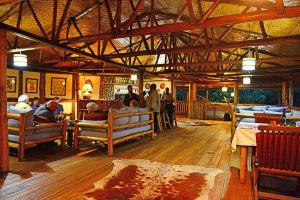 At Bwindi, Impentrable Forest National Park, the word “eco-friendly” gets used by almost every lodge. It is worth knowing what actually separates the genuine article from a lodge that recycles and calls it conservation.
The real test is money flow. Bwindi’s gorillas survive because the forest is worth more alive than cut down. That calculation only works when tourism income reaches the people who live alongside the park — the farmers who lose crops to buffalo, the communities that gave up forest access when Bwindi was gazetted in 1991. A lodge that employs outsiders, pays no conservation levies and has no community benefit programme is not eco-friendly, regardless of its solar panels.
Look for four things when you are comparing lodges:
Who does it employ? The best Bwindi lodges hire staff — guides, cooks, housekeeping, management — from the villages immediately around the park. This is the most direct and reliable way tourism income reaches communities.
What levies does it pay? Responsible lodges pay verified conservation fees to Uganda Wildlife Authority and to community conservation funds. Ask whether a lodge can tell you specifically what those fees fund. If it cannot, that is an answer.
What is its energy source? Solar power is the practical and ethical choice in Bwindi’s remote terrain. Diesel generators in a permanent lodge are a decision, not a necessity.
Does it have a specific community programme? Not a general commitment to “supporting communities” — a specific one. A school it funds, a cooperative it sources from, a cultural programme it employs people through. The lodges worth staying at can name these without hesitation.
Eco-Friendly Bwindi Lodges by Sector
Bwindi has four gorilla trekking sectors. Each has a different character, different accessibility and a different lodge portfolio. The sector you choose also determines which gorilla family you will trek — so your choice of lodge and sector go together.
Buhoma — The Most Accessible, with the Deepest Community Roots
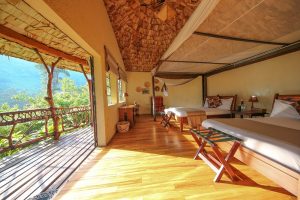 Buhoma is where gorilla trekking in Uganda started. It is in the north of the park, the easiest to reach from Entebbe, and has the most developed lodge infrastructure. It also has something rarer: a community that has been in a genuine partnership with the tourism industry for decades. The Buhoma Community Development Programme, which predates many of the lodges here, distributes conservation revenues to local families for health, education and infrastructure.
Buhoma Lodge was built alongside that community programme and remains tied to it. Almost all of its staff come from the surrounding villages. It uses solar power, sources food locally, and runs guided community walks that go well beyond the standard cultural performance. This is a proper mid-range lodge — comfortable, well-run, with the kind of forest views that remind you why you came. If you want a reliable, well-priced Buhoma base with genuine eco-credentials, this is it.
Gorilla Forest Camp is different from most lodges in East Africa in one significant way: it sits inside the national park boundary, not on the edge. That means waking up in the forest itself, with everything that implies — night sounds, morning mist, the sense that you are a guest in something older and larger than the tourism industry. The camp’s concession fees go directly to park management. Its community employment agreements with Buhoma village are formal and documented. For the luxury end of the market, it is the most immersive choice in the sector.
Mahogany Springs sits above the Bwindi River on elevated walkways, with tented chalets that feel genuinely in the landscape rather than placed over it. Solar-powered, locally staffed, with contributions to community conservation funds. A strong choice if the river setting appeals more than the forest interior.
Ruhija — Remote, High and Serious About Community Ownership
Most people have not heard of Ruhija, and that is part of its appeal. It sits at over 2,300 metres on Bwindi’s eastern edge, higher and cooler than Buhoma, with fewer visitors and a wilder character. It is also the best birding area in the park, with several Albertine Rift endemic species found only here. The lodges are smaller and simpler than Buhoma’s — but one of them has a community model that no other lodge in Uganda comes close to matching.
Gorilla Highlands was founded on a single idea: that gorilla tourism should work for the people who live alongside the gorillas, not just the people who come to see them. It employs Bakiga and Batwa community members as cultural guides and storytellers, sources its food from community gardens, and runs education and literacy programmes for school-going children in the Ruhija highlands. Its accommodation is stone cottages built by local craftspeople using local materials. None of this is accidental — it is the founding philosophy of the lodge, documented and independently observed. If your primary concern is that your lodge fees reach the right people, Gorilla Highlands is the answer.
Ruhija Community Gorilla Lodge is community-owned, meaning profits go directly back to local stakeholders rather than to a private operator. It is a basic option, but for travellers who want complete transparency about where their money goes, it is the most honest choice in the sector.
Nkuringo — Dramatic Landscape and One of Uganda’s Best Conservation Stories
 Nkuringo is in the south of Bwindi, accessed from Kisoro and the Mgahinga border area. The terrain is steeper here than in Buhoma, the gorilla trek is more demanding, and the landscape — ridges falling away into deep valleys with the Virunga volcanoes on the horizon — is among the most beautiful in Uganda. It also has one community programme that is worth knowing about.
The Nkuringo Gorilla Beekeepers’ Cooperative began as an alternative livelihood programme for farmers who had been raiding the park for honey. Instead of prosecution, they were given modern beekeeping equipment, training and a market. The cooperative now supports dozens of families, sells honey through the lodge, and has converted people who once saw the forest as a resource to raid into people who have a financial stake in keeping it intact. Nkuringo Gorilla Camp is built around this cooperative — its staff come from the local community, its lodge fees contribute to community conservation funds, and its positioning on the park boundary gives guests a direct view into the forest from the perspective of the families who live alongside it.
Clouds Mountain Gorilla Lodge is the luxury property in this sector, with panoramic ridge-top views across into the Democratic Republic of Congo. Solar-powered, entirely locally staffed, and connected to the same community programmes as Nkuringo Gorilla Camp. It is one of the most visually striking lodges in East Africa, and its conservation credentials are as strong as its rack rate. For a luxury Bwindi experience outside the Buhoma crowd, it is the first recommendation.
Rushaga — The Most Gorilla Families, Best for Back-to-Back Permits
Rushaga is the southernmost sector, near Butogota town, and has more habituated gorilla families than any other part of Bwindi. If you want two gorilla permits on consecutive days, or a gorilla habituation experience (a full day with a family still being introduced to human presence), Rushaga is where to go. Its lodge portfolio is younger than Buhoma’s but growing quickly.
Ichumbi Gorilla Lodge has built a stronger community record than most Rushaga properties. It employs Batwa guides at standard rates — not as a performance add-on but as a genuine employment arrangement — and it supports a primary school programme in the area. For a community-conscious choice in the sector, it leads.
Rushaga Gorilla Camp is a tented camp with a small footprint, solar power and local staff drawn from Rushaga village. Less elaborate than Ichumbi, but a solid and honest choice for mid-range travellers who want a clean, well-run base close to the trekking trails.
Lodge Costs: What to Budget for Eco-Friendly Bwindi Accommodation
| Lodge | Sector | Per Person/Night (USD) | Tier |
|---|---|---|---|
| Ruhija Community Lodge | Ruhija | $80 – $150 | Budget |
| Gorilla Highlands | Ruhija | $250 – $400 | Mid-range |
| Buhoma Lodge | Buhoma | $300 – $450 | Mid-range |
| Rushaga Gorilla Camp | Rushaga | $280 – $420 | Mid-range |
| Ichumbi Gorilla Lodge | Rushaga | $300 – $450 | Mid-range |
| Nkuringo Gorilla Camp | Nkuringo | $350 – $500 | Mid-range |
| Mahogany Springs | Buhoma | $600 – $900 | Luxury |
| Clouds Mountain Gorilla Lodge | Nkuringo | $700 – $1,100 | Luxury |
| Gorilla Forest Camp | Buhoma | $800 – $1,200 | Luxury |
These rates are per person sharing in peak season (June–September and December–January) and do not include the Uganda gorilla permit ($700 per person). Contact Superfine Safaris for current availability and a quote that combines your lodge preference with a full Uganda itinerary.
Which Bwindi Sector Should You Choose?
This comes down to what you want from the experience, not just where the best lodges are.
Choose Buhoma if you are visiting Bwindi for the first time, want the most straightforward logistics, and value a lodge with deep community roots. Gorilla Forest Camp for luxury, Buhoma Lodge for mid-range — both deliver.
Choose Ruhija if you are a birder, if you want a quieter and more remote experience, or if you want to stay at a lodge — Gorilla Highlands — whose community model is the strongest in Uganda. The altitude means cooler temperatures and a dramatically different forest character.
Choose Nkuringo if the landscape matters as much as the gorillas — the views from Clouds Mountain across the Virunga volcanoes are genuinely extraordinary — and if you want a trekking experience that is more physically demanding and more intimate. The Nkuringo GBC story makes it the most compelling conservation narrative in the park.
Choose Rushaga if you want two gorilla permits on consecutive days, a gorilla habituation experience, or if you are travelling with a group that needs multiple permits on the same day. Ichumbi’s community credentials make it the right eco-conscious choice here.
If you have time, combining two sectors gives you the fullest picture. Our 5-day Uganda itinerary and 7-day Uganda itinerary are built around multi-sector Bwindi visits, and we can adjust either to your preferred lodges.
The Batwa: Why It Matters Which Lodge You Choose
The Batwa were Bwindi’s original inhabitants, hunter-gatherers who had lived in the forest for centuries before the park was created in 1991. When Bwindi was gazetted, the Batwa were removed with almost no compensation and no alternative land. A significant portion of the Batwa community around Bwindi lives in severe poverty today.
Some lodges address this seriously. Others treat the Batwa cultural experience as a low-cost add-on — a performance that comes with a tip jar. The difference is whether Batwa community members are employed as salaried guides and cultural interpreters at standard rates, or whether they are paid per-performance. Gorilla Highlands in Ruhija, Ichumbi in Rushaga and Nkuringo Gorilla Camp have the most documented Batwa employment arrangements. When you are comparing lodges, it is a fair question to ask.
Superfine Safaris includes Batwa cultural experiences in our standard Uganda itineraries. We select lodges where the Batwa engagement is a genuine employment arrangement, not a tourism set piece. See our sustainable tourism page for more on how community benefit works across our itineraries.
School Visits and Community Support Near Bwindi
On Uganda itineraries where timing allows, Superfine Safaris visits primary schools in communities bordering Bwindi. We bring exercise books, pens and pencils for children from the most vulnerable households — families living in the park’s buffer zone, where farming land is limited and school supplies are beyond reach for many. These are not planned as tourist attractions. They are quiet visits arranged with school leadership, a small and direct way to contribute to the communities that make gorilla conservation possible.
If you would like a school visit included in your Uganda itinerary, ask your Superfine Safaris consultant. If you have space in your luggage, a few exercise books go a long way.
Best Time to Visit Bwindi Eco-Lodges
Bwindi is open year-round, and gorilla trekking is possible in every month. The dry seasons — June to August and December to January — mean firmer trails, more comfortable trekking and easier drives on the approach roads. They are also when demand is highest and lodges fill fastest. Book permits and accommodation at least six months ahead for June to August.
The wet seasons — March to May and September to November — bring heavier rain and muddier paths but a dramatically greener forest, lower lodge rates and significantly fewer visitors. Many experienced Bwindi travellers prefer a shoulder-season visit for exactly this reason: fewer people means a more private experience, and the forest in the rain is something the dry-season photographs do not capture. See our Uganda safari guide for a month-by-month breakdown.
Frequently Asked Questions: Eco-Friendly Lodges in Bwindi
Which is the best eco-friendly lodge in Bwindi Impenetrable Forest? It depends on your sector and budget. Gorilla Forest Camp (Buhoma, luxury) and Buhoma Lodge (Buhoma, mid-range) are the strongest in the north. Gorilla Highlands (Ruhija) leads for community ownership. Clouds Mountain Gorilla Lodge and Nkuringo Gorilla Camp (Nkuringo) are the best in the south for luxury and mid-range respectively. Ichumbi Gorilla Lodge leads in Rushaga for community engagement.
What does an eco-friendly lodge at Bwindi actually do differently? It employs community members at all levels, pays verified conservation levies to Uganda Wildlife Authority and community funds, uses solar power, and has a specific community programme — a school it funds, a cooperative it sources from, or a cultural programme it employs people through. This is different from a lodge that recycles and calls itself sustainable.
How much does it cost to stay at an eco-lodge in Bwindi? Community-run budget lodges start around $80–$150 per person per night. Mid-range eco-lodges — Buhoma Lodge, Gorilla Highlands, Nkuringo Gorilla Camp — range from $250 to $500. Luxury properties such as Gorilla Forest Camp and Clouds Mountain run $700–$1,200. All prices are on top of the Uganda gorilla permit ($700 per person).
Which Bwindi sector is best for eco-lodges? Ruhija for the strongest community ownership model (Gorilla Highlands). Nkuringo for the most integrated conservation programme (Nkuringo GBC). Buhoma for the most developed infrastructure with strong community credentials. Rushaga for back-to-back gorilla trekking with Ichumbi as the best eco-conscious option.
Is it worth choosing an eco-lodge over a standard lodge at Bwindi? Yes — and at Bwindi the choice matters more than at most destinations. The communities living alongside the park bear real economic costs from conservation: reduced farmland, crop-raiding wildlife, restricted forest access. A lodge that channels income back to those communities is part of the conservation equation, not just a preference. The gorillas are here because that equation is working. Your lodge choice either supports it or it does not.
Can I visit a local school near Bwindi with Superfine Safaris? Yes. On itineraries where timing allows, Superfine Safaris visits primary schools in communities near the park with school supplies for children from the most vulnerable households. Ask your consultant to include this when planning your Uganda trip.