Sustainable tourism in East Africa is at the heart of everything Superfine Safaris Limited does. Since our founding, we have operated on a single principle: that a safari should leave the ecosystems and communities we visit better off than it found them. That is not a marketing position but a framework we use to design every itinerary, select every lodge and choose every activity we recommend. In Rwanda, gorilla permit revenue has helped grow the mountain gorilla population from under 700 individuals in the early 2000s to over 1,000 today. In Uganda, Bwindi’s community revenue-sharing programme distributes 20% of park fees to the villages surrounding the forest. In Kenya, the Maasai conservancy model has turned community land into the most effective private conservation financing system in Africa. Superfine Safaris works within and actively supports all of these systems — and this guide explains exactly how.
How Superfine Safaris Promotes Sustainable Tourism in East Africa
 Superfine Safaris Limited promotes sustainable tourism through four concrete commitments that run through every trip we plan:
1. Official permits at official prices. Every gorilla permit we book for clients in Rwanda ($1,500) and Uganda ($800) is purchased through official Uganda Wildlife Authority and Rwanda Development Board channels at full price. We do not seek discounts on conservation permits, and we do not work with operators who do. The permit price is the primary funding mechanism for gorilla conservation; reducing it reduces the income that pays ranger salaries and funds anti-poaching patrols.
2. Lodges with verified conservation credentials. Before we include any lodge in our recommended properties, we evaluate its conservation levy structure, community equity arrangements and environmental practices. We prioritise lodges with direct community ownership stakes, verified conservation fees paid to park management, and solar or low-impact energy systems. This evaluation is separate from our assessment of comfort and value — a lodge that does not meet our conservation criteria does not appear in a Superfine Safaris itinerary regardless of its reputation or facilities.
3. Community experiences as standard, not optional. At Superfine Safaris Limited, cultural and community experiences are built into our standard itineraries rather than offered as paid extras. The Batwa cultural programme in Mgahinga and Bwindi Forest National Parks,, the Iby’iwacu cultural village near Rwanda’s Volcanoes National Park, and community walks around the Masai Mara conservancies are all part of what we consider a complete East Africa safari not because they are checkbox items, but because they direct income to the communities bearing the costs of conservation on behalf of every visitor.
4. Local employment at every level. Superfine Safaris works with driver-guides, porters, cooks and lodge staff who are members of the communities we travel through. We do not sub-contract to remote operators; we work directly with local guides who know their ecosystems, speak the local languages and have personal stakes in the health of the wildlife and communities they show our clients.
5. Supporting vulnerable children in communities near national parks. Beyond the transactional benefits of tourism, Superfine Safaris Limited maintains direct relationships with schools and community groups in the villages surrounding the parks we operate in. On itineraries where timing and access allow, we visit schools near Bwindi, Volcanoes National Park and the Masai Mara to deliver stationery, books, and learning materials to children from the most vulnerable households. These visits are not staged photo opportunities — they are modest, direct contributions to communities whose cooperation makes wildlife conservation possible. Many of the children in these schools will grow up to be the rangers, guides and conservation managers of the next generation. We believe investing in them is investing in the future of East Africa’s wildlife.
6. No-plastic compliance and environmental briefings. Rwanda introduced one of the world’s strictest plastic bag bans in 2008. The use, importation or distribution of non-biodegradable plastic bags is prohibited nationwide, and this is enforced at the border: visitors arriving with plastic bags are required to surrender them at entry. Superfine Safaris briefs every client travelling to Rwanda on this requirement before departure, provides guidance on packing alternatives, and supports the spirit of the policy throughout every Rwanda itinerary. We extend the same no-single-use-plastic standard to our operations across Uganda, Tanzania and Kenya, encouraging clients to carry reusable bottles and bags regardless of the destination.
What Sustainable Tourism in East Africa Actually Means
 Before explaining what Superfine Safaris does, it is worth being specific about what sustainable tourism means — because the term is used by almost every safari operator regardless of whether their practices back it up. In East Africa’s conservation context, sustainable tourism has three measurable dimensions:
Wildlife conservation funding: Park entry fees, gorilla permits, concession fees and lodge levies that flow into habitat protection, ranger employment and anti-poaching operations. These are not optional donations — they are the financial architecture that keeps East Africa’s wildlife alive. When Superfine Safaris builds an itinerary, we calculate the conservation levy flow of every component: which park fees go where, which lodge concession fees fund which conservation area, and which community programmes our lodge choices support.
Community benefit: Revenue that reaches the communities living alongside wildlife, reducing the economic pressure to convert habitat to farmland or resort to poaching. The Maasai conservancies around Kenya’s Masai Mara pay monthly per-acre fees to thousands of individual landowners. Rwanda’s revenue-sharing programme funds schools and health centres in communities around Volcanoes National Park. Uganda’s Bwindi community programme supports the villages that gave up forest access when the park was gazetted. Superfine Safaris designs itineraries to maximise the money flowing through these channels.
Low environmental impact: Lodge operations, vehicle practices and visitor behaviour that minimise disruption to the ecosystems being visited. This includes solar-powered lodges, responsible waste management in remote areas, adherence to park rules on vehicle numbers and approach distances, and the strict wildlife viewing guidelines we brief every client on before their first game drive or gorilla trek.
Rwanda: How Superfine Safaris Supports Gorilla Conservation
Rwanda is where Superfine Safaris’ sustainable tourism commitment is most directly visible. When we book a gorilla trek in Volcanoes National Park, the $1,500 permit funds the Rwanda Development Board’s entire Volcanoes NP management budget — ranger salaries, patrol equipment, veterinary care for habituated gorilla families and the community revenue-sharing programme that distributes 10% of park income to villages in the buffer zone.
Beyond the permit, Superfine Safaris recommends lodges near Volcanoes NP with specific community credentials: properties with Rwandan staff at senior management level, community land lease agreements and verified contributions to the Iby’iwacu cultural village programme. We include the Iby’iwacu visit in our standard Rwanda itineraries — a programme founded by former poachers who were offered employment as cultural guides and performers as an alternative livelihood, directly addressing the economic drivers of wildlife crime.
In Akagera National Park, Superfine Safaris recommends the park’s two lodges specifically because their concession fees fund African Parks’ management of Akagera — the same management that reintroduced lion in 2015 and black rhino in 2017, both now self-sustaining populations. Every lodge night in Akagera is a direct contribution to one of Africa’s most successful Big Five restoration programmes. See our Rwanda safari guide for full itinerary options.
Rwanda’s plastic bag ban. Rwanda implemented one of the world’s strictest plastic bag prohibition laws in 2008. Non-biodegradable plastic bags are banned nationwide — their importation, sale, use and distribution are all illegal, and enforcement at Kigali International Airport means visitors arriving with plastic bags must surrender them at the border. Rwanda’s streets, parks and natural areas are visibly cleaner as a result: it is one of the few African capitals where plastic litter is genuinely rare. Superfine Safaris takes this seriously. Every client travelling to Rwanda receives a pre-departure briefing that covers the plastic bag ban, what to pack instead, and how to avoid inadvertent violations. We carry reusable bags for clients and encourage the same standard across all four countries we operate in, regardless of local law.
School and community visits near Volcanoes National Park. The villages in the buffer zone around Volcanoes National Park are home to families whose land and forest access were reduced when the park was extended. On our Rwanda itineraries, Superfine Safaris arranges visits to primary schools in these communities, bringing school supplies — exercise books, pens, pencils and reading materials — to children from the most economically vulnerable households. These visits are low-key, respectful and pre-arranged with school leaders. They are not part of the advertised itinerary because we do not treat them as a tourist activity; they are part of how we conduct ourselves in the communities that host our clients.
Uganda: Community Co-existence and the Batwa Programme
 Uganda’s conservation challenge is unique in East Africa: Bwindi Impenetrable Forest, home to half the world’s mountain gorillas, is surrounded by some of the most densely populated farmland on the continent. The communities bordering Bwindi gave up land access, crop protection and forest resources when the park was gazetted in 1991. Sustainable tourism in Uganda means ensuring those communities receive tangible economic benefits from the park’s existence — or the pressure to encroach will never fully abate.
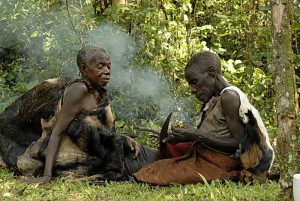
Superfine Safaris addresses this in three ways. First, we book gorilla permits at the full $800 Uganda Wildlife Authority price — the income that funds ranger salaries, anti-poaching operations and the 20% community revenue-sharing programme. Second, we include the Batwa cultural experience in our standard Uganda itineraries. The Batwa were Bwindi’s original forest inhabitants, evicted with minimal compensation when the park was created. Community tourism programmes employing Batwa as cultural guides, honey hunters and traditional medicine practitioners provide direct income to a population that was left economically marginalised by the conservation decision that made gorilla trekking possible. Third, we direct clients to the Bigodi Wetland Sanctuary near Kibale Forest — a community cooperative that retains all entry fees within the village and has created one of Uganda’s best birding destinations from land that might otherwise have been converted.
See our Uganda safari guide for the full Uganda conservation picture and our lodge recommendations.
Tanzania: Private Concessions and the Serengeti Ecosystem
Tanzania presents a different sustainable tourism challenge: scale. The Serengeti ecosystem receives tens of thousands of visitors annually, and the northern circuit’s main parks, Serengeti, Ngorongoro, Tarangire are among the most-visited in Africa. The risk is not underinvestment but overcrowding, too many vehicles at river crossings, too much pressure on specific game-drive areas, too little of the tourism revenue reaching communities outside the park boundaries.
Superfine Safaris’ response in Tanzania is to prioritise private concession lodges over public park accommodation wherever possible. Private concessions exclusive areas within or adjacent to national parks, leased by operators who pay annual conservation fees to TANAPA — keep visitor numbers per area low, allow off-road driving, fund conservation in buffer zones and create direct financial incentives for concession holders to maintain wildlife populations. The concession fee model means that choosing a private concession camp over a public lodge puts more conservation money into the system, not less, despite the higher rack rate.
In the Ngorongoro Conservation Area, Superfine Safaris recognises the Maasai’s permanent residence within the NCA as a conservation asset rather than a management problem — their traditional land use patterns are part of the ecosystem’s function. We include interactions with NCA Maasai communities as part of our Ngorongoro itineraries. See our Tanzania safari guide for specific properties and itinerary options.
Kenya: Conservancies and the Maasai Partnership
Kenya’s Maasai conservancy model around the Masai Mara is the most sophisticated community conservation financing system in East Africa, and Superfine Safaris is a strong advocate for it. The conservancies — Olare Motorogi, Naboisho, Ol Kinyei, Mara North and others — are formed when Maasai landowners lease their land to tourism operators under agreements that pay monthly per-acre conservation fees to each individual landowner family. The economics are straightforward: a Maasai family earns significantly more from a wildlife conservancy lease than from equivalent livestock grazing, creating a direct financial incentive to maintain habitat and tolerate wildlife.
When Superfine Safaris places clients in conservancy camps around the Mara, we choose properties specifically for the strength of their landowner agreements — the per-acre rate paid, the community employment percentage and the additional community programmes the camp supports. Clients staying in a Superfine Safaris-recommended Mara conservancy camp are, in effect, paying rent to hundreds of individual Maasai landowner families for the right to watch wildlife on their land. The conservancies have added hundreds of square kilometres of effective wildlife habitat to the Mara ecosystem and reduced human-wildlife conflict across the entire region. See our Kenya safari guide for our conservancy lodge recommendations.
How to Verify a Safari Operator’s Sustainability Credentials
Superfine Safaris Limited encourages every traveller considering an East Africa safari with us or with any operator to ask the following questions before booking:
How are gorilla permits purchased? Official channels only, at official prices ($800 Uganda, $1,500 Rwanda). Any operator offering “discounted” permits outside the June–September shoulder season should be questioned carefully.
Which specific conservation programmes do your lodge fees support? An operator with genuine conservation commitments can name specific programmes, concession fee structures and community benefit agreements. Vague references to “supporting conservation” are not sufficient.
Are community experiences included or optional? Operators who treat community experiences as paid add-ons reveal that their sustainability commitment is transactional. At Superfine Safaris, community experiences are part of what a complete East Africa safari means.
What is the energy source of the lodges you recommend? Solar-powered lodges in remote wilderness areas are the appropriate technology. Diesel-dependent permanent lodges in off-grid settings have made an operational choice that should be explained.
Do your guides live in the communities they guide through? Local employment in safari guiding is not just an ethical preference — it produces better experiences. Guides who grew up near Bwindi know the forest differently from guides trained elsewhere. Superfine Safaris works with locally-rooted driver-guides across all four countries.
What You Can Do as a Traveller
Sustainable tourism is not only the responsibility of operators. Here is what individual travellers can do to ensure their East Africa safari delivers maximum conservation and community benefit:
Book the gorilla and chimpanzee permits. Uganda’s $800 and Rwanda’s $1,500 gorilla permits fund the conservation infrastructure that keeps these animals alive. Not booking because the price seems high is, from a conservation perspective, precisely the wrong decision.
Engage with community experiences. The Batwa cultural programme near Bwindi, Iby’iwacu near Volcanoes NP, Maasai community visits near the Mara, and Bigodi Wetland near Kibale all direct income to communities that have paid real costs for conservation. Superfine Safaris includes these in our itineraries; take them seriously.
Hire a porter in Bwindi. Porter hire at Bwindi’s gorilla trekking gate costs $15–20 and puts money directly into the local economy. It is also practically useful on steep terrain. We recommend it to every client regardless of fitness level.
Follow the rules on every trek and game drive. The 7-metre minimum distance from gorillas and chimpanzees, the one-hour time limit with habituated families, vehicle behaviour guidelines in national parks — these exist because decades of research demonstrate that human proximity affects primate health, stress levels and long-term habituation success. Superfine Safaris briefs every client on these rules before the first activity. We expect them to be followed.
Leave your plastic bags at home before Rwanda. Rwanda’s 2008 plastic bag ban is one of the strictest in the world and is enforced at the border. Do not pack items in plastic bags for your Rwanda trip — use packing cubes, cloth bags or paper packaging instead. Superfine Safaris will brief you on this before departure; take the advice seriously to avoid having bags confiscated at Kigali Airport.
Pack school supplies if you have space. On Superfine Safaris itineraries that include community visits near Volcanoes National Park or Bwindi, we welcome clients who bring modest school supplies — exercise books, pencils, pens — to contribute during our school visits. Ask your safari consultant whether a community school visit is part of your itinerary and what would be most useful. Small contributions matter significantly to the schools involved.
Stay longer. A 10-day Rwanda circuit generates significantly more conservation revenue — in permits, lodge conservation levies and community income — than two separate 5-day trips. Fewer, longer trips are the more sustainable travel pattern. See our 10-day Rwanda itinerary and 10-day Uganda itinerary for the full-circuit options.
What Sustainable Tourism Has Achieved in East Africa
Sustainable tourism in East Africa is not a theory, it has measurable outcomes. The mountain gorilla population has grown from approximately 620 individuals in 2010 to over 1,000 today, making it the only great ape subspecies whose population is increasing. This recovery is directly attributable to the conservation funding that gorilla tourism generates. Rwanda’s Akagera National Park, which had lost its lion population entirely by the early 2000s, now has a self-sustaining pride following the 2015 reintroduction funded by African Parks’ concession-based management model. Uganda’s chimpanzee population in Kibale Forest has remained stable through three decades of expanding human settlement in surrounding areas — a result of the conservation investment that Kibale’s tourism revenue funds. Kenya’s Mara conservancies have increased the effective range of the Mara ecosystem by hundreds of square kilometres, providing dispersal habitat the wildebeest migration depends on.
These outcomes are what Superfine Safaris is working toward with every itinerary we design. We are not a conservation organisation — we are a safari operator. But we operate in a context where tourism revenue is the primary conservation funding mechanism, and where the difference between a well-designed trip and a poorly-designed one is, in aggregate, the difference between growing wildlife populations and declining ones.
Frequently Asked Questions About Sustainable Tourism in East Africa
What is sustainable tourism in East Africa? Sustainable tourism in East Africa refers to safari and wildlife travel designed to fund conservation, benefit local communities and minimise environmental impact — specifically through permit systems, community revenue-sharing programmes, private conservation concessions and low-impact lodge operations. At Superfine Safaris, it is the framework we use to design every itinerary we sell.
How does Superfine Safaris promote sustainable tourism? Superfine Safaris promotes sustainable tourism by booking all permits at official prices through official channels, recommending only lodges with verified conservation credentials, including community cultural experiences in our standard itineraries, and working with locally-rooted driver-guides across Rwanda, Uganda, Tanzania and Kenya. We evaluate every itinerary component against conservation and community benefit criteria, not just comfort and logistics.
Is gorilla trekking sustainable tourism? Yes — gorilla trekking is among the most directly conservation-linked tourism activities available anywhere in the world. Rwanda’s $1,500 and Uganda’s $800 gorilla permits fund the park management, ranger salaries and community programmes that have allowed the mountain gorilla population to recover from under 700 to over 1,000 individuals. The trekking rules — 7-metre distance, 1-hour maximum, health restrictions — also protect the gorillas from disease transmission.
What is the Maasai conservancy model and how does Superfine Safaris support it? The Maasai conservancy model involves Maasai landowners leasing their land to tourism operators under agreements that pay monthly per-acre conservation fees to each individual family. Superfine Safaris supports the model by recommending conservancy camps specifically for the strength of their landowner agreements and by briefing clients on the conservation economics behind the camps they stay in. Every conservancy lodge night with Superfine Safaris is a direct transfer of income to Maasai landowners.
What is the most sustainable country to safari in East Africa? All four countries Superfine Safaris operates in — Rwanda, Uganda, Tanzania and Kenya — have effective sustainable tourism frameworks when visited with the right operator and itinerary. Rwanda’s revenue-sharing model is most transparent; Uganda’s community programmes are most directly tied to conservation costs; Kenya’s conservancy model is the most developed private-sector system; Tanzania’s private concession model delivers the best conservation outcomes at the high end of the market.
How can I verify that my safari operator is genuinely sustainable? Ask for specific answers: which conservation programmes do their lodge fees support, how are gorilla permits purchased, what are the community benefit agreements for the lodges they use, and do their guides live in the communities they work in. Superfine Safaris can answer all of these questions with specifics for every component of every itinerary we sell. Contact us directly to ask.